
On 9th November 2020 the House of Lords debated and voted on the Government’s UK Internal Market Bill during its Committee stage. A cross-party group of Peers had tabled motions that all the clauses of Part 5 of the Bill, which covered Northern Ireland, international law, and executive powers, should not remain in the Bill. These successfully passed by large majorities across two votes. The Bishop of Leeds acted as a sponsor of two of those motions, and spoke in the debate on whether the clauses of Part 5 should ‘stand part’ of the Bill:
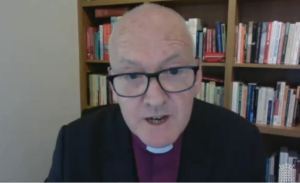 The Lord Bishop of Leeds [V]: My Lords, it is a great pleasure to follow the speech by the noble Baroness, Lady Suttie. I endorse completely the points made by the noble and learned Lord, Lord Judge, at the outset of this debate. I hope the Government will listen carefully to the advice from the noble Lord, Lord Empey, on the alternatives to what is before us. This is not an either/or situation.
I have read every word of the Second Reading and Committee debates and the reports—especially from the Constitution Committee. I have even reread Tom Bingham’s book on the rule of law. I ask myself whether I am missing something, but I still come back to the point of principle. I accept the Government’s intention in this Bill, but not the means. Continue reading “UK Internal Market Bill: Bishop of Leeds supports removal of clauses on Northern Ireland and international law”
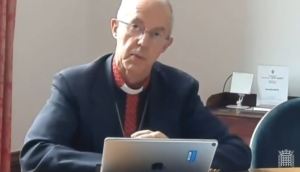 The Archbishop of Canterbury [V]: My Lords, I will speak to Amendment 161*, to which I have added my name, alongside the noble and right reverend Lord, Lord Eames, the noble Lord, Lord Hain, and the noble Baroness, Lady Ritchie of Downpatrick. The previous speeches have all been both moving and deeply eloquent, and I shall therefore be very brief.
 The Lord Bishop of Southwark: My Lords, I speak in favour of the amendment moved by the noble Lord, Lord Dubs. In doing so, I speak not only on my account but also in place of the right reverend Prelate the Bishop of Durham, who is locked down in the north-east and therefore, because of the procedures for consideration of Commons amendments, is unable to speak on this amendment, although that had been very much his intention.
 The Lord Bishop of Winchester [V]: My Lords, I am grateful to Her Majesty’s Government for seeking to ensure that the appropriate measures are in place to protect the most vulnerable and restrict the spread of this virus. It is important that we do not prolong such stringent lockdown measures because of the way that they impact on the mental, physical and, indeed, spiritual well-being of the population. However, I will not be supporting the fatal Motion. I recognise the exceptional nature of these times, and welcome that the regulations will enable places of worship to remain open for private prayer and broadcasting acts of worship. Creating such broadcast acts of worship often requires a team of people, both amateurs and professionals. I would welcome more clarity from the Minister on the number of people allowed to do this.
 The Lord Bishop of Durham [V]: My Lords, I declare my interests as set out in the register. In welcoming warmly this new instrument to ensure that all schools are subject to inspection in the same way, we recognise the continuing value of inspections as a whole. I want to associate myself warmly with the comments made by the noble Baroness, Lady Massey, and the noble Lord, Lord Addington. However, although we welcome this instrument, we would also welcome the further postponing of Ofsted and school inspections, including the Section 48 inspections of schools with a religious designation, throughout the pandemic period.
  On 27th October 2020 the House of Lords considered the Government’s Social Security (Up-rating of Benefits) Bill in Committee. The Bishop of St Albans supported an amendment on reporting impacts on pensioner poverty:
 The Lord Bishop of London: My Lords, this Measure will enable the General Synod—the legislative body of the Church of England—to meet and conduct its business remotely. Current coronavirus restrictions mean it is not practically possible for the synod to meet in the usual way, with 500 people from across England gathering in the same place.
  The Church of England in Parliament
You must be logged in to post a comment.