On 30th December 2020 the House of Lords considered the Government’s European Union (Future Relationship) Bill at all stages. Three votes were held on the Bill, in which bishops took part:


Legislation before Parliament
On 30th December 2020 the House of Lords considered the Government’s European Union (Future Relationship) Bill at all stages. Three votes were held on the Bill, in which bishops took part:
The wider debate requires a candid and truthful recognition of what has been a complex process, including an explicit acknowledgement that a successful negotiation requires significant compromise. Such truthful recognition makes for good civil discourse. This will be further helped by more accurate language about the good and less good aspects of the package and appropriate scrutiny of detail—sadly not possible today. I hope that the public debate is less about the intangibles of rhetoric and more about the true and honest cost of the investment, outreach and spiritual renewal needed if we are to flourish as a nation state, going forward.
My final point begins with comments from the former Archbishop of Canterbury, Lord Williams of Oystermouth, recently retired from this House, who, early in the pandemic, spoke of what has become a much wider perception that our lives are bound together with those of every human being on this planet. That, he said, poses “the biggest moral questions”. A more positive focus on our continuing interdependence, not least with other European nations but more widely—globally—would be welcome and herald the future partnerships that are so essential to our national well-being.
Therefore, I hope that, as we consider the Bill and continue the shared endeavour that is our proud national story, we recognise that people and institutions flourish best under relational frameworks and that individualism, freed of obligation or collective provision, will ultimately fail. We are still in the season of Christmas, and the birth of a saviour transcends all national boundaries with a message of peace and good will to all people.
On 14th December votes were held in the House of Lords on the United Kingdom Internal Market Bill during its ‘ping-pong’ stage between Houses. Bishops supported two motions tabled by Peers to insist on amendments to the Bill that had been turned down by the Government in the House of Commons.
On 9th December 2020 the House of Lords again considered the Government’s UK Internal Market Bill, after the Commons had considered – and rejected – amendments passed by the Lords.
Votes were held on Motions to disagree with the Commons and propose further amendments in their place. The Bishops of Leeds and Newcastle took part in two of those votes, details below: Continue reading “Votes: UK Internal Market Bill”
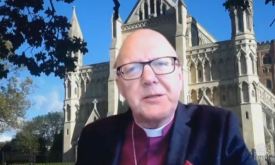 The Lord Bishop of St Albans [V] : My Lords, I support Amendment 6 in the name of the noble Lord, Lord Purvis of Tweed, and the revision he has made as he has engaged with the Government. I am grateful for his very clear exposition and will be concise in my support.
On 3rd December 2020 the House of Lords considered the Government’s Covert Human Intelligence Sources (Criminal Conduct) Bill 2020 at its Committee Stage. The Bishop of Durham had co-sponsored two amendments aimed at restricting or regulating the use of children as covert agents. The Bishop of Carlisle spoke in his place, in support of the amendments. As is usual practice they were withdrawn after debate and may be returned to at a later stage:
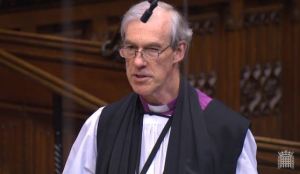 The Lord Bishop of Carlisle: My Lords, I speak in support of Amendment 43, in the names of my right reverend friend the Bishop of Durham, the noble Lord, Lord Young, and the noble Baronesses, Lady Chakrabarti and Lady Bull, and Amendment 60, in the names of the noble Baronesses, Lady Young and Lady Hamwee, and the noble Lord, Lord Kennedy of Southwark. As we have heard, both concern the treatment of children.
We should not for a moment underestimate some of the evils in our society that the Government and the forces of law and order are tasked with confronting. Some of those evils involve the abuse of children and vulnerable people, including, as we know, the scourge of county lines drug gangs, sexual predators and traffickers. It does not take much imagination to see how, as a result of this, there is a periodic temptation to use children as covert assets. We must clearly guard against that temptation; as we have already been reminded, our first duty must be to the care and well-being of children. This applies all the more to children who find themselves in vulnerable and harmful situations, such as those used and abused by criminal gangs.
On 18th November the House of Lords voted on two amendments to the Government’s UK Internal Market Bill. The Bishop of Leeds took part: Continue reading “Votes: UK Internal Market Bill”
On 18th November the House of Lords considered the Government’s Ship Recycling (Facilities and Requirements for Hazardous Materials on Ships) (Amendment) (EU Exit) Regulations 2020. The Bishop of Salisbury spoke in the debate:
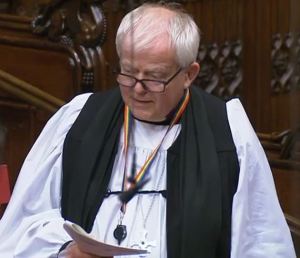 The Lord Bishop of Salisbury: My Lords, neither ship recycling nor Northern Ireland are my territory, though church is sometimes seen as an ark to gather people safely and hazardous materials are a concern for us all. It is important for Northern Ireland to thrive as best it can within the new political arrangements that are still unfolding. The purpose of this SI is clear and not controversial; it is to the benefit of one shipyard in Northern Ireland. The EU has developed a good scheme for overseeing this process and I am sure we will be glad to continue to use it. Continue reading “Bishop of Salisbury raises environmental implications of ship recycling regulations”
On 17th November 2020 votes took place on amendments to the Government’s Fire Safety Bill. The Bishop of St Albans took part: Continue reading “Votes: Fire Safety Bill”


You must be logged in to post a comment.