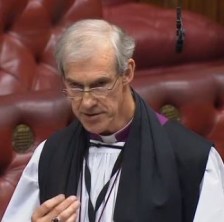
House of Commons passes Church of England (Miscellaneous Provisions) Measure

On 25th February 2020 the Delegated Legislation Committee of the House of Commons passed the Church of England (Miscellaneous Provisions) Measure, which then progressed to receive Royal Assent.

Seventh Delegated Legislation Committee: Church of England (Miscellaneous Provisions) Measure

The Second Church Estates Commissioner (Andrew Selous): I beg to move,

That the Committee has considered the Church of England (Miscellaneous Provisions) Measure (HC 299).

It is a pleasure to serve under your chairmanship, Mr Robertson. The Measure was laid before the House on 4 November 2019. To some colleagues, this might seem a slightly unusual format for a Delegated Legislation Committee. I should explain that the Measure has been through the Ecclesiastical Committee, which is composed of Members of both Houses, is cross-party and is chaired by Baroness Butler-Sloss. That Committee went through the Measure in considerable detail on 29 October, and the House of Lords did the same on 30 January—I have the reports of both sets of scrutiny with me today. I therefore hope that we can deal with the Measure reasonably expeditiously. Continue reading “House of Commons passes Church of England (Miscellaneous Provisions) Measure”
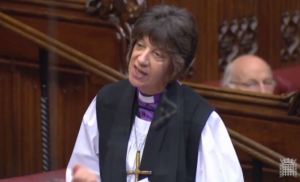
Bishop of Gloucester responds to Government plans to end early release for terrorist offenders

On 24th February 2020 the House of Lords considered the Government’s Terrorist Offenders (Restriction of Early Release) Bill at its Second Reading (and remaining stages). The Bishop of Gloucester, Rt Revd Rachel Treweek, spoke in the debate:

The Lord Bishop of Gloucester: My Lords, I am grateful to those contributing to this subject today who have far greater knowledge than I do, and I will aim to keep my comments brief.
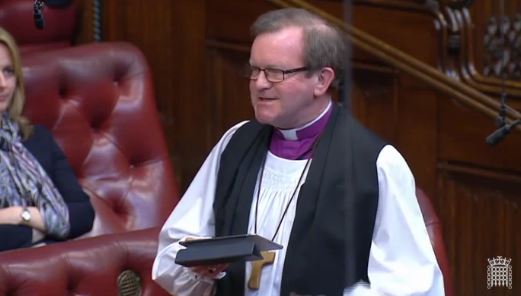
Certainly, if a society that relies on government to deliver justice has lost confidence in the current system, it is right that we try to address those fears, and we must look at the bigger picture. I share concerns already expressed about the manner in which this legislation has been brought before the House, and particularly the very short time that we have to consider it.

If the justice system is to serve the common good and the flourishing of people and place, there needs to be an emphasis on a radical mutual responsibility, in which we are all truly responsible for one another. Offenders must be expected to take responsibility for their actions. This should be about not only taking the consequences and punishments imposed by a criminal justice system but having the opportunity to take responsibility for past actions, and the possibility of taking responsibility to restore their relationship with society.

Continue reading “Bishop of Gloucester responds to Government plans to end early release for terrorist offenders”

Divorce, Dissolution and Separation Bill ‘discourages possibility of reconciliation’ – Bishop of Portsmouth

On 5th February 2020 the House of Lords debated the Government’s  Divorce, Dissolution and Separation Bill at its Second Reading. The Bishop of Portsmouth, Rt Revd Christopher Foster, expressed concern about the Bill, saying that divorce needed to be kinder to all involved, rather than easier. In his view “the Bill before the House discourages reflection and hence the possibility of reconciliation”.

Continue reading “Divorce, Dissolution and Separation Bill ‘discourages possibility of reconciliation’ – Bishop of Portsmouth”

Divorce, Dissolution and Separation Bill ‘creates more difficulties than it resolves’ – Bishop of Carlisle

On 5th February 2020 the House of Lords debated the Government’s  Divorce, Dissolution and Separation Bill at its Second Reading. The Bishop of Carlisle, Rt Revd James Newcome, spoke in the debate and his remarks are below. He highlighted several problems with the Bill, which he said would create more difficulties than it was intended to resolve.

The Lord Bishop of Carlisle: My Lords, I am greatly looking forward to the maiden speech of the noble Baroness, Lady Hunt of Bethnal Green, and I welcome her to this House, which I am sure will benefit greatly from her expertise, campaigning zeal and commitment to debates on justice and equality.
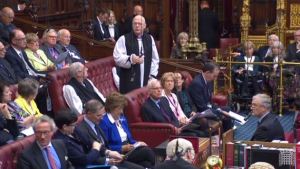
Let me begin by saying that I appreciate the motivation behind the Government’s Divorce, Dissolution and Separation Bill. As we have already heard, they want to make divorce less complicated, less acrimonious and less harmful. Who could possibly argue with that? I like the revised terminology that the Bill suggests, and I agree that, at first sight, this looks like a sensible response to shortcomings in a process that is currently unsatisfactory and often seems to lack transparency or fairness.

However, this deceptively simple piece of legislation actually creates more difficulties than it resolves. One has to do with the nature of marriage itself and our commitment to it as a society—I shall confine my comments to marriage rather than civil partnership.

Continue reading “Divorce, Dissolution and Separation Bill ‘creates more difficulties than it resolves’ – Bishop of Carlisle”

Lords approve Church of England (Miscellaneous Provisions) Measure

On 30th January 2020 the House of Lords considered the Church of England (Miscellaneous Provisions) Measure, a piece of church legislation that was introduced by the Bishop of Gloucester, Rt Revd Rachel Treweek. A short debate also took place on a motion to regret the Measure, tabled by Lord Trefgarne, which was subsequently withdrawn. The Measure was passed.

Moved by The Lord Bishop of Gloucester

That this House do direct that, in accordance with the Church of England Assembly (Powers) Act 1919, the Church of England (Miscellaneous Provisions) Measure be presented to Her Majesty for the Royal Assent.

The Lord Bishop of Gloucester: My Lords, although the provisions contained in this Measure are miscellaneous, some of them are nevertheless important. Rather than go through the Measure section by section, it might be helpful if I just mention some of the more significant provisions at this point.

Section 2 implements a recommendation from Dame Moira Gibb’s report following her review of the Church of England’s response to the abuse committed by Peter Ball. One of the report’s recommendations was for the introduction of a national register of clergy with permission to officiate. That recommendation has been further developed and Section 2 will now require there to be a national ministry register. Every clerk in holy orders who has authority to exercise ministry in the Church of England will have to be included in the register. There is also provision for the creation of a register of licensed lay people, and bishops will be required to provide details to the Archbishops’ Council on a regular basis so that the national registers are kept up to date. A form of the register that omits personal contact information will be published by the council and be accessible to the public free of charge.

Continue reading “Lords approve Church of England (Miscellaneous Provisions) Measure”

Votes: EU (Withdrawal Agreement) Bill – Refugee children family reunion

On 21st January 2020 the House of Lords voted on amendments to the Government’s EU (Withdrawal Agreement) Bill. Three bishops took part in a vote on an amendment from Lord Dubs, to put in place  measures for refugee children family reunion. The Bishop of Durham also acted as a sponsor of the amendment. Continue reading “Votes: EU (Withdrawal Agreement) Bill – Refugee children family reunion”

EU (Withdrawal Agreement) Bill: Bishop of Durham urges support for Dubs amendment on refugee children family reunion

On 21st January 2020 the House of Lords debated and voted on an amendment to the Government’s EU (Withdrawal Agreement) Bill from Lord Dubs, which would restore  measures for refugee children family reunion. The Bishop supported the amendment as a co-sponsor and in the subsequent vote it was passed by 300 votes to 220. It returns to the Commons to be voted on by MPs.

The Lord Bishop of Durham: My Lords, I speak once more from these Benches, recognising that the argument has been made again and again. I am honoured to follow the noble Lord, Lord Kerr, and to concur with all that he said. As my right reverend friend the Bishop of Worcester reminded the House last week—he kindly spoke for me because I could not be present in Committee—this debate resonates with the nativity story, the story of a child fleeing persecution. The voices of these children are too often drowned out by conflict and violence, by traffickers and by political leaders. Let this House speak on their behalf by voting for the amendment. Continue reading “EU (Withdrawal Agreement) Bill: Bishop of Durham urges support for Dubs amendment on refugee children family reunion”

Votes: EU (Withdrawal Agreement) Bill – Proof of settled status for EU citizens

On 20th January 2020 the House of Lords voted on amendments to the Government’s EU (Withdrawal Agreement) Bill. The Bishop of Birmingham voted on an amendment from Lord Oates to allow EU citizens covered by the settled status scheme to have the right to a physical form of proof of status. Continue reading “Votes: EU (Withdrawal Agreement) Bill – Proof of settled status for EU citizens”

Bishop of St Albans introduces Bill on gambling-related suicides

On 16th January 2020 the Bishop of St Albans, Rt Revd Alan Smith, introduced a Private Member’s Bill to the House of Lords. The Bill received its formal First Reading and awaits time for debate.

Continue reading “Bishop of St Albans introduces Bill on gambling-related suicides”

European Union (Withdrawal Agreement) Bill: Bishops support Dubs amendment on refugee children family reunion

On 15th January 2020 the House of Lords considered amendments to the Government’s European Union (Withdrawal Agreement) Bill at its second day in Committee. The Bishop of Worcester, Rt Revd John Inge, spoke in support of an amendment in the name of Lord Dubs and the Bishop of Durham, to ensure the continuation of the refugee children and family reunification provisions of the European Union (Withdrawal) Act 2018. The amendment was withdrawn by Lord Dubs at the end of the debate, with a commitment to return to it at a later stage.

Clause 37: Arrangements with EU about unaccompanied children seeking asylum. Debate on whether Clause 37 should stand part of the Bill. 

The Lord Bishop of Worcester: My Lords, I am pleased to support this amendment, to which my friend the right reverend Prelate the Bishop of Durham has put his name. He is sorry not to be able to be in the Chamber today. A few weeks ago, we celebrated the story of Christmas. In the nativity, the happy events in a Bethlehem stable were followed by the more dramatic flight of the holy family to escape the violent persecution of King Herod. As we discuss this amendment, that story of the child Jesus and his parents fleeing from violence to a foreign land resonates loudly.

Children are among the most vulnerable victims of conflict, persecution and violence around the world. We all know that they do not choose to become refugees separated from their families. We as a nation can choose to reunite some families torn apart by conflict by offering children shelter, hope and a future. That is what I believe the majority of people in this country wish, and I am sure that is what the Government wish. This amendment seeks to ensure it by guaranteeing a safe, legal, effective and managed route for child refugees to join their families in this country. Continue reading “European Union (Withdrawal Agreement) Bill: Bishops support Dubs amendment on refugee children family reunion”