Bishop of Winchester asks about role of freedom of religion in migration

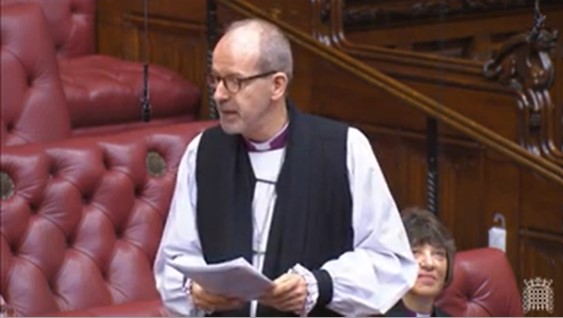
The Bishop of Winchester asked a question about the role of denial of freedom of religion as a driver of migration on 25th November 2025, in response to a government statement on changes to the migration settlement pathway :

The Lord Bishop of Winchester: My Lords, I will keep my question brief because I want to give time to the noble Baroness, Lady Bennett. One of the most encouraging developments in foreign policy in this country in recent years has been the growing recognition of the evil of the denial of freedom of religion or belief across the world, leading to widespread persecution of faith communities, Christians not least among them, as we have tragically seen in these last days in Nigeria. The UK has become a recognised global leader in advocacy for this oft-overlooked right.

Does the Minister accept that denial of freedom of religion or belief is a significant driver of migration? It is certainly so in the case of a significant number who arrive illegally, who, according to the Statement,

“could see settlement take up to 30 years”.

Continue reading “Bishop of Winchester asks about role of freedom of religion in migration”
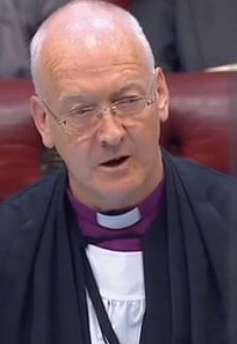
Bishop of Leeds asks about response to Russian espionage

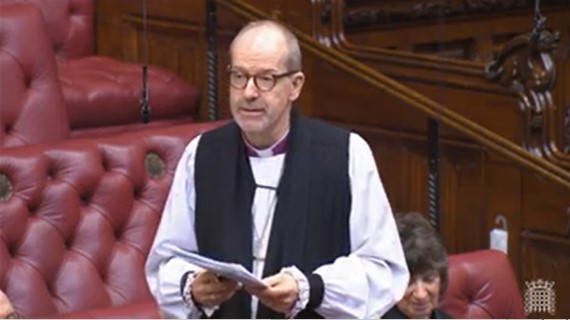
The Bishop of Leeds asked a question on UK response to potential acts of war by Russia, following a government statement on the Russian spy ship Yantar on 25th November 2025:

The Lord Bishop of Leeds: My Lords, it is clear that that message is conveyed, but it seems to do nothing to deter the Russians from continuing with their activity. Can the Minister say whether our military leaders have come to any conclusions about what an appropriate response will be to what, in the end, could be an act of war?

Continue reading “Bishop of Leeds asks about response to Russian espionage”

Bishop of Leeds asks about resilience of democracy in Bosnia and Herzegovina

The Bishop of Leeds asked a question on UK government efforts to hold Serbia to account in the public arena during a discussion on democratic resilience in Bosnia and Herzegovina on 25th November 2025:

The Lord Bishop of Leeds: My Lords, it is perhaps salutary to remember that the GDR lasted for only 40 years, that the 30 years since the Dayton accords is not a very long time, and that what can be built up over a period of time can be demolished very quickly. Can the Minister say what the UK Government are doing to hold particularly Serbia to account in the public arena, exposing what is going on and what its influences are—from Russia in particular but not from Russia alone?

Continue reading “Bishop of Leeds asks about resilience of democracy in Bosnia and Herzegovina”

Bishop of Leeds asks about ongoing conflict in Ukraine

The Bishop of Leeds asked a question on countering ongoing and future effects of the forcible removal of Ukrainian children from their homes and country by Russia on 24th November 2025:

The Lord Bishop of Leeds: My Lords, will the Minister respond to two questions? First, on the real impact of sanctions, they do not seem to have diminished in any way Russia’s ability or intention to pursue this war of attrition and the cruelties that have already been mentioned, particularly in relation to children. Secondly, as someone who was a Soviet military specialist in a previous career, I can say that their aim is not to punish children but to wipe out a generation’s memory and retell a story. The effects of that, even if children are brought back at the end of this war, are going to go on for a generation. Have the Government given any consideration to how the rules-based international order can be effectively used to counter this and prepare for that longer term future?

Continue reading “Bishop of Leeds asks about ongoing conflict in Ukraine”

Bishop of Leeds asks about treatment for brain tumours

The Bishop of Leeds asked a question on treatment for brain tumours on 24th November 2025:

The Lord Bishop of Leeds: My Lords, would the Minister agree that it is important to recognise and praise the treatment that is already available while challenging to do more? I was diagnosed with a benign tumour and the treatment was exemplary. On the real upside of this, I have a lot of documentary evidence that I have a brain.

Continue reading “Bishop of Leeds asks about treatment for brain tumours”

Church Commissioners Written Questions: Clergy (Freedom of Expression), Clergy (Gender), Abortion Decriminalisation, Church Attendance, Slavery (Compensation)

On 24th November 2025, the Second Church Estates Commissioner, Marsha De Cordova MP, gave the following written answers to questions from MPs:

Clergy: Freedom of Expression

Andrew Rosindell MP (Con, Romford): To ask the hon. Member for Battersea, representing the Church Commissioners, what guidance the Church of England provides to clergy on the principle of freedom of speech.

Continue reading “Church Commissioners Written Questions: Clergy (Freedom of Expression), Clergy (Gender), Abortion Decriminalisation, Church Attendance, Slavery (Compensation)”

Bishop of Hereford asks about impact of new immigration regulations on refugees

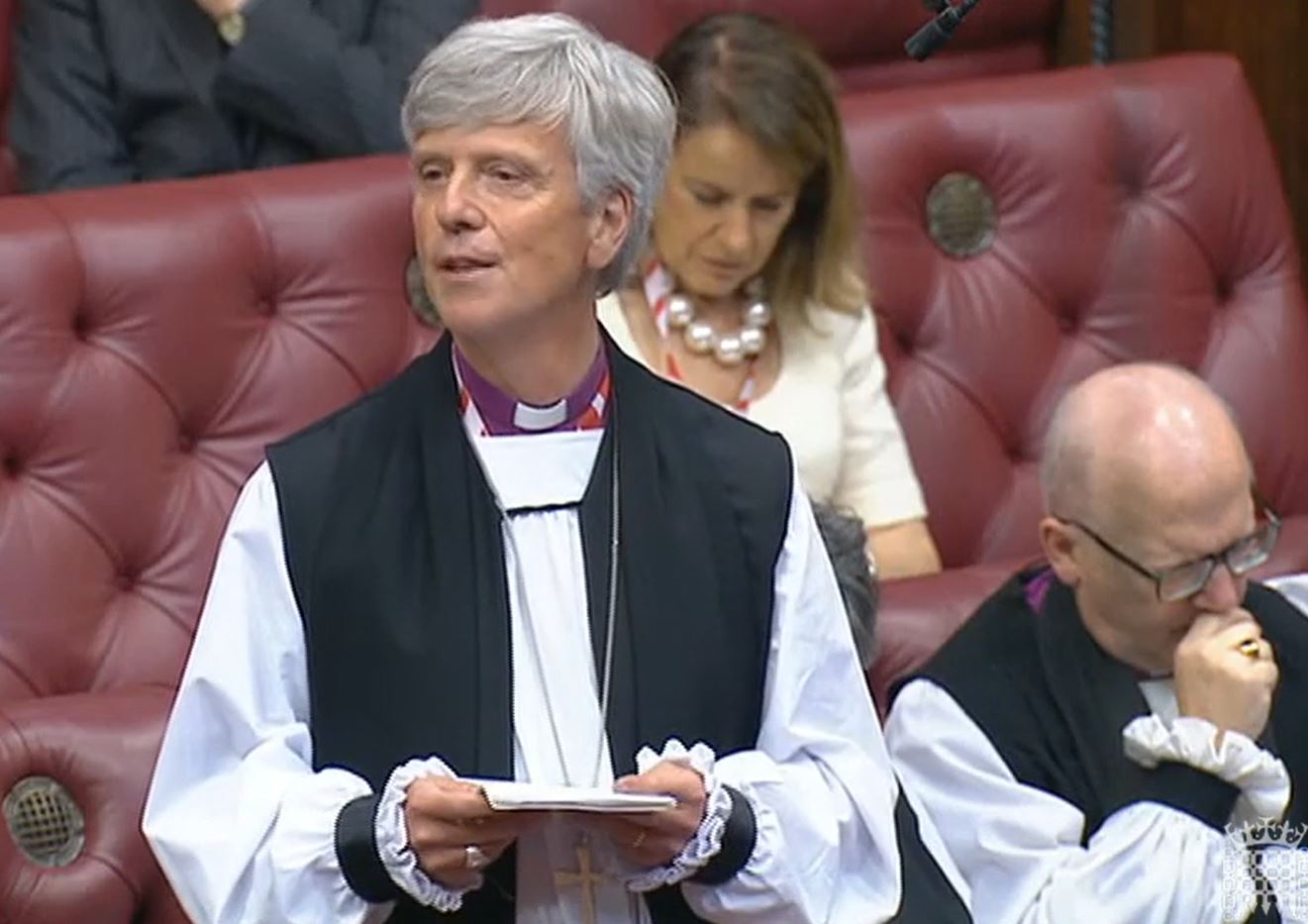
The Bishop of Hereford asked a question on the viability of safe and legal routes for asylum seekers to come to the UK on 20th November 2025, during a discussion on the government’s asylum policy:

The Lord Bishop of Hereford: My Lords, I declare an interest as a participant in the Homes for Ukraine scheme. Three and a half years on, we have a delightful Ukrainian family still living in our house. In the section of the report on safe and legal routes, the options in the policy document include a route to safety for students and skilled workers. Such schemes may be a useful adjunct to sufficient open safe and legal routes, but does the Minister share my concern that, in a world where safe and legal routes are limited, we may send a message that young, healthy, skilled people are more deserving of sanctuary than others?

Continue reading “Bishop of Hereford asks about impact of new immigration regulations on refugees”

Bishop of Hereford asks about sustainable hydrogen fuel sources

The Bishop of Hereford asked a question on sustainable sources of hydrogen fuel on 19th November 2025, during a discussion on the hydrogen and fuel cell energy industry in the UK:

The Lord Bishop of Hereford: My Lords, we accept that the use of hydrogen is to help us to reduce our carbon footprint but recognise that there are a variety of different ways by which that hydrogen can be generated, some of which are environmentally damaging. What steps are His Majesty’s Government taking to ensure that the hydrogen used across UK industry is sourced sustainably and in ways that will reduce CO2 emissions, not increase them?

Continue reading “Bishop of Hereford asks about sustainable hydrogen fuel sources”

Church Commissioners Written Questions: Slavery (Compensation)

On 19th November 2025, the Second Church Estates Commissioner, Marsha De Cordova MP, gave the following written answer to a question from an MP:

Slavery: Compensation

Andrew Rosindell MP (Con, Romford): To ask the hon. Member for Battersea, representing the Church Commissioners, whether she has made an assessment of the compatibility of (a) ‘Project Spire’ and (b) the ‘Fund for Healing, Repair, and Justice’ with the trustee obligations of the Board of Governors of the Church Commissioners.

Continue reading “Church Commissioners Written Questions: Slavery (Compensation)”

Bishop of Guildford asks about local community politics

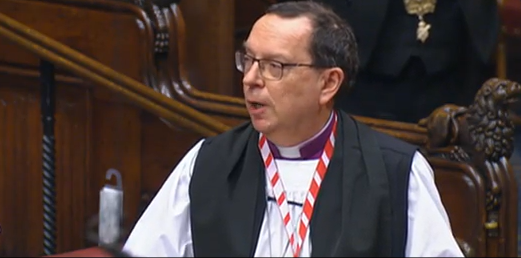
The Bishop of Guildford asked a question on local politics during a discussion on police reform on 18th November 2025:

The Lord Bishop of Guildford: My Lords, I welcome this Statement and agree with its direction of travel. Fellow bishops serving in more urban contexts where elected mayors now hold policing functions speak positively about the clarity and democratic accountability that the new approach has engendered. Other communities, such as my own, have had to work extremely hard to interest the electorate in voting for a police and crime commissioner. I think we have done slightly better than average in that regard, but even then the turnout is comparatively low. Will the new policing and crime boards lead to tensions in communities where so-called upper-tier leaders, who are often not used to working together, take very different perspectives on policing priorities? What might be done at this stage to lessen the potential of stalemate in such situations?

Continue reading “Bishop of Guildford asks about local community politics”