
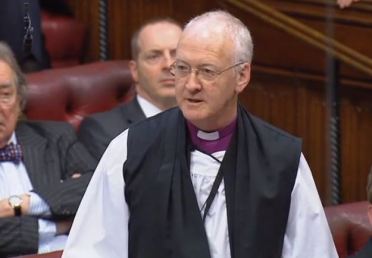
 On 14th May Lord Cormack asked Her Majesty’s Government “what plans they have to assist England’s historic cathedrals.” The Bishop of Leeds, the Rt Revd Nick Baines, asked a follow-up question:
The Bishop of Leeds: My Lords, does the Minister agree that underlying this Question is the need for some long-term attention to be given to cathedrals, rather than having one-off initiatives such as the First World War repairs fund? I extend to him an invitation to visit my diocese—I am the only bishop with three cathedrals, so I can take him on a tour. Continue reading “Bishop of Leeds asks Government about support for cathedrals”
 On 14th May the Bishop of St Albans, the Rt Revd Alan Smith, received a written answer to a question about emergency loans to British victims of forced marriage:
 On 2nd May 2018 the Bishop of Durham, Rt Revd Paul Butler, received a written answer to a question on assistance for refugees:
 On 30th April Lord Pearson of Rannoch asked Her Majesty’s Government “what assessment they have made of figures from the Office for National Statistics showing that the Muslim population of England grew 10 times faster than the general population between 2001 and 2016; what is their estimate of future growth; and what is their assessment of the impact of that trend on the relationship between Sharia and domestic law.” The Bishop of Leeds, the Rt Revd Nick Baines, asked a follow-up question:
 On 30th April Baroness Lister of Buttersett asked Her Majesty’s Government “what assessment they have made of the impact of the benefit cap on child and family wellbeing since that cap was lowered in 2016-17.'” The Bishop of Portsmouth, the Rt Revd Christopher Foster, asked a follow-up question:
 The Lord Bishop of Norwich: My Lords, yesterday there was a meeting here in Westminster of parliamentarians and representatives of the Church of England and of the black majority churches about the ongoing problems of the Windrush generation, some of which have been made more acute by the controversy over removal targets.
  The right hon Member for Meriden, representing the Church Commissioners, was asked—

You must be logged in to post a comment.