
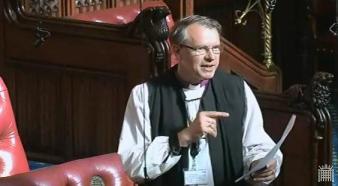
 On 27th February 2018,Lord Addington asked Her Majesty’s Government ‘what consideration they have given to removing the need for candidates for higher education with dyslexia and other specific learning disabilities to pay for new assessments for the disabled students’ allowance if they have an existing diagnosis acquired before the age of 16 and a history of support’. The Bishop of St Albans, the Rt Revd Dr Alan Smith, asked a follow up question about distinguishing learning disabilities from physical and mental disabilities:
The Lord Bishop of St Albans: My Lords, as I understand it, the Equality Act recognises learning disabilities and other forms of mental and physical disabilities in the same way. Yet until now, the Government’s position has been to separate learning disabilities out into a different category. I welcome this review but can the Minister assure us that it will lay out the basis for that different treatment?
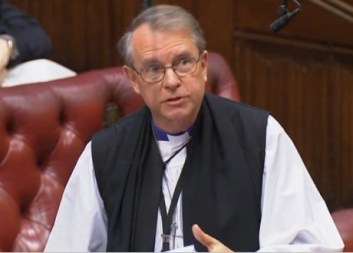 On 26nd February 2018, Baroness Benjamin asked Her Majesty’s Government ‘what plans they have for publicising a detailed evaluation of stage one of the National Child Obesity Strategy; and when a publication timetable for stage two will be produced’. The Bishop of Durham, the Rt Revd Paul Butler, asked a follow up question about free school meals.
 On the 22nd February 2018 the Bishop of St Albans, the Rt Revd Dr Alan smith asked an urgent (Private Notice) Question in the House of Lords about the humanitarian situation in Eastern Ghouta in Syria. The Bishop of Leeds, the Rt Revd Nick Baines, also asked a question during the follow-up. Both the Bishops’ contributions can be found below.
 In the House of Lords on the 22nd February 2018 the Bishop of Gloucester, the Rt Revd Rachel Treweek, asked a question she had tabled to Government about their long-term plans for the prison sector, specifically plans for the funding of women’s centres.
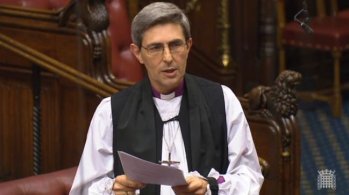 On the 22nd February 2018 Baroness Cox asked Her Majesty’s Government “what is their assessment of the situation in Sudan, with particular reference to violations of human rights and access to those in need of humanitarian aid”. The Bishop of Winchester, the Rt Revd Tim Dakin, asked a follow-up question about the arrest of Christian leaders and the demolition of churches and schools.
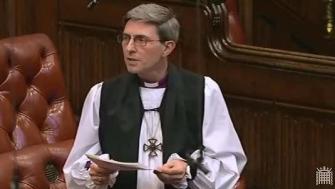 On the 21st February 2018 Lord Greaves asked Her Majesty’s Government what priority they give to the provision of and funding for local neighbourhood services. The Bishop of Winchester, the Rt Revd Tim Dakin, asked a follow-up question about the pressures on Local Authority services and social care.
 On 19th February 2018 the Bishop of Durham, the Rt Rev Paul Butler, received answers to three written questions on Child Tax Credits, following up questions asked in
  On 19th February 2018 the Archbishop of Canterbury, the Most Revd and Rt Hon Justin Welby, received an answer to a written question on the Democratic Republic of Congo. The question was originally tabled on 5th February 2018.
 On 8th February 2018 Lord Lee of Trafford asked Her Majesty’s Government “what assessment they have made of the size of the prison population and conditions within prisons.” The Bishop of St Albans, Rt Revd Alan Smith, asked a follow up question about women in prison:

You must be logged in to post a comment.