
 On 31st January 2017, Lord Beecham asked Her Majesty’s Government “what steps they plan to take, in addition to their support for the Private Member’s Homelessness Reduction Bill, to tackle the growing problems of homelessness and rough sleeping.” The Lord Bishop of Norwich, the Rt Revd Graham James, asked a follow up question about the eviction of tenants on universal credit. Continue reading “Bishop of Norwich questions Government on links between universal credit and homelessness”
Category: Questions
Oral & written questions in the Lords and Commons
Bishop of Ely highlights work of Church in promoting educational leadership
 On the 30th January 2017, Baroness Donaghy asked the government “in the light of figures showing that nearly one-third of newly qualified teachers leave the profession within five years of qualifying, what steps they are taking, including continuing professional development entitlement, to retain them.” The Bishop of Ely, the Rt Revd Stephen Conway, asked a follow-up question.
The Lord Bishop of Ely: My Lords, does the Minister agree that the working environment for teachers is so often determined by the quality and effectiveness of school leaders, and therefore it is essential to equip school leaders to ensure the flourishing of their staff as well as their pupils? Will he be pleased to note with me the launch this weekend of the Church’s Foundation for Educational Leadership to work in this field? Continue reading “Bishop of Ely highlights work of Church in promoting educational leadership”
Bishop of Chester asks question about future electricity supply
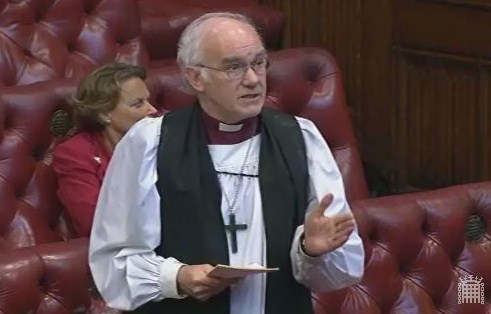 On 26th January 2017 the Bishop of Chester, Rt Revd Peter Forster, asked a question in the Lords about electricity interconnectors. His question and follow-up, and those of Peers, are below:
The Lord Bishop of Chester: To ask Her Majesty’s Government, at peak electricity demand, what level of supply is expected to be available through international interconnectors. Continue reading “Bishop of Chester asks question about future electricity supply”
Bishop of Durham questions Government on unaccompanied child migrants in Europe
 On the 25th January 2017 the Bishop of Durham, Rt Revd Paul Butler, asked a question to the Government on the floor of the House of Lords about unaccompanied child migrants in Europe. His question, the response and full series of follow-up questions from Peers is reproduced below.
Asked by The Lord Bishop of Durham: To ask Her Majesty’s Government, in the light of recent analysis by UNICEF of the growth in the number of unaccompanied child migrants to Italy, what measures they are taking under section 67 of the Immigration Act 2016 to relocate child refugees from Italy to the United Kingdom. Continue reading “Bishop of Durham questions Government on unaccompanied child migrants in Europe”
Archbishop of Canterbury responds to Supreme Court Article 50 judgement
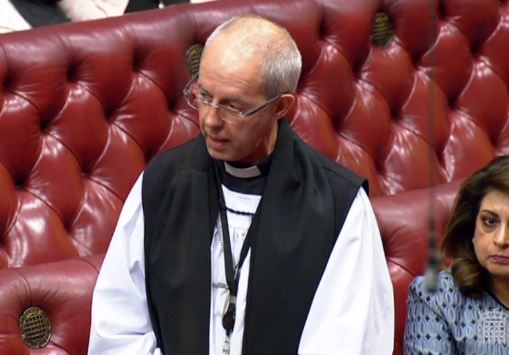 On 24th January 2017 the House of Lords heard the repeat of a Government statement to the House of Commons on ‘The Process for Triggering Article 50’, following the judgement of the Supreme Court that Parliament must be involved. The Archbishop of Canterbury, Most Revd Justin Welby, responded:
The Archbishop of Canterbury: Does the Minister agree that the Bill which will come to this House is essentially about process, not outcomes? The way we handle our processes is different from how we may argue about outcomes at the end of this whole two-year period. The use of language which may occasionally sound threatening is very unhelpful if, at the end of the two-year period we are to end up with a country which can go forward in a reconciled, prosperous and flourishing way. I hope the Minister agrees that those who, like the judges, have quite rightly come to an unbiased and impartial opinion, should be defended against criticism, as should the person who brought the case. We need to take our processes calmly and quietly, without issuing threats and with an eye to the unity of this country. Continue reading “Archbishop of Canterbury responds to Supreme Court Article 50 judgement”
Archbishop of York responds to question from UKIP Peer on Muslim tenets of Taqiyya and Al Hijra
 On 24th January 2017 UKIP Peer Lord Pearson of Rannoch asked the Government “whether, as part of their strategy against Islamist terrorism, they will encourage United Kingdom Muslim leaders to re-examine the Muslim tenets of Taqiyya and Al Hijra.” He mentioned the Archbishop of Canterbury in his follow up question. The Archbishop of York, Most Revd John Sentamu, asked a question in response:
The Archbishop of York: My Lords, first, would the Minister agree that the term Taqiyya came into being at a time of terrible persecution? It did not get invented because people did not want to be difficult or awkward. Of my friends who escaped Amin’s torture, some left dressed as women. You would not say these Christians wanted simply to be deceptive; things have to be read in context. Secondly, the lecture by the most reverend Primate the Archbishop of Canterbury was a one-hour lecture in France; he is more than happy to repeat it if your Lordships’ House wants.
Bishop of Durham calls for more joined-up approach to tackling child poverty
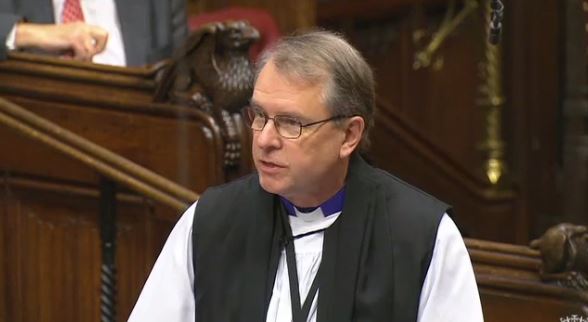 On 24th January 2017 Baroness Lister of Burtersett asked the Government “why they have abolished the Child Poverty Unit which was sponsored by the Department for Work and Pensions, the Department for Education and HM Treasury.” The Bishop of Durham, Rt Revd Paul Butler, asked a follow up question:
The Lord Bishop of Durham: My Lords, I know the Minister will agree that no child chooses to live in poverty, so when a child is hungry or lives in poor housing, will the Minister and the Government recognise that these are our children, as a society, and that that means we must have good joined-up structures which tackle these issues? Does he also recognise that the abolition of the CPU does not hint at good joined-up structures? Continue reading “Bishop of Durham calls for more joined-up approach to tackling child poverty”
Bishop of St Albans asks government about number of forced marriages and support for those sent abroad
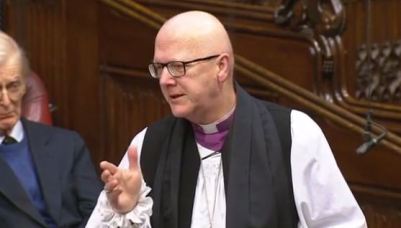 On the 23rd and 24th January 2017, the Bishop of St Albans, Rt Revd Alan Smith, received answers to written questions about British children being sent abroad to marry, and about the Forced Marriage Unit’s policy of not paying for the repatriation of British nationals forced to marry abroad.
Lord Bishop of St Albans: To ask Her Majesty’s Government what estimate they have made of the total number of (1) British nationals under the age of 16, and (2) British nationals aged 16–17, sent abroad in 2016 in order to enter into a forced marriage.
Lord Bishop of St Albans: To ask Her Majesty’s Government how many cases the Forced Marriage Unit dealt with in 2015 and 2016 respectively, in which (1) British nationals under the age of 16, and (2) British nationals aged 16–17, were sent abroad in order to enter into a forced marriage. Continue reading “Bishop of St Albans asks government about number of forced marriages and support for those sent abroad”
Bishop of Durham asks about UK representative in Burundi
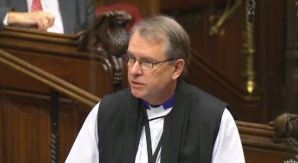 On the 24th January 2017, the Bishop of Durham, the Rt Revd Paul Butler, received answers to written questions about UK representation in Burundi.
Bishop of Durham: To ask Her Majesty’s Government what plans they have for a permanent representative in Burundi.
Baroness Anelay of St Johns: The Foreign and Commonwealth Office operates a permanent British Embassy Office in the Burundian capital Bujumbura. The non-resident British Ambassador to Burundi is based in Kigali, Rwanda.
(via Parliament.uk)
Bishop of Durham raises cases of imprisoned Sudanese pastors
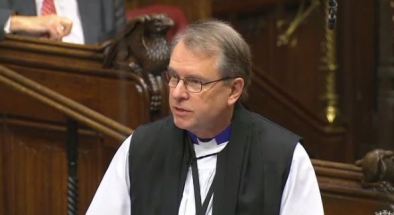 On 23rd January 2017, Baroness Cox asked the Government “what assessment they have made of recent developments in Sudan.” The Bishop of Durham, the Rt Revd Paul Butler, asked a follow up question:
Bishop of Durham: My Lords, while recognising that improvements between the Anglican Church of Sudan and the Sudanese Government have occurred, it remains the case that, after over a year, there are two Sudanese pastors, one Czech aid worker and a Sudanese civil rights activist still in al-Huda prison in Omdurman under the death penalty. Human rights activists say that there is no case at all. What contact have Ministers with the Government of Sudan regarding these prisoners and the treatment of Christians more generally? Continue reading “Bishop of Durham raises cases of imprisoned Sudanese pastors”
 The Church of England in Parliament
You must be logged in to post a comment.