
 On 10th October 2016, Baroness Hussein-Ece asked the government “how many lone children in Calais with family links in the United Kingdom have been allowed into the United Kingdom in the past 12 months.” The Bishop of Norwich, the Rt. Revd. Graham Jones, asked a supplementary question.
Continue reading “Bishop of Norwich calls on Government to prioritise vulnerable children in Calais”
Category: Questions
Oral & written questions in the Lords and Commons
Archbishop of Canterbury praises work of voluntary sector in helping those in debt
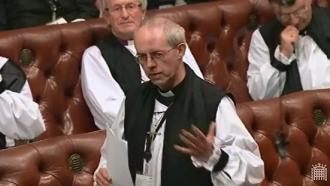 On 10th October 2016, Lord Sharkey asked the Government “what assessment they have made of the harm to consumers caused by unsolicited real-time promotion of high-cost credit and of debt management solutions.” The Archbishop of Canterbury, the Most Rev. and Rt. Hon. Justin Welby, asked a follow up question.
The Archbishop of Canterbury: My Lords, I declare an interest as patron of Christians Against Poverty, a voluntary organisation based in Bradford dealing with debt management. Does the Minister agree that debt management is an area where there is very significant participation by the not-for-profit voluntary sector? Will he undertake to draw the attention of the FCA and other authorities to the participation of this sector so that it may be listened to and its role receive the recognition that will help people in these problems? Continue reading “Archbishop of Canterbury praises work of voluntary sector in helping those in debt”
Bishop of Durham asks Government about aid to Burundi and Rwanda
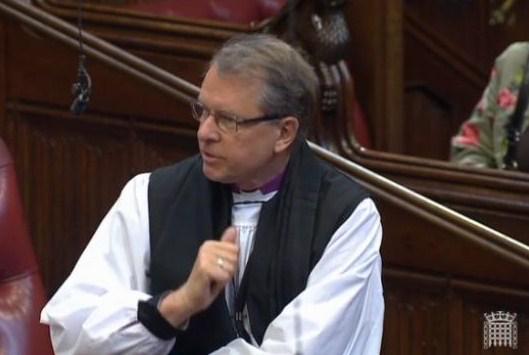 On 10th October 2016 the Bishop of Durham, Rt Revd Paul Butler, received written answers to four questions on aid to Rwanda and Burundi:
The Lord Bishop of Durham: To ask Her Majesty’s Government what contingency plans are in place to provide humanitarian aid in the event of a poor harvest in Burundi. [HL1693] Continue reading “Bishop of Durham asks Government about aid to Burundi and Rwanda”
Bishop of Durham asks about inequality in Rwanda
On 16th September 2016 the Bishop of Durham, Rt Revd Paul Butler, received a written answer to a question on aid to tackle inequality in Rwanda:The Lord Bishop of Durham: To ask Her Majesty’s Government what assistance they are providing to the government of Rwanda to tackle levels of inequality there.
Continue reading “Bishop of Durham asks about inequality in Rwanda”
Bishop of Durham asks about humanitarian aid to Burundi
On 16th September 2016 the Bishop of Durham, Rt Revd Paul Butler, received a written answer to a question on aid to Burundi: The Lord Bishop of Durham: To ask Her Majesty’s Government what contingency plans are in place to provide humanitarian aid in the event of a poor harvest in Burundi. Continue reading “Bishop of Durham asks about humanitarian aid to Burundi”
Bishop of St Albans calls for more home building, less land banking
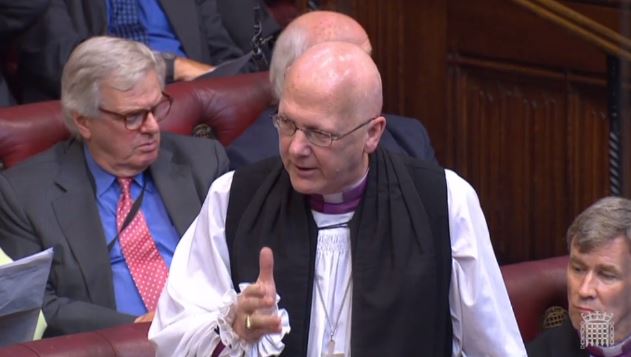 On 15th September 2016 Lord Kennedy of Southwark asked Her Majesty’s Government “what action they are taking to reverse the decline in home ownership.” The Bishop of St Albans, Rt Revd Alan Smith, asked a follow-up question:
The Lord Bishop of St Albans: My Lords, while the price of land continues to increase so rapidly, landowners have much less incentive for immediate development, particularly if they are negotiating with local authorities over their desire for more affordable housing requirements. Will Her Majesty’s Government take further steps to tackle land-banking, so that we can get more houses up more quickly? Continue reading “Bishop of St Albans calls for more home building, less land banking”
Bishop of Rochester asks about extremism vetting process for prison chaplains
 On 15th September 2016 the Bishop of Rochester, Rt Revd James Langstaff, received a written answer to a question on vetting of prison chaplains:
The Lord Bishop of Rochester: To ask Her Majesty’s Government, in the light of the publication of the review of Islamist extremism in prisons and the probation and youth justice services, in what ways they plan to change the vetting of prison chaplains and build on existing good practice, including vetting to counter-terrorism level.
Continue reading “Bishop of Rochester asks about extremism vetting process for prison chaplains”
Bishop of St Albans asks if Brexit will lead to cheap and low quality food imports
 On Wednesday 14th September 2016, Lord Taverne asked the Government “whether, in their negotiations to leave the European Union, they will seek to preserve the United Kingdom’s membership of the single market.” The Lord Bishop of St Albans, the Rt Revd Alan Smith, asked a supplementary question.
Bishop of St Albans: My Lords, many parts of our country are deeply concerned about the negotiations, not least the farming community, as evidenced by the Back British Farming demonstration going on outside. We produce food of the highest quality, by environmental and welfare concerns, of almost anywhere in the world. For the sake of our health, our livestock and the environment, can the noble Lord assure the House that Her Majesty’s Government will be very careful to ensure we will not be flooded with cheap imports of food produced to much lower standards than that which our excellent farming industry produces? Continue reading “Bishop of St Albans asks if Brexit will lead to cheap and low quality food imports”
Bishop of St Albans asks about growing pension deficits of FTSE100 companies
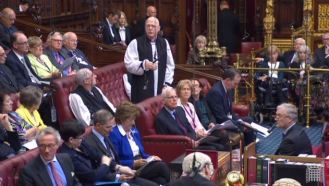 On 13th September 2016, Lord Haskell asked the Government whether the Pension Protection Fund will be able to meet its obligations to pensioners. The Lord Bishop of St Albans, the Rt Revd Alan Smith, asked a follow up question.
The Lord Bishop of St Albans: Perhaps I may push the Minister a little more. I totally accept that the value of pension funds goes up and down according to a number of factors, but recent statistics show that 56 of the FTSE 100 companies had a combined pension deficit of £42.3 billion, which was up from £25 billion in the previous year—so growing fairly steadily. Just last year those FTSE companies were able to pay out dividends of £53 billion—a sign of their success. Does the Minister think that those companies have the balance right between shareholders and employees? If not, will the Government consider doing something about it to ensure that their responsibilities are taken more seriously? Continue reading “Bishop of St Albans asks about growing pension deficits of FTSE100 companies”
Bishop of St Albans calls for better coordination to improve Troubled Families programme
 On 12th September 2016 Baroness Massey of Darwen asked the Government “how they will respond to the unpublished report on the effectiveness of the Troubled Families programme.” The Lord Bishop of St Albans, the Rt Revd Alan Smith, asked a follow-up question.
Bishop of St Albans: My Lords, one of the successes of this programme, which I have seen in a number of places, has been to try to get proper co-ordination. With so many different silos addressing this and so many resources going to a limited number of families, one success has been the way that progress has been made by bringing real focus and integration. Can the Minister assure us that that lesson has been learned and that we will continue to see how we can get movement on this relatively small but very problematic and difficult group, and find the way forward? Continue reading “Bishop of St Albans calls for better coordination to improve Troubled Families programme”
 The Church of England in Parliament
You must be logged in to post a comment.