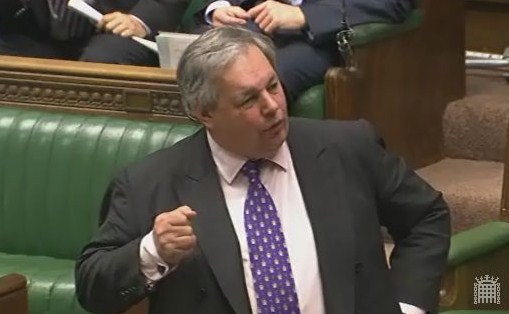
Bishop of Coventry receives answers to questions on Saudi Arabia

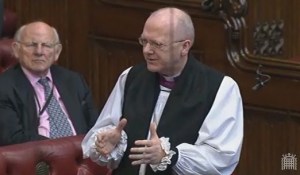
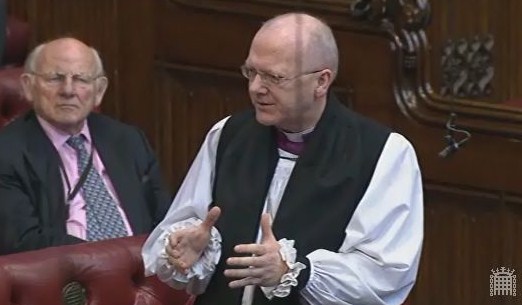
On 6th November 2014, the Bishop of Coventry, the Rt Revd Christopher Cocksworth, recieved answers to three written question Saudi Arabia from the Minister of State for the Foreign and Commonwealth Office, Baroness Anelay of St Johns.

13.10 Bishop of CoventryThe Lord Bishop of Coventry: To ask Her Majesty’s Government what is their assessment of freedom of religion or belief in Saudi Arabia and the extent to which discrimination against and restrictions experienced by Shiite Muslims contribute to sectarian unrest and dissent in that country.[HL2365]

The Minister of State, Foreign and Commonwealth Office (Baroness Anelay of St Johns): The British Government strongly supports the right to freedom of religion or belief, which is severely restricted in Saudi Arabia. We make our views well known through the UN Universal Periodic Review Process, in the Foreign and Commonwealth Office Annual Human Rights and Democracy Report, and to the Saudi Arabian authorities. We have made clear the importance of religious tolerance, including for different branches of Islam. There are some long-standing tensions between some Shia communities in the Eastern Province and the Saudi authorities. We continue to monitor developments. We welcome all efforts to increase religious tolerance in Saudi Arabia, including the recent calls by King Abdullah and Saudi religious leaders for greater religious tolerance in the Kingdom. Continue reading “Bishop of Coventry receives answers to questions on Saudi Arabia”

Bishop of St Albans raises concerns about Work Capability Assessment

On 5th November 2014, Lord McAvoy asked Her Majesty’s Government how many people were awaiting a Work Capability Assessment on the latest date for which figures are available. The Bishop of St Albans, the Rt Revd Alan Smith, asked a supplementary question:

Bishop of St AlbansThe Lord Bishop of St Albans: My Lords, great concern has been expressed by some people about how work capability assessments are being carried out and whether those undertaking them have the right skills and expertise. Indeed, in one anecdotal case, the health professional who undertook a complex mental health assessment was a physiotherapist. If that is the case, surely it cannot be right. What are Her Majesty’s Government doing to ensure that those undertaking the assessments have the right skills and experience to be able to do them properly?

Lord Freud: The important thing about doing these assessments is that someone assesses correctly in terms of capability of performing functions and capability of working; that is, what people are able to do. As I said earlier, we have more specialist professional support going into the system to make sure that those assessments are done accurately.

(via Parliament.uk)

Bishop of Norwich calls for extension of PSVI initiative to Central African Republic

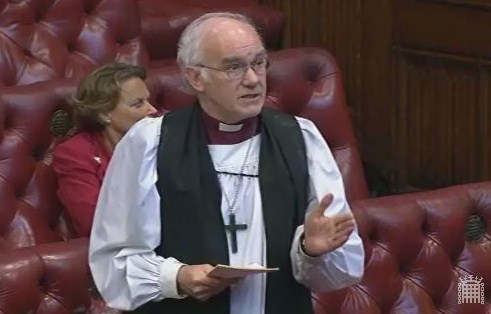
On 4th November 2014, Lord McConnell of Glenscorrodale asked Her Majesty’s Government what support they will provide to the United Nations mission in the Central African Republic. The Bishop of Norwich, the Rt Revd Graham James, asked a supplementary question:

14.06.12 Bishop of Norwich

The Lord Bishop of Norwich: My Lords, given the widespread violation of both women and children in this tragic conflict, will the Minister indicate whether there are ways in which the Government could extend the success of the Preventing Sexual Violence in Conflict Initiative to the Central African Republic?

Baroness Anelay of St Johns: The right reverend Prelate makes a very important point. The work done by my noble friends in the Foreign Office and DfID this summer is bearing good results but we need to be able to take those further forward. I listened to what he said and I will certainly take his views back to the FCO.

(via Parliament.uk)

Bishop of Norwich calls for focus on family well-being in handling of Chilcot Inquiry

On 3rd November 2014, Lord Dykes asked Her Majesty’s Government what steps they are taking to expedite the publication of the report by the Chilcot Inquiry. The Bishop of Norwich, the Rt Revd Graham James, asked a supplementary question:

14.06.12 Bishop of NorwichThe Lord Bishop of Norwich: My Lords, does the Minister accept that repeated press reports of rows between the Cabinet Office and the inquiry over the declassification of documents are deeply hurtful to the families most affected by the Iraq conflict? Does he agree that until the inquiry is completed, many bereaved and grieving families will not be able to move on?

Lord Wallace of Saltaire: My Lords, I appreciate that many have been affected by the issues studied by this inquiry. I am not aware of any rows between the Cabinet Office and the inquiry. I am aware of a long series of complex discussions within the British Government, between the British Government and our allies and with the inquiry about the exact nature of what should be published. I am conscious that what will be published includes notes from more than 200 Cabinet meetings, for example, including some extracts from Cabinet minutes.

(via Parliament.uk)

Bishop of Coventry receives written answer on reform and reconciliation in Iraq

On 3rd November 2014, the Bishop of Coventry, the Rt Revd Christopher Cocksworth, received an answer to a written question on the subject of reform and reconciliation in Iraq.

13.10 Bishop of CoventryThe Lord Bishop of Coventry: To ask Her Majesty’s Government what practical assistance and support they are providing to the government of Iraq in taking forward a credible programme of political reform and reconciliation in that country.[HL2201]

The Minister of State, Foreign and Commonwealth Office (Baroness Anelay of St Johns): Political reconciliation and reform are crucial if there is to be a long-term solution to the current instability in Iraq. We therefore welcome the new Government of Iraq’s commitment to inclusive governance. We will support them in implementing their programme wherever we can and have called for others in the international community to do the same. We are already providing assistance with the development of parliamentary democracy, community policing and dialogue between religious leaders. We are in regular contact with the new Iraqi government over national reconciliation and, in particular, with Vice-President Allawi, whose responsibility it is. The Secretary of State for Foreign and Commonwealth Affairs, my right hon. Friend the Member for Runnymede and Weybridge (Mr Hammond), raised the importance of reform and reconciliation with Vice-President Allawi during his recent visit to London and our ambassador in Baghdad has also discussed it with him on a number of occasions.

(via Parliament.uk)

Bishop of St Albans receives written answer on financial advisory services

On 3rd November 2014, the Bishop of St Albans received an answer to a written question on the subject of financial advisory services.

Bishop of St AlbansThe Lord Bishop of St Albans: To ask Her Majesty’s Government how the provision of money management, budgeting and debt advice by local authorities and social sector landlords is being monitored.[HL2156]

The Parliamentary Under-Secretary of State, Department for Communities and Local Government (Lord Ahmad of Wimbledon): The Department for Work and Pensions are currently undertaking a review into how local welfare provision has been used in 2013/14 and its anticipated use in 2014/15 which will be published in due course. In addition, as part of its work on Universal Credit, the Department is commissioning budgeting support for claimants who need help and is establishing local delivery partnerships with local government to help provide this.

The Government-funded Money Advice Survey offers advice on managing personal debt, money management and budgeting. Face to face debt advice is provided by Citizens Advice, under contract with the Money Advice Service.

Department for Business Innovation and Skills also provide funding for the Citizens Advice Bureau, which provides people with advice on debt and other issues.

More generally, the Department for Communities and Local Government issued guidance to councils last year on good practice in the collection of council tax arrears. The actions of local authorities (in relation to service failures, maladministration or injustice) can be investigated by the Local Government Ombudsman, whilst the Housing Ombudsman Service looks at complaints about social landlords.

(via Parliament.uk)

Bishop of St Albans calls for pan-European strategy on immigration and asylum seekers

On 30th October 2014, the Parliamentary Under-Secretary of State for the Home Office, Lord Bates, repeated a Government statement concerning search and rescue for migrants and refugees. The Bishop of St Albans, the Rt Revd Alan Smith, asked a supplementary question:

Bishop of St AlbansThe Lord Bishop of St Albans: My Lords, it is clear that we are all deeply worried about this terrible situation. Just last weekend, a family drowned off our own coasts and the horror was felt right across our country. There were serious discussions about whether we needed more people on duty to look after them. There is a deep sense of worry where people put themselves in such danger. I do not think that any of us believe that people are putting their families at risk—sometimes, they are huge, extended families; one was reported earlier this week on television—thinking, “Oh, well, it does not matter if we are likely to drown because we might be saved”. That would seem to me incredible. Surely we need a much more coherent, pan-European strategy underlying the whole question of immigrants and asylum seekers, and we should try to get some agreement on how we can address it. However, I would lament us withdrawing from anything that would help people in such dire circumstances.

Lord Bates: I understand the right reverend Prelate’s point. I should make the point again for the benefit of the House that we are not withdrawing from anything; this was something for which the Italian Government had responsibility, and they have decided to phase it out. The right reverend Prelate is absolutely right that more needs to be done to establish a co-ordinated approach, which was indeed the purpose of the Justice and Home Affairs Council meeting on this specific issue held on 9 and 10 October. One of the outcomes of that meeting was Operation Triton, which we have pledged resources to, in addition to all the other things that we are trying to do to help in the countries from which these people are fleeing for their lives.

(via Parliament.uk)

Bishop of Lichfield raises concerns about kidnappings by Boko Haram in Nigeria

On 30th October 2014, Baroness Cox asked Her Majesty’s Government what assessment they have made of recent developments in Nigeria, with particular reference to the terrorist activities of Boko Haram. The Bishop of Lichfield, the Rt Revd Jonathan Gledhill, asked a supplementary question:

14.03.27 Bishop of LichfieldThe Lord Bishop of Lichfield: My Lords, what does the Minister make of the claims recently made by journalists that the girls kidnapped by Boko Haram are being held as trophies for various tribal leaders, as is apparently common in these regions, and that they will be released as soon as some way is found to flatter these leaders?

Baroness Anelay of St Johns: My Lords, I have read those reports. Anyone who is kidnapped in any situation is a bargaining chip. The difficulty is knowing with whom one strikes the bargain and at what price for all.

(via Parliament.uk)

Second Church Estates Commissioner answers questions in the House of Commons

On 30th October 2014, the Second Church Estates Commissioner, the Rt Hon Sir Tony Baldry MP, answered questions in the House of Commons on the subjects of the ordination of women, extremism, episcopal vacancies and Church investments.

The full transcript of the question session is reproduced below:

Ordination of Women

14.01 CCQ BaldryDiana Johnson (Kingston upon Hull North): What assessment the Church of England has made of the potential effects of clause 2 of the Bishops and Priests (Consecration and Ordination of Women) Measure 2014 on women. [905729]

The Second Church Estates Commissioner (Sir Tony Baldry): The Church’s memorandum to the Ecclesiastical Committee gave a detailed assessment of that provision. I also refer the hon. Lady to the Lords Hansard report for 14 October, in which the Archbishop of Canterbury ably explained clause 2. I tried to explain it when I took the measure through the House but, given that she has tabled this question, clearly I lamentably failed.

Diana Johnson: I welcome the fact that we have recently had this long overdue Measure through Parliament, and the hon. Gentleman will know that I have put in an early bid for the Bishop of Hull to be a woman. However, I am concerned about clause 2. Does he share my concern that this country’s established Church will not be governed by the laws of this land? I think that it is a very odd situation for the established Church to be in.

Sir Tony Baldry: We are very much governed by the laws of this land, which is why the Measure had to go to the Ecclesiastical Committee, a statutory Committee of both Houses of Parliament, and then had to be approved by both the House of Lords and the House of Commons, and last week you, Mr Speaker, announced that it had been granted Royal Assent. Had the hon. Lady had serious concerned about clause 2, she could have raised them in the debate—[Interruption.] Yes, she did raise them, but if I had not managed to assuage those concerns for her and the House sufficiently, she could have divided the House on the matter. Parliament has now agreed to the Measure and—this is the substantive point—the only reason it is here is to help ensure that the arrangements work; it is not putting the Church of England outside gender and equality legislation. Were it to do so, I have absolutely no doubt that the Government would have opposed it.

Continue reading “Second Church Estates Commissioner answers questions in the House of Commons”

Bishop of Coventry receives answers on Government response to situation in Syria

On 29th October 2014, the Bishop of Coventry, the Rt Revd Christoper Cocksworth, received answers to two written questions from the Minister of State at the Foreign and Commonwealth Office, on the subject of religious and other groups in Syria.

13.10 Bishop of CoventryThe Lord Bishop of Coventry: To ask Her Majesty’s Government what steps they are taking to work with Syria’s religious communities, including the smallest minority communities and their political and civic representatives, to help them reach agreement on what measures are needed to ensure religious freedom and security for all communities in that country.[HL2204]

The Minister of State, Foreign and Commonwealth Office (Baroness Anelay of St Johns): We are supporting non-governmental efforts to promote dialogue between different ethnic and sectarian groups in Syria, with a view to a future political settlement. We are also funding training for Syrian activists to document abuses to a criminal law standard with the aim that this documentation could be used in a future process of accountability.

In the long run the only way to secure the position of Syria’s minority communities is to find an inclusive political solution to the crisis. The UK is determined to support the moderate opposition, who are working for an inclusive political settlement, and are committed to protect all of Syria’s communities and resist, extremists and authoritarian regimes. Continue reading “Bishop of Coventry receives answers on Government response to situation in Syria”