
The Lord Bishop of Coventry: To ask Her Majesty’s Government what meetings they have had or are intending to have with Sikh organisations in the United Kingdom following the publication of the Cabinet Secretary’s report on the Indian operation at Sri Harmandir Sahib Continue reading “Sikhs and Golden Temple, Amritsar: Bishop of Coventry’s Written Question”
Category: Questions
Oral & written questions in the Lords and Commons
Cost of Family Breakdown: Bishop of Chester Question to Government
The Bishop of Chester asked Her Majesty’s Government: what is their estimate of the cost of family and relationship breakdown to the welfare budget.
After the Minister’s reply, he followed up with a supplementary question.
Lord Freud: My Lords, I am unable to give an official figure. A number of organisations have produced estimates—for example, the Relationships Foundation, at £45 billion-odd—but there is no consensus. The social security spend on lone parents and collecting child maintenance is just under £9 billion, but we must acknowledge that there are wider societal costs. Government have an important role to play in supporting families and working to ensure stable futures for children.
The Lord Bishop of Chester: My Lords, if the figure of £45 billion or £46 billion given by the Relationships Foundation is even remotely accurate, that illustrates the cost of family and relational breakdown, which cashes out at about £1,500 each year for each taxpayer in our country. What more do the Government propose to do to support and strengthen family life and relationships in our country, which must somewhere include supporting the institution of marriage? Continue reading “Cost of Family Breakdown: Bishop of Chester Question to Government”
Bishop of St Albans Raises Impact of Floods on Food Security
The Earl of Shrewsbury asked Her Majesty’s Government what measures they are taking to improve flood defences in agricultural areas.
The Bishop of St Albans asked a supplementary question:
The Lord Bishop of St Albans:
My Lords, the noble Lord will be only too aware of the huge contribution that British agriculture makes to food security. Could he therefore tell us what assessment Her Majesty’s Government have made concerning the risk to food security due to poorly planned flooding amelioration and prevention schemes, which are allowing considerable areas of high-grade agricultural land to be taken out of production due to flooding?
Lord De Mauley:
I am grateful to the right reverend Prelate for coming to see me the other day to talk about these things. There is currently no evidence that flood events such as those experienced in 2007, 2009 or 2012—or, so far, in recent events—represent a threat to food security in the United Kingdom. According to the UK food security assessment, the UK enjoys a high level of food security as a developed, stable economy. I think it is more likely that disruption to transport links could impact access to food supplies, but we are watching this carefully.
(via Parliament.uk)
Rural Affairs: Church Commissioners’ Written Answer
Second Church Estates Commissioner, Rt Hon Sir Tony Baldry MP, answered a written question from Anne McIntosh MP about rural affairs.
Miss McIntosh: To ask the right hon. Member for Banbury, representing the Church Commissioners, when he last met the Rural Affairs Group of the Church of England.
Sir Tony Baldry: I have not att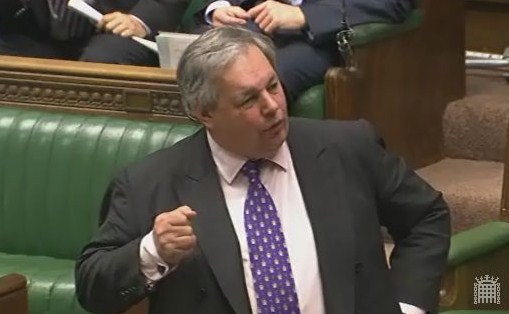 ended a meeting of the Rural Affairs Group of the Church of England. I am kept fully informed about the relevant issues concerning the committee when needed by the National Rural Officer and the Church of England’s Parliamentary Unit.
(via Parliament.uk)
UK Government Relations with Sikhs: Bishop of Coventry Asks Written Question
The Lord Bishop of Coventry: To ask Her Majesty’s Government what representations they have received from Sikh organisations in the United Kingdom following the publication of the Cabinet Secretary’s report on the Indian operation at Sri Harmandir Sahib.
The Senior Minister of State, Department for Communities and Local Government & Foreign and Commonwealth Office (Baroness Warsi) (Con): We continue to take the views of the Sikh community on this matter very seriously, and round-table meetings were hosted by the Foreign and Commonwealth Office on 4th February and by the Department for Communities and Local Government on 25th February. The following organisations took part:
4th February:
Sikh Council UK
Network of Sikh Organisations (UK)
Federation of Sikh Organisations
Sikh Organisation of Prisoner Welfare
Sikh Community and Youth Services
Shiromani Akali Dal Amritsar
Akhand Kirtani Jatha
Sikh Youth Project
Kesri Leher/1984 Genocide Coalition
Akali Dal
Sikhs in England
United Sikhs
City Sikhs Network
Sikh Federation UK
25th February:
Sikh Council UK
Federation of Sikh Organisations
Sikh Organisation of Prisoner Welfare
Kesri Leher
Sikh Community and Youth Services
Sikhs in England
City Sikhs Network
Guru Nanak Nishkam Sewak Jatha
Sikh Federation UK
Indian Workers Association
Young Sikhs UK
Sikh Care Society Heathrow
Sikh Community and Youth Services
Network of Sikh Organisations (UK)
(via Parliament.uk)
Church Commissioner Sir Tony Baldry MP Highlights Archbishop’s Ash Wednesday Eucharist in Parliament
During Business Questions in the House of Commons, the Second Church Estates Commissioner, Rt Hon Sir Tony Baldry MP, drew attention to the Ash Wednesday Eucharist taking place the following week in the Parliamentary Chapel, at which the Archbishop of Canterbury would preside. The Leader of the House responded.
Sir Tony Baldry (Banbury) (Con): Will my right hon. Friend ensure that on Tuesday evening, the House finishes its business promptly at 7 o’clock, so that we can all get home, finish our pancakes, and have an early night, as on Wednesday, the first day of Lent, at 7.45 am, the Archbishop of Canterbury is celebrating Holy Communion in the Undercroft chapel? Everyone working in the Palace of Westminster is very welcome to attend.
Mr Lansley: I am grateful to my right hon. Friend, and I am sure that the House appreciates the opportunity to go to the Ash Wednesday service that he advertises. I think that there is nothing on the Order Paper at the moment that would require us to extend our proceedings beyond the moment of interruption at 7 o’clock on Tuesday.
(via Parliament.uk)
Bishop of Wakefield welcomes continued Government support for Near Neighbours
Lord Phillips of Sudbury asked Her Majesty’s Government what is being done to mitigate the social and cultural consequences of the weakening of community life in the United Kingdom.
The Bishop of Wakefield asked a supplementary question:
The Lord Bishop of Wakefield: My Lords, will the Minister join me in welcoming this morning’s announcement by the Secretary of State for Communities and Local Government that the Near Neighbours scheme—a very successful collaboration between faith groups and government—is being extended for a further two years? Does he also agree that the scheme is an excellent example of strengthening social cohesion in ways that are sensitive to local dynamics, and that it could serve as a model for communities up and down the United Kingdom?
Lord Ahmad of Wimbledon: The right reverend Prelate is of course right to raise the issue of the Near Neighbours scheme. It is a successful scheme in which the Church of England works with local communities, and it shows how communities and wider faith groups can come together. My noble friend who is sitting to my right famously said, “This Government does do God”. We work with people of all faiths across the country to ensure that communities are vibrant and working well together.
The Bishop of St Albans calls for greater support for businesses taking on apprentices
Baroness Stedman-Scott asked Her Majesty’s Government what steps they are taking to equip young people with the skills necessary to enter the job market.
The Bishop of St Albans asked a supplementary question:
The Lord Bishop of St Albans: My Lords, there are four times as many 18 to 24 year-olds looking for work at the moment as there are in the 16 to 17 age group. Yet the Government’s policy on apprenticeships for 19 to 24 year-olds is to ask employers to pay half the costs of the learning framework. Many businesses, especially SMEs, will pause before taking on an apprentice because of this. Does the Minister agree that if this requirement were to be removed, it would hugely encourage many more young people to get into apprenticeships as well as giving them much more of a chance to succeed?
Lord Ahmad of Wimbledon: The right reverend Prelate makes an important point, but I am sure many noble Lords are aware that the Government do support local businesses. Indeed, they have made additional funding available to small businesses that are looking to take on both trainees and apprentices.
On the age group that the right reverend Prelate mentioned, particularly 19 to 24 year-olds, in October 2013 the Government announced funding of an additional £20 million to support the expansion of traineeships, which are helping even more young people to get the skills and experience they need to get into full-time work.
(via parliament.uk)
Bishop of St Albans raises concerns about the impact of closing rural schools
Lord Storey asked Her Majesty’s Government what support is given to young people living in rural areas to enable them to travel to school or college.
The Bishop of St Albans asked a supplementary question:
The Lord Bishop of St Albans: My Lords, the Church of England is deeply involved with hundreds of tiny rural schools in sparsely populated areas and is acutely aware of some of the financial difficulties that they face. When such a school has to close, what advice do Her Majesty’s Government give on the educational, financial and environmental issues—to do with sustainability—of transporting these pupils, sometimes very long distances, to the next nearest school?
Baroness Northover: I will write to the right reverend Prelate with details about what happens when these schools are closed. There is a special premium for rural schools of the type that he describes, which have fewer pupils than you might find elsewhere, but I will write with further details.
(via parliament.uk)
Bishop of Wakefield raises concerns about impact of lack of free parking on local businesses
Baroness Williams of Trafford asked Her Majesty’s Government what assessment they have made of town-centre parking policies and their impact on local businesses.
The Bishop of Wakefield asked a supplementary question:
The Lord Bishop of Wakefield: My Lords, I want to focus particularly on the impact on small towns, which may not necessarily have trains and buses bringing people into them. Where there are not just large-scale out-of-town developments but also small-scale shopping centres, where it is easy to park for nothing, the impact on the high street is significant. In Mirfield, in the diocese from which I come, free parking has had a very good impact. In Berwick-upon-Tweed, another town I know very well, there is no free parking and that is seriously affecting local businesses. Can we be assured that Her Majesty’s Government will encourage local authorities to look at ways of finding more parking spaces in small towns?
Baroness Stowell of Beeston: The right reverend Prelate is right to raise the issue of more free parking. In a recent report published by Deloitte, more free parking was the single biggest issue raised by people who responded. In examining some options, we are trying to ensure that local people have a greater say in the parking arrangements of their local areas—and, clearly, access to free parking should be one of those things.
(via parliament.uk)
 The Church of England in Parliament
You must be logged in to post a comment.