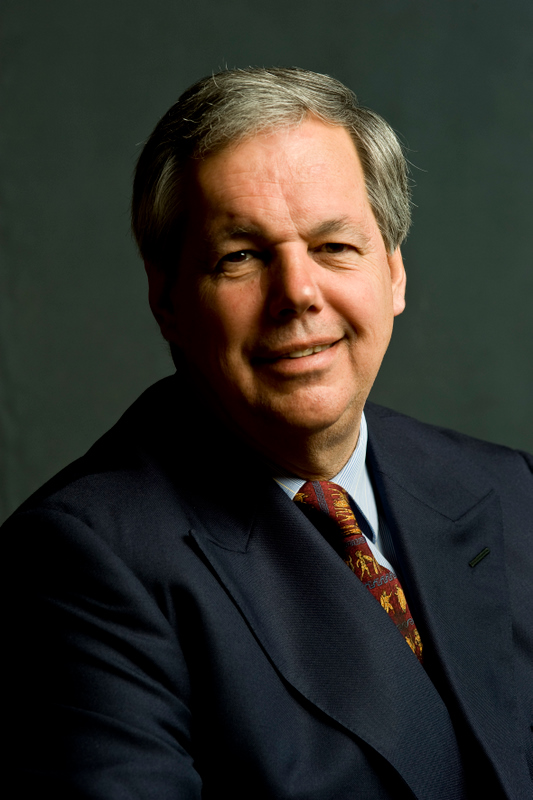
In Church Commissioners’ question time in the House of Commons on 27th March Sir Tony Baldry MP was asked by MPs to answer questions on cathedral repairs, same-sex marriage, investment returns, diocesan mission and church growth.

Oral & written questions in the Lords and Commons
In Church Commissioners’ question time in the House of Commons on 27th March Sir Tony Baldry MP was asked by MPs to answer questions on cathedral repairs, same-sex marriage, investment returns, diocesan mission and church growth.

On 27th March 2014, the Bishop of St Albans received an answer to a written question on flooding.
The Lord Bishop of St Albans: To ask Her Majesty’s Government whether, in the light of the recent and ongoing flooding, they plan to reconsider their 2010 decision to remove the duty on local authorities to produce climate adaptation plans. Continue reading “Flooding: Written Question”
Lord Foulkes of Cumnock asked Her Majesty’s Government ‘what action they propose to take over the potential impact on university funding arising from lower than expected repayment of student loans?’ The Bishop of Chester asked a supplementary question:
The Lord Bishop of Chester: My Lords, I share the Government’s view that the higher education sector is in remarkably good health given the recession. However, does not setting fees at £9,000, which is far higher than fees in any other European country, imply a loans system that has its own element of generosity, including a repayment starting point of £21,000, rather than the original £16,000?
Lord Ahmad of Wimbledon: The right reverend Prelate raises an important point. I am sure he is aware that the Government have ensured that those universities that have chosen to raise their fees to the £9,000 limit have suitable access agreements so that those who come from disadvantaged backgrounds are given the opportunity to go to university. The Government’s policy remains that access to a university education should be based not on someone’s ability to pay but on their ability.
(via Parliament.uk)
On 26th March 2014 the Bishop of St Albans received replies to two written questions, on human trafficking and the Government’s draft Modern Slavery Bill.
The Lord Bishop of St Albans
To ask Her Majesty’s Government when they will publish the findings of the review of the National Referral Mechanism; and how civil society groups are being involved in that review.[HL6121]
The Parliamentary Under-Secretary of State, Home Office (Lord Taylor of Holbeach) (Con): An announcement on the review of the National Referral Mechanism will be made shortly.
Continue reading “Human Trafficking, Modern Slavery Bill: Written Answers”
On 25th March 2014 Baroness Massey of Darwen asked Her Majesty’s Government ‘what policies they promote to prevent bad behaviour in schools, apart from punishment?’. The Bishop of Leicester asked a supplementary question:
The Lord Bishop of Leicester:
My Lords, in view of the Minister’s clear endorsement of the policy of positive reinforcement of good behaviour, does he agree that we should be doing much more to promote a culture of mutual respect more widely in society so that the benefit of the positive work of many schools is not lost when our children step out of the school gate?
On 25th March 2014 Lord Trimble asked Her Majesty’s Government ‘what steps they are taking to support the Government of Ukraine’. The Bishop of St Albans asked a supplementary question:
The Lord Bishop of St Albans: My Lords, can the Minister tell us what representations are being made on behalf of Ukrainians who are still living in Crimea and find themselves living there now under the Russian state? How are their interests going to be protected?
Written Questions, answered on 24th and 25th March, 2014:
The Lord Bishop of T
ruro: To ask Her Majesty’s Government what representations they have made to the government of Israel regarding the recent announcement by the Jerusalem municipal authorities of their approval of building permits for 558 new units in East Jerusalem, in Har Homa, Neve Yaakov and Pisgat Zeev.
Written Question, answered on 25th March, 2014:
The Lord Bishop of Coventry: To ask Her Majesty’s Government what is their assessment of freedom of religion and belief in Somalia.
The Senior Minister of State, Department for Communities and Local Government & Foreign and Commonwealth Office (Baroness Warsi): The vast majority of people in Somalia are Muslim (around 99.8%) and Islam is recognised as the official state religion in Somalia’s provisional constitution. The majority of reports of restriction of religious freedom relate to human rights abuses by Al Shabaab.
(via Parliament.uk)
A Government statement on the High Speed Two rail project was repeated in the House of Lords on 24th March 2014 by Transport Minister Barioness Kramer. The Bishop of Chester asked a question:
The Lord Bishop of Chester: My Lords, the spirit of the Statement is in for a penny, in for pound—a lot of pounds, of course—but if it is to be done, it should be done well and quicker.
I particularly welcome the extension to Crewe, which is in my diocese, so much sooner; I am sure that the people of Crewe, that noble old railway city, will welcome that warmly. I notice in the Statement, though, that direct trains will be able to run off HS2 to serve north Wales. I have always assumed that the trains on the high-speed rail link will be electric. Does this mean that the Government are announcing plans to electrify the railways beyond Crewe to Chester and into north Wales? If so, when is that going to happen?
In the House of Lords on 20th March 2014 Lord Beecham asked Her Majesty’s Government ‘what assessment they have made of the number and role of food banks in the United Kingdom.’
The Bishop of Gloucester, Rt Rev Michael Perham, asked a supplementary question:
The Lord Bishop of Gloucester: My Lords, research by Citizens Advice shows that the main reason people are referred to food banks is delay in the payment of benefits and benefit sanctions; anecdotally, this is also the church’s own experience from its involvement in the many food banks it helps to run across the country. Will the Minister tell us whether the Government are persuaded by this evidence and, if they are not, will he share with us what plans they have to carry out their own research into the reasons leading so many people to seek food aid?
Lord De Mauley: My Lords, I very much acknowledge the right reverend Prelate’s question. While it is right to expect that claimants who are able to look for or prepare for work should do so, a sanction will never be imposed if a claimant has good reason for failing to meet requirements. If claimants demonstrate that they cannot buy essential items, including food, as a result of their sanction, they can claim a hardship payment. No claimant should ever have to go without essentials as a result of a sanction.
(via Parliament.uk)
You must be logged in to post a comment.