
On Tuesday 16th January 2018 the House of Lords debated a motion from Baroness Pitkeathley “That this House takes note of the Report from the Select Committee on Charities Stronger charities for a stronger society (Session 2016-17, HL Paper 133).” The Bishop of Durham, Rt Revd Paul Butler, spoke in the debate:
 The Lord Bishop of Durham: My Lords, I draw notice to my charitable interests as listed in the House register.
This insightful report rightly stresses that we live in a time when charities provide an ever-greater volume and range of social provision in our society. Therefore, their role must be thoughtfully recognised and supported by the Government. I am proud of the role that the Church of England and all UK faith groups play in this provision. As examples, we run food banks, advice drop-ins, youth clubs and practical skills and jobs training, support the elderly and offer legal support to asylum seekers. According to New Philanthropy Capital, more than a quarter of charities in Great Britain have an association with faith and many people of faith help in the full range of charities. The significance of faith as a motivator for charitable action should never be underestimated. The particular needs and challenges that the Church and other faith-based charities face must be considered and taken seriously in any coherent strategy for the long-term flourishing of UK charities. Continue reading “Bishop of Durham highlights work of faith-based charities and role of volunteers”
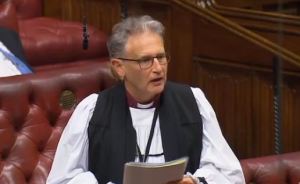 On 11th January 2018 the Bishop of Coventry, Rt Revd Christopher Cocksworth, led a debate in the House of Lords on the question: “to ask Her Majesty’s Government what is their post-conflict strategy for protecting the rights of religious and ethnic minorities in Iraq.” His speech is reproduced in full below, as is that of the Government minister responding. All speeches by those taking part in the debate
  The Lord Bishop of Gloucester: My Lords, I thank the noble Baroness, Lady Kidron, for obtaining this debate. I, too, thank her for her tireless work in this area.
 The Lord Bishop of Newcastle: My Lords, it may be no coincidence of timing that as we debate the performance of the major housebuilders, every day this week in the financial press we have seen the trading results of many of these major companies, the latest being Barratt this morning, the country’s largest housebuilder. There is a consistent picture of extraordinarily high levels of profit and cash being returned to shareholders. However, my first point is that past history tells us this will not last. Housebuilding is a highly cyclical industry and when the next recession comes, new house sales will plummet, as they did in 2003 and 2008. Housebuilders, especially the smaller ones, will fail, and there will be high unemployment in the building trades.
  The Lord Bishop of Birmingham: My Lords, as convener of the Lords spiritual, I welcome warmly the report of the Speaker’s Committee and pay tribute to the work of the noble Lord, Lord Burns, and his fellow committee members for their thoughtful and thorough attention to the question of the size of the House, which we all agree is in need of urgent resolution. I notice that the word “magic” has already been used in the debate, but the desire for love has also been added at Christmas time. To hear the leader of the Lib Dems imploring the work of the Lord in becoming pure is a most encouraging start to this debate.
 On the 18 December 2017 Baroness Tyler of Enfield led a debate on the report of the Select Committee on Financial Exclusion – Tackling Financial Exclusion: A country that works for everyone? (
 On the 18th December 2017 Lord Whitty led a debate on the report of the European Union Committee – Brexit: trade in non-financial services (
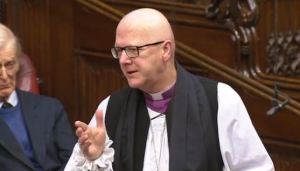 The Lord Bishop of St Albans: I too thank the noble Lord, Lord Bird, for this debate. I want to make just a couple of points in the time I have.
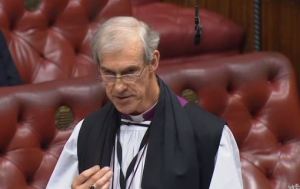 The Lord Bishop of Carlisle: My Lords, I, too, thank the noble Lord, Lord Bird, for securing this debate. As we have just heard, poverty cannot be measured simply in economic terms. It affects every area of a person’s life and, as a recent Demos report put it:
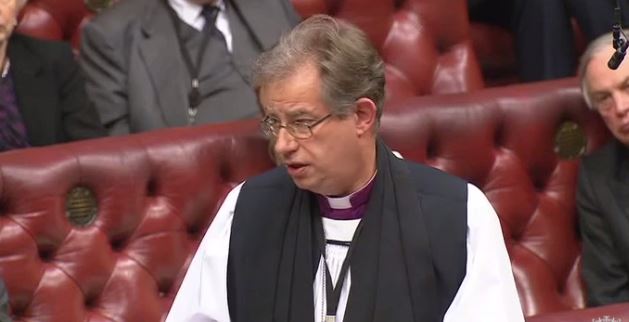 The Lord Bishop of Oxford: My Lords, like other speakers, I am grateful to the most reverend Primate the Archbishop of Canterbury for his leadership in this debate and in much else.
 The Church of England in Parliament
You must be logged in to post a comment.