Bishop of Derby highlights work of prison chaplains and value of educational and arts projects

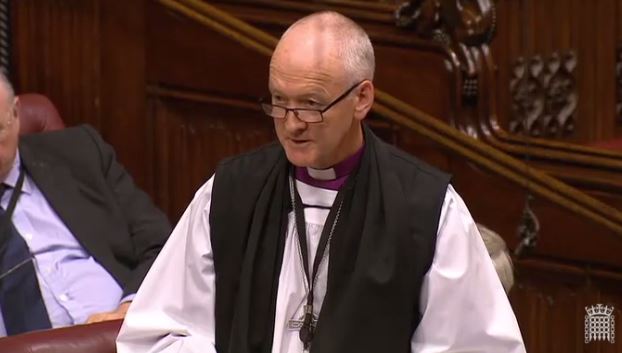
On the 19th January 2016 the Bishop of Derby, the Rt Revd Alistair Redfern took part in a short debate  tabled by Lord Hanningfield “To ask Her Majesty’s Government what steps they are taking to help improve education standards in United Kingdom prisons.” The Bishop spoke from his own experience of visiting a number of prisons in his diocese and of the important work of chaplains, musicians and arts projects within prisons.

DerbyThe Lord Bishop of Derby: My Lords, I, too, thank the noble Lord, Lord Hanningfield, for his introduction to the debate, especially for linking education with vocation for people in prison. As the noble Lord, Lord Addington, said, it is a very complex territory with very deep needs. A lot of research shows that the prison population represents people with multiple needs. Therefore, the task of education and vocation will be challenging. I see the importance of formal education for literacy and numeracy to help people to get jobs. I am all in favour of that, but I want to look behind that at the informal fashioning of vocation and the development of character and confidence, which allows people to enter formal learning. I will draw on my own experience of going into prisons. Continue reading “Bishop of Derby highlights work of prison chaplains and value of educational and arts projects”

Bishop of Portsmouth calls on UK Government to ratify Hague Convention for Protection of Cultural Property in Armed Conflict

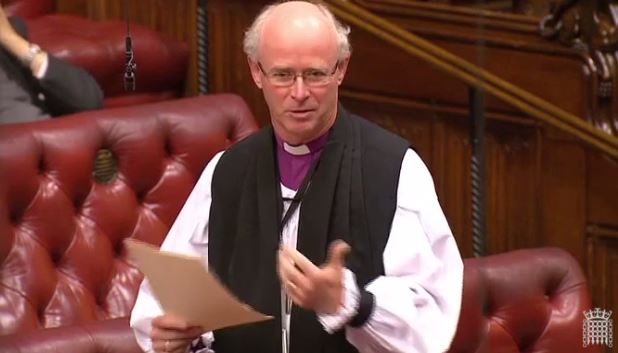
On 14th January 2016 the House of Lords debated a motion from Baroness Andrews “to ask Her Majesty’s Government what is their plan for ratifying the Hague Convention for the Protection of Cultural Property in the Event of Armed Conflict”. The Bishop of Portsmouth, Rt Revd Christopher Foster, spoke in the debate:

14.04.09 Portsmouth maiden speech 1The Lord Bishop of Portsmouth: My Lords, I add my thanks to the noble Baroness, Lady Andrews, for this debate and for the very important Question that she asks of the Government Front Bench. In June 2015, the Ministry of Defence answered a Written Question, as we have heard, on the timetable for ratifying the Hague convention. A Minister stated:

“The Government believes that protection of cultural property in the event of armed conflict is a priority and remains committed to that task”.

She confirmed the,

“plan to introduce legislation to ratify the Convention”,

as we know,

“as soon as Parliamentary time allows”.

The Answer continued with a reassurance:

“Respect for cultural property is already upheld across the Armed Forces and they currently act within the spirit of the 1954 Convention. This respect is incorporated into military law”.

I wholeheartedly welcome that commitment and ask the Minister if she can recognise both the embarrassment of the present and lengthy delay in ratification, which successive Governments since 2008 have pledged to end, and the compelling practical, cultural and humanitarian reasons for speedy rectification of this inordinate delay. Continue reading “Bishop of Portsmouth calls on UK Government to ratify Hague Convention for Protection of Cultural Property in Armed Conflict”

Bishop of Leeds leads debate on national response to flooding

On 14th January 2016 the Bishop of Leeds, Rt Revd Nick Baines, led a short debate in the House of Lords on flood management. His speech and the Government response is below. The full text of the debate, including a speech by the Bishop of St Albans, can be read here.

The Lord Bishop of Leeds: To ask Her Majesty’s Government how they intend to review their long term strategy for flood management, particularly in rural areas that do not qualify for large-scale flood defences.

LeedsThe Lord Bishop of Leeds: My Lords, I am grateful for the opportunity to put to the Government the Question before us. If there was a sound track to this debate it would probably include Phil Collins’s “In Too Deep”.

It is important to note the destructiveness of the recent flooding, given that the news agenda moves on very quickly and communities which found themselves at the heart of a sympathetic nation quickly feel themselves to be forgotten. For some of the communities in my diocese, the recent floods come in the wake—almost literally—of other occurrences in recent years. For them the need for longer-term and more joined-up measures is obvious.

I pay tribute to civic leaders, emergency services, public service workers, members of the Armed Forces, the Environment Agency and local volunteers, many of whom sacrificed holidays and family time over Christmas to support victims of this appallingly destructive flooding. Continue reading “Bishop of Leeds leads debate on national response to flooding”

Bishop of St Albans suggests new approaches to flood management

On 14th January 2016 the Bishop of Leeds, Rt Revd Nick Baines, led a short debate in the House of Lords on flood management. The Bishop of St Albans, Rt Revd Alan Smith, also spoke in the debate.

StAlbans171115The Lord Bishop of St Albans: My Lords, I thank my right reverend colleague for today’s debate. Due to the shortage of time, straightaway I shall focus a little more on whole-catchment flood management. A renewed focus on this approach has been one of the notable outcomes of the current flood crisis, helped of course by the exemplary work of the Pickering slow-the-flow scheme, which the noble Baroness, Lady McIntosh, described so eloquently.

The potential of whole-catchment approaches—for example, using meandering rivers, planting trees and building permeable dams to slow water in upland areas and reduce peak flow further downstream—is enormous. In the long term, it provides a cheaper, more environmentally friendly method of flood management, which works, as a number of people have already said, with natural processes rather than constantly trying to hold back the tide. Such approaches also have the benefit of being effective across a catchment, rather than simply focusing on one or two high-value areas, and so can help to lower the flood risk in rural hamlets and villages that might otherwise not qualify for flood protection. Continue reading “Bishop of St Albans suggests new approaches to flood management”

Bishop of St Albans calls for more personal responsibility and new social contract between citizens and the NHS

On 14th January 2016 the House of Lords debated a motion from Lord Turnberg “that this House takes note of the ability of the National Health Service to meet present and future demands.” The Bishop of St Albans spoke in the debate:

StAlbans171115The Lord Bishop of St Albans: My Lords, I am glad to congratulate the noble Baroness, Lady Watkins, on her maiden speech. Due to the pressure on time, I want to focus on one very small area, which has been alluded to by various noble Lords but which I want to develop a little. It is the pressing and vital need to reboot the concept of a social contract, which lay at the heart of the national health system as envisaged by Beveridge and which balanced rights and responsibilities, not least against the background of living in a time when people have increasingly emphasised rights and perhaps downplayed the sense of duty and responsibility. Continue reading “Bishop of St Albans calls for more personal responsibility and new social contract between citizens and the NHS”

Bishop of Leeds praises “heroic” work of NHS staff in Lords health debate

On 14th January 2016 the House of Lords debated a motion from Lord Turnberg “that this House takes note of the ability of the National Health Service to meet present and future demands.” The Bishop of Leeds, Rt Revd Nick Baines, spoke in the debate.

BpLeeds2The Lord Bishop of Leeds: My Lords, I am very grateful for the opportunity to speak in this debate. Much of what I was going to say has been said and I do not intend to repeat it. I have surveyed some of the National Health Service foundation trusts in my diocese and there are common threads, both of opportunity and concern: financial, operational and clinical. Yet it ought to be said that some of the administrations of these health services are doing heroic work at a time of enormous complexity and constraint. Again, as has been said about the need to raise morale among staff, we should at least thank and congratulate those who are making the system work despite the challenges. Continue reading “Bishop of Leeds praises “heroic” work of NHS staff in Lords health debate”

Bishop of Rochester contributes to debate on Lords powers

On 13th January 2016, the Bishop of Rochester, the Rt Revd James Langstaff, spoke in a debate on Lord Strathclyde’s motion “that this House takes note of Command Paper Cm 9177, Secondary legislation and the primacy of the House of Commons.” This related to the Strathclyde Review, which assessed the House of Lord’s powers regarding Statutory Instruments.


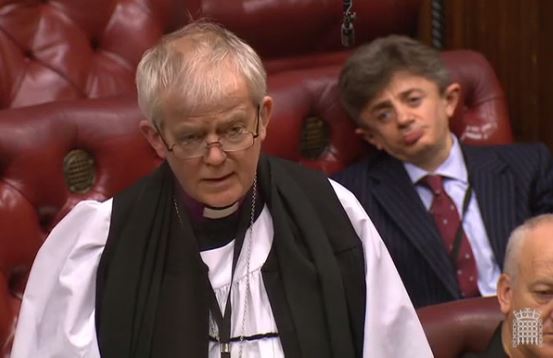
RochesterThe Lord Bishop of Rochester: My Lords, I, like other Members of your Lordships House, am grateful to the noble Lord, Lord Strathclyde, for the work that he has undertaken and for giving rise to what is clearly an important debate about the role of this House, which probably goes much wider than some of the specifics in front of us today. By way of introduction, I will add a little correction to the text of the noble Lord’s report.

Continue reading “Bishop of Rochester contributes to debate on Lords powers”

Immigration Bill: Bishop of Southwark speaks about reduced support for asylum seekers and new powers for immigration officers

On the 22nd December 2015 the Bishop of Southwark, the Rt Revd Christopher Chessun spoke during the Second Reading debate of the Government’s Immigration Bill. Bishop Christopher spoke about the proposals for new powers for immigration officers and voiced concern about further reductions in support for those whose asylum claims have been refused. He also drew on his recent visit to the Calais migrant camp.

Bp Southwark May 2015The Lord Bishop of Southwark: My Lords, the Bill is the latest in a list of substantive immigration legislation that this House has considered in recent years. Since the Nationality, Immigration and Asylum Act 2002 we have had five further pieces of primary legislation in this area, yet Her Majesty’s Government have published no White Paper on immigration since 2002—no considered, detailed overview and proposals through which we might consider all aspects relating to immigration before embarking on major legislation. The Explanatory Notes are helpful but they are no substitute for a White Paper. Continue reading “Immigration Bill: Bishop of Southwark speaks about reduced support for asylum seekers and new powers for immigration officers”
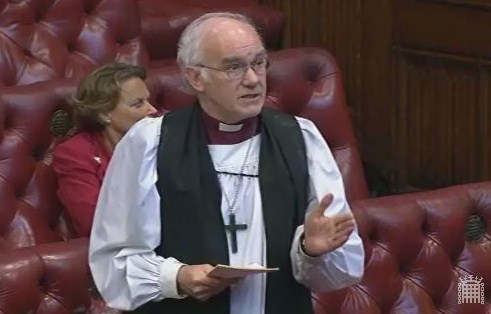
Bishop of Chester pays tribute to Heritage Lottery Fund support for cathedrals and church buildings

On 17th December 2015 the House of Lords debated a motion from Lord Holmes of Richmond, “To move that this House takes note, on the occasion of its 21st birthday, of the contribution made by the National Lottery to sport, culture, charities and national heritage throughout the United Kingdom.” The Bishop of Chester, Rt Revd Peter Forster, spoke in the debate,paying tribute to the positive impact lottery funding has had on cathedrals and church buildings. 


14.03 Bishop of Chester

The Lord Bishop of Chester: My Lords, most of us will remember the strapline which launched the National Lottery: “It could be you”. Well, I never quite believed that it would be me but, nevertheless, the lottery has had great success over time. Many people thought that it would slightly fade from view and lose some of its initial gloss. Indeed, people worked out that it probably would not be them at all. It is very interesting how it has become a national institution. In that sense, we have been led into temptation on a grand scale. Continue reading “Bishop of Chester pays tribute to Heritage Lottery Fund support for cathedrals and church buildings”

Bishop of Salisbury welcomes Paris agreement and calls for sights to be set higher on climate change

On 17th December 2015 the House of Lords debated a motion from Baroness Miller of Chilthorne Domer, “To ask Her Majesty’s Government what progress was made at the COP 21 climate change talks”. The Bishop of Salisbury, Rt Revd Nicholas Holtam, spoke in the debate, congratulating Government on the achievements on climate change at the Paris summit and calling for more emphasis on community energy and renewables. 


Bp Salisbury 2

The Lord Bishop of Salisbury: My Lords, I thank the noble Baroness, Lady Miller, for this debate and congratulate the noble Baroness, Lady Sheehan, on her maiden speech. What a great debate in which to make a maiden speech, when we are looking so much towards the future.

On Tuesday, we congratulated the Government, the Minister, the officials from DECC and some Members of this House on the contributions that they made in Paris. Many people will feel that this is an agreement for which they hoped and prayed. Someone said, “I can’t really comment. It was near miraculous”. I think that that might be true. It is particularly significant in the wake of the terrorism in Paris on 13 November. Terrorism seeks to divide us and creates fear. This agreement of nearly all the world acting together gives hope, which feels to be a very important statement. I have said before that I am particularly grateful for the creation of a predictable framework of $100 billion of climate finance for poor countries. That is particularly significant at a time when questions are being asked about overseas aid. This is an important contribution to that debate. Continue reading “Bishop of Salisbury welcomes Paris agreement and calls for sights to be set higher on climate change”