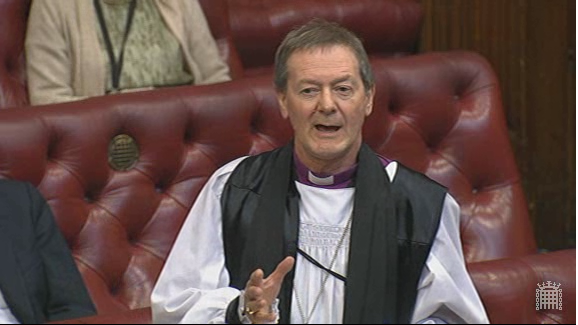
Bishop of Derby speaks on the Local Government Financial Settlement

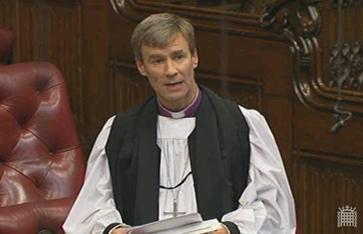
On the 22nd January 2015 the Bishop of Derby spoke in a debate about the Local Government Financial Settlement. Bishop Alastair spoke about the need to stand back and look at what the future of local government should be. He went on to speak to the House about the work he undertakes in the Diocese to engage with local government on a variety of issues including regeneration, attracting new local business and the danger facing local government of local disengagement with politics.

DerbyThe Lord Bishop of Derby: My Lords, I thank the noble Lord, Lord Beecham, for securing this debate and for his introduction to it. I also thank the noble Broness, Lady Pinnock, and the right reverend Prelate the Bishop of Southwark, who both gave us very specific examples of some of the issues involved in this area. Continue reading “Bishop of Derby speaks on the Local Government Financial Settlement”

Bishop of Portsmouth speaks about the Local Government Finance Settlement

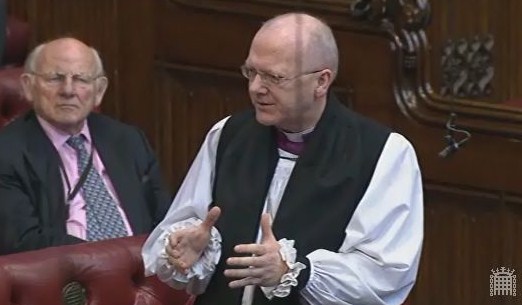
On the 22nd January 2015 the Bishop of Portsmouth spoke during a debate on the Local Government Finance Settlement. Bishop Christopher spoke about the issues of local welfare provision and thanked the Government for including notional provision for the continuation of local welfare provision in the current settlement. The Bishop went on to ask the Government to maintain or ring-fence the local welfare allocation to ensure that those in crisis need are helped. 

14.04.09 Portsmouth maiden speech 1The Lord Bishop of Portsmouth: My Lords, I welcome this debate on the implications and challenges of the local government settlement. On these Benches, and indeed in the whole House, we look forward to the maiden speeches of the noble Baroness, Lady Pinnock, and of my colleague and friend, the right reverend Prelate the Bishop of Southwark. I look forward to that for many reasons, not least that he was a senior curate in the diocese that I now serve. He is the most recent in this House of a long line of able clergy nurtured and grown in the Diocese of Portsmouth. Continue reading “Bishop of Portsmouth speaks about the Local Government Finance Settlement”

Bishop of St Albans calls for improved access to the criminal justice system and victim support for vulnerable people

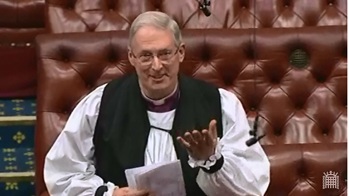
On January 22nd 2015, the Bishop of St Albans, the Rt Revd Dr Alan Smith, took part in a debate on improving access to the criminal justice system and victim support for people with autism spectrum disorders. The debate was precipitated by the case of Faruk Ali, a young autistic man who was attacked in Luton.

Bishop of St Albans The Lord Bishop of St Albans: My Lords, I, too, thank the noble Baroness for this debate. As has already been said, Faruk Ali comes from Luton, a town in my own diocese. Quite a number of people have raised that case with me and have been concerned about what happened, so I am glad to be able to involve myself in this debate. However, I will leave it to other noble Lords to comment on the specifics of the debate—I, too, have read the media on this—as clearly it raises a number of wider problems. At an early stage I pay tribute to all those people, both professional and volunteers, who work in the statutory services and in the charitable sector, who are doing a very good job at huge personal cost and with great expertise. We need to acknowledge what they are doing and affirm it before looking at some of the problems. Continue reading “Bishop of St Albans calls for improved access to the criminal justice system and victim support for vulnerable people”

Bishop of Derby: focus on grassroot responses to maternal mortality

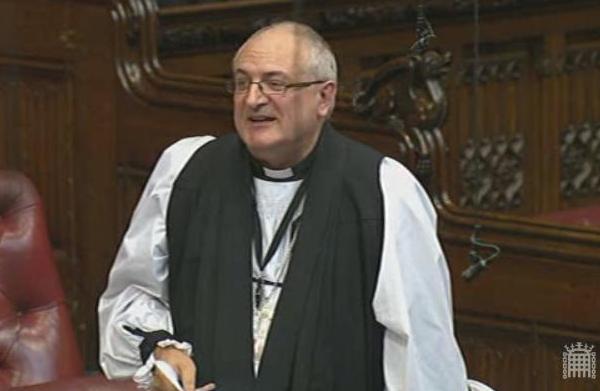
On 15th January 2015, the Bishop of Derby, the Rt Revd Alastair Redfern, took part in a question for short debate in the House of Lords, led by Baroness Hayman, on what progress has been made in reducing maternal and neonatal mortality in the developing world; and what plans they have to build on this work post-2015. The Bishop spoke of the situation in India, which has an ecumenical partnership with Derby Diocese, where one-third of global neonatal deaths occur. He noted that poverty, lack of education about basic hygine, attitudes towards women and girls and a lack of necessary infrastructure all contribute to high levels of maternal and neonatal mortality. He spoke of the grassroots responses to these conditions that he had observed in visits to India, and welcomed the partnership between DfID and development agencies such as Christian Aid, which work to channel funds to these effective local efforts.

DerbyThe Lord Bishop of Derby: My Lords, I too congratulate the noble Baroness, Lady Hayman, on securing this debate and on introducing it with such expertise and such a challenging sense of the statistics. Millennium development goals 4 and 5 are not being met and, as other speakers have said, the consequences are horrendous. My contribution will be from my own experience working with people at the grass roots, and I will then tease out what the implications of that experience should be.

I work in the diocese of Derby, in England, and we are twinned with the Church of North India, which extends from Calcutta to Mumbai—the whole of north India is twinned with our diocese in an ecumenical link. I work with people in a number of Indian communities where this issue is enormous. In 2012, one-third of global neonatal deaths happened in India. The highest rate of first-day mortality is in India. That is the context in which we are working with our partners, through whose eyes we discern some factors. Continue reading “Bishop of Derby: focus on grassroot responses to maternal mortality”

Bishop of Derby takes part in debate on chancel repair liability

Bishop of DerbyOn 15th January 2015, the Bishop of Derby, the Rt Revd Alastair Redfern, took part in a short debate in the House of Lords, led by Lord Avebury, on what steps the Government are taking to abolish the liability of private householders and others for chancel repairs. The Bishop put on record that the Church is, in principle, in favour of changing the law. However, he cautioned that the loss of title may cause the local parish financial hardships, and that compensation for the financial loss that would occur must be taken into account. The full transcript of the debate is reproduced below.

Chancel Repairs

Asked by Lord Avebury: To ask Her Majesty’s Government what steps they are taking to abolish the liability of private householders and others for chancel repairs.

Lord Avebury (LD): My Lords, a consensus that reform of the law on chancel repairs is long overdue has emerged from discussions with the church, the Law Commission, the Law Society, the Country Landowners’ Association and the National Secular Society. Since the Chancel Repairs Bill will not make further progress until after the general election, a preliminary debate on the issues is useful now. Continue reading “Bishop of Derby takes part in debate on chancel repair liability”

Bishop of St Albans leads debate on A&E pressures

On 15th January 2015, the Bishop of St Albans, the Rt Revd Alan Smith, led a question for short debate in the House of Lords on the pressures facing accident and emergency services. In his opening speech, the Bishop called for the House to disregard the media frenzy and political partisanship of the past week, and instead take a level-headed look at the issue – moving the debate away from scapegoating ‘inappropriate attender’ and seeking rather to find new ways of linking those within the health system with the most appropriate services for their needs.

Bishop of St AlbansThe Lord Bishop of St Albans: To ask Her Majesty’s Government what is their assessment of the pressures facing accident and emergency services.

The Lord Bishop of St Albans: My Lords, I come to this debate not as a doctor with specialist medical knowledge nor with any special insights into the complex processes which hospital managers have to manage. I approach it as someone from an institution, the church, which has been concerned for healing, in its broadest sense, from its very foundation and I live opposite what is left of the great medieval monastery of St Albans, which for centuries was a centre of healing, with its infirmary and herbarium. In my present role, I have regular contact with the hospitals across Hertfordshire, Bedfordshire, Luton and Barnet, which make up the diocese of St Albans. Continue reading “Bishop of St Albans leads debate on A&E pressures”

Bishop of Ely takes part in debate on A&E services

On 15th January 2015, the Bishop of Ely, the Rt Revd Stephen Conway, took part in the Bishop of St Albans’ debate on the pressures facing accident and emergency services. Speaking to the experiences of Addenbrooke and Hinchingbrooke Hospitals, which is in his diocese, he noted that demand for services was continuing to increase. He called for greater integration and more joined-up working between different parts of the health sector.

14.10.16 Bishop of Ely 1The Lord Bishop of Ely: My Lords, I am very grateful to the noble Lord, Lord McColl, for reminding me how pleased I was to be off my trolley in February 2013, when I was admitted as an emergency patient to Addenbrooke’s Hospital in Cambridge. Were it not for the skill and dedication of the surgeons and nurses—and the grace of God—I would not be here now. Like the right reverend Prelate the Bishop of St Albans, I pay tribute to the dedication of staff in our hospitals, not least Addenbrooke’s, from which no one needing emergency treatment is turned away. Continue reading “Bishop of Ely takes part in debate on A&E services”

Bishop of St Albans – Forced Marriage (Written Answer)

On 12th January 2015, the Bishop of St Albans, the Rt Revd Alan Smith, received an answer to a written question from the Home Office Minister, on the subject of forced marriage.

Bishop of St AlbansThe Lord Bishop of St Albans: To ask Her Majesty’s Government whether they collect data on the number of British girls sent abroad to marry each year; and if they do not collect such data, what they are doing to assess the scale of such activity.[HL3493]

The Parliamentary Under-Secretary of State, Home Office (Lord Bates): The Forced Marriage Unit (FMU) was established in 2005 to lead on the government’s forced marriage policy, outreach and casework. The FMU operates both inside the UK, where support is provided to any individual, and overseas, where consular assistance is provided to British nationals, including dual nationals. In 2013, the FMU gave advice or support related to a possible forced marriage in 1302 cases. Continue reading “Bishop of St Albans – Forced Marriage (Written Answer)”

Early Years Intervention – Speech by Bishop of St Albans

On 8th January 2015 Peers debated a motion in the name of Baroness Massey of Darwen, ‘that this House takes note of the case for early years intervention in breaking the cycle of deprivation and promoting social mobility’. The Bishop of St Albans, Rt Rev Alan Smith, spoke in the debate:

The Lord Bishop of St Albans:

Bishop of St AlbansI, too, thank the noble Baroness, Lady Massey, for pressing this very important issue. It is, as has already been noted, an extremely complex one. We are talking about nothing less than a profound culture change in many local communities if we are to break the cycle of deprivation and increase social mobility. Continue reading “Early Years Intervention – Speech by Bishop of St Albans”

Bishop of Sheffield calls for creative communication of post-2015 development goals

“The threat of climate change, the desire for sustainable growth, digital communications and the movements of peoples have all contributed to this sense of one world and the desire for a good globalisation. It is a vision profoundly rooted in the Judaeo-Christian vision of the world: a family of diverse nations, cherishing peace, seeking justice, nurturing wisdom and looking for the flourishing of all.”

14.03.27 Bishop of SheffieldOn 11th December 2014, Labour Peer Lord McConnell of Glenscorrodale led a take-note debate in the House of Lords on the case for establishing new global development goals in 2015. The Bishop of Sheffield, the Rt Revd Steven Croft, took part in the debate. He paid tribute to the Government’s role in the continuing international dialogue and noted the significant achievements made through the Millennium Development Goals. He challenged all stakeholders in the post-2015 process to think creatively about how best to communicate these successes, in order to engage more people in the process. He noted that the Church, through the Anglican Communion is a key partner in international development. He commended the work of Christian Aid on the process and highlighted four key priorities identified by the agency – tackling climate change, a stand-along goal on gender justice, increased capacity to respond to natural disasters, and a focus on global inequality and a fairer global economic system.
Continue reading “Bishop of Sheffield calls for creative communication of post-2015 development goals”