Bishop of St Albans calls for stronger enforcement and culture change to tackle lack of FGM prosecutions

“…as well as hoping to get prosecutions, we need to work really hard on changing culture. Law is a blunt instrument. We have loads of laws on drugs and substance abuse and we try to enforce them, but, in that and other areas, we need to keep trying to get behind the issue which is causing the problem in the first place.”

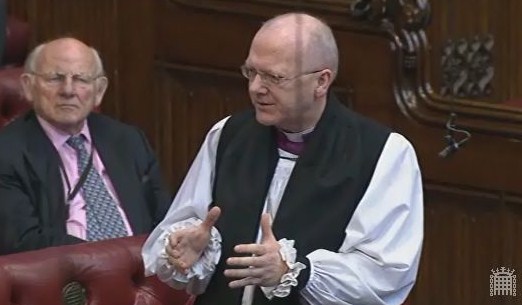
Bishop of St AlbansOn 11th December 2014, Labour Peer Baroness Rendell of Babergh led a debate in the House of Lords to ask Her Majesty’s Government what steps they are taking to encourage prosecutions of offenders under the Female Genital Mutilation Act 2003. The Bishop of St Albans, the Rt Revd Alan Smith, spoke in the debate. He welcomed the Government’s Action Plan on FGM and the cross-party consensus on dealing with the issue. He noted that efforts had been made to strengthen the law on FGM through the Serious Crime Bill, but cautioned that existing legislation needed to be better enforced, if prosecution rates were to rise. He also called for a renewed effort to understand and challenge the cultural underpinnings of the practice, in order to see lasting change.
Continue reading “Bishop of St Albans calls for stronger enforcement and culture change to tackle lack of FGM prosecutions”

Bishop of Sheffield speaks in debate on economic leadership for cities

“Sheffield Cathedral has recently celebrated its centenary, together with the centenary of the diocese I serve. This has been marked by a £3 million reordering of the medieval church to make it truly a place for all people and contributing to building confidence across the whole region.”

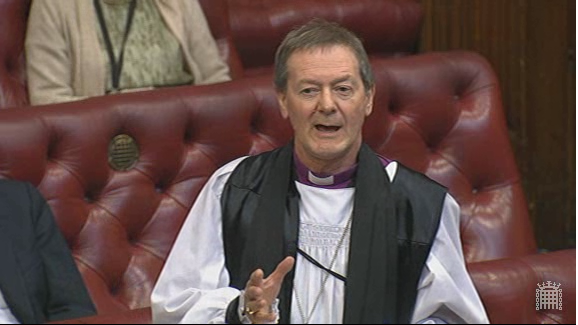
14.03.27 Bishop of SheffieldOn 11th December 2014, Liberal Democrat Peer Lord Shipley led a take-note debate in the House of Lords on the case for enabling economic leadership for cities. The Bishop of Sheffield, the Rt Revd Steven Croft, spoke in the debate. He highlighted the importance of local democracy in enabling economic flourishing, noting the recent commitment by the Sheffield City Council to become the ‘fairest city in Britain.’ He highlighted the importance of community integration, investment in infrastructure and a broad engagement with local democracy as key attributes of a flourishing local economy and called on the Government and future governments to prioritise strategies to improve local democracy. Continue reading “Bishop of Sheffield speaks in debate on economic leadership for cities”

Archbishop of Canterbury leads House of Lords debate on conflict prevention

“I hope that in this debate we will see how the different strands of soft and hard power can be better combined, and there can be a clearer sense of the narrative which sustains this wonderful country which has in the past given so much to the world when at its best, and has the potential to give even more if the advantages of our history, the skills of our institutions and the courage of our people are combined with a clear aim in view.”

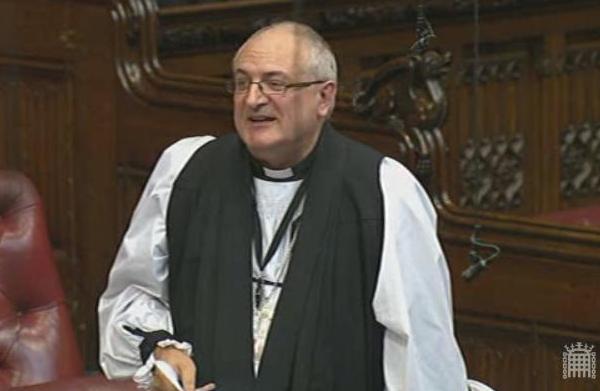
Archbishop of CanterburyOn 5th December 2014, the Archbishop of Canterbury, the Most Revd and Rt Hon Justin Welby, led a debate in the House of Lords to take note of the role of soft power and non-military responses to conflict prevention. In his opening speech, he reflected on the UK’s role in the wider world and the soft power assets it has at its disposal – the diplomatic services, the BBC, the British Council, the Commonwealth, overseas development assistance and the Church, particularly through relationships with the Anglican Communion. He spoke of the need to better understand ourselves, so as to be more effective in projecting the values and influence of the UK overseas. He also noted that the next Strategic Defence and Security Review needed to reflect the central relationship between soft and hard power, and called for more joined-up working across Government to ensure this was the case. Following his opening speech, twenty-six other members of the House contributed to the debate, including the Bishop of Derby, whose remarks can be read here. The Archbishop closed with his reflections on the topics discussed in the course of the debate. Continue reading “Archbishop of Canterbury leads House of Lords debate on conflict prevention”

Bishop of Derby calls for hope in the face of conflict, during Archbishop’s debate

DerbyOn 5th December 2014, the Bishop of Derby, the Rt Revd Alastair Redfern, took part in the Archbishop of Canterbury’s debate on the role of soft power and non-military responses to conflict prevention. He noted that for soft power to be successfully exercised, it requires a great deal of trust – particularly trust in a bigger overview, the dignity of all people, a trust in the goodness of heart of people – and a willingness to learn new things. He also reflected on how the Anglican Church at its best is a model for these forms of trust.

The Lord Bishop of Derby: My Lords, I, too, congratulate my colleague the most reverend Primate—or perhaps I should say from these Benches my honourable friend—on his securing this debate. Continue reading “Bishop of Derby calls for hope in the face of conflict, during Archbishop’s debate”

Bishop of Portsmouth responds to the Autumn Statement

“I pray, and not just hope, that, as we approach further substantial cuts in public spending, the aspiration for the nation will be enjoyed by the many and not just those who now benefit from the welcome but modest steps that the Chancellor has taken.”

14.04.09 Portsmouth maiden speech 1On 4th December 2014 the Bishop of Portsmouth, the Rt Revd Christopher Foster, spoke in a take-note debate in the House of Lords on the Autumn Statement and measures to promote economic growth and to support businesses in the United Kingdom. In his speech, the Bishop welcomed the Chancellor’s wish to back the aspiration of many to save, work and own a home, but noted that there are still many barriers to this being possible for all.

The Lord Bishop of Portsmouth: My Lords, it is a pleasure to add to others’ my welcome to the noble Lord, Lord Rose, in eager anticipation of his maiden speech. The Statement of the right honourable Chancellor of the Exchequer has been welcomed and applauded in some quarters and criticised in others for its emphasis on what it means for individuals and families, as well as for the national economy. I am glad to see specific, though limited, encouragement for some individuals and welcome support for some often overlooked but important groups in society. The most noticeable and eye-catching announcements yesterday highlighted the changes to stamp duty, ISAs, fuel duty and air passenger tax. For some in our communities, these will be welcome news after an extended and extending period of fiscal tightening and often reduced disposable income. There will, however, be changes—as those on these Benches serving all parts of England know—that will make little or no difference to many who would echo the Chancellor’s wish to back the aspiration to save, work and own a home. Continue reading “Bishop of Portsmouth responds to the Autumn Statement”

Lords Debate on Religion and Belief in British Public Life

A full transcript of the House of Lords debate on Religion and Belief in British Public Life, which took place on 27th November 2014, is below.
A video of the debate can also be watched on the UK Parliament website, here.
The speeches made by the Bishops of Norwich and Birmingham are also available on this website, here and here.
Motion to Take Note
11.53 am
Moved by Lord Harries of Pentregarth
That this House takes note of the role of religion and belief in British public life.

Red Benches

Continue reading “Lords Debate on Religion and Belief in British Public Life”

Service and trust: Bishop of Norwich speaks in Lords debate on religion and belief in public life

“Service, in the Christian tradition, is a vocation. When Jesus washed the feet of his disciples he reversed the power relationship between the teacher and his followers. Two thousand years ago, service never made you great; it was a sign of your enslavement. These days, by contrast, everyone wants to do us a service” – Bishop of Norwich, 27/11/14

On 27th November 2014 the House of Lords debated a motion from the Crossbench Peer and former Bishop of Oxford, Lord Harries of Pentregarth, on ‘the role of religion and belief in British public life’. The Bishop of Norwich, Rt Rev Graham James, spoke in the debate, focusing on themes of trust and a vocation to service in public life.

14.06.12 Bishop of NorwichThe Lord Bishop of Norwich: My Lords, like other noble Lords I am very grateful to the noble and right reverend Lord, Lord Harries, for securing this debate. I notice that the commission of which he is part is considering how religion may contribute to,

“greater levels of mutual trust and collective action, and to a more harmonious society”.

I will address the reference to mutual trust, especially with regard to our public life, which is far from well. The level of cynicism about our political structures and politicians finds reflection in an all too common assumption that many people in public life are not to be trusted. That is true for religious leaders, too, and for almost anyone in the public eye, and it generates cynicism about the state itself. Continue reading “Service and trust: Bishop of Norwich speaks in Lords debate on religion and belief in public life”

Bishop of Birmingham in Lords Debate on Religion and Belief in Public Life

On 27th November 2014 the House of Lords debated a motion from the Crossbench Peer and former Bishop of Oxford, Lord Harries of Pentregarth, on ‘the role of religion and belief in British public life’. The Bishop of Birmingham, Rt Rev David Urquhart spoke in the debate:

The Lord Bishop of Birmingham: My Lords, I am grateful to my colleague, the noble and right reverend 01.04.14 Bishop of BirminghamLord, Lord Harries, for shaping this debate and for the remarks just offered by the noble Baroness. It may be a great surprise to many of our fellow citizens that public religious figures should be asked to play a part at all in 21st century society. However, the least surprised in the city of Birmingham are my interfaith colleagues. They expect the leaders and members at a local parish level and at a national level in what they regard as the indigenous national religion to play a full part in society and to articulate the needs, values and beliefs of those who have faith on things that are a matter of importance to the whole of society, whether they are faithful or not. Continue reading “Bishop of Birmingham in Lords Debate on Religion and Belief in Public Life”

Bishop of Coventry takes part in debate on the UK’s membership of the European Union

In the House of Lords on 25th November 2014, Labour Peer Lord Liddle led a take-note debate on the case for the United Kingdom’s membership of the European Union. The Bishop of Coventry, the Rt Revd Christopher Cocksworth, took part in the debate. In his remarks, he noted that a shift in focus from economic costs and benefits to the European Union’s role as an institution of peace and reconciliation is necessary for meaningful debate to take place on the UK’s place in the EU. He noted that reform was necessary, not least to rebalance the democratic deficit between national and supra-national governance. He noted that churches may be well placed to create safe and neutral spaces in which informed and serious debate on the UK’s place in Europe can take place.

13.10 Bishop of CoventryThe Lord Bishop of Coventry: My Lords, I, too, am grateful to the noble Lord, Lord Liddle, for securing this debate, although I enter it with some trepidation in such company. I am constrained to do so by the story of Coventry, from where I come, and by the originating Christian contribution to the possibilities that some form of common life might have for Europe and, thereby, for the world. When in your daily life you see the scars of warfare upon a city, when you hear the testimony of those who lost homes and families on one night in November 1940, when each year you are joined by Germans in the commemoration of your city’s 500 dead, and when you join them as they remember their city’s thousands of dead, you know that peace counts and that reconciliation is indeed a precious gift, and you give thanks for the project which has had peace as its fundamental purpose. Continue reading “Bishop of Coventry takes part in debate on the UK’s membership of the European Union”

Bishop of Worcester takes part in debate on relationship between children’s rights and internet use

“The Church of England schools’ commitment to this aim is seen in the breadth of our holistic educational vision. We seek to conceive of education as developing children’s creativity and awareness of the world around them—of course, we are not alone in that. To fit students for a life of active civic engagement, and not just to learn facts, is what education should be about.”

On 20th November 2014, Baroness Kidron led a debate in the House of Lords to take note of the impact of the United Nations Convention on the Rights of the Child on children’s and young people’s online and digital interactions. The Bishop of Worcester, the Rt Revd John Inge, took part in the debate, which was timed to mark the 25th anniversary of the Convention. The Bishop spoke about the ability of online education resources to release the talents of all children, noting the Church of England’s commitment to a holistic educational vision in its schools. He also highlighted some of the risks associtated with young people using the internet and supported calls for the government to review how the UNCRC can be applied to the context of these online and digital interactions.

WorcesterThe Lord Bishop of Worcester: My Lords, I begin by echoing the congratulations offered to the noble Baroness, Lady Shields, on an excellent maiden speech. I join her in applauding the wonderful work in this area of the noble Baroness, Lady Kidron, to whom I am also grateful for providing the House with an opportunity to take stock of the changes wrought over the past couple of decades by the growth of the internet and evolution of digital technologies—on this auspicious day, 25 years since the establishment of the UN Convention on the Rights of the Child, which coincides, as she pointed out, with the beginning of the development of the internet. What a different world we live in now that the convention has come of age. It behoves us to consider the new cultural landscape in which we find ourselves, in which 81% of 12 to 15 year-olds use the internet every day. Continue reading “Bishop of Worcester takes part in debate on relationship between children’s rights and internet use”