Bishop of Derby on ISIS and UK Military Action in Iraq

Besides the current military need, we have to engage with the debate about what a good society is from the ingredients of politics and religion. We have to contribute to that together if we are to stem this tide and create a safer world to live in – Bishop of Derby, 26/9/14

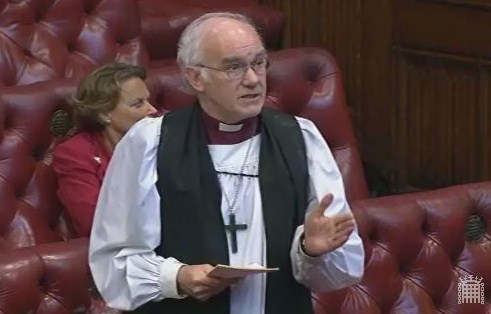
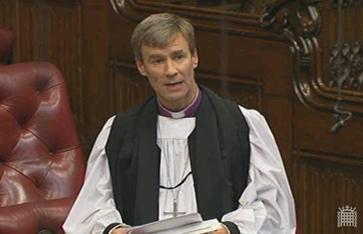
Parliament was recalled on Friday 26th September 2014 in order to debate UK involvement in military action against ISIS/ISIL, following a request for assistance from the Government of Iraq. In the debate that took place in the House of Lords the Bishop of Derby, Rt Rev Alastair Redfern, gave the following speech:

Bishop of DerbyMy Lords, I invite us to think for a moment about the role of government in the wider strategy. A number of noble Lords have pointed out that this is not just a military issue; it is about religious and political matters. We might just note that some of us in a liberal society are in danger of separating religious and political issues. These are mixed up, but we need to look at them together. Continue reading “Bishop of Derby on ISIS and UK Military Action in Iraq”

Archbishop Speaks on ISIS and UK Military Action in Iraq

“We must demonstrate that there is a positive vision far greater and more compelling than the evil of ISIL and its global clones. Such a vision offers us and the world hope and assurance of success in this struggle, not the endless threat of darkness” – Archbishop of Canterbury, 26/9/14

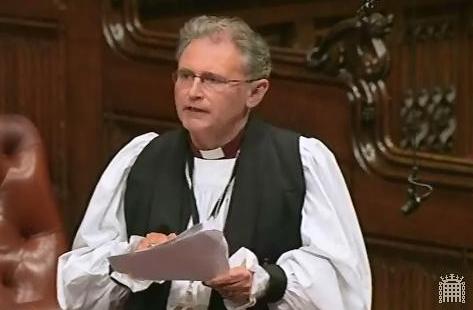
Parliament was recalled on Friday 26th September 2014 in order to debate UK involvement in military action against ISIS/ISIL, in response to requests from the Government of Iraq. In the debate that took place in the House of Lords the Archbishop of Cantery, Most Rev Justin Welby, gave the following speech:

Archbishop of Canterbury

My Lords, the danger of this debate is that we speak only of Iraq and Syria, ISIL, and armed force. ISIL and its dreadful barbarity are only one example of a global phenomenon, as the noble Baroness the Leader of the House mentioned. Continue reading “Archbishop Speaks on ISIS and UK Military Action in Iraq”

Bishop of Sheffield on UK trade with Colombia and human rights

On 30th July 2014, Lord Stevenson of Balmacara led a debate in the House of Lords on the motion ‘that the Grand Committee takes note of the Bilateral Agreement for the Promotion and Protection of Investments between the United Kingdom and Colombia’.

The Bishop of Sheffield, the Rt Revd Steven Croft, spoke during the debate, raising the issues of land ownership rights, protection of the human rights of indigenous Colombian people and the need for a monitoring system.

14.03.27 Bishop of SheffieldThe Lord Bishop of Sheffield: My Lords, I shall speak briefly to support and echo the excellent remarks of the noble Lord, Lord Stevenson, and the points made by other noble Lords on the dangers posed by this treaty, in three specific areas. Continue reading “Bishop of Sheffield on UK trade with Colombia and human rights”

Bishop of Chester speaks during debate on constitutional role of Leader of the House of Lords

On 28th July 2014, former speaker of the House of Commons, and Crossbench Peer the Rt Hon. the Baroness Boothroyd, moved a Motion to Regret in the House of Lords. The Motion stated:

That this House welcomes the appointment of Baroness Stowell of Beeston as Leader of the House of Lords, but regrets the decision of the Prime Minister to diminish the standing of the House by failing to make her a full member of the Cabinet; and requests that the Prime Minister reconsiders this decision.

The Bishop of Chester, the Rt Revd Peter Forster, took part in the debate on the motion. He spoke of the way in which power is distributed throughout the contemporary political system and how this distribution of power may need to be reconsidered if the public are to be re-engaged with the political process.

14.03 Bishop of ChesterThe Lord Bishop of Chester: My Lords, I want to associate these Benches fully with both sides of the Motion; first, the welcome to the noble Baroness in her role as Leader of the House and, secondly, the regrets that have been expressed already in our debate. Rather than focus on the details, I shall make a few comments about the wider symbolic significance of these events. A healthy society distributes power. The banking crisis arose partly because power got too concentrated in certain institutions and in a certain section of the financial community. Government, if it is about nothing else, is about the exercise of power. We have to accept and acknowledge that, and not try to deny it. The exercise of power calls for clear leadership, which is right, too. Continue reading “Bishop of Chester speaks during debate on constitutional role of Leader of the House of Lords”

Bishop of Chester highlights impact of built environment on well-being of society

On 28th July 2014, the Bishop of Chester, the Rt Revd Peter Forster, took part in a short debate in the House of Lords on the Government’s response to the Farrell Review of architecture and the built environment. He supported the relaxing of planning laws, to enable people to have a greater say in the built environment in which they live. He also argued that architects should play a more significant role in issues of planning, cautioning that houses built in the past 20 years risked becoming the slums of the future.

14.03 Bishop of ChesterThe Lord Bishop of Chester: My Lords, reference to the Tower of Babel earlier stimulated me to speak in the gap, and I believe that there is time to do so. Skyscrapers are quite ambiguous—they work in some places but not in others. Why does the Shard work but the Cheesegrater look completely out of place? Maybe that is just my own subjective judgment. Why do some cities that have no need of skyscrapers feel they want them? Some cities in Australia that have all the space they could possibly want still have an instinct to build skyscrapers. It indicates how important the environment is for us. We see no skyscrapers in Paris or Rome. The urban planners there do not allow them. Continue reading “Bishop of Chester highlights impact of built environment on well-being of society”

Bishop of Coventry – religious freedom “canary in the mine of human rights”

“Freedom of belief, including the freedom to change one’s belief, is like a canary in the mine of human rights. Abuses of religious freedom are often an early indication that all is not well….Where religious freedom is abused, peace and security often become more elusive.”

On 24th July 2014, Crossbench Peer Lord Alton of Liverpool led a short debate in the House of Lords to take note of international compliance with Article 18 of the Universal Declaration of Human Rights concerning freedom of belief. The Bishop of Coventry, the Rt Revd Christopher Cocksworth, spoke in the debate. He spoke of the role of religious freedom as a marker for other freedoms, and the positive role religious freedom can play in strengthening democracy and countering radicalisation and terrorism. He also spoke of the responsibility held by religious institutions to speak together on the importance of religious freedom for all, and to model these freedoms themselves.

13.10 Bishop of CoventryThe Lord Bishop of Coventry: My Lords, like other Members of your Lordships’ House, I am grateful to the noble Lord, Lord Alton, for securing this debate and pay tribute to his great efforts on this vital issue. I thank him for his reference to the 800th anniversary of the Magna Carta. I have a personal connection with the charter, as one of my predecessors, William, was among the reverend fathers who advised the King to enshrine its principles of justice and freedom, including freedoms of religion. Magna Carta, despite our own failings—to which reference has been made—to live up to its logic, remains the seed of a tree of which Article 18 of the Universal Declaration of Human Rights is part, and under the cover of which all the peoples of the world should be allowed to stand. Continue reading “Bishop of Coventry – religious freedom “canary in the mine of human rights””

Bishop of Peterborough highlights human rights abuses in North Korea

“There is great evil in the North Korean regime, which the civilised world cannot simply ignore…not to do anything about evil on this scale is to collude with it” – Bishop of Peterborough, 23/7/14

14.02 PeterboroughOn 23 July 2014 Lord Alton of Liverpool tabled a debate to ask Her Majesty’s Government ‘what was their response to the work of the United Nations Commission of Inquiry on Human Rights in the Democratic People’s Republic of Korea’.

The Bishop of Peterborough, the Rt Rev Donald Allister, spoke about the importance of keeping diplomatic channels open, the situation of  the Christian population in North Korea and the need to keep up pressure over human rights abuses. Drawing on his experiences of visiting South Korea, he spoke about the growth of Christianity there and the Anglican Church’s initiative, TOPIK—Towards Peace in Korea. Continue reading “Bishop of Peterborough highlights human rights abuses in North Korea”

Assisted Dying Bill – Archbishop of York speaks against

The Archbishop of York, Most Rev John Sentamu, spoke on 18th July 2014 in the Second Reading of the Assisted Dying Bill in the House of Lords.  His speech follows in full:

Archbishop of York

My Lords, let me state at the outset that the ‘official’ Church of England position was made very clear on 9th July 2005, when the General Synod voted on a motion referring to the joint submission of the C of E House of Bishops and the Roman Catholic Bishops’ Conference to your Lordships’ House Select Committee [1].  The motion argued strongly against making assisted suicide or euthanasia lawful. The vote was carried by 297 votes to 1.

This position was reaffirmed in a General Synod motion in 2012 [2].

My Lords, this present Bill is not about relieving pain or suffering. It makes that quite clear in its definition of a terminally ill patient to include those whose progressive illness can be relieved but not reversed.   This bill is about asserting a philosophy, which not only Christians, but also other thoughtful people of goodwill who have had experience in care for the dying must find incredible: that is, the ancient Stoic philosophy that ending one’s life in circumstances of distress is an assertion of human freedom.   That it cannot be.   Human freedom is won only by becoming reconciled with the need to die, and by affirming the human relations we have with other people.    Accepting the approach of death is not the attitude of passivity that we may think it to be.   Dying well is the positive achievement of a task that belongs with our humanity.   It is unlike all other tasks given to us in life, but it expresses the value we set on life as no other approach to death can do.    Continue reading “Assisted Dying Bill – Archbishop of York speaks against”

Bishop of Carlisle leads tributes to departing Leader of the House of Lords

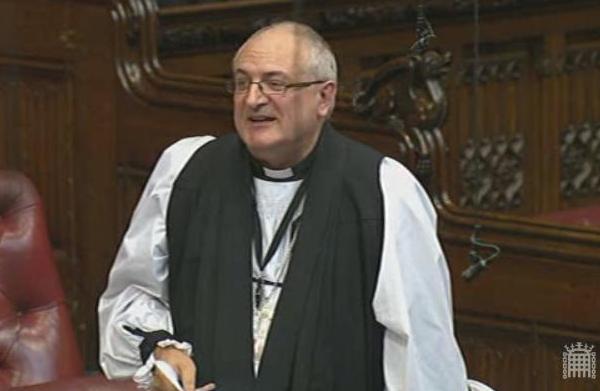
On 15th July, tributes were offered to the out-going Leader of the House of Lords, the Lord Hill of Oareford, following his nomination as the United Kingdom’s candidate to the European Commission. The Bishop of Carlisle, the Rt Revd James Newcome, led the tributes on behalf of the Lords Spiritual.

14.06.09 Bishop of CarlisleThe Lord Bishop of Carlisle: My Lords, I associate those of us on these Benches with the generous comments from around the House about the noble Lord, Lord Hill. My colleagues have been grateful for the support, the wisdom and the guidance of the noble Lord and his office for the Lords spiritual to enable our contribution to the work of the House to match the high levels of all other parts of the House. He also did a wonderful job as Education Minister and he has been a good friend to the Church and to the Lords Spiritual. Continue reading “Bishop of Carlisle leads tributes to departing Leader of the House of Lords”

Bishop of Carlisle calls for Government action to tackle religious persecution in Republic of Sudan

“…the local Christian diocese has to shoulder most of the burden of caring for people who are in desperate need, and of attempting to feed them when its own resources are pitifully small. Have Her Majesty’s Government given any consideration to providing aid, and so helping to meet people’s basic human rights to food and drink, through the church in that part of Sudan? Heroic efforts are being made to alleviate desperate need, but funding is urgently required” – Bishop of Carlisle, 14.7.14

CarlisleOn 14th July 2014, Baroness Cox led a short debate in the House of Lords to ask Her Majesty’s Government what is their assessment of human rights in the Republic of Sudan. The Bishop of Carlisle, the Rt Revd James Newcome, took part in the debate. He spoke about the dire humanitarian situation in the country and the increasing role being played by the church; and also highlighted a number of instances of persecution on the grounds of religious beliefs, urging the Government to put pressure on the Republic of Sudan to respect and promote Article 18 of the UN Declaration of Human Rights.

The Lord Bishop of Carlisle: My Lords, I, too, am most grateful to the noble Baroness, Lady Cox. Unlike her, I cannot claim to be an expert on Sudan, but some of my colleagues who would normally speak on this issue have been unavoidably detained today in another debate of some importance to the church at the General Synod in York. I am very grateful for this opportunity to contribute to this debate because the human rights issues it raises are of such enormous significance, not only for the individuals directly concerned but for the way in which we direct our foreign aid and conduct our foreign policy. Continue reading “Bishop of Carlisle calls for Government action to tackle religious persecution in Republic of Sudan”