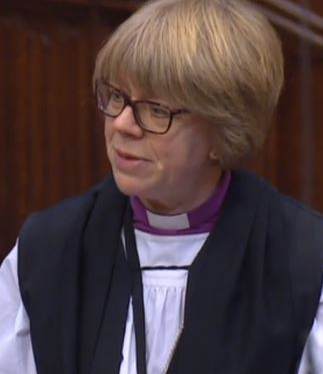
Refugees (Family Reunion) Bill: Bishop of Sheffield welcomes new routes for refugees

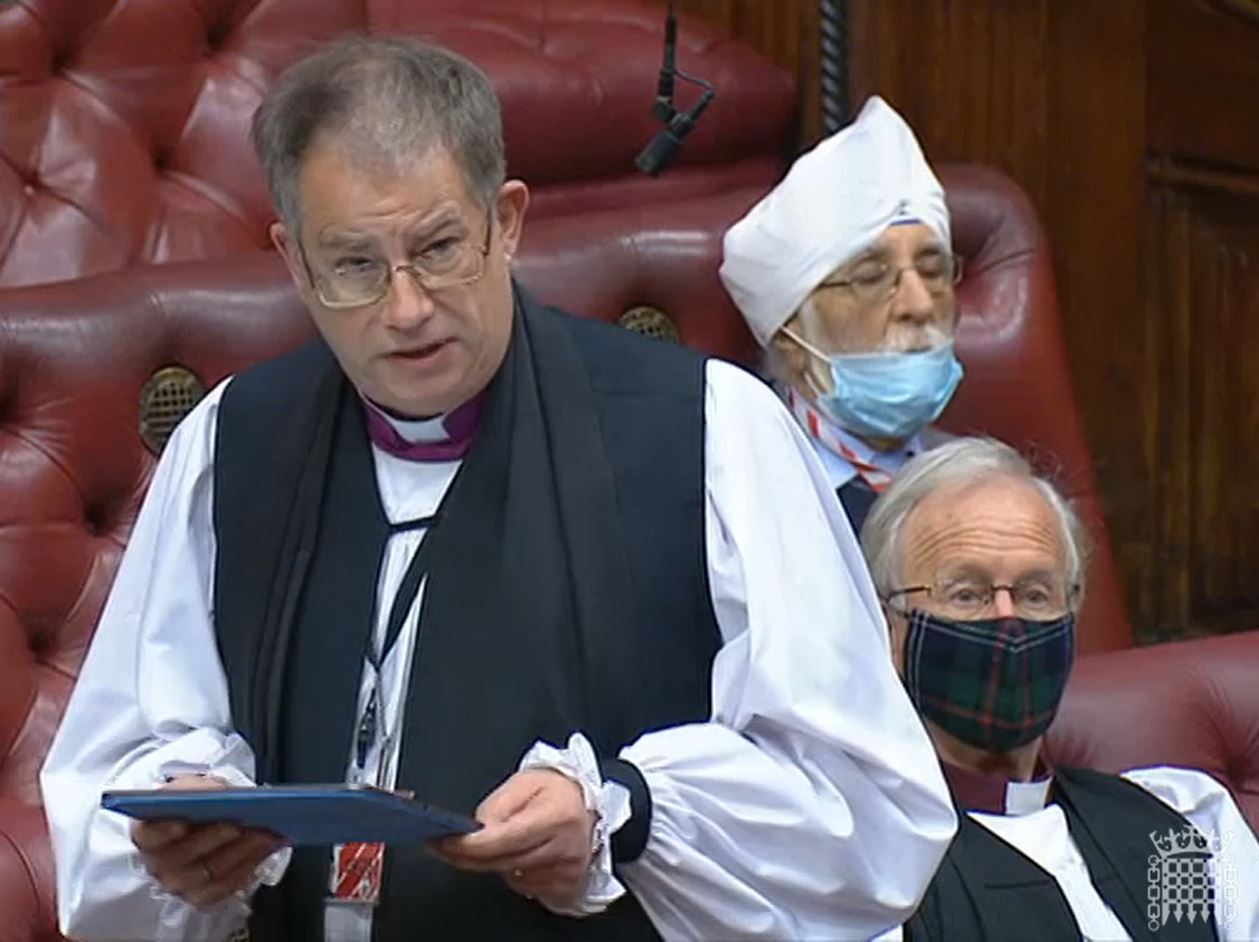
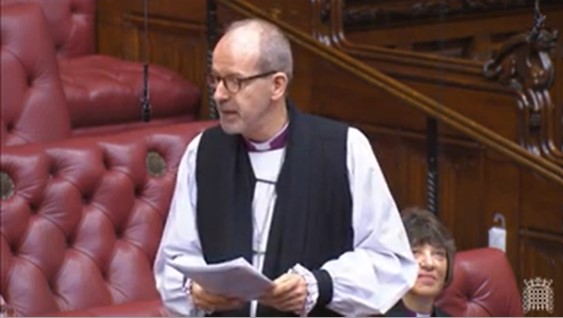
The Bishop of Sheffield spoke in support of the Refugees (Family Reunion) Bill, a private members bill tabled by Baroness Hamwee, at its second reading on 18th October:

The Lord Bishop of Sheffield: My Lords, I commend the noble Baroness, Lady Hamwee, for bringing forward this important Bill, and I acknowledge the work of other noble Lords on similar Bills.

The sustained interest in a Bill of this kind should tell us something: that the current route to family reunion is unduly restrictive and prohibitive. Government data shows that in 2023 there were over 7,000 unaccompanied asylum-seeking children in the care of local authorities in the UK, 141 of those in the communities that I serve as bishop in Doncaster, Rotherham and Sheffield.

Continue reading “Refugees (Family Reunion) Bill: Bishop of Sheffield welcomes new routes for refugees”

Education (Values of British Citizenship) Bill: Bishop of Sheffield speaks in support of legislation

On 18th October 2024, the Bishop of Sheffield spoke at the second reading of the Education (Values of British Citizenship) Bill, a private members bill tabled by Lord Harries of Pentregarth, supporting the bill and welcoming provision to improve provision for education on religion and the environment:

The Lord Bishop of Sheffield: My Lords, I too congratulate the noble and right reverend Lord, Lord Harries, on bringing forward this Private Member’s Bill, and indeed on the many years of thinking and hard work which have brought the Bill to this point. I welcome the Bill, support its aims and heartily welcome the five specific headings, which together give some definition of what is meant by “British values” in an educational context.

Especially in an educational context, it will be vital to foster a culture in which these headline categories are inhabited in a meaningful way. This kind of culture is capable of being fostered as much in the teaching of maths and science as through the teaching of citizenship, PSHE or RE, but these latter subjects provide an opportunity for values to be addressed directly and explicitly. I shall say something further about RE in particular, but the list of values identified in the Bill includes respect for the environment, and I would also like to say something about the potential for a natural history GSCE.

Continue reading “Education (Values of British Citizenship) Bill: Bishop of Sheffield speaks in support of legislation”

Bishop of Sheffield speaks in debate on 40th anniversary of famine in Ethiopia

The Bishop of Sheffield spoke in a debate commemorating the 40th anniversary of the 1984 famine in Ethiopia, stressing the need to act to prevent famines and similar crises before they occur:

The Lord Bishop of Sheffield: My Lords, I too am grateful to the noble Baroness, Lady Featherstone, for securing this important debate and for the opportunity to contribute to it.

I remember 1984 very vividly. That summer, I graduated from university and got married, and early that autumn, I began training for ordained ministry. I have clear memories of the powerful BBC news coverage of the Ethiopian famine—which, as the noble Baroness reminded us, was broadcast exactly 40 years ago this month—and of the Band Aid Christmas single that year and the Live Aid concerts of 1985. Those events were all quite formative for me.

In retrospect, our crowd-sourced responses to the famine in 1984 were naive, not least in treating the famine as simply a natural disaster and in failing to take into account the human factors that contributed to it, including both the global climate emergency, or global warming as we were just beginning to call it then, and the more local political and military practices. Although we may have learned a good deal in the past 40 years, and although we may be significantly more sophisticated now in our analysis of the causes of famine in that part of the world, it is evident that we are barely more effective at responding to it, let alone at preventing it. Both those aims are urgent: we need to respond effectively to the current crisis, and we need to improve our capacity to anticipate and therefore to forestall future famines.

Continue reading “Bishop of Sheffield speaks in debate on 40th anniversary of famine in Ethiopia”

Bishop of Leicester speaks in debate on sustainable development

The Bishop of Leicester took part in a debate on global conflict and the UN sustainable development goals on 17th October 2024, raising the need for increased understanding and cooperation across faith groups and communities:

The Lord Bishop of Leicester: My Lords, I too am grateful to the noble Lord, Lord McConnell, for securing this debate in advance of the Budget, which is due to be delivered in a fortnight’s time. Undoubtedly, that Budget will involve difficult decisions and sacrifices. It is easy to lose sight of how very fortunate we are as a nation when compared with many others around the world.

As noble Lords have mentioned, the UN has warned that progress towards the sustainable development goals has ground to a halt and in some cases been reversed. Over the last year, the prospect of achieving the 16th sustainable development goal of

“peaceful and inclusive societies”

for sustainable development, and

“access to justice for all”

has seemed even further out of reach as war in the Middle East has become broader and deeper, and multiple conflicts in Africa have also worsened.

Continue reading “Bishop of Leicester speaks in debate on sustainable development”

Bishop of Oxford urges government to commit to accelerating transition to electric vehicles

On 16th October 2024, the Bishop of Oxford took part in a debate on a report from the Environment and Climate Change Committee EV strategy: rapid recharge needed, urging the government to work to accelerate the transition to electric vehicles and to ensure parity and fairness in the emerging sector:

The Lord Bishop of Oxford: My Lords, I too warmly welcome this debate as a member of the committee that produced the report. I pay tribute to the noble Baroness, Lady Parminter, for her introduction to the debate and her very careful, wise and gracious—and patient—leadership of the committee in its first three years.

My experience of serving on the ECC Committee across the three years was that each of the challenges we addressed proved to be both more significant and more complex than we first appreciated. It was a tremendous learning curve. Each issue had multiple questions and problems associated with it and needed complex solutions. That was clearly the case with the EV report before the House today.

Some very good work has been done by the previous Government, manufacturers and local authorities, but much more needs to be done—and urgently—to keep this transition on track. I would highlight that need for urgency in the transition. As the noble Baroness, Lady Jones, has just said, the effects of climate change across the world are accelerating, as all of us in this Chamber recognise, often affecting those who have least, who are least resilient and whose emissions in the present and in the past have been lowest across the world.

Continue reading “Bishop of Oxford urges government to commit to accelerating transition to electric vehicles”

Bishop of St Albans highlights need for investment in rural communities

The Bishop of St Albans spoke in a debate on government priorities for rural communities on 15th October 2024, raising the need for concentrated investment in key sectors such as housing in rural areas:

The Lord Bishop of St Albans: My Lords, I thank the noble Baroness, Lady McIntosh, for getting this debate and I congratulate the noble Lord, Lord Elliott, on his excellent speech. I declare my interest as president of the Rural Coalition.

Rural communities make up nearly 20% of the population. That is similar to the number of people living in London, yet our biggest metropolis, among others, often feels far more integral to our policy and governance than our rural communities do. Rural communities are not just the responsibility of Defra; they are a significant proportion of our population, businesses, services and economy, and they cut across every government department. The specific impacts and challenges of policy rollout in rural areas need to be baked into the decision-making process of every single government department—not an afterthought but integral to the development of policy from the very beginning. Rural concerns are so often given to Defra which, while it has the lead on rural affairs, has very few of the levers necessary to bring about change. The sustainability of our rural communities should be of critical concern to us all, regardless of where we live.

Continue reading “Bishop of St Albans highlights need for investment in rural communities”

Bishop of Sheffield speaks in debate on Infected Blood Inquiry

The Bishop of Sheffield spoke in a debate on the Infected Blood Inquiry on 15th October 2024, querying whether the government would establish a wide reaching duty of candour and the need to tackle a defensive culture in the public sector:

The Lord Bishop of Sheffield: My Lords, I am grateful to the Minister for scheduling this vital debate and for this opportunity to contribute to it. I follow other noble Lords in expressing my gratitude to Sir Brian for his comprehensive report and my deep sorrow at the distress suffered by the infected and affected alike, with many cases ongoing.

Continue reading “Bishop of Sheffield speaks in debate on Infected Blood Inquiry”

Bishop of Lincoln speaks in debate on European Relations

On 10th October 2024, the Bishop of Lincoln took part in a debate on relations between the UK and Europe, highlighting the value in strong community relationships:

The Lord Bishop of Lincoln: My Lords, I am grateful to the noble Baroness, Lady Smith, for having made this debate possible and am looking forward to the speech of the noble Baroness, Lady Hodge, directly after this. Her experience as MP for Barking highlights how important it is that we are alert to the risk that cultural and ethnic diversity in our country can be exploited by extremists, and how important it is for us, as faith communities, not to have our faith and belonging co-opted by extremists in the way that we saw in the summer.

Faith and culture must not be seen as a cause of conflict. Our beliefs and values enrich and inspire us; these are the foundations of both individual and communal strength. Our cultural diversity, moreover, is a source of vitality, creativity and wisdom, but only when we are able to come together in dialogue, study and celebration. Faith remains a key feature of modern society in the UK and across Europe. It is worth remembering that Christianity, Islam and Judaism all have roots in the Middle East and long histories in Europe. It is vital that we build constructive relationships between these significant faith communities as we look towards a more positive future.

Continue reading “Bishop of Lincoln speaks in debate on European Relations”

Bishop of St Albans leads debate on support and compensation for farmers

The Bishop of St Albans led a debate on support and compensation for farmers affected by flooding on 10th October 2024:

The Lord Bishop of St Albans: To ask His Majesty’s Government what plans they have to ensure farmers are supported and recompensed for their role in flood prevention.

My Lords, I am grateful to all Members of your Lordships’ House who have signed up for this topical debate, giving us a few minutes to explore the extraordinary challenges that flooding is causing for our farming community.

Continue reading “Bishop of St Albans leads debate on support and compensation for farmers”

Bishop of Oxford urges government to tackle issues in social care

The Bishop of Oxford spoke in a debate on social care strategy on 10th October 2024, referencing the work of the Archbishops’ Commission on Reimagining Care and the need for a social care renewal:

The Lord Bishop of Oxford: My Lords, I too welcome this debate. I particularly appreciated the initial appeal by the noble Baroness, Lady Tyler, for a reframing of a broader conversation. Like others across this House, I pay tribute to the many unpaid carers and those who work in social care, who invest their lives in the well-being of others. As has been said, in this debate we acknowledge together that our social care system is in urgent need of reform and that this is a key moment. I share the hope that the Government will take the first steps in that reform in the very near future. Social care impacts us all, in terms of our responsibilities and needs. It brings the most vulnerable in our society from the margins to the centre of our attention and our love.

Last year, the Archbishops’ Commission on Reimagining Care published its excellent report, Care and Support Reimagined. The commission was chaired by Dr Anna Dixon MBE and the right reverend James Newcombe, then Lord Bishop of Carlisle. The report commends the development of a national care covenant. The biblical notion of covenant is based not around commercial contract but around a wider societal promise and mutual expectation, and is focused on relationships, mutuality and partnership. It demands a shared vision across society and common values.

Continue reading “Bishop of Oxford urges government to tackle issues in social care”