Armed Forces Bill: Bishop of St Albans supports raising age of enlistment to 18

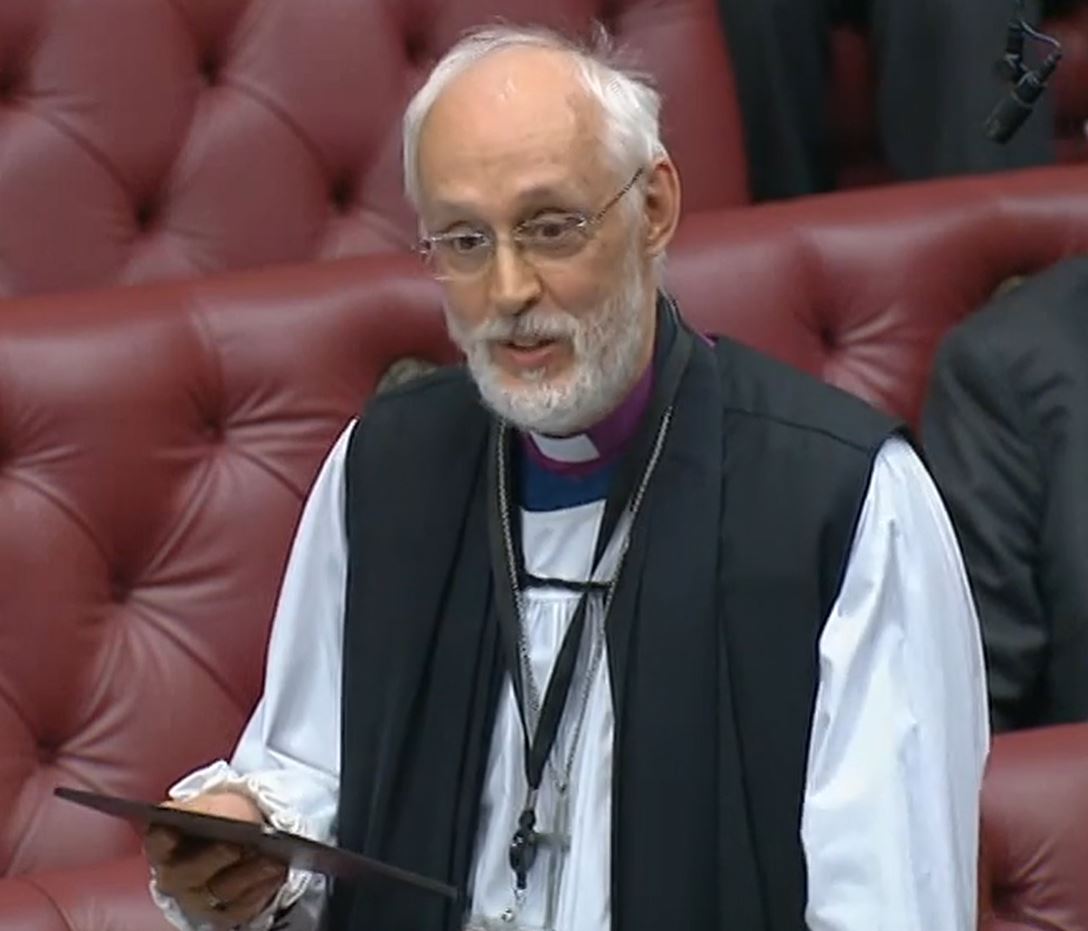
On 8th November 2021, the House of Lords debated the Armed Forces Bill in committee. The Bishop of St Albans spoke in the debate, supporting an amendment tabled by Baroness Massey of Darwen which would raise the age of enlistment into the armed forces to 18:
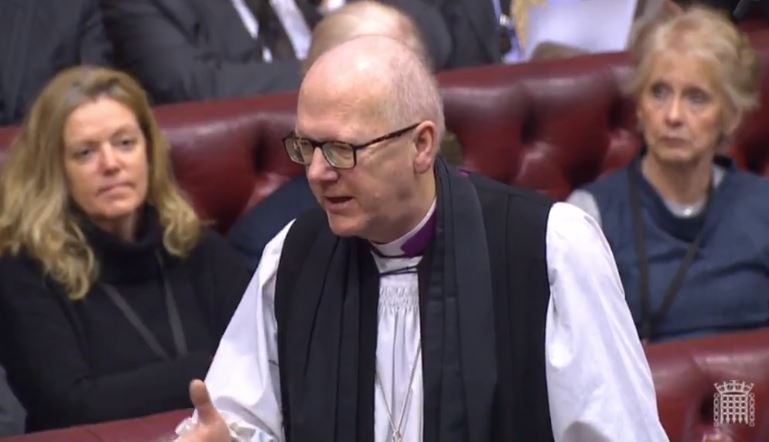
The Lord Bishop of St Albans: My Lords, I rise to speak in support of Amendment 61 in the name of the noble Baroness, Lady Massey of Darwen, to which I have added my name. I have done so because of my concerns about the well-being of young people and because I am not convinced that there are sufficient benefits in allowing the enlistment of young people of 16 or 17 rather than 18. Evidence and personal experience tell me that there is not.

I speak because of the experience of a member of my own family, so I know a story inside out, but I have also spoken to a number of parents whose children were recruited under the age of 18—and I have heard some very similar stories those described by the noble Baroness, Lady Massey, in her speech. I have no doubt that, for some early leavers recruited below the age of 18, the mental damage can take years to recover from. These recruits have the legal status as children and are entitled in law under safeguarding legislation to be protected from harm as far as possible.

There are a number of other reasons why I question this policy. Younger recruits suffer from very high drop-out rates. Official statistics show that, once enlisted, 30% of the Army’s under-18 recruits leave or are dismissed before they finish their training. They can find themselves out of work and education within months of joining, and these discharged recruits are not tracked, so we cannot speculate on how they fare after they leave the military. That being said, it would not be unreasonable to say that, had the option of joining up not been available, they would have stayed in full-time education, taken an apprenticeship or worked part time while undertaking a qualification. We are talking about not some small, troubled minority who failed to adapt adequately to military service, but nearly a third of all junior recruits. That is affecting some 700 young people a year, according to the Child Rights International Network.

Continue reading “Armed Forces Bill: Bishop of St Albans supports raising age of enlistment to 18”
Bishop of London speaks on need to improve housing standards in the UK

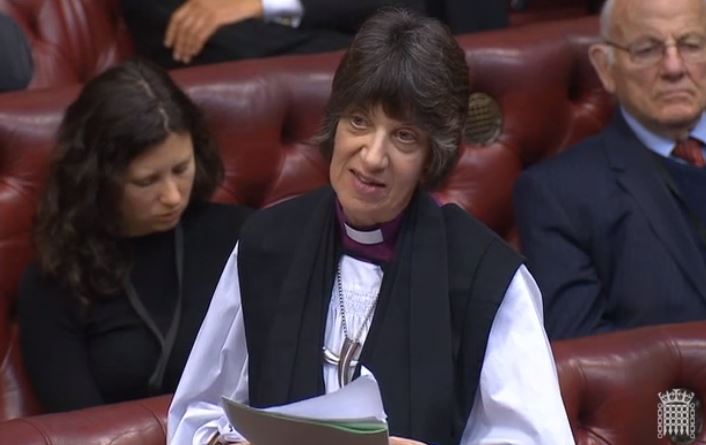
The Bishop of London spoke in a debate following a motion to take note: “That this House takes note of the situation of leaseholders who are facing substantial bills for fire and building safety remediation work; and of the need for safe, green and affordable housing” tabled on 4th November 2021, arguing for greater protection to leaseholders:

The Lord Bishop of London: My Lords, I, too, thank the noble Lord, Lord Stunell, for securing this debate, and I thank the noble Lord who will speak after me. It has been four years, four months and 20 days since the Grenfell Tower fire. On the 14th day of every month, Grenfell survivors and their loved ones walk around the remains of Grenfell Tower to signal that they are yet to receive justice for what has happened.

Many in the other place allowed the Fire Safety Bill to pass on the promise that the issues relating to the remediation of unsafe buildings would be dealt with comprehensively and thoroughly in the Building Safety Bill. However, the Bill has just completed Committee in the other place and the Government have yet to set out how they intend to deal with the unaffordable costs faced by leaseholders for interim safety measures and the remediation of unsafe buildings.

The Government’s reannouncement of £5 billion for the removal of unsafe cladding only raised concerns for those affected. The Red Book notes that £3 billion will be spent over the spending review period up to the end of March 2025. Can the Minister tell the House when he expects all dangerous cladding will have been removed?

Continue reading “Bishop of London speaks on need to improve housing standards in the UK”

Police, Crime, Sentencing and Courts Bill: Bishop of London adds support to amendments aimed at protecting sites for Gypsy, Roma, and Traveller Communities

The House of Lords debated amendments to the Police, Crime, Sentencing & Courts Bill in committee on 3rd November 2021. During the debate, the Bishop of London spoke in support of amendments which would limit police powers relating to the proposed offence of criminal trespass, which would have particular effect on Gypsy, Roma and Traveller communities and the sites used by these communities:

The Lord Bishop of London: My Lords, I have listened with interest to what noble Lords have said on this group of amendments, and I rise to add my support to them, particularly Amendment 149.

In 2019, the General Synod, the parliament of the Church of England, held a serious and lengthy debate on the treatment of Gypsy, Roma and Travelling communities. It noted the long and ugly history, going back at least as far as the Egyptians Act, passed by your Lordships’ predecessors in 1530, which sought to ban further immigration from Romani Gypsies and to deport resident Gypsies.

Continue reading “Police, Crime, Sentencing and Courts Bill: Bishop of London adds support to amendments aimed at protecting sites for Gypsy, Roma, and Traveller Communities”

Police, Crime, Sentencing and Courts Bill: Bishop of Manchester supports amendments to limit police powers regarding criminal trespass

On 3rd November 2021, the Bishop of Manchester spoke in support of amendments to the Police, Crime, Sentencing & Courts Bill in committee. The amendments, tabled by Baroness Whittaker, aimed to limit police powers relating to the offence of “criminal trespass”, particularly pertaining to sites used by Gypsy, Roma and Traveller Communities:

The Lord Bishop of Manchester: My Lords, I support Amendments 133 and 149 in my name and the names of the noble Baroness, Lady Whitaker, who has spoken so eloquently, and the unavoidably absent noble Lords, Lord Alton and Lord Bourne. I also wish to support Amendment 147 in the name of the noble Lord, Lord Rosser, and others. I refer noble Lords to my interest in policing ethics that is set out in the register.

As I said at Second Reading, Gypsy, Roma and Traveller people have been a vital part of the economy of our nation—not least its agricultural sector—for many generations. Their mobility has enabled them to provide labour at the point of need for shorter or longer periods of time. The consequence of that very flexibility is that they have not acquired fixed land, property or dwellings over generations, but are constantly at the whim of the availability of sites and pitches for their vehicles and caravans. The labour shortages that presently beset us might serve as a reminder that we owe a debt to those who have provided a flexible workforce in times past. Instead, this Bill seeks to push them towards criminality while making no adequate alternative provision for them.

Continue reading “Police, Crime, Sentencing and Courts Bill: Bishop of Manchester supports amendments to limit police powers regarding criminal trespass”

Bishop of Newcastle makes valedictory speech on economic planning and issues arising from the government’s budget

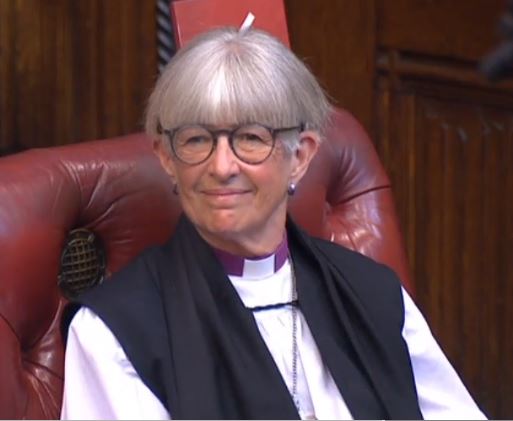
On 3rd November 2021, the Bishop of Newcastle gave her valedictory speech in the House of Lords, raising issues of economic planning and the impact of the government’s budget on poorer communities, and paying tribute to the North-East of England:

The Lord Bishop of Newcastle: My Lords, these past six years during which I have served as Bishop of Newcastle and as a Member of your Lordships’ House have, in a good way, been the most extraordinary years of my life. After a lifetime of living in the south, these six years in the north-east have helped me to see things from a different and much richer perspective.

The usual way to assess a Budget, the one we see in the newspapers, is to identify the winners and losers. I want strongly to resist this approach. When, aeons ago, I studied for my degree in economics, I learned that the way we spend our money shows what we value, what really matters to us. The question that matters is not what will I or we get out of this, but what kind of values does this Budget embrace—what is the moral framework undergirding it?

Continue reading “Bishop of Newcastle makes valedictory speech on economic planning and issues arising from the government’s budget”

Police, Crime, Sentencing and Courts Bill: Bishop of St Albans moves amendments on poaching and illegal hare coursing

On 3rd November 2021, the House of Lords debated the Police, Crime, Sentencing and Courts Bill in committee. The Bishop of St Albans moved two amendments to the bill which would broaden the powers of the police and courts to pursue those engaged in illegal hare coursing and poaching of game:

The Lord Bishop of St Albans: My Lords, I declare my interest as president of the Rural Coalition. In moving Amendment 124, I will speak also to Amendment 128 in my name. These amendments seek to strengthen police powers to deal with illegal hare coursing and, more generally, the illegal poaching of game.

Amendment 124 would amend the Game Laws (Amendment) Act 1960 to broaden the police’s powers to remove or arrest an individual trespassing on land where there is clear intent to trespass in pursuit of game, as defined by Section 9 of the Night Poaching Act 1828 and Section 30 of the Game Act 1831. It would also allow the police to seize any vehicles or animals used for the killing or taking of game found in the possession of the trespasser, and would allow the court to order

“the offender to reimburse any expenses incurred by the police in connection with the keeping of any animal seized”.

Further, the amendment seeks to broaden the court’s ability to limit repeated violations by issuing disqualification orders for those individuals convicted under the Night Poaching Act or Game Act for having custody of a dog or dogs.

Continue reading “Police, Crime, Sentencing and Courts Bill: Bishop of St Albans moves amendments on poaching and illegal hare coursing”

Armed Forces Bill: Bishop of St Albans tables amendment to mandate research into problem gambling and gambling related harm in the military

On 2nd November 2021, the House of Lords debated the Armed Forces Bill in committee. The Bishop of St Albans tabled an amendment to the bill which would require that the Ministry of Defence conduct research into gambling related harm in the military, and stood as part of a group of amendments focused on mental health and wellbeing in the armed forces:

The Lord Bishop of St Albans: My Lords, I declare my interest as a vice-chair of Peers for Gambling Reform. I rise to speak to Amendment 60 in my name. I tabled it because I am concerned that the Ministry of Defence is not taking gambling-related harm in the military community sufficiently seriously. On two occasions in response to my concerns in this area, the Ministry of Defence has stated that it has seen no evidence, or does not hold information, suggesting that serving personnel are more prone to problem gambling than any other group in society.

At the same time, it was disappointing to hear that evidence from the United States that suggested that serving personnel were more prone to problem gambling did not constitute an evidence base for the UK Armed Forces. This leaves us with a clear impasse, where the Government refuse to accept research from abroad but, at the same time, do not commit to researching whether there is a problem.

Continue reading “Armed Forces Bill: Bishop of St Albans tables amendment to mandate research into problem gambling and gambling related harm in the military”

Police, Crime, Sentencing and Courts Bill: Bishop of Gloucester moves amendments on bail for primary carers of children

On 1st November 2021, the House of Lords debated the Police, Crime, Sentencing and Courts Bill in Committee. The Bishop of Gloucester spoke in the debate, in support of her amendment 110 and other amendments which would require courts to consider the impact of not granting bail on a child when the recipient of a bail decision is a primary carer to that child:

The Lord Bishop of Gloucester: My Lords, I am pleased to move this amendment, which has the support of the noble and learned Lord, Lord Falconer, the noble Lord, Lord Dubs, and the noble Baroness, Lady Massey. I am grateful for the knowledge and wisdom they will bring to the debate. I declare an interest as Anglican Bishop for Her Majesty’s Prisons in England and Wales and president of the Nelson Trust.

The sentencing of a primary carer can have a serious detrimental impact on the rights of a child and their life chances, yet the fact that they are a primary carer is not consistently considered by the court making the sentencing decision. Amendment 110 would require judges to consider the impact on a child of the decision of not granting bail when determining in criminal proceedings whether to grant bail to a primary carer of that dependent child. Amendments 215 to 217 aim to address inconsistencies in sentencing by requiring judges and magistrates to give due regard to the impact of a sentence on any dependent children and their welfare when sentencing a primary carer. The intention of Amendment 218 is to gather the relevant data about the number of prisoners who are primary carers and the number of children who have a primary carer in custody. Given that there are five amendments here, I hope noble Lords will bear with me.

Continue reading “Police, Crime, Sentencing and Courts Bill: Bishop of Gloucester moves amendments on bail for primary carers of children”

Police, Crime, Sentencing & Courts Bill: Bishop of Bristol supports amendment to limit data extraction powers of immigration officers

On 27th October 2021, during a committee debate on the Police, Crime, Sentencing and Courts Bill, the Bishop of Bristol spoke in support of an amendment tabled by Lord Rosser which would seek to remove immigration officers from lists of people authorised to carry out data extraction from personal devices:

The Lord Bishop of Bristol: My Lords, some common themes are emerging. I rise in support of Amendment 107, which was tabled by the noble Lord, Lord Rosser, and to which I have added my name, alongside that of the noble Baroness, Lady Jones.

The inclusion in this Bill of immigration officers among those authorised to undertake digital extractions strikes me as extremely troubling, particularly in the absence of significantly more detail on the safeguards, including the meaning of “agreement” and the specificity of the data sought, and the relevant training and expertise of these officers. Voluntary provision and agreement to extract data must surely rely on a level of informed consent. If it is not, then “voluntary” and “agreement” are just empty words.

Continue reading “Police, Crime, Sentencing & Courts Bill: Bishop of Bristol supports amendment to limit data extraction powers of immigration officers”

Bishop of Bristol speaks on importance of maintaining overseas aid

The Bishop of Bristol spoke in a debate on the Overseas Development Aid Budget on 27th October 2021, emphasising the importance of overseas aid in helping countries manage crises, climate initiatives, and public health measures:

The Lord Bishop of Bristol: My Lords, I am grateful to the noble Baroness, Lady Ritchie of Downpatrick, for initiating this short debate. Cuts to overseas aid continue to be of great concern to the Churches, which set the target of 0.7% at a meeting of the World Council of Churches in 1958. The target was then taken up by the United Nations in 1970.

The Government have now walked away from their own manifesto commitment to the 0.7% target and there are considerable concerns, as we have heard, that it may never be regained, despite the Chancellor’s announcement in today’s Budget. Meanwhile, as we have also heard, there are increasing needs for aid, not least because of Covid and climate change. As the most reverend Primate the Archbishop of Canterbury said in response to recent cuts:

“Reducing our overseas aid commitment at this critical time is morally wrong, politically foolish and an act of national self-harm.”

Continue reading “Bishop of Bristol speaks on importance of maintaining overseas aid”