Police, Crime, Sentencing and Courts Bill: Bishop of Manchester supports amendments consolidating mental health and family support for police force

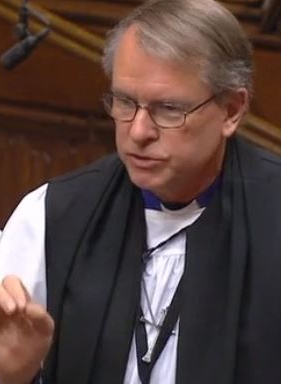
On 2oth October 2021, the Bishop of Manchester spoke in a debate on the Police, Crime, Sentencing and Courts Bill, adding his support to a group of amendments intending to create a police covenant to better support the mental health and wellbeing of police and their families:
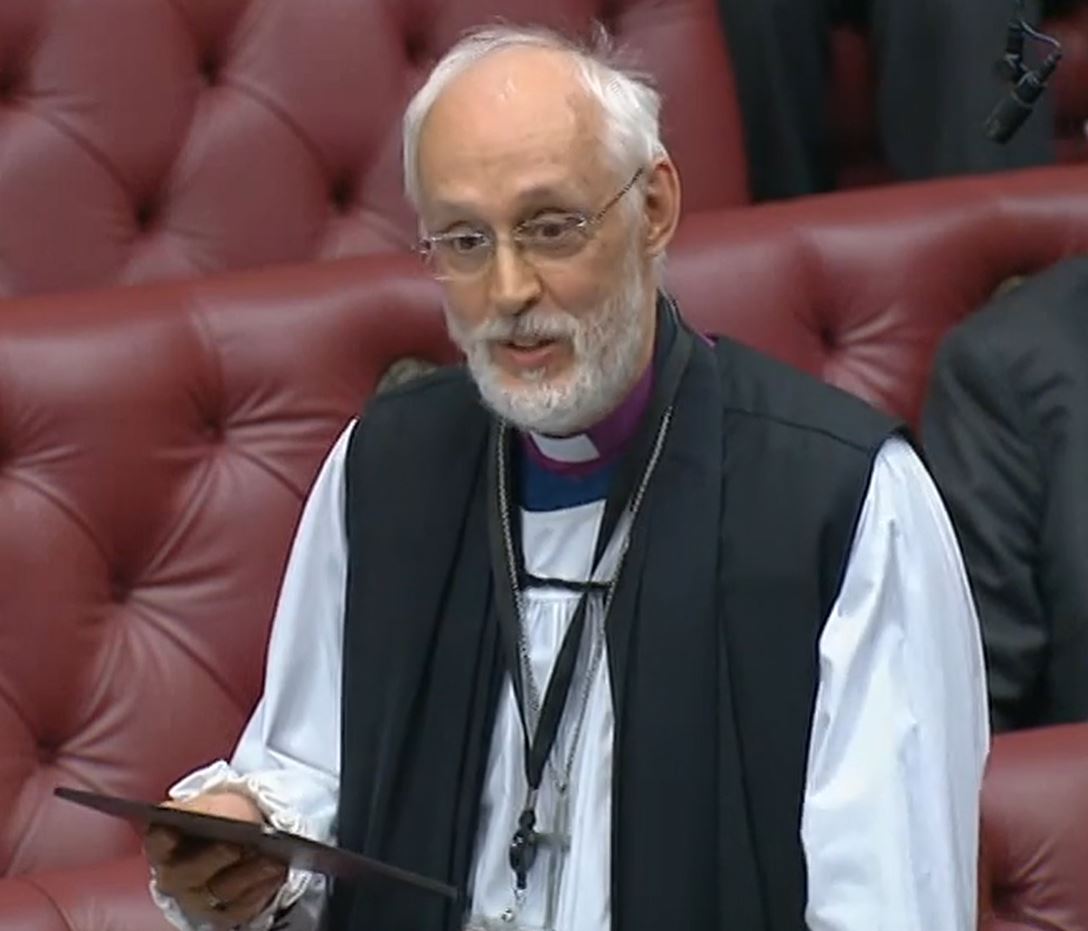
The Lord Bishop of Manchester: My Lords, I draw your Lordships’ attention to my interests in the world of policing as set out in the register, particularly in policing ethics, both with the Greater Manchester Police and the National Police Chiefs’ Council.

At Second Reading I referred briefly to the culture of policing. I did not specifically mention a policing covenant given that time was so short, but I have been intrigued by the debate we have had this afternoon. I note the way in which Members have referred to the Armed Forces covenant. That is helpful in some ways, although I am just a little concerned. As I said at Second Reading, the heart of the policing model is that our police are civilians in uniform; they are not the Armed Forces. We need to be careful not to put police too easily into the same category as the Armed Forces. The Armed Forces are agents of the state while police are agents of society in a slightly different way. That is an important civilian distinction I would want always to hold before us.

Continue reading “Police, Crime, Sentencing and Courts Bill: Bishop of Manchester supports amendments consolidating mental health and family support for police force”
Archbishop of York pays tribute to his friend David Amess

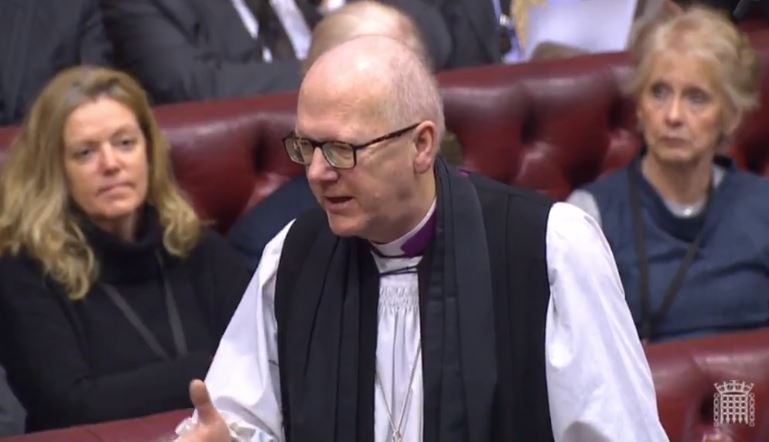
In the House of Lords on 18th October 2021 Peers paid tribute to Sir David Amess MP, following his tragic murder. The Archbishop of York, Most Revd Stephen Cottrell, spoke of his friendship with Sir David during his time as Bishop of Chelmsford, how his faith motivated him, and of the need for more kindness in politics.

My Lords, on behalf of the most reverend Primate the Archbishop of Canterbury, the bishops of the Church of England and, I am sure, all Christian people and all people of good will, I am here to offer the family of Sir David Amess and the constituents of Southend West my condolences and the assurance of the prayers of the Church. I am very grateful for all that has been said thus far, and, certainly, we on these Benches wish to associate ourselves with those comments.

Continue reading “Archbishop of York pays tribute to his friend David Amess”

Bishop of Durham speaks about tackling child poverty and health inequality

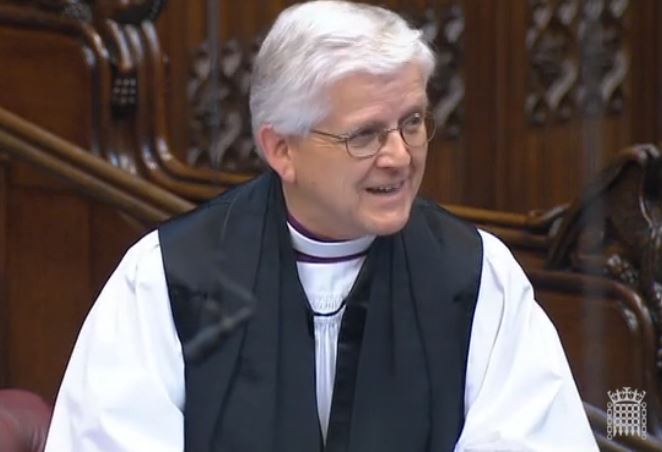
The Bishop of Durham spoke in a debate on regional inequalities on 14th October 2021, discussing issues relating to child poverty and health inequality:

The Lord Bishop of Durham: My Lords, I thank the noble Lord, Lord Liddle, for securing this debate, and am pleased to follow on from the noble Lord, Lord Young of Cookham. I, too, look forward to the maiden speech of the noble Viscount, Lord Stansgate.

Jubilee is a strong theme of our Judaeo-Christian tradition. Jubilee includes setting people free from the impacts of inequality. If levelling up is going to mean anything significant, it must tackle the inequalities that exist in our nation. It needs to be a kind of jubilee.

This week is Challenge Poverty Week. Child poverty is a very good measure of regional inequalities within England, as it is both an indicator of poverty and a perpetuator of it. Child poverty highlights the complexity of issues that cause it, including education and employment. It has lifelong impacts on children as they grow into adults and shape their communities. The recent report by Donald Hirsch for Loughborough University estimates that the cost of child poverty is £38 billion a year, a significant increase in the past five years.

We see far higher levels of child poverty in some places than others. It is not a simple divide of a wealthy London and an impoverished north. The Institute for Fiscal Studies reported in its Green Budget for 2020 that

“inequalities within regions are larger than the inequalities between regions.”

Continue reading “Bishop of Durham speaks about tackling child poverty and health inequality”

Bishop of St Albans tables question for debate on gambling related harms

The Bishop of St Albans tabled a question for short debate on the topic of the recently published Gambling Related Harms Evidence Review on 14th October 2021:

The Lord Bishop of St Albans: To ask Her Majesty’s Government what assessment they have made of the report by Public Health England Gambling-related harms evidence review, published on 30 September.

My Lords, I declare my interests as a vice-chair of Peers for Gambling Reform. I thank Public Health England and all those who worked on this review, which sheds light on the health impacts of gambling-related harms and quantifies the direct cost of gambling harms to the Government. The review concluded that 0.5% of our population were considered problem gamblers and 7% of the population of the UK are negatively affected by gambling. This is over 4 million people in England and over 5 million people across the UK as a whole, which is one in 12 people either directly or indirectly affected by gambling-related harms. This is a significant social problem.

Continue reading “Bishop of St Albans tables question for debate on gambling related harms”

Bishop of Oxford speaks on community care and gaps in the social care sector

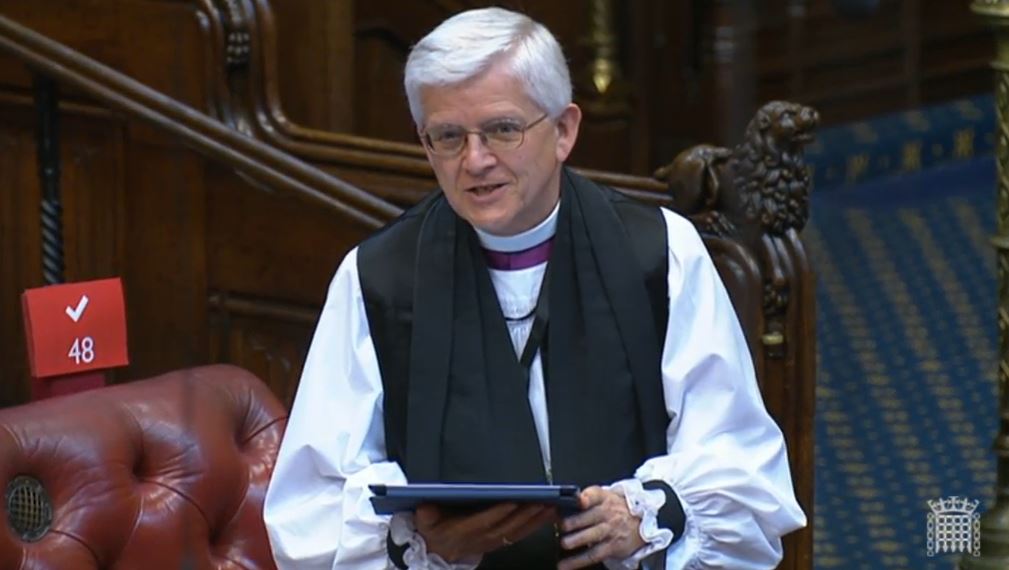
The Bishop of Oxford spoke in a debate on social care on 14th October 2021, raising issues of the need for community care and the risks posed by high vacancies in the care sector:

The Lord Bishop of Oxford: My Lords, it is an honour to contribute to this key debate. Like others, I am grateful to the noble Baroness, Lady Pitkeathley, for her excellent introduction. I welcome the Minister to his new responsibilities. It is a privilege to follow the noble Baroness, Lady Finlay.

One of the key texts on which so much of our human civilisation is based contains these lines:

“Honour your father and mother, so that your days may be long in the land that the Lord your God is giving you.”

The care offered by one generation to another is fundamental to human flourishing and a good society. As we have heard, that care is offered in families generously and unstintingly, but it needs to be supported by the wider community, through creative partnerships with the third sector, and by the state. These principles have led to our current system of social care, which now stands in urgent need of fresh vision and reform.

Continue reading “Bishop of Oxford speaks on community care and gaps in the social care sector”

Social Security (Up-rating of Benefits) Bill: Bishop of Durham calls for further action on benefits issues

On 13th October 2021, the House of Lords debated the Social Security (Up-rating of Benefits) Bill in its second reading. The Bishop of Durham spoke in the debate, urging the government to do more to support those in poverty:

The Lord Bishop of Durham: My Lords, when I read the title of the Bill I thought, “Good: we will have before us a measure that covers the wide issues of the uprating of the wide range of social security benefits we have, most notably pensions, universal credit and perhaps the question of legacy benefits.” So I was very disappointed to discover that, actually, the scope of the content was purely to do with pensions.

In relation to pensions, I have sympathy with the proposals tackling a specific issue that appears to have emerged as something of an anomaly, given our recent experience of the pandemic. I think the triple lock was probably the right move when it was introduced and it has served pensioners well. However, I now have questions as to whether having such a lock in one part of the social security system actually prevents both the Treasury and the Department for Work and Pensions from truly looking at the system and its funding as a rounded whole—although I note with care the comprehensive and careful input of the noble Baroness, Lady Drake, and that of the noble Baroness, Lady Greengross, just now on the double lock. But this is an uprating Bill for the system, it is not about changing the system, so with some reluctance I accept the proposals in the Bill.

However, I now turn to my deep disappointment with the Bill. I join many noble Lords in raising a concern that the Bill does not address the universal credit uplift cut. I recall the debate in this Chamber back in February, in which many Peers expressed their concern that a Bill would not address what is historically one of the most significant cuts to social security benefits. The letter sent by the Minister outlining the content of this Bill began by stating:

Continue reading “Social Security (Up-rating of Benefits) Bill: Bishop of Durham calls for further action on benefits issues”

Skills and Post-16 Education Bill: Bishop of Oxford speaks to Bishop of Durham’s amendments on improving SEND provision in higher education

On 12th October 2021, the House of Lords debated the Skills and Post-16 Education Bill in the first day of the report stage. On behalf of the Bishop of Durham, the Bishop of Oxford spoke to three amendments to the bill aimed at improving provision of higher and further education to people with special educational needs and disabilities:

The Lord Bishop of Oxford: My Lords, I shall speak to Amendments 13, 16 and 19, tabled by the right reverend Prelate the Bishop of Durham, who is unable to be present because of his other engagements. Along with others, I welcome the Minister to her new role and join others in offering appreciation to her predecessor, the noble Baroness, Lady Berridge. I should also say, as a member of your Lordships’ Select Committee on the Environment and Climate Change, how much I welcome government Amendment 6, and I add my support to Amendment 64.

The context of my remarks is a general welcome for the Bill and recognition of its role in helping to meet the Government’s ambition on FE and skills. However, there is almost no specific reference to SEND provision in the Bill, despite the significant role that FE plays in provision for students with additional needs or disabilities. Noble Lords will know that around 202,000 students have special educational needs in further education, of whom 90% attend general FE colleges and make up almost one in six of all enrolments. Within those, almost a quarter of students are aged 16 to 18. In contrast to the school sector, there is a small number of specialist institutions. That situation makes a profound difference to the scale and range of support needed in general FE and sixth-form colleges.

Continue reading “Skills and Post-16 Education Bill: Bishop of Oxford speaks to Bishop of Durham’s amendments on improving SEND provision in higher education”

Health and Social Care Levy Bill: Bishop of Carlisle expresses concerns on government approach towards social care

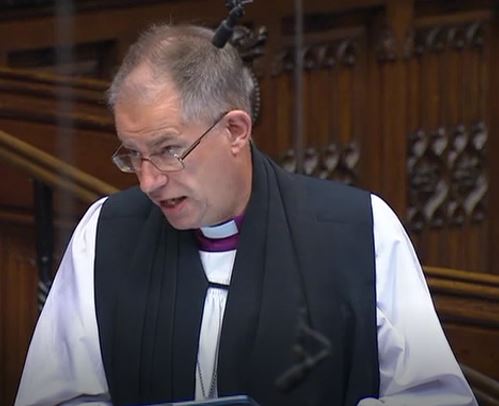
On 11th October 2021, the House of Lords debated the Health and Social Care Levy Bill in its second reading. The Bishop of Carlisle spoke in the debate, raising several areas of concern over the bill and the government’s approach to social care funding and practice:

The Lord Bishop of Carlisle: My Lords, it is a privilege and a little daunting to follow the noble Lord, Lord Forsyth. I should declare an interest in this debate, given that I share with my brother in caring for our 93 year-old father who has dementia. He lives with each of us for six months at a time.

To be positive for a moment, I should also say how grateful I am that the ongoing nettle of funding social care is being grasped, at least tentatively, by this proposed levy when, for so many years, it has been studiously avoided or ignored. Nor would I wish to quibble with the obvious benefit of this proposal for our hard-pressed NHS, resolving as it will at least some of the backlog of diagnosis and treatment that has built up during the pandemic. Despite the hesitations already expressed about Sir Andrew Dilnot’s proposals, I am glad of signs that some of them—now 10 years old—are being partially implemented. I am also delighted that the question of integration between health and social care is, at least on the surface, being taken seriously at last.

But—and it is quite a significant but—there are several problems with this proposal, in addition to those which have already been raised, which demand our attention. First, we have already referred to the relatively small amount of money raised over the next few years that will actually go into social care when the whole social care system is already on its knees and in danger of breakdown.

Continue reading “Health and Social Care Levy Bill: Bishop of Carlisle expresses concerns on government approach towards social care”

Lords passes Safeguarding (Code of Practice) Measure 2021

On 16th September 2021 the House of Lords approved the Church of England’s Safeguarding (Code of Practice) Measure. The Bishop of Blackburn introduced the debate:

Moved by The Lord Bishop of Blackburn: That this House do direct that, in accordance with the Church of England Assembly (Powers) Act 1919, the Safeguarding (Code of Practice) Measure be presented to Her Majesty for the Royal Assent.

The Lord Bishop of Blackburn: My Lords, it has been a long day and we are on the cusp of a party conference recess. I do not want to detain your Lordships more than is necessary. I am somewhat anxious, and feel, to use the words of a noble Lord a moment ago, a scintilla of fear, standing here for the first time and hearing much of the previous debate about the importance of good leadership and of doing everything well. Perhaps I am a candidate for all that further training that was talked about. It is a great privilege to be allowed to spend this week as duty Bishop in this House and to lead Prayers each day.

I am grateful for your Lordships’ presence this evening, not least because the Measure before us is significant in its application and is about safeguarding. As noble Lords will know, the Church of England has been on a long journey of putting in place appropriate staff, policies and practices to make the Church a safe place for all people, especially children and vulnerable adults. That has been essential as a response to church often being unsafe and to stories—historic and current—of appalling cases of abuse by those in positions of power who should have known better and whom many were willing to trust.

Continue reading “Lords passes Safeguarding (Code of Practice) Measure 2021”

Bishop of Blackburn stresses importance of accessibility when encouraging behaviour change on the path to net-zero

The Bishop of Blackburn spoke in a debate on behaviour change and the transition to net-zero carbon emissions on 16th September 2021, urging that the government consider the issues faced by the poorest in society so that they are not left behind:

The Lord Bishop of Blackburn: My Lords, I too am grateful to the noble Baroness, Lady Blackstone, for the opportunity of this debate. I have just finished reading a book about wilding in the UK, and it is a classic story of how difficult it is to change a culture, attitudes and expectations from deeply embedded practices and convictions, in this case about how we manage our land—which was appropriate, with the Environment Bill this week. The same difficulty applies in this debate, which is less about government policy and more about how we, as citizens, choose to live.

My main point, in discussing the role behaviour change can play in helping us towards net-zero carbon emissions, is this: it is essential that our expectations are aspirational, but also realistic. They need to apply to all people. It is my fear that the poorest 10% will be left not just behind, but feeling that they are part of the problem, when they would rather be part of the solution.

Continue reading “Bishop of Blackburn stresses importance of accessibility when encouraging behaviour change on the path to net-zero”