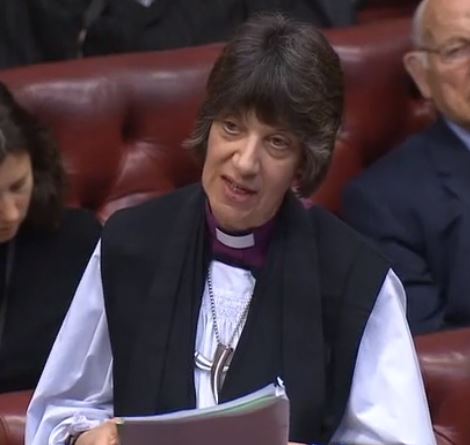
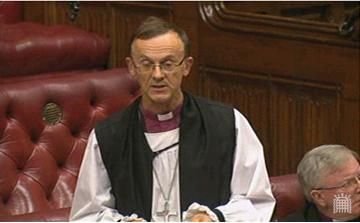
Environment Bill: Bishop of Manchester supports amendments on sustainable forestry

On 12th July 2021, the House of Lords debated the Environment Bill in the seventh day of the committee stage. The Bishop of Manchester spoke in the debate, expressing his support for amendments focused on sustainable forestry:
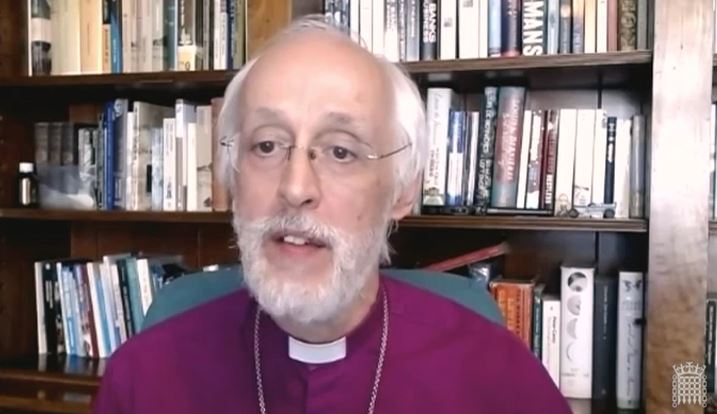
The Lord Bishop of Manchester: My Lords, it is a particular pleasure to speak in the same debate as the noble and right reverend Lord, Lord Harries of Pentregarth, from whose wisdom, when I was a very young bishop some 20 years ago, I learned a great deal. I also an honour to follow the noble Earl, Lord Caithness, who has reminded us, powerfully, of the crucial role that commercial forestry and good moorland management should be enabled to play. Hence, I draw your Lordships’ attention to my interests as set out in the register, specifically my deputy chairmanship of the Church Commissioners, which the noble and right reverend Lord famously once took to court. We are one of the foremost owners of sustainable commercial forestry in the UK and beyond.

Continue reading “Environment Bill: Bishop of Manchester supports amendments on sustainable forestry”

Bishop of St Albans welcomes commonwealth trade agreements

The Bishop of St Albans took part in a debate on new commonwealth trade agreements on 8th July 2021, welcoming the agreements and urging they be used as a force for positive social consequences:

The Lord Bishop of St Albans: My Lords, I welcome Her Majesty’s Government’s intent to strengthen ties with the Commonwealth as we transition to our new reality outside the European Union. When we entered the European Common Market, we severed many tight economic ties with some of our Commonwealth partners. It is because of that that I am particularly pleased at the announcement of the economic partnership agreement with CARIFORUM, which covers many countries with whom we continue to share a head of state.

My diocese is linked with the Windward Islands, and we are glad to have a large community of Vincentians living in Luton. They have told me of the extraordinary economic disruption that occurred to them when we joined the EEC. Although many of these Commonwealth realm territories contained within the CARIFORUM agreement are small in GDP terms, there is a symbolic importance to this agreement, and I hope it will be a platform to further invest and engage culturally with these territories to strengthen our existing ties.

Continue reading “Bishop of St Albans welcomes commonwealth trade agreements”

Environment Bill: Bishop of Manchester supports amendments to preserve biodiversity

On 7th July 2021, the House of Lords debated the Environment Bill in the sixth day of the Committee stage. The Bishop of Manchester spoke in the debate, in support of a group of amendments aimed at preserving and protecting biodiversity in terms of land use regulations:

The Lord Bishop of Manchester: My Lords, I draw your Lordships’ attention to my interests as set out in the register, specifically with the Church Commissioners—a significant owner of agricultural and development land. On matters of climate change, we are a leading edge and an awarding-winning investor, yet the Bill reminds us that climate is only part of the story.

Continue reading “Environment Bill: Bishop of Manchester supports amendments to preserve biodiversity”

Bishop of St Albans criticises cuts in global aid amid COVID-19 pandemic

The Bishop of St Albans spoke in a debate in response to cuts to overseas aid on 1st July 2021, criticising the decision to reduce aid at a time when many countries are experiencing negative effects of the COVID-19 pandemic and calling for the cuts to be reversed:

The Lord Bishop of St Albans: My Lords, these cuts raise profound ethical questions as the world faces the worst pandemic in over a century. Despite all the talk of global Britain, these cuts shout out that we are withdrawing from the world stage. Here we are, planning booster vaccinations in the UK this autumn, while only 0.9% of people in low-income countries have received even one dose. Covid is a global problem, and it is made worse when essentials such as clean water and basic health programmes, often provided by British aid, are cut.

Yesterday, I met the ambassador of Ethiopia, who spoke with grave concern about the cut in aid to Ethiopia, which is likely to be by more than 50%. Currently, less than 2% of its population is vaccinated, and it faces a third wave while simultaneously managing the fallout from the conflict in Tigray and famine due partly to war and partly to the swarms of locusts.

Continue reading “Bishop of St Albans criticises cuts in global aid amid COVID-19 pandemic”

Bishop of Gloucester speaks about impact of aid cuts on women and girls

The Bishop of Gloucester spoke in a debate on the UK Foreign Aid Programme on 1st July 2021, stressing the impact cuts to aid would have on women and girls:

The Lord Bishop of Gloucester: My Lords, I have spoken before about the challenges faced by girls and women throughout the world, and I am therefore dismayed, along with others, by what we hear of the impact of the aid cuts on them. As the noble Baroness, Lady Sugg, said so eloquently, women and girls will suffer disproportionately as a result of these cuts. I understand that Her Majesty’s Government have undertaken a central equalities impact assessment. However, I believe this is yet to be published and I would be grateful for an update from the Minister.

Continue reading “Bishop of Gloucester speaks about impact of aid cuts on women and girls”

Environment Bill: Bishop of Gloucester speaks in favour of establishing an independent body to scrutinise climate efforts

On 30th June 2021, the House of Lords debated the Environment Bill in the fourth day of the Committee Stage. The Bishop of Gloucester spoke, welcoming the bill and, on behalf of the Bishop of Oxford, expressed support for amendments aimed at ensuring independent scrutiny of government climate progress:

The Lord Bishop of Gloucester: My Lords, I add my voice in support of Amendments 105 and 107, and I shall speak to those amendments together. My right reverend friend the Lord Bishop of Oxford would have spoken to them, but is unable to be here, so I am glad to be able to speak and endorse what other noble Lords have said.

From this Bench, we welcome much of the content of the Bill, and we believe deeply in the importance of the good stewardship of creation. We recognise the need for global solutions to an international challenge and that any solutions will take leadership and require harmonising regulation on a global scale. As others have said, it is essential that the new OEP be given the appropriate teeth—not dentures, perhaps jaws—to hold business and government at all levels, national, regional and local, to account.

Continue reading “Environment Bill: Bishop of Gloucester speaks in favour of establishing an independent body to scrutinise climate efforts”

Bishop of Lincoln calls for greater investment in UK infrastructure to promote tourism

The Bishop of Lincoln spoke in a debate on tourism in the UK on 24th June 2021, calling for greater investment in coastal and rural communities in order to encourage “at home” tourism:

The Lord Bishop of Lincoln: My Lords, I speak, once again, about the communities I have engaged with in Lincolnshire over the last 10 years. Two years ago, I was pleased to serve on the Select Committee on Regenerating Seaside Towns and Communities under the leadership of the noble Lord, Lord Bassam of Brighton. That helped me to understand some of the policy issues that need to be addressed by the Government. The committee had a splendid and impressive visit to Skegness, which is addressing some of the issues. Lincolnshire has an extensive coastline and much unspoiled countryside, and is still popular with many holidaymakers. It is heartening to see reports over the weekend of a boom of interest in domestic tourism during the last few months, as a side-effect of the pandemic. However, many of our seaside towns need more than a one-off boost. They need sustained, strategic investment, in which entrepreneurs are encouraged to set up businesses in coastal areas. They need better broadband, better transport connectivity, flexible recruitment practices, and further education provision to be enhanced.

Continue reading “Bishop of Lincoln calls for greater investment in UK infrastructure to promote tourism”

Bishop of Worcester speaks in debate on official development assistance

The Bishop of Worcester took part in a debate on the UK Government’s decision to reduce spending on official development assistance on 24th June 2021, pointing out the high number of doctors and healthcare professionals from overseas working in the UK, in effect taking from countries to which the UK provides aid:

The Lord Bishop of Worcester: My Lords, I echo the thanks expressed to the noble Lord, Lord Campbell, for this debate. There are many reasons for honouring the manifesto commitment to 0.7% aid, of which the Conservative Party can be proud. I will focus on just one.

Our National Health Service has done a fantastic job during the pandemic and been rightly lauded for doing so. One of the reasons for its success is its superb workforce, no fewer than 170,000 of whom are foreign, the vast majority from poorer countries which are struggling in the face of the pandemic. Figures show that Indians make up the largest number of foreign staff members at 27,000, followed by Filipinos at 23,000. Ghana provides over 3,000, Zimbabwe 4,500 and Pakistan 4,400. The fact is that we are taking more out of developing countries, when we poach their doctors, nurses and other skilled professionals, than we are putting in through aid.

Continue reading “Bishop of Worcester speaks in debate on official development assistance”

Bishop of Carlisle raises need for proper support for paid and unpaid carers

The Bishop of Carlisle spoke in a debate on social care in the UK on 24th June 2021, raising the issue of staff retention in the paid care sector, and the need for recognition and support of unpaid carers:

The Lord Bishop of Carlisle: I congratulate the noble Baroness, Lady Jolly, on securing this timely debate. I should declare an interest as co-chair of a newly formed archbishops’ commission on reimagining social care. Understandably, much of the current discussion of social care involves the issue of funding. That is fundamentally important, but I believe the time has also come for a radical—in the sense of going to its roots—reappraisal of the values and principles underlying social care, not only for the elderly but for those with disabilities and severe mental illnesses. It has been clear for many years that we need an inspiring, cross-party, long-term vision for social care which involves rethinking how we want it to be understood as well as delivered, with those in need of care valued for who they are rather than simply regarded as an inconvenient burden. It has also been clear that that should include reference to some of the underlying societal conditions that contribute to the overall need, such as deprivation, lack of family support and loneliness.

Continue reading “Bishop of Carlisle raises need for proper support for paid and unpaid carers”

Bishop of St Albans warns against increased use of Magnitsky sanctions

The Bishop of St Albans spoke in a Grand Commitee debate on the effectiveness of the Magnitsky sanctions on 24th June 2021, arguing for better cooperation with international partners and support for international law, and warning of the danger of overreliance on sanctions in global affairs:

The Lord Bishop of St Albans: My Lords, I too agree that there are occasions when these Magnitsky sanctions may be the best available option to us. However, the increased use of such sanctions is a worrying sign that the organs of international arbitration such as the UN or the ICJ may be losing their effectiveness. These were the very institutions established in response to the tit-for-tat foreign policy that defined the 19th and early 20th centuries, with all their resulting catastrophes.

Our Government are a big advocate of the concept of “Global Britain”, an ambiguous phrase that sometimes means leading as a force for good in the world but at other times is simply a declaration that Britain is open for international business. My concern is that these conflicting visions of global Britain are sometimes mutually exclusive, and that when dealing with human rights abuses there may be a tendency to take the route of least domestic economic disruption.

Continue reading “Bishop of St Albans warns against increased use of Magnitsky sanctions”