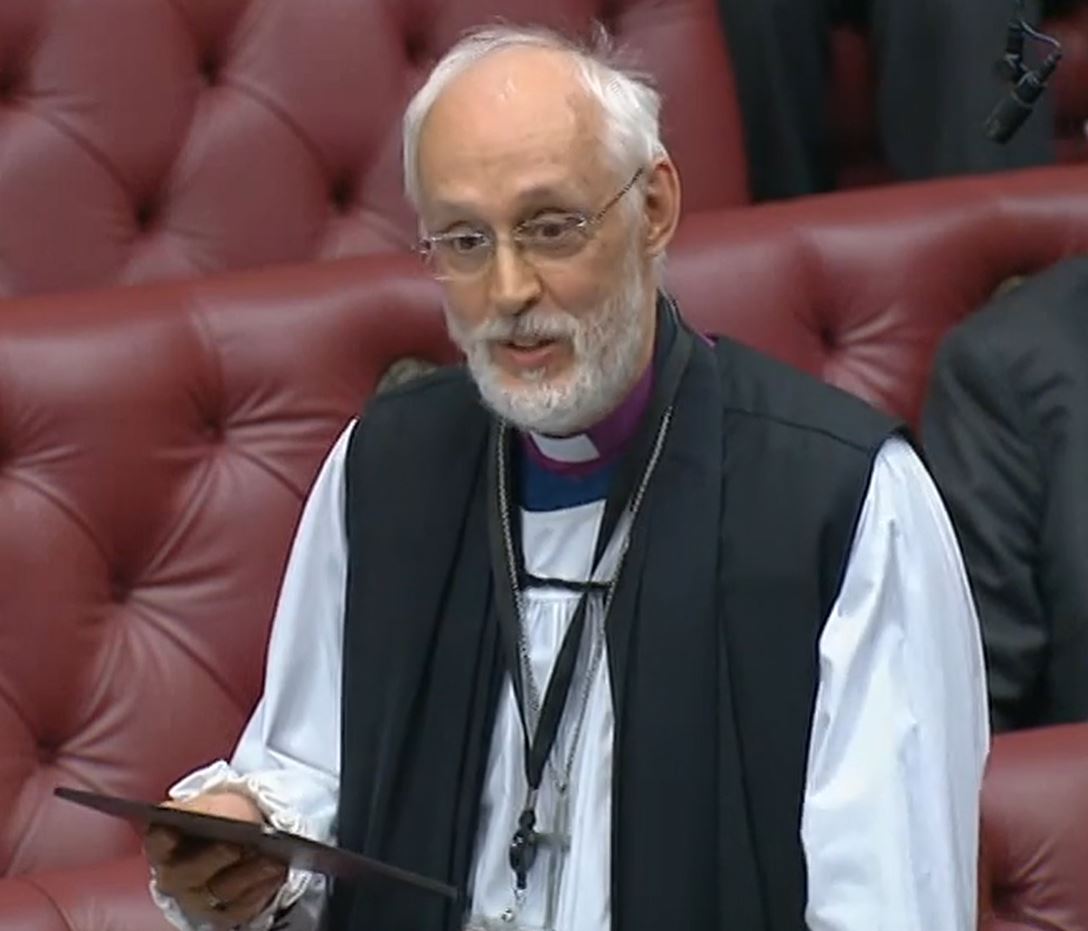
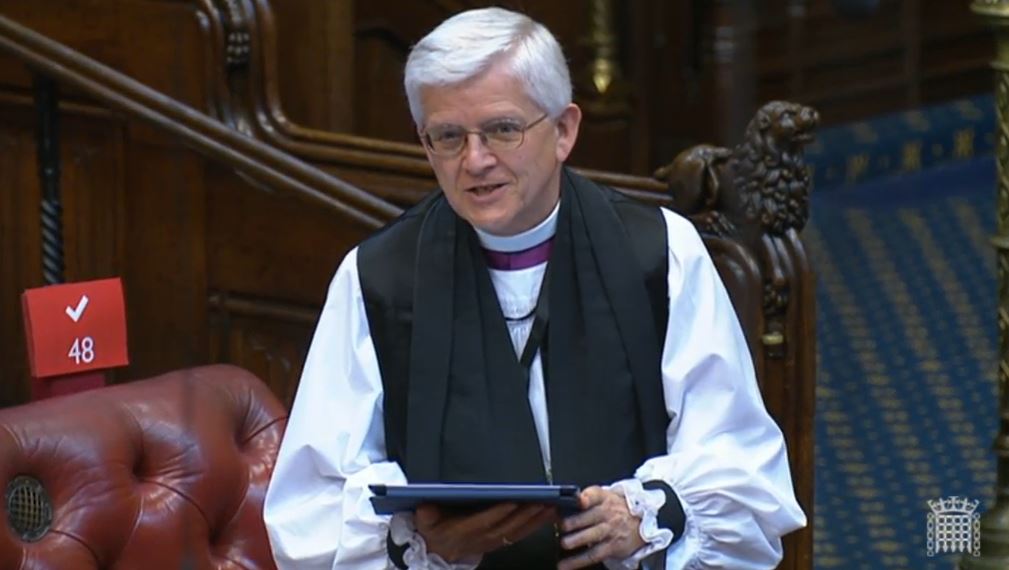
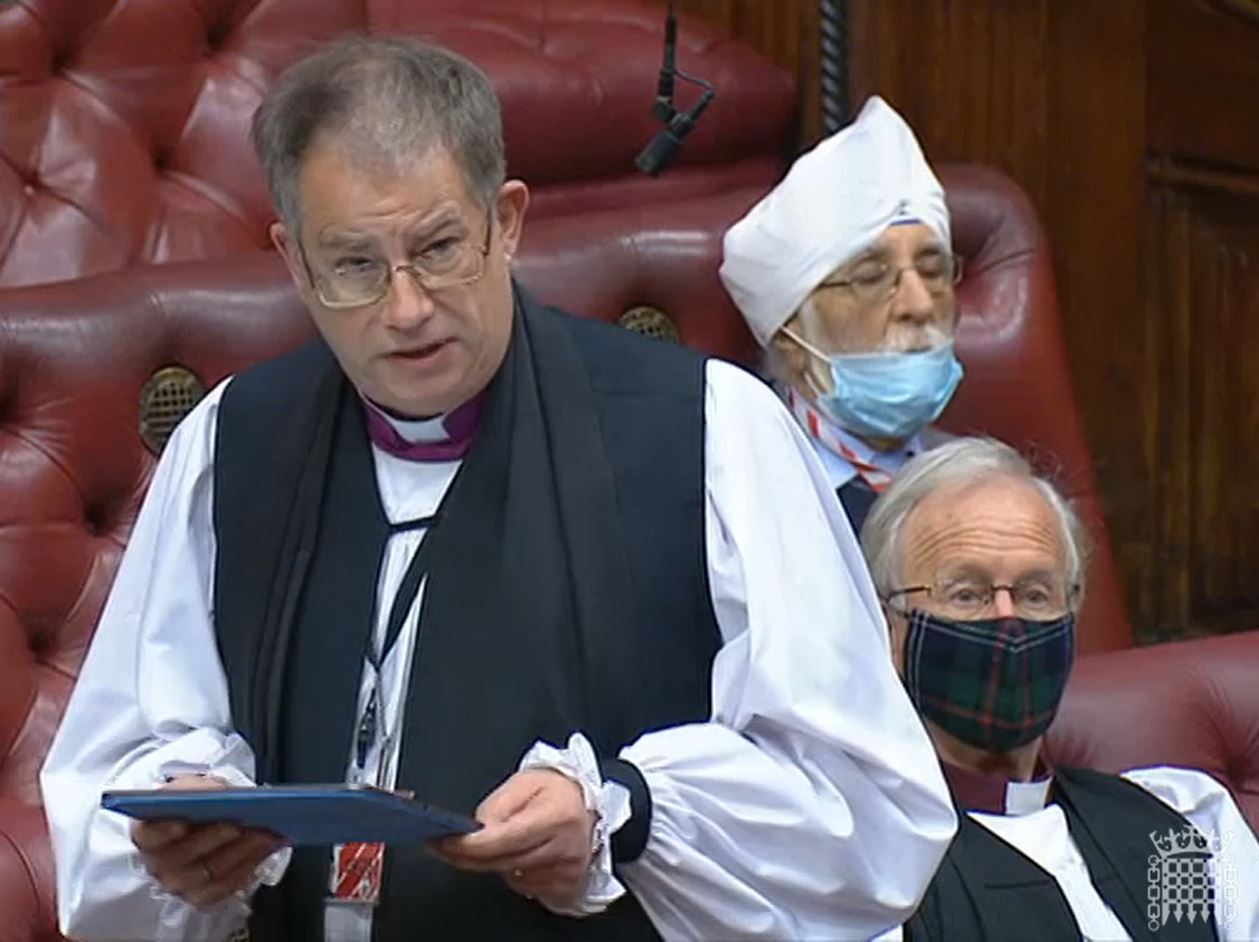
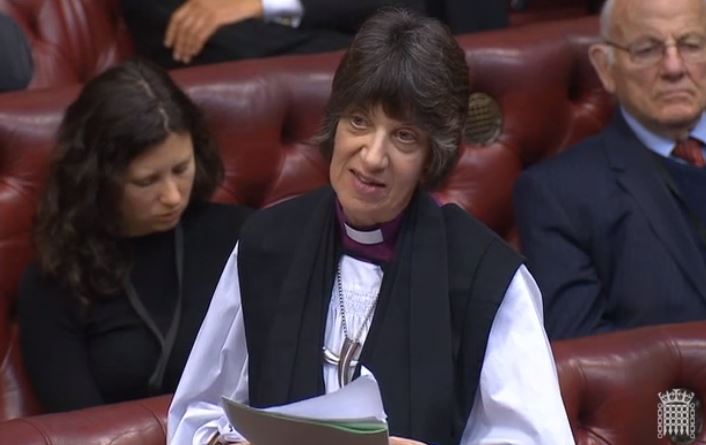
Health and Social Care Levy Bill: Bishop of Carlisle expresses concerns on government approach towards social care

On 11th October 2021, the House of Lords debated the Health and Social Care Levy Bill in its second reading. The Bishop of Carlisle spoke in the debate, raising several areas of concern over the bill and the government’s approach to social care funding and practice:

The Lord Bishop of Carlisle: My Lords, it is a privilege and a little daunting to follow the noble Lord, Lord Forsyth. I should declare an interest in this debate, given that I share with my brother in caring for our 93 year-old father who has dementia. He lives with each of us for six months at a time.

To be positive for a moment, I should also say how grateful I am that the ongoing nettle of funding social care is being grasped, at least tentatively, by this proposed levy when, for so many years, it has been studiously avoided or ignored. Nor would I wish to quibble with the obvious benefit of this proposal for our hard-pressed NHS, resolving as it will at least some of the backlog of diagnosis and treatment that has built up during the pandemic. Despite the hesitations already expressed about Sir Andrew Dilnot’s proposals, I am glad of signs that some of them—now 10 years old—are being partially implemented. I am also delighted that the question of integration between health and social care is, at least on the surface, being taken seriously at last.

But—and it is quite a significant but—there are several problems with this proposal, in addition to those which have already been raised, which demand our attention. First, we have already referred to the relatively small amount of money raised over the next few years that will actually go into social care when the whole social care system is already on its knees and in danger of breakdown.

Continue reading “Health and Social Care Levy Bill: Bishop of Carlisle expresses concerns on government approach towards social care”
Lords passes Safeguarding (Code of Practice) Measure 2021

On 16th September 2021 the House of Lords approved the Church of England’s Safeguarding (Code of Practice) Measure. The Bishop of Blackburn introduced the debate:

Moved by The Lord Bishop of Blackburn: That this House do direct that, in accordance with the Church of England Assembly (Powers) Act 1919, the Safeguarding (Code of Practice) Measure be presented to Her Majesty for the Royal Assent.

The Lord Bishop of Blackburn: My Lords, it has been a long day and we are on the cusp of a party conference recess. I do not want to detain your Lordships more than is necessary. I am somewhat anxious, and feel, to use the words of a noble Lord a moment ago, a scintilla of fear, standing here for the first time and hearing much of the previous debate about the importance of good leadership and of doing everything well. Perhaps I am a candidate for all that further training that was talked about. It is a great privilege to be allowed to spend this week as duty Bishop in this House and to lead Prayers each day.

I am grateful for your Lordships’ presence this evening, not least because the Measure before us is significant in its application and is about safeguarding. As noble Lords will know, the Church of England has been on a long journey of putting in place appropriate staff, policies and practices to make the Church a safe place for all people, especially children and vulnerable adults. That has been essential as a response to church often being unsafe and to stories—historic and current—of appalling cases of abuse by those in positions of power who should have known better and whom many were willing to trust.

Continue reading “Lords passes Safeguarding (Code of Practice) Measure 2021”

Bishop of Blackburn stresses importance of accessibility when encouraging behaviour change on the path to net-zero

The Bishop of Blackburn spoke in a debate on behaviour change and the transition to net-zero carbon emissions on 16th September 2021, urging that the government consider the issues faced by the poorest in society so that they are not left behind:

The Lord Bishop of Blackburn: My Lords, I too am grateful to the noble Baroness, Lady Blackstone, for the opportunity of this debate. I have just finished reading a book about wilding in the UK, and it is a classic story of how difficult it is to change a culture, attitudes and expectations from deeply embedded practices and convictions, in this case about how we manage our land—which was appropriate, with the Environment Bill this week. The same difficulty applies in this debate, which is less about government policy and more about how we, as citizens, choose to live.

My main point, in discussing the role behaviour change can play in helping us towards net-zero carbon emissions, is this: it is essential that our expectations are aspirational, but also realistic. They need to apply to all people. It is my fear that the poorest 10% will be left not just behind, but feeling that they are part of the problem, when they would rather be part of the solution.

Continue reading “Bishop of Blackburn stresses importance of accessibility when encouraging behaviour change on the path to net-zero”

Police, Crime, Sentencing and Courts Bill: Bishop of Manchester expresses concern over increased police powers

The Bishop of Manchester spoke in a debate on the Police, Crime, Sentencing and Courts Bill on 14th September 2021, expressing concern over the increased police powers relating to protest and approaches to Gypsy, Roma and Traveller Communities:

The Lord Bishop of Manchester: My Lords, I draw the House’s attention to my interests as set out in the register, particularly in the world of policing as a trustee of the Clink Charity.

Two centuries ago, in the aftermath of the Peterloo massacre, where a politically motivated militia killed and maimed dozens of citizens who were protesting for voting rights in Manchester city centre, Robert Peel introduced the principles of civilian policing. Those principles have served this country with distinction ever since. British police are civilians in uniform, not agents of state control. Their calling is to police by consent, enabling the public to exercise their rights and freedoms as well as maintaining good order. It is a delicate balance. It requires Governments to stay their hand when proposing legislation and senior police officers to guard their operational independence. It is especially sensitive when the rights of citizens to protest come into the frame.

Continue reading “Police, Crime, Sentencing and Courts Bill: Bishop of Manchester expresses concern over increased police powers”

Police, Crime, Sentencing and Courts Bill: Bishop of Blackburn calls for greater recognition of faith communities

The Bishop of Blackburn spoke in a debate on the second reading of the Police, Crime, Sentencing and Courts Bill, noting the lack of reference to faith communities and calling for more recognition for those communities in the bill:

The Lord Bishop of Blackburn: My Lords, I offer to the noble Lord, Lord Sandhurst, my congratulations on his maiden speech. We are glad to welcome him to this House.

With so many words in this wedge of a Bill, it is easy to forget that we are talking about people—as someone said earlier, real people—and the potential consequences for real lives. There is a huge responsibility, therefore, to get these details right, for both the police and the public. The noble Baroness, Lady Chakrabarti, is right, that deep scrutiny is needed here in this House. An example of the wide range of the Bill and the important but almost impossible nature of covering all of its detail is that, although my friend the right reverend Prelate the Bishop of St Albans is unable to attend today’s proceedings, he has asked me to relay his intention to amend the Bill in Committee, to strengthen the ability of the police to deal with the issue of hare coursing. That is something to look forward to.

Continue reading “Police, Crime, Sentencing and Courts Bill: Bishop of Blackburn calls for greater recognition of faith communities”

Police, Crime, Sentencing and Courts Bill: Bishop of Gloucester speaks on need for “restorative, responsible, and relational” criminal justice system

On 14th September 2021, the Police, Crime, Sentencing and Courts Bill had its second reading in the House of Lords. The Bishop of Gloucester spoke in response to the bill, expressing concern over the effects of the bill on women and children and calling for a “restorative, responsible, and relational” approach to criminal justice:

The Lord Bishop of Gloucester: My Lords, I am grateful for the varied contributions heard today from noble and learned Lords, many of whom have vast experience in this area. I declare an interest as Anglican Bishop to Her Majesty’s Prisons in England and Wales and as president of the Nelson Trust.

As a Lord spiritual rooted in Christian hope, I look for a criminal justice system which is restorative, responsible and relational, and which is effective in focusing holistically on prevention and rehabilitation as well as appropriate conviction and punishment.

There are some welcome proposals within this very long Bill. These include community and diversionary cautions, problem-solving courts and additional support for employment for ex-offenders. There are other aspects that raise concern, and I will name just a few of them: increasing sentence lengths, police-led diversion, sentencing of mothers, racial disparities and young offenders.

Continue reading “Police, Crime, Sentencing and Courts Bill: Bishop of Gloucester speaks on need for “restorative, responsible, and relational” criminal justice system”

Environment Bill: Bishop of Manchester urges increased protection for ecological sites

On 13th September 2021, the House of Lords debated the Environment Bill in the third day of the report stage. The Bishop of Manchester spoke in the debate, advocating for limits on government powers to reduce terms of protection for ecological sites:

The Lord Bishop of Manchester: My Lords, I draw attention to my interest as a Church Commissioner, as set out in the register, and I wish to support what the noble Baroness just said: 30 years is rather a short period of time. I am grateful for the way the Minister, in proposing Amendments 86 and 88, is showing us the possibility of some flexibility in the future, but may I just tempt him a little further?

Continue reading “Environment Bill: Bishop of Manchester urges increased protection for ecological sites”

Education (Assemblies) Bill: Bishop of Oxford urges against removal of collective worship in schools

On 10th September 2021, the House of Lords debated the Education (Assemblies) Bill at its second reading. The Bishop of Oxford spoke in response to the bill, welcoming the debate on the topic, but opposing the proposed removal of the requirement for collective worship in schools:

The Lord Bishop of Oxford: My Lords, I warmly welcome this debate. As others have said, it is very timely that it is raised. I thank the noble Baroness, Lady Burt, for her careful introduction, and other noble Lords and noble Baronesses who have spoken, particularly my distinguished predecessor but one, the noble and right reverend Lord, Lord Harries, with whom I think I am about to disagree.

Worship and spirituality are a vital part of what it means to be human, and it is absolutely right, for all the reasons that have been given, that it be carefully reviewed and, possibly, that some changes should be introduced. But my reason for in conscience finding this Bill difficult goes back to my experience of leading assemblies as a local parish priest many years ago in Halifax. I put a great deal of time and energy into rehearsing the parable of the good Samaritan and the stories of Joseph and Moses, only for the otherwise extremely good and gifted head teacher of the school to reinterpret my assembly with the phrase, “Of course, what the vicar really means is don’t run in the corridors, and pick up the litter in the playground.” It is the reduction, without a serious faith tradition, of the fantastic values that are being articulated, to simple practical motifs which I fear is the danger of a Bill like this.

Continue reading “Education (Assemblies) Bill: Bishop of Oxford urges against removal of collective worship in schools”

Status of Workers Bill: Bishop of St Albans supports greater protection for workers

On 10th September 2021, the House of Lords debated the Status of Workers Bill in its second reading. The Bishop of St Albans spoke in support of the bill, which would seek to introduce greater protection for workers classified as “contractors” in the gig economy:

The Lord Bishop of St Albans: My Lords, I too congratulate the noble Lord, Lord Hendy, on tabling this Private Member’s Bill. It echoes the Judaeo-Christian teaching that workers deserve proper remuneration, and I support it.

I recognise that there are many advantages in having a flexible labour market which allows for individuals to tailor their work to their lifestyles. However, I and I know many others take issue with those times when employers curtail other people’s rights in an exploitative manor to reduce benefits costs. The Taylor review’s suggestion of replacing the category of working with a more positively defined “dependent contractor” was a positive step in preventing companies from unscrupulously categorising an employee as a worker while elevating the bogus self-employed into this category along with the increased rights it affords and the national insurance contributions that would accompany it.

Continue reading “Status of Workers Bill: Bishop of St Albans supports greater protection for workers”

Bishop of Gloucester raises issues of food poverty in debate on universal credit uplift

The Bishop of Gloucester spoke in a debate on the proposed removal of the universal credit uplift on 9th September 2021, with reference to the impact such a decision would have on levels of food poverty in the UK:

The Lord Bishop of Gloucester: I am grateful to the noble Baroness, Lady Tyler, for introducing this important debate, and I declare my interest as a trustee of Feeding Britain. I will focus my time on the impact that withdrawing the £20 uplift will have on food poverty. More than 500 anti-poverty workers, volunteers and supporters within the Feeding Britain network have signed a petition calling on the Government not to remove the increase, and that petition will be delivered to No. 10 in about an hour.

Continue reading “Bishop of Gloucester raises issues of food poverty in debate on universal credit uplift”