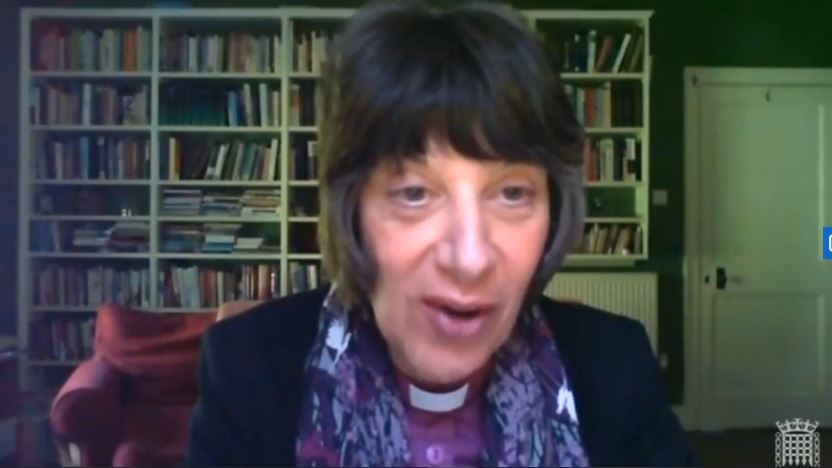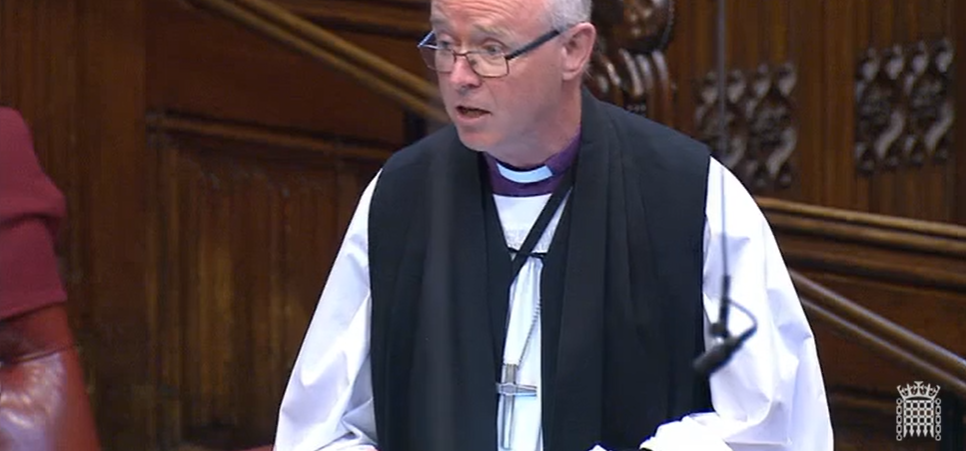
Bishop of Rochester asks about engagement by faith communities in COVID-19 Pandemic response

The Bishop of Rochester asked a question on how faith communities might continue to address the needs of communities in the wake of the COVID-19 Pandemic on 7th January 2021, and spoke in a debate on the Health Protection (Coronavirus, Restrictions) (Self-Isolation and Linked Households) (England) Regulations 2020:

The Lord Bishop of Rochester: My Lords, if any may have doubted the seriousness of the current situation, they had only to watch last night’s BBC report from University College Hospital, or to note that we are once again seeing multiple deaths in care home settings. Along with the Prime Minister’s Statement, it was announced that places of worship in England may remain open. I know that that has been welcomed by some faith communities, although others have already gone largely online. However, all such communities continue to engage with energy in acts of pastoral and community service. In the light of this, would the Leader of the House care to suggest what she and her colleagues would most wish to ask of our faith communities? What further might we offer? I believe that the noble Lord, Lord Boateng, may already have provided part of an answer.

Continue reading “Bishop of Rochester asks about engagement by faith communities in COVID-19 Pandemic response”
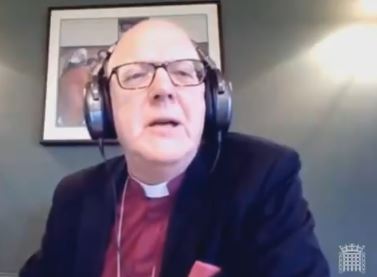
Trade Bill: Bishop of St Albans supports amendment on protection of children online

On 6th January 2021, the Bishop of St Albans spoke during a debate on the Trade Bill, supporting an amendment aimed at protecting children on online and digital platforms:

The Lord Bishop of St Albans: My Lords, I will speak briefly in support of Amendment 23. The Government’s proposed online harms Bill will provide a welcome framework to protect the most vulnerable from exposure to dangerous content by placing the burden of responsibility on social media companies. This crucial legislation will better equip Britain to deal with the digital age.

Continue reading “Trade Bill: Bishop of St Albans supports amendment on protection of children online”

Domestic Abuse Bill: Bishop of London urges measures to strengthen legislation

The Bishop of London spoke in a debate on the Domestic Abuse Bill on 5th January 2021, welcoming the bill while emphasising the need for legislation to go further in combatting domestic abuse:

The Lord Bishop of London [V]: My Lords, I will add my voice to those who have already welcomed this Bill while also, in the brief time I have, suggesting that still more could be done to strengthen it further. The legislation is long overdue. As others have mentioned, we know that the pandemic has only exacerbated an already dire situation that leaves far too many survivors of abuse without the protections and support they require.

Much in this Bill is welcome, yet I fully support the remarks of my right reverend friend the Bishop of Gloucester and others who have noted that it does not yet go far enough, particularly on children, young people and migrant women. It is a cliché to note that these count as some of society’s most vulnerable, but this Bill is meant precisely to provide support to those whom the system is currently failing. If it fails to support the most vulnerable survivors, it is not yet living up to its potential.

Continue reading “Domestic Abuse Bill: Bishop of London urges measures to strengthen legislation”

Domestic Abuse Bill: Bishop of Gloucester highlights need to protect women in vulnerable groups

On 5th January 2021, the Bishop of Gloucester spoke at the second reading of the Domestic Abuse Bill, highlighting issues faced by victims of domestic violence in the criminal justice system and the need to protect women and girls across communities:

The Lord Bishop of Gloucester: My Lords, I am glad to contribute to this vital debate and I draw attention to my interests as president of the Nelson Trust and as Anglican Bishop to Prisons.

I note three things. First, this is a landmark piece of legislation and reflects good progress. We must ensure that the Bill is as good as it can be for the sake of those at risk of abuse, its victims and survivors. Secondly, work on the task of ending domestic abuse does not end with this legislation. Thirdly, there are issues unresolved in the Bill regarding certain vulnerable groups, some of which have been mentioned. I will highlight just a few in the time I have.

Continue reading “Domestic Abuse Bill: Bishop of Gloucester highlights need to protect women in vulnerable groups”

EU (Future Relationship) Bill: Bishop of Southwark welcomes deal, stresses interdependence of people and nations

On 30th December 2020 the House of Lords considered all stages of the Government’s European Union (Future Relationship) Bill. The Bishop of Southwark spoke at Second Reading:
The Lord Bishop of Southwark: My Lords, I am glad to follow the noble Lord, Lord Butler of Brockwell, and agree with much of what he said. I congratulate Her Majesty’s Government on achieving a negotiated outcome with the European Union. In doing so, I pay tribute not only to the Prime Minister but to the negotiating team, which bore a weighty burden, the Civil Service support that provided them with necessary expertise and, last but not least, the chief negotiator the noble Lord, Lord Frost.

The wider debate requires a candid and truthful recognition of what has been a complex process, including an explicit acknowledgement that a successful negotiation requires significant compromise. Such truthful recognition makes for good civil discourse. This will be further helped by more accurate language about the good and less good aspects of the package and appropriate scrutiny of detail—sadly not possible today. I hope that the public debate is less about the intangibles of rhetoric and more about the true and honest cost of the investment, outreach and spiritual renewal needed if we are to flourish as a nation state, going forward.

My final point begins with comments from the former Archbishop of Canterbury, Lord Williams of Oystermouth, recently retired from this House, who, early in the pandemic, spoke of what has become a much wider perception that our lives are bound together with those of every human being on this planet. That, he said, poses “the biggest moral questions”. A more positive focus on our continuing interdependence, not least with other European nations but more widely—globally—would be welcome and herald the future partnerships that are so essential to our national well-being.

Therefore, I hope that, as we consider the Bill and continue the shared endeavour that is our proud national story, we recognise that people and institutions flourish best under relational frameworks and that individualism, freed of obligation or collective provision, will ultimately fail. We are still in the season of Christmas, and the birth of a saviour transcends all national boundaries with a message of peace and good will to all people.

Trade Bill: Bishop of St Albans support amendments to give parliament approval of trade deals

On 7th December the House of Lords considered the Government’s Trade Bill at its Report Stage. The Bishop of St Albans sponsored and spoke in support of amendment 6 from Lord Purvis of Tweed on parliamentary approval of future trade deals:
The Lord Bishop of St Albans [V] : My Lords, I support Amendment 6 in the name of the noble Lord, Lord Purvis of Tweed, and the revision he has made as he has engaged with the Government. I am grateful for his very clear exposition and will be concise in my support.
Modern trade agreements affect huge swathes of public policy, including consumer and workers’ rights, environmental legislation, food standards, health, public services and international development. MPs, who represent constituencies and work with a variety of stakeholders, deserve the right to assess the consequences of an agreement, as does your Lordships’ House.

Continue reading “Trade Bill: Bishop of St Albans support amendments to give parliament approval of trade deals”

Covert Human Intelligence Sources Bill: Bishop of Carlisle supports amendment to prevent use of children as covert agents

On 3rd December 2020 the House of Lords considered the Government’s Covert Human Intelligence Sources (Criminal Conduct) Bill 2020 at its Committee Stage. The Bishop of Durham had co-sponsored two amendments aimed at restricting or regulating the use of children as covert agents. The Bishop of Carlisle spoke in his place, in support of the amendments. As is usual practice they were withdrawn after debate and may be returned to at a later stage:

The Lord Bishop of Carlisle: My Lords, I speak in support of Amendment 43, in the names of my right reverend friend the Bishop of Durham, the noble Lord, Lord Young, and the noble Baronesses, Lady Chakrabarti and Lady Bull, and Amendment 60, in the names of the noble Baronesses, Lady Young and Lady Hamwee, and the noble Lord, Lord Kennedy of Southwark. As we have heard, both concern the treatment of children.
We should not for a moment underestimate some of the evils in our society that the Government and the forces of law and order are tasked with confronting. Some of those evils involve the abuse of children and vulnerable people, including, as we know, the scourge of county lines drug gangs, sexual predators and traffickers. It does not take much imagination to see how, as a result of this, there is a periodic temptation to use children as covert assets. We must clearly guard against that temptation; as we have already been reminded, our first duty must be to the care and well-being of children. This applies all the more to children who find themselves in vulnerable and harmful situations, such as those used and abused by criminal gangs.

Continue reading “Covert Human Intelligence Sources Bill: Bishop of Carlisle supports amendment to prevent use of children as covert agents”

Bishop of Portsmouth urges Government to keep uplift in universal credit for those ‘on cliff edge’

On 3rd December the House of Lords debated the Chancellor’s November Spending Review statement. The Bishop of Portsmouth took part in the debate:

The Lord Bishop of Portsmouth [V]: My Lords, I was delighted to hear the Chancellor stress that the Government would continue to support the most vulnerable, but the proof of that assertion will be in how much money the Government are prepared to provide. That will be the barometer of what and who they consider most important. I therefore join my voice to those profoundly deprecating the proposed cut in development aid. I urge the Government to think again. Continue reading “Bishop of Portsmouth urges Government to keep uplift in universal credit for those ‘on cliff edge’”

Bishop of Salisbury raises environmental implications of ship recycling regulations

On 18th November the House of Lords considered the Government’s Ship Recycling (Facilities and Requirements for Hazardous Materials on Ships) (Amendment) (EU Exit) Regulations 2020. The Bishop of Salisbury spoke in the debate:

The Lord Bishop of Salisbury: My Lords, neither ship recycling nor Northern Ireland are my territory, though church is sometimes seen as an ark to gather people safely and hazardous materials are a concern for us all. It is important for Northern Ireland to thrive as best it can within the new political arrangements that are still unfolding. The purpose of this SI is clear and not controversial; it is to the benefit of one shipyard in Northern Ireland. The EU has developed a good scheme for overseeing this process and I am sure we will be glad to continue to use it. Continue reading “Bishop of Salisbury raises environmental implications of ship recycling regulations”

Covert Human Intelligence Sources Bill – Bishop of Durham raises child safety fears

On 11th November the House of Lords debated the Government’s Covert Human Intelligence Sources (Criminal Conduct) Bill at its Second Reading. The Bishop of Durham spoke in the debate, raising concerns about the risks to the safety of children:

The Lord Bishop of Durham [V]: My Lords, I too would like to welcome the noble and learned Minister to the House and to his new role. Not many find their maiden speech to be that of introducing a Bill to the House, and I congratulate him on the necessarily blended speech.

I welcome the Government’s move to provide a statutory basis for covert human intelligence sources to participate in criminal conduct, where it is necessary and proportionate to do so for a limited set of specified purposes. We recognise the heavy duty placed on ​government to protect its citizens, and this Bill is a necessary step so that those undertaking these activities with a view to protecting the public can be clear in their status and duties.

However, while welcoming the intent behind this Bill, I am concerned that safeguards should be properly scrutinised, in particular when they concern the treatment of children. Continue reading “Covert Human Intelligence Sources Bill – Bishop of Durham raises child safety fears”