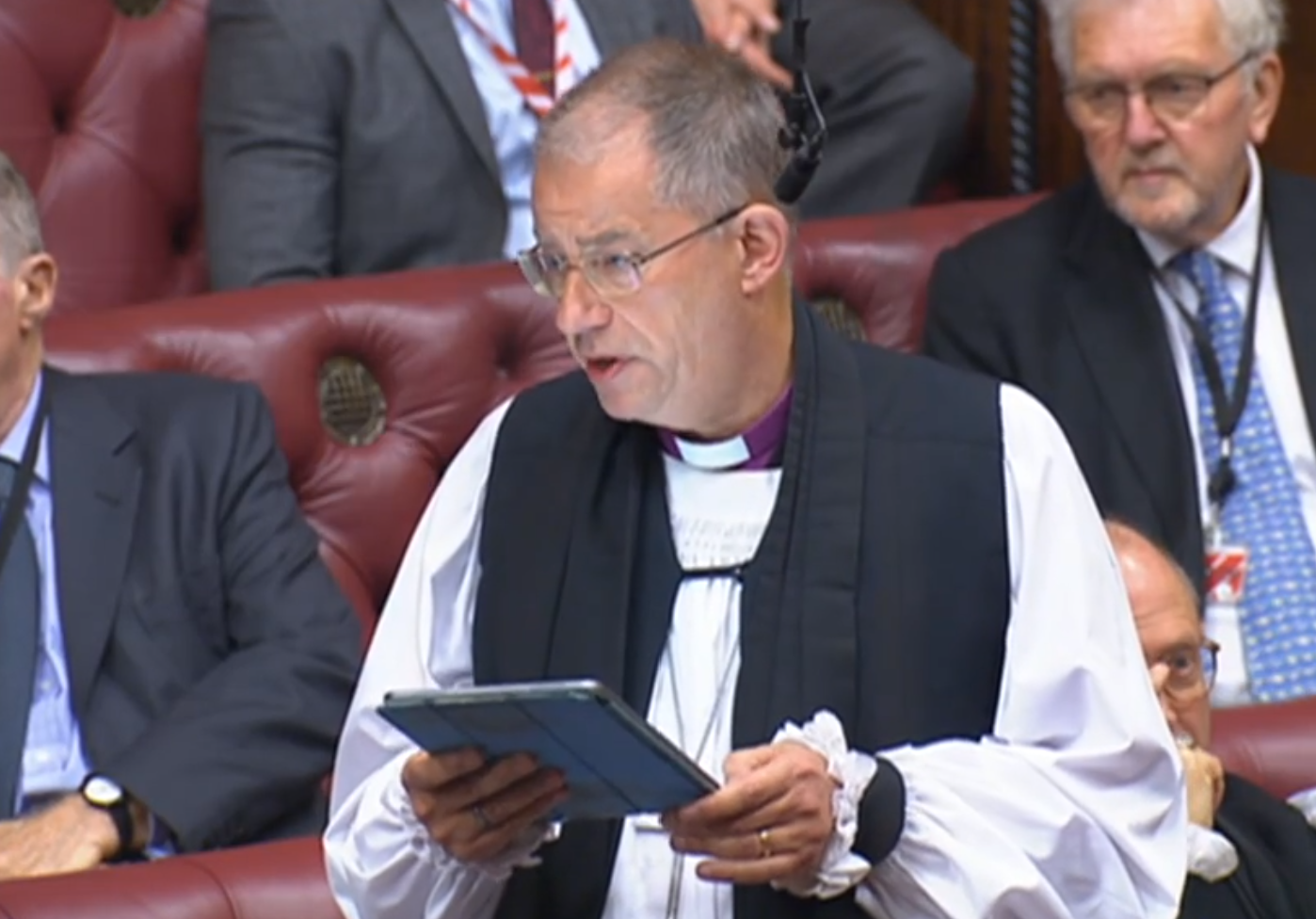
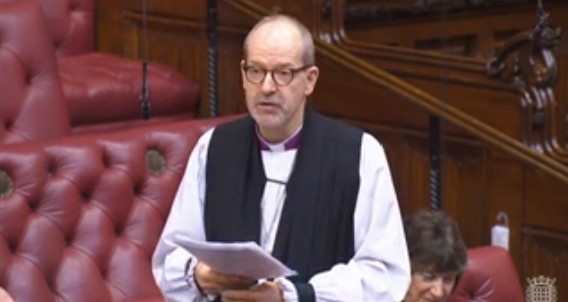
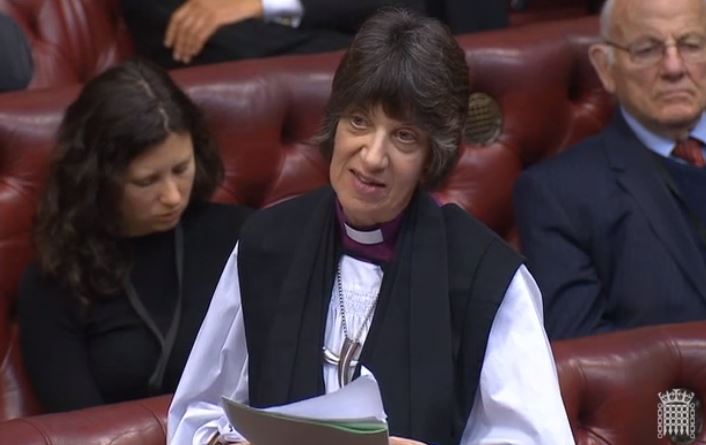
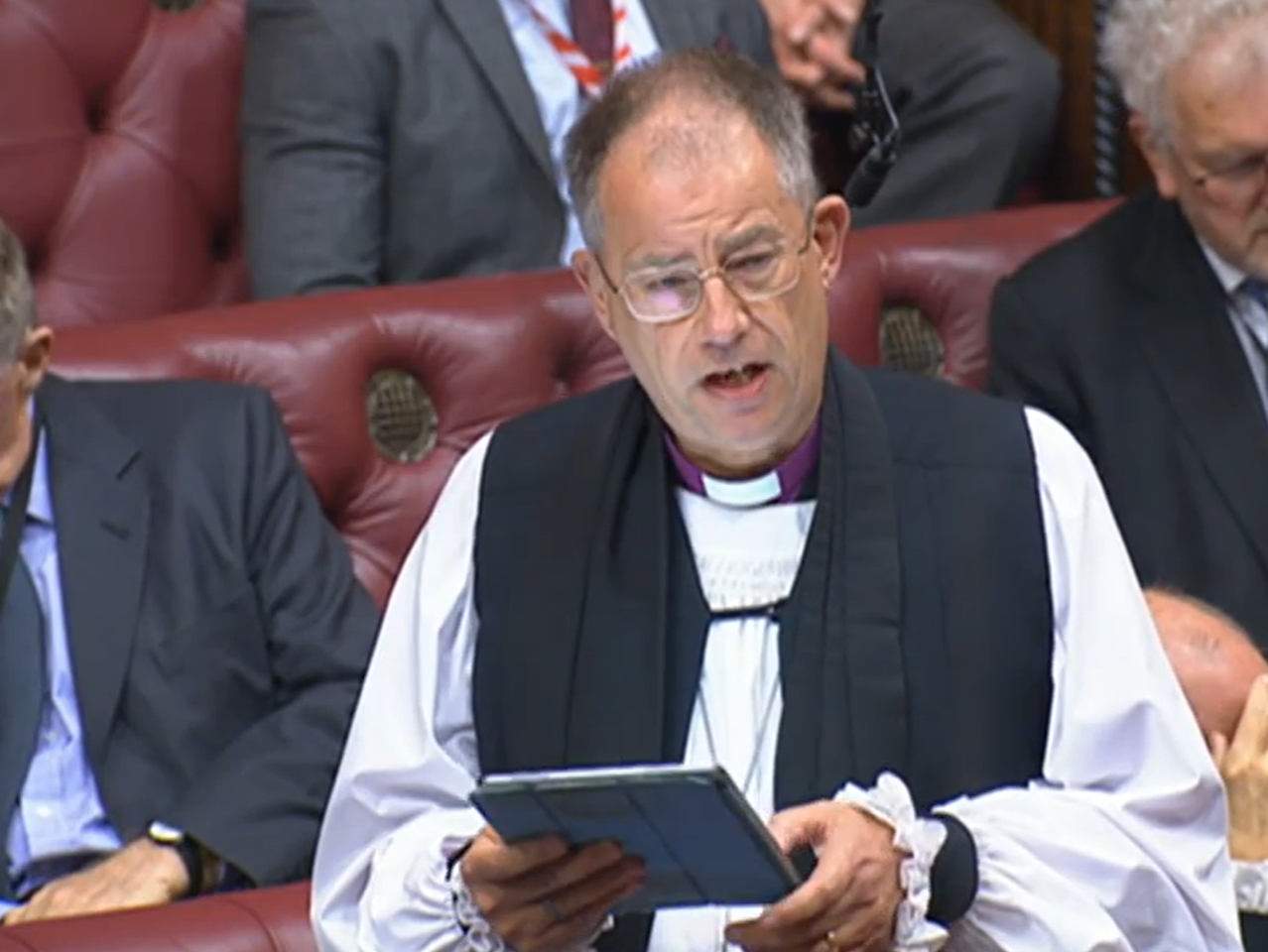
The Lord Bishop of St Albans received the following written answer on 13th February 2024:
The Lord Bishop of St Albans: To ask His Majesty’s Government what assessment they have made of the impact of the proposed ‘taxi tax’ on rural communities accessing essential services, particularly healthcare.
The Bishop of St Albans received the following written answer on 13th February 2024:
The Lord Bishop of St Albans asked His Majesty’s Government what assessment they have made of (1) the joint report by the UN World Food Programme and Famine Early Warning Systems Network Ethiopia – Food Security Outlook 2023-24: Food assistance needs remain high amid slow recovery of livelihoods in 2024, published in October 2023, which found that “Crisis (IPC Phase 3) and Emergency (IPC Phase 4) outcomes are expected in northern, southern, and southeastern Ethiopia through at least early 2024”, and (2) the risk of famine in Tigray.
The Bishop of Chelmsford received the following written answers on 13th February 2024:
The Lord Bishop of Chelmsford asked His Majesty’s Government what is the schedule for, and availability of, transport provided to residents of MDP Wethersfield to leave the site.
Lord Sharpe of Epsom (Con, Home Office): Those living at the site are able to come and go. The process for leaving the site is the same as the rest of our asylum accommodation.
During a debate on the Safety of Rwanda (Asylum and Immigration) Bill on 12th February 2024, the Bishop of Southwark spoke in favour of a group of amendments centred around ensuring that Rwanda not be considered safe until the full implementation of the UK-Rwanda treaty, querying when a new Rwandan Asylum bill required by the treaty would be published and made operational:
The Lord Bishop of Southwark: My Lords, I will speak in favour of this group, particularly Amendments 6, 14 and 20, but I wish to avoid the circularity, as the noble Baroness, Lady Chakrabarti, was saying, that has been inevitable on something so interconnected.
The Home Secretary has said that
“we will not operationalise this scheme until we are confident that the measures underpinning the treaty have been put in place; otherwise, the treaty is not credible”.
During a debate on the Safety of Rwanda (Asylum & Immigration) Bill on 12th February 2024, the Bishop of Lincoln spoke in support of amendment 8 to the bill, which would insert a stipulation that those granted refugee status have automatic right of return to the UK into the bill, explaining his experience of Rwanda and urging that the UK not place a burden on the Rwandan people that the country may not be able to cope with:
The Lord Bishop of Ely: My Lords, I rise to speak because I suspect I am in a minority as one of the very few Members of this House who have had direct contact with Rwanda, having had 10 years’ engagement with the diocese of Kigali, the capital city, and the great joy of visiting the country and seeing life outside in the countryside. One of the most moving things of my nearly 40 years of ministry was praying at the national memorial for the holocaust in Kigali with a local bishop who had lost so many members of his family. He was still so distraught that I had to find the words for our prayer together.
I put on record that I have come across so many wonderful Rwandans who would be hugely great examples to us individually of the practice of forgiveness and trying to make life beautiful again after a terrible tragedy. I can think of one instance where I met a priest; most of his family had been murdered, and in an act of forgiveness he took the murderer of his loved ones into what was left of his family, because he felt there was a requirement upon him to demonstrate and show forgiveness in this terrible situation.
On 12th February 2024, the House of Lords debated the Safety of Rwanda (Asylum and Immigration) Bill in committee. The Bishop of Southwark spoke in support of an amendment to the bill tabled by Baroness Chakrabarti which would ‘add the purpose of compliance with the rule of law to that of deterrence,’ pointing out the dissonance between the bill’s intention of replacing the Supreme Court’s judgement on the safety of Rwanda and the actual situation in the country for vulnerable asylum seekers sent there:
The Lord Bishop of Southwark: My Lords, I support Amendment 1, tabled by the noble Baroness, Lady Chakrabarti, the noble and learned Baroness, Lady Hale of Richmond, and the most reverend Primate the Archbishop of Canterbury, and Amendments 2, 5 and 34, tabled by the same noble Lords and the noble Viscount, Lord Hailsham. I also offer supportive comments on Amendment 7 to Clause 1, tabled by the noble Viscount, the noble Baroness, Lady Chakrabarti, and the right reverend Prelate the Bishop of Manchester. The most reverend Primate is present but cannot attend the entirety of this debate and the right reverend Prelate cannot be with us this afternoon.
It will be a very slight augmentation of the wisdom of this House to know that we on these Benches do not favour the outsourcing of asylum claims to other countries or territories—which is rather different from what the noble Lord, Lord Howard, was saying about the outsourcing of power. We recognise, however, that the courts have deemed this lawful in certain circumstances and that we have a Bill from the other place which is designed to deal with a particular designation that the Supreme Court deemed to fall outside our obligations under the law.
The Bishop of Lincoln asked a question on support for families in the process of receiving special educational needs diagnoses and provision for their children on 12th February 2024:
The Lord Bishop of Lincoln: My Lords, I welcome everything that the Minister has said, but we all know that, even with the initial screening online, a full diagnosis for many children with any of these needs can take years to confirm. I am interested in what the noble Baroness has to say about how families—and the children themselves—are accompanied through several years of negotiation with the NHS and with local authorities, especially when, as has already been said, certainly in Lincolnshire, staffing costs outstrip the need that is expressed within our schools.
The Bishop of Southwark received the following written answers on 12th February 2024:
The Lord Bishop of Southwark asked His Majesty’s Government, further to their statement on 27 January that they have “considerable concerns” about the International Court of Justice ruling on 26 January regarding the case of genocide against Israel, what assessment they have made of that ruling; and what representations they have made to the government of Israel concerning compliance with it.
The Bishop of Norwich received the following written answer on 12th February 2024:
The Lord Bishop of Norwich asked His Majesty’s Government what assessment they have made of the Communion Forest, an initiative comprising local activities of tree growing and ecosystem conservation, protection and restoration undertaken by parishes, dioceses and provinces across the Anglican Communion.
On 9th February 2024, the Bishop of Guildford spoke in a debate on the Conversion Therapy Prohibition (Sexual Orientation and Gender Identity) Bill, supporting the intention of the bill whilst noting concern that the wide scope of the bill would have an impact on religious freedoms:
The Lord Bishop of Guildford: My Lords, the use of coercion to seek to alter the sexuality or gender identity of another person, whether medical, psychological, spiritual or otherwise, is clearly an abhorrent abuse of power. If there is a gap in the law at this point—I leave that question to those who are more expert in the law than I am—it needs to be filled. The Church of England has given serious thought to coercion in recent years, as we have become more aware of the dangers of controlling and bullying leadership styles and the toxic cultures that they can engender. In that sense, I welcome at least part of the intention of this Bill—to protect vulnerable LGBT adults and young people from such potentially abusive and harmful environments and behaviours.
However, I share with many others across this Chamber a sense of deep alarm at the almost unlimited reach of the Bill as drafted, in which no attention is given to questions of consent, harm, vulnerability or the use and abuse of power. Instead, it appears to introduce blanket bans on certain ways of behaving, even certain ways of thinking, within the workplace, school, church, mosque and even the family. At the very least, it creates a culture of fear across the board—a kind of chill factor, especially for those who may not be fully signed up to the current societal orthodoxies.
You must be logged in to post a comment.