Archbishop of Canterbury asks about the government’s asylum policy

The Archbishop of Canterbury received the following written answers on 24th May 2022:

The Lord Archbishop of Canterbury asked Her Majesty’s Government:

  • what criteria they will use to determine whether someone arriving in the UK, outside of the authorised channels, is eligible for being relocated to Rwanda.
  • whether families will be split up through the new Asylum Partnership Arrangement with Rwanda; and if not, what evidence they have that the policy will not lead to increased trafficking of women and children.
Continue reading “Archbishop of Canterbury asks about the government’s asylum policy”

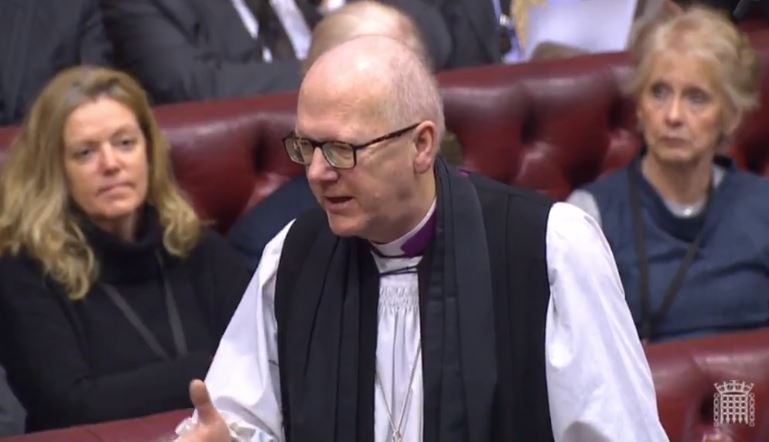
Bishop of Southwark asks about government’s asylum policy

The Bishop of Southwark received the following written answers on 24th May 2022:

The Lord Bishop of Southwark asked Her Majesty’s Government when they expect the removal of asylum seekers to Rwanda will begin under the Migration and Economic Development Partnership with Rwanda.

Continue reading “Bishop of Southwark asks about government’s asylum policy”

Bishop of Durham asks about the North East Ambulance Service

The Bishop of Durham asked a question during a discussion on the North East Ambulance Service on 23rd May 2022:

The Lord Bishop of Durham: My Lords, I should declare that NEAS serves the area that I live in; indeed, I shall be in Shildon on other business later this week. Will the Minister take the opportunity to applaud the work—on the ground and in the vehicles—of members of the ambulance service? They seek to do their best under incredible pressure, day in and day out. This is an opportunity to thank them, I think, even in the face of such tragedy.

Continue reading “Bishop of Durham asks about the North East Ambulance Service”

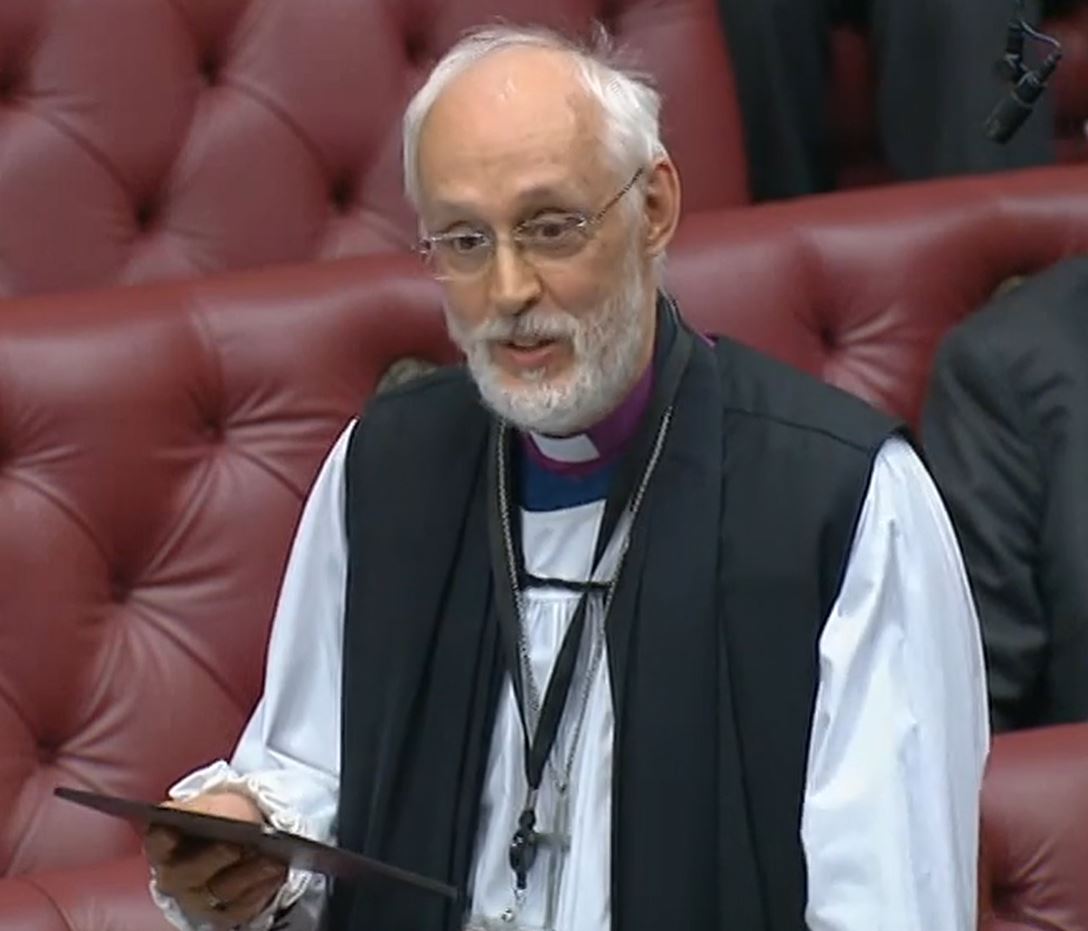
Bishop of Durham speaks in debate on the Schools Bill

On 23rd May 2022, the House of Lords debated the Schools Bill in its second reading. The Bishop of Durham spoke in the debate with regards to faith schools, teachers, and other points in the bill. The Bill was committed to a committee of the whole house.

The Lord Bishop of Durham: My Lords, I declare my specific interest as chair of the National Society. Noble Lords will know that the Church of England started mass education for the poor in England in 1811 through the work of the National Society. We built thousands of schools which have been at the heart of our commitment to the common good ever since. The state joined in this educational endeavour 50 years later. A strong mutual relationship developed, culminating in the dual system settlement in the 1944 Education Act.

Since a Labour Government introduced academies in the early 2000s, that system has been evolving but bringing complexity and fragmentation. Free schools added to this. Academies started as an innovation to bring fresh approaches to improve outcomes, especially for children in the most disadvantaged areas. There has been much success, although not in every case. Academies are now the predominant school type. As the system moves towards all schools being academies in a strong trust, it is right that we give detailed attention to ensure that academies are placed within a firm legislative context rather than rely on the largely contractual nature of the present arrangements.

Continue reading “Bishop of Durham speaks in debate on the Schools Bill”

Bishop of Oxford asks about targeted support for poorest community members

The Bishop of Oxford asked a question during a debate on inflation on 23rd May 2022:

The Lord Bishop of Oxford: My Lords, I have seen at first hand from touring every part of the three counties in the Diocese of Oxford the rise in the take-up of food banks in recent weeks. I pay tribute to all those who work and volunteer in them. I have heard heartbreaking stories of those who need to use them. The Government’s response to the Covid pandemic was remarkable in its creativity and urgency, helping the poorest. Will we see now a windfall tax? Will we see more targeted support for the poorest in the communities as an urgent matter?

Continue reading “Bishop of Oxford asks about targeted support for poorest community members”

Bishop of Oxford speaks in a debate on the Schools Bill

On 23rd May 2022, the House of Lords debated the Schools Bill (2022) in its second reading. The Bishop of Oxford spoke in the debate in regards to faith schools and rural schools. The Bill was read through and committed to a committee of the whole house:

The Lord Bishop of Oxford: My Lords, there is much to welcome in the new Bill, as my colleague the right reverend Prelate the Bishop of Durham and other noble Lords have indicated. In particular, it is good to know the Government’s direction of travel on academisation and the continued emphasis on raising standards. I support the comments made by other noble Lords on the need properly to resource our schools, particularly in the aftermath of the pandemic, to safeguard the morale of heads, governors and teachers and to pay much greater attention to mental health provision.

It is vital as well to continue to build on secure partnerships across the statutory, voluntary, church and faiths sector. The education of our children has never been the sole responsibility of central government—it is the responsibility of all. These vital partnerships have flourished for many decades to the mutual benefit of all and the common good. It is very good to note the Government’s intention to safeguard those partnerships into the future through the Bill and the process of academisation which will follow. One of the tests of the Bill will be the strengthening of social capital and intermediate institutions.

Continue reading “Bishop of Oxford speaks in a debate on the Schools Bill”

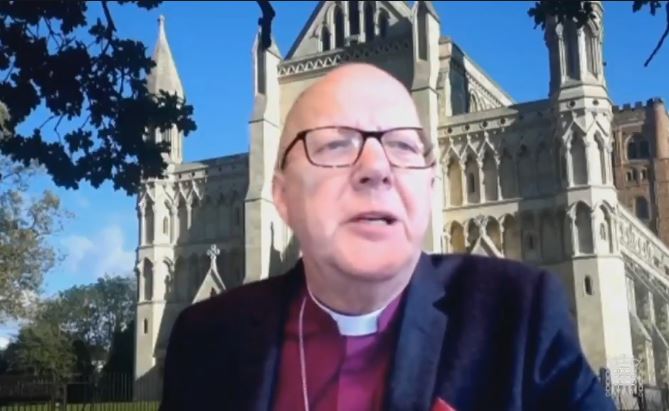
Bishop of St Albans asks about UNESCO access in Azerbaijan

The Bishop of St Albans received the following written answer on 23rd May 2022:

The Lord Bishop of St Albans asked Her Majesty’s Government what representations they have made to UNESCO and the government of Azerbaijan to allow a UNESCO mission unimpeded access to document Armenian and Azerbaijan heritage in Nagorno-Karabakh as part of a reconciliation measures.

Continue reading “Bishop of St Albans asks about UNESCO access in Azerbaijan”

Bishop of St Albans asks about Indian ban on cereal exports

On 19th May 2022, the Bishop of St Albans asked a question concerning a ban placed on cereal exports by India:

The Lord Bishop of St Albans asked Her Majesty’s Government what assessment they have made of the impact of the decision by the government of India to ban the export of cereals from that country on inflation and the cost of living in the United Kingdom.

Continue reading “Bishop of St Albans asks about Indian ban on cereal exports”

Bishop of St Albans speaks in a debate on international agreements

The Bishop of St Albans spoke in a debate on the Working Practices – International Agreements Committee Report on 19th May 2022:

My Lords, I declare my interest as president of the Rural Coalition. Although I am not a member of this committee, I am very grateful for this report and enjoyed reading it, including its stress on the role of Parliament, not just in approving what has been decided but in the issues we are discussing now.

I found the previous speech very helpful. Why is there such reluctance to allow Parliament—both its Houses—to engage at a much earlier stage? This House is renowned for its extraordinary levels of experience, both in international diplomacy and negotiation and in the actual substance of many of the areas in which we are trying to get treaties and memoranda of understanding. Surely all it will do in the long run, if we can simply go ahead and give Parliament time, is to allow that experience to come out and be brought together. This is precisely what we should be doing.

Continue reading “Bishop of St Albans speaks in a debate on international agreements”

Bishop of St Albans asks about food prices

On 19th May 2022, the Bishop of St Albans asked a question during a debate on inflation and food prices:

The Lord Bishop of St Albans: My Lords, I thank the Minister for his replies on this important area, but is he concerned, as a number of people are, that some farmland is now being taken out of production because it is being bought by companies for carbon offset? Indeed, one of the issues about some of the rewilding is that, sometimes, good farmland, which could help us, is now not available. What are Her Majesty’s Government doing to increase our food production, both for our own security but also so we can export to help those other countries that are facing huge hikes in prices?

Continue reading “Bishop of St Albans asks about food prices”