Bishop of Coventry urges government to consider responsibility in the captivity of Nazanin Zaghari-Ratcliffe

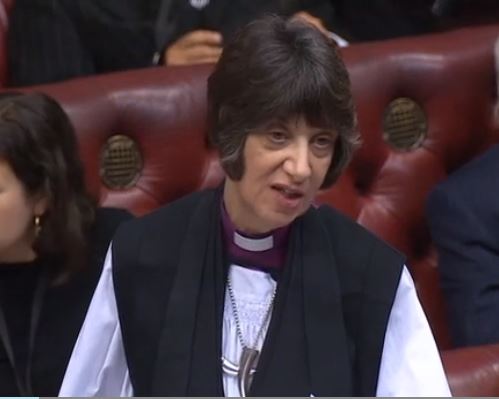
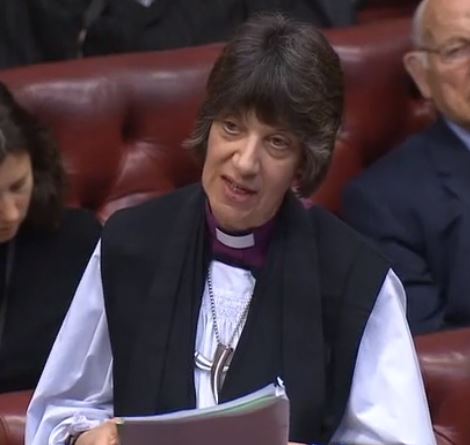
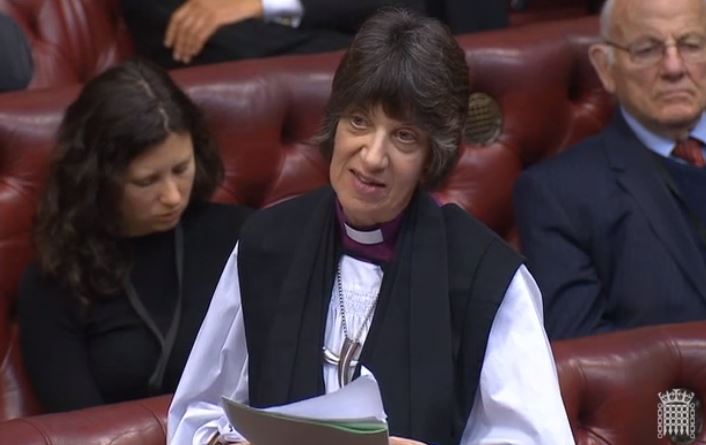
The Bishop of Coventry raised a question of forgiveness and responsibility in the government response to the continued imprisonment of Nazanin Zaghari-Ratcliffe in Iran on 15th November 2021, during a debate on what action the government was taking to facilitate her release and return to the UK:

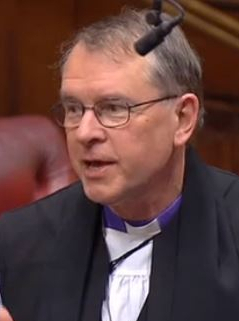
The Lord Bishop of Coventry: My Lords, what does the Minister think Governments on both sides might have to learn from a simple prayer that was once prayed on this day in Coventry, after the destruction of the city? It is a simple prayer but a brave one; it simply says: “Father, forgive.” It does not try to forgive the other side, or even to absolve the other side from responsibility, but it does say that, somewhere along the line, both sides, in whatever proportion, need to accept that a very deep hole has been dug and suffering people have fallen into it. In this case, there is a suffering woman at the bottom of the hole, and her husband and child. Can we not do more to accept that there is something we have a responsibility for?

Continue reading “Bishop of Coventry urges government to consider responsibility in the captivity of Nazanin Zaghari-Ratcliffe”

Bishop of Coventry asks about incursion of Azerbaijani troops into Armenian territory

On 15th November 2021, Bishop of Coventry asked a question on UK government efforts to help ensure the integrity of Armenia’s borders following incursions by Azerbaijani troops:

The Lord Bishop of Coventry: My Lords, in June, I visited the border inclusion area of Syunik province, at an earlier stage than the noble Baroness, Lady Cox. In Khoznavar, the incursion had cut off the nearby village from its main water source, and access to grazing land had been denied, threatening the survival of this poverty-stricken village. Following my letters of 7 July to the Foreign Secretary and of 5 November to the Minister for Europe and Americas, what further steps are Her Majesty’s Government taking to challenge those illegal incursions, to ensure the integrity of Armenia’s borders and to press for the withdrawal of Azerbaijani troops according to the terms of the November 2020 ceasefire?

Continue reading “Bishop of Coventry asks about incursion of Azerbaijani troops into Armenian territory”

Bishop of Liverpool introduced

On 15th November 2021, the Right Reverend Paul Bayes, Bishop of Liverpool, was introduced to the House of Lords and took his seat on the Bishops Benches as a Lord Spiritual.

Hansard records that:

Paul, Lord Bishop of Liverpool, was introduced and took the oath, supported by the Lord Bishop of St Albans and the Lord Bishop of Manchester, and signed an undertaking to abide by the Code of Conduct.

Bishop of Exeter introduced

On 15th November 2021, the Right Reverend Robert Atwell, Bishop of Exeter, was introduced to the House of Lords and took his seat on the Bishops Benches as a Lord Spiritual.

Continue reading “Bishop of Exeter introduced”

Bishop of Leeds asks about women’s rights and religious freedom in Pakistan

The Bishop of Leeds received the following written answers on 15th November 2021:

The Lord Bishop of Leeds asked Her Majesty’s Government what representations they have made to the government of Pakistan regarding an independent, impartial and prompt investigation of allegations of (1) forced conversion, and (2) forced marriage, of girls belonging to minority communities.

Continue reading “Bishop of Leeds asks about women’s rights and religious freedom in Pakistan”

Bishop of Coventry asks about efforts towards disarmament and non-proliferation of nuclear weapons

The Bishop of Coventry received the following written answers on 15th November 2021:

The Lord Bishop of Coventry asked Her Majesty’s Government what steps they are taking to prepare for the Review Conference of the Parties to the Treaty on the Non-Proliferation of Nuclear Weapons in January 2022; what steps they are taking to ensure a successful outcome; and what discussions they are having with other nuclear weapon states on the prevention of nuclear conflict.

Continue reading “Bishop of Coventry asks about efforts towards disarmament and non-proliferation of nuclear weapons”

Police, Crime, Sentencing & Courts Bill: Bishop of Durham supports exclusion of children from changes to mandatory minimum sentences

On 10th November 2021, during a debate on amendments to the Police, Crime, Sentencing & Courts Bill, the Bishop of Durham, on behalf of the Bishop of Derby, spoke in support of an amendment tabled by Baroness Massey which would ensure that children would not be affected by the imposition of changes to mandatory minimum sentences under the bill:

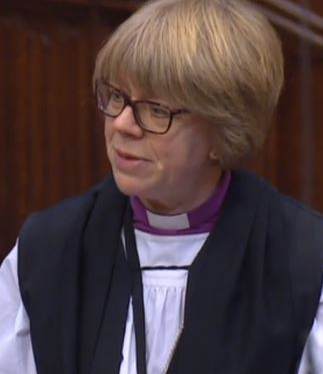
The Lord Bishop of Durham: My Lords, I speak on behalf of the right reverend Prelate the Bishop of Derby on this occasion, who could not be here today. I add my support to Amendments 198, 199, 200 and 201, in the name of the noble Baroness, Lady Massey, which deal with tariff starting points or DHMP sentences as they relate to young people. The noble Baroness laid out well the case for amending Clause 104 so that it takes into account evidence on maturation. I will briefly add the right reverend Prelate the Bishop of Derby’s perspective as a Lord spiritual and as part of a team of Bishops focused on Her Majesty’s prisons, particularly young offender institutions. She also declares an interest as vice-chair of the Children’s Society.

Children ought to be treated as children, and we resist any erosion of that in law. If we are to argue to the contrary we must be content to go against the trajectory of every other arena of English law. Eighteen is soon to become the age at which people can legally marry, leave education and join the Armed Forces. I urge noble Lords to reflect on this. If we project from this that children are to be protected from making decisions about marriage, education and even enlisting in Her Majesty’s Armed Forces until they reach a maturation point of 18, then the same logic surely must continue to apply in this instance.

Continue reading “Police, Crime, Sentencing & Courts Bill: Bishop of Durham supports exclusion of children from changes to mandatory minimum sentences”

Police, Crime, Sentencing and Courts Bill: Bishop of Durham moves rehabilitation amendment on behalf of the Bishop of Gloucester

On 10th November 2021, the House of Lords debated the Police, Crime, Sentencing and Courts Bill in the seventh day of the committee stage. On behalf of the Bishop of Gloucester, the Bishop of Durham moved amendment 181, which would ensure that “reasonable efforts” would be made to support interventions to prevent offenders under community cautions from reoffending:

The Lord Bishop of Durham: My Lords, I am moving the amendment in the name of my friend the right reverend Prelate the Bishop of Gloucester, with her permission, as she is, sadly, unable to be here. I declare her interest as Anglican Bishop for Prisons in England and Wales, and we are very grateful for the support of the noble and learned Lord, Lord Thomas, and the noble Lord, Lord Beith.

I should say first that, while there are many parts of the Bill with which I take some issue, I do by and large consider it a welcome feature of the Bill that it places a new emphasis and focus on diversionary and community cautions, and on simplifying the previous regime. Done well, these out-of-court disposals, with helpful conditions attached, can be an effective solution that strikes a balance between punishment, the protection of communities and supporting the offender to successfully seek restoration in their community.

Continue reading “Police, Crime, Sentencing and Courts Bill: Bishop of Durham moves rehabilitation amendment on behalf of the Bishop of Gloucester”

Armed Forces Bill: Bishop of St Albans supports raising age of enlistment to 18

On 8th November 2021, the House of Lords debated the Armed Forces Bill in committee. The Bishop of St Albans spoke in the debate, supporting an amendment tabled by Baroness Massey of Darwen which would raise the age of enlistment into the armed forces to 18:

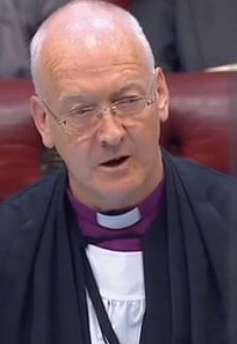
The Lord Bishop of St Albans: My Lords, I rise to speak in support of Amendment 61 in the name of the noble Baroness, Lady Massey of Darwen, to which I have added my name. I have done so because of my concerns about the well-being of young people and because I am not convinced that there are sufficient benefits in allowing the enlistment of young people of 16 or 17 rather than 18. Evidence and personal experience tell me that there is not.

I speak because of the experience of a member of my own family, so I know a story inside out, but I have also spoken to a number of parents whose children were recruited under the age of 18—and I have heard some very similar stories those described by the noble Baroness, Lady Massey, in her speech. I have no doubt that, for some early leavers recruited below the age of 18, the mental damage can take years to recover from. These recruits have the legal status as children and are entitled in law under safeguarding legislation to be protected from harm as far as possible.

There are a number of other reasons why I question this policy. Younger recruits suffer from very high drop-out rates. Official statistics show that, once enlisted, 30% of the Army’s under-18 recruits leave or are dismissed before they finish their training. They can find themselves out of work and education within months of joining, and these discharged recruits are not tracked, so we cannot speculate on how they fare after they leave the military. That being said, it would not be unreasonable to say that, had the option of joining up not been available, they would have stayed in full-time education, taken an apprenticeship or worked part time while undertaking a qualification. We are talking about not some small, troubled minority who failed to adapt adequately to military service, but nearly a third of all junior recruits. That is affecting some 700 young people a year, according to the Child Rights International Network.

Continue reading “Armed Forces Bill: Bishop of St Albans supports raising age of enlistment to 18”

Bishop of Southwark asks about human rights organisations in Israel and Occupied Palestinian Territories

The Bishop of Southwark received the following written answer on 8th November 2021:

The Lord Bishop of Southwark asked Her Majesty’s Government:

  • what discussions they have had with the government of Israel following claims by the Israeli Ministry of Defence that six human rights organisations are linked to the Popular Front for the Liberation of Palestine; and whether they share this assessment by the Israeli Ministry of Defence.
  • what assessment they have made of the work of (1) Al-Haq, (2) Addameer, (3) Defence of Children International – Palestine, (4) Bisan Center for Research and Development, and (5) Union of Palestinian Women’s Committee in monitoring allegations of human rights breaches in Israel and the Occupied Palestinian Territories.
Continue reading “Bishop of Southwark asks about human rights organisations in Israel and Occupied Palestinian Territories”