
On 7th December 2021, the House of Lords debated the Health and Care Bill in its second reading. The Bishop of Carlisle made a speech welcoming the bill and outlining the multiple aspects of care in need of attention going forwards:
The Lord Bishop of Carlisle: My Lords, this is a health and care Bill. I will address certain specific aspects of that care that deserve further attention.
First, on integrated care, like the noble Lord, Lord Kakkar, I welcome the clear desire for integration, collaboration and local flexibility, and the placing of integrated care systems on a statutory footing. But can the Minister assure us that, in ICBs and ICPs working together to ensure co-ordination in the design and delivery of integrated care, there will be an adequate focus on prevention rather than just cure, especially in mental health needs, not least among young people with learning disabilities?
The Bishop of Gloucester received the following written answer on 7th December 2021:
The Lord Bishop of Gloucester asked Her Majesty’s Government how many women in prison aged (1) 18 to 24, or (2) 25 or older, are currently sharing a cell.
Lord Wolfson of Tredegar (Con): On 19th November, the population of the women’s prison estate was 3,236.
The Bishop of Durham received the following written answer on 7th December 2021:
The Lord Bishop of Durham asked Her Majesty’s Government:
how many missing persons cases of child refugees have been issued in 2021.
what records they keep of the number of child refugees who go missing in the UK.
Baroness Williams of Trafford: Safeguarding procedures are in place to ensure children in temporary accommodation are safe and supported until a permanent place can be found with a local authority.
The Bishop of St Albans asked a question on the need for age verification on social media advertisement on 6th December 2021, during a debate on the effects of gambling on young people:
The Lord Bishop of St Albans: My Lords, I declare my interest as a vice-chair of Peers for Gambling Reform. As the noble Lord, Lord Foster, has already mentioned, 60,000-plus young people are diagnosed as suffering from gambling-related harm in this country. What consideration have Her Majesty’s Government given to ensuring, perhaps under the online harms Bill, that social media companies will provide an opt-in age-verification tool so that we can provide additional protections for our young people to protect them from these adverts?
The Bishop of Gloucester received the following written answer on 6th December 2021:
The Lord Bishop of Gloucester asked Her Majesty’s Government how many women in prison aged (1) 18 to 24, or (2) 25 years or older, have dependent children.
Lord Wolfson of Tredegar (Con): We do not hold current figures on how many women in prison aged (1) 18 to 24 or (2) 25 years or older have dependent children. Information on a prisoner’s caring responsibilities and their children living in the community is currently monitored locally by prison Governors/Directors to ensure appropriate support can be provided to offenders and their families. We are making changes to the questions within the Basic Custody Screening Tool (BCST) in the first quarter of 2022 and, once this has been done, we will be able to collect primary carer data via the BCST and access this information centrally. Consideration will then be given to how and what we can publish.
On 3rd December 2021, Andrew Selous MP, representing the Church Commissioners, gave the following written answers to questions from an MP:
Religious Freedom
Jim Shannon MP (DUP, Strangford): To ask the Member for South West Bedfordshire, representing the Church Commissioners, what assessment the Church has made of where persecution of religion and belief is most concerning.
The Bishop of Gloucester received the following written answer on 3rd December 2021:
The Lord Bishop of Gloucester asked Her Majesty’s Government when they will publish the evaluation of the ‘Action Access’ alternative detention pilot.
Baroness Williams of Trafford (Con): The United Nations High Commissioner for Refugees (UNHCR) have appointed the National Centre for Social Research (NatCen) to independently evaluate this pilot.
NatCen will be publishing the evaluation on their website the aim is for the evaluation to be published by the end of the year.
The Bishop of St Albans received the following written answer on 3rd December 2021:
The Lord Bishop of St Albans asked Her Majesty’s Government what plans they have, if any, (1) to investigate the purchase of agricultural farmland by multinational companies for the purpose of planting trees to offset carbon emissions, and (2) to prevent agricultural farm land being purchased for such purposes.
“I have experienced first-hand the sting of injustice—injustice born of being caught up in events that are bigger than we are and in the face of which we are powerless.”
The Bishop of Chelmsford, Rt Revd Guli Francis-Dehqani, made her maiden speech in the House of Lords on 2nd December 2021, in a debate led by Lord Collins of Highbury, “That this House takes note of the detention of Nazanin Zaghari-Ratcliffe and the case for further action by Her Majesty’s Government to secure her release.”
The Lord Bishop of Chelmsford (Maiden Speech): My Lords, I was introduced to the House barely a month ago, having recently taken up my post as Bishop of Chelmsford, that vast and wonderful diocese that covers the whole of Essex and east London. It is a privilege to serve this diocese, which is complex, diverse and full of opportunities and challenges. Today, I thank everyone here who has offered me the warmest of welcomes. I am immensely grateful, in particular, for the help and support that I have received from staff and officials.
I have a deep and personal interest in the subject of this debate. Not only have I met Richard Ratcliffe and followed the story of Nazanin over the years, but I myself originally come from Iran. Born and brought up there, I left as a teenager during the Islamic Revolution, following difficult and traumatic circumstances. I was born into a Christian household, my father having been a convert from Islam to Christianity, in a small village in the centre of Iran. We were part of the tiny Anglican Church in Iran, which, when I was growing up in the 1970s, was made up primarily of converts and second- and third-generation Christians.
“Calm scrutiny will cause people with power, whoever and wherever they may be, whatever they may say, however loudly they may speak, one and all, to be uncomfortable. This applies as much to the Bishops of the Church of England as to anyone else”.
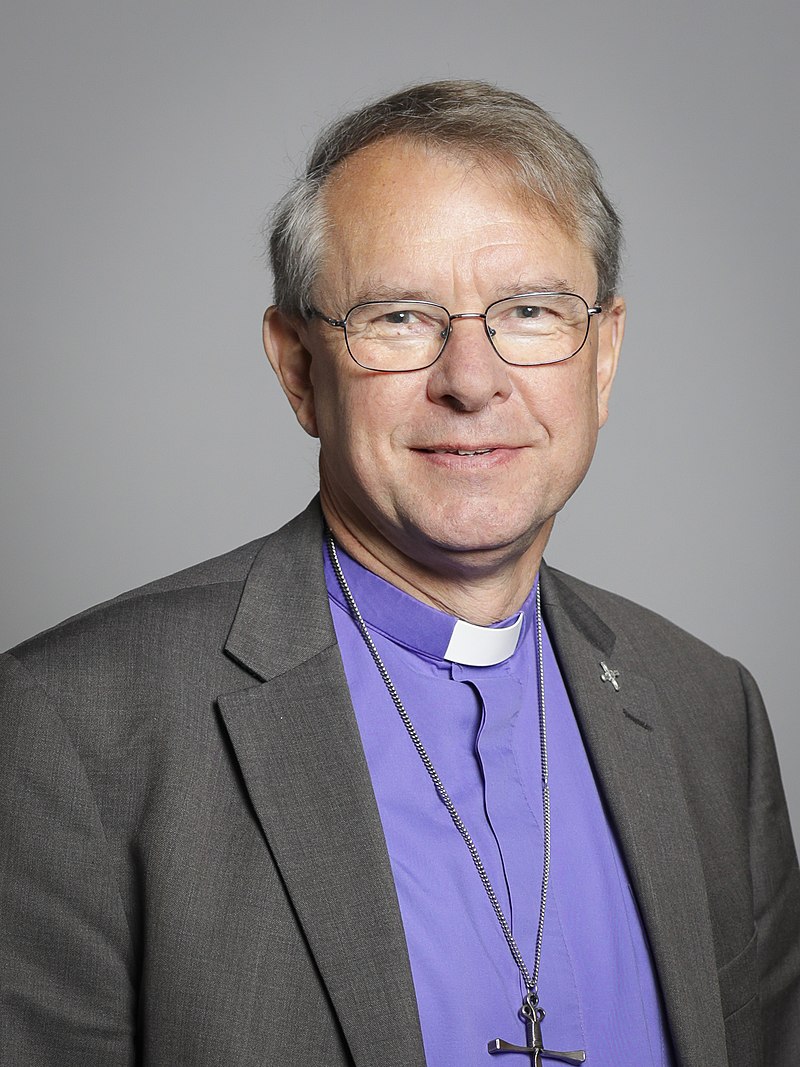
On 2nd December 2021 the Bishop of Liverpool, Rt Revd Paul Bayes, made his maiden speech in the House of Lords, during a debate led by Lord Bragg “That this House takes note of the BBC’s value to the United Kingdom and a wider global audience and the case for Her Majesty’s Government giving it greater support.”
The Lord Bishop of Liverpool (Maiden Speech): My Lords, I am grateful for the opportunity to address your Lordships for the first time and on this subject, and for the privilege of following the noble Lord, Lord Bilimoria. I am grateful to the noble Lord, Lord McNally, for his kind words*. I thank all noble Lords for the warmth of the welcome that I have received, and, for the quality of briefing and induction from the officers and staff of your Lordships’ House, which has been exemplary and profoundly helpful.
I speak as one whose first degree was in drama and theatre arts, and who was almost employed by the BBC as a trainee script editor in what was then called “English Regions Drama”, at the Pebble Mill studios in Birmingham, in 1975. With whatever wisdom, I chose instead to enter the ordained ministry of the Church, and there have been times when I have felt that I chose the lower calling. Forty-two years of ministry in six different dioceses have culminated in the enormous privilege of my being appointed Bishop of Liverpool in 2014. I have been preferred to your Lordships’ House late in my ministry, but I am very grateful to be here and to receive wisdom for at least a few months.
Among its many dimensions, I want to speak of what the BBC does uniquely in our fragmented public square. To me, the gift and value of public service broadcasting is a matter of form before it is a matter of content: it rests on the decision to assume a tone of voice. The value of the BBC to this nation and our global position is rooted in its decision to be calm, to choose a particular volume and quality of scrutiny and to sustain it, no matter how unpopular it may be.
You must be logged in to post a comment.