Bishop of Winchester asks about provision of high quality jobs for young people

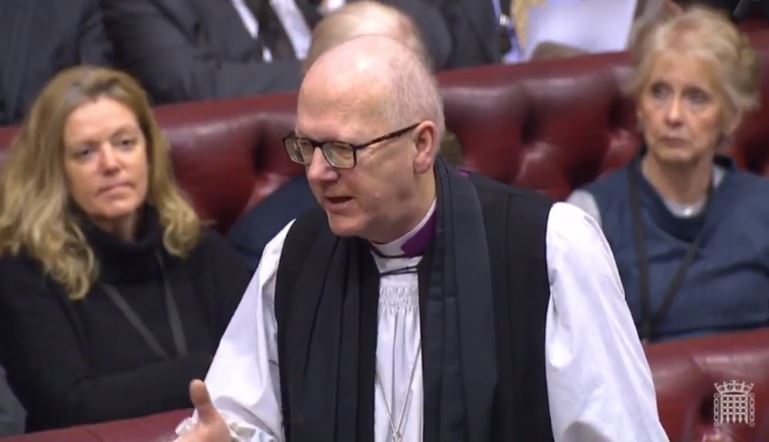
The Bishop of Winchester asked a question on provision of high quality jobs and work placements for young people affected by the COVID-19 Pandemic on 2nd February 2021, during a discussion on youth unemployment:

The Lord Bishop of Winchester [V]: My Lords, in a recent survey by the Prince’s Trust, 21% of those aged 16 to 24 said that they felt their skills and training were no longer useful as a result of the pandemic. Given that about only 2,000 young people secured roles out of 120,000 approved placements in the Kickstart scheme, can the Minister say what action Her Majesty’s Government are taking to increase the numbers enrolled on placements and to ensure that they are all high quality?

Continue reading “Bishop of Winchester asks about provision of high quality jobs for young people”
Archbishop of Canterbury asks about immigration controls at the Port of Dover

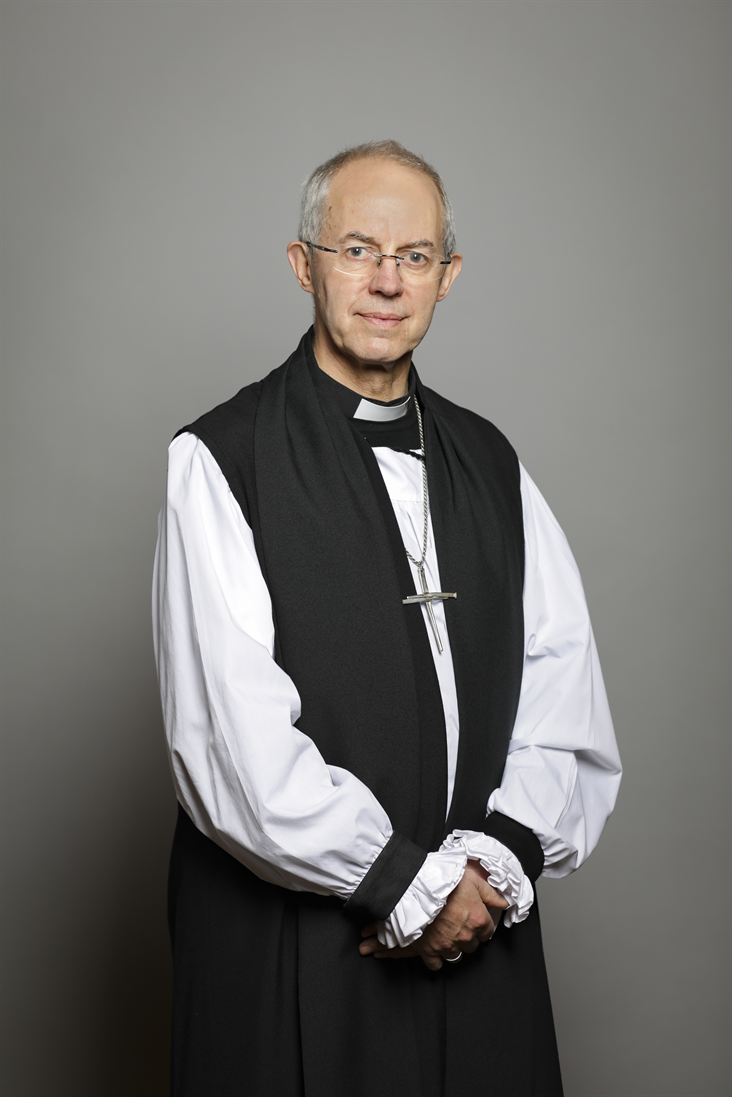
The Archbishop of Canterbury received the following written answer on 2nd February 2021:

The Lord Archbishop of Canterbury asked Her Majesty’s Government why they did not approve the application by the Port of Dover for funding to double the capacity for passport checks by the government of France at that port.

Continue reading “Archbishop of Canterbury asks about immigration controls at the Port of Dover”

Bishop of Durham asks about granting of family dependent and refugee status visas

The Bishop of Durham received the following written answer on 2nd February 2021:

The Lord Bishop of Durham asked Her Majesty’s Government how many applications for Adult Dependent Relative visas have been refused since 2016.

Continue reading “Bishop of Durham asks about granting of family dependent and refugee status visas”

Domestic Abuse Bill: Bishop of Derby

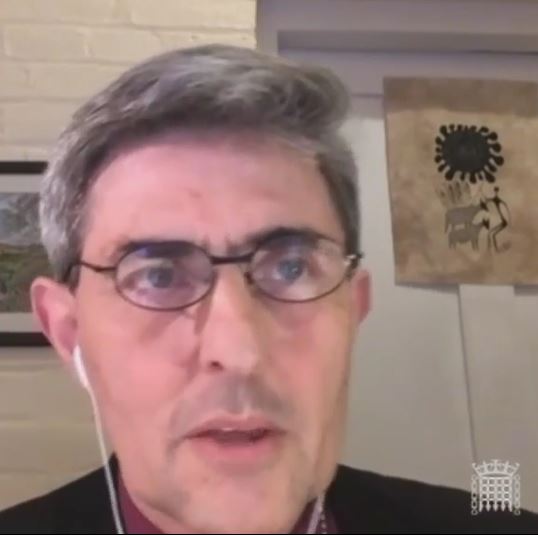
The Bishop of Derby spoke during a debate on the Domestic Abuse Bill on 1st February 2021, in support of amendment 176, which would clarify the need for specialist domestic abuse services:

The Lord Bishop of Derby [V]: My Lords, I add my voice to those who have already welcomed this Bill and thank the Minister for the Government’s responses so far. I support all the amendments in this group but address my comments to Amendment 176, to which I was pleased to add my name. I am privileged to follow the noble Lord, Lord Polak, and commend his clear and passionate introduction to this amendment.

Although this Bill is welcome and long overdue, its success as legislation must ultimately be measured in how far it improves on current outcomes in supporting survivors of abuse. To that end, Amendment 176 seeks to strengthen the Bill to ensure that all survivors of domestic abuse can equally access the protection and support measures they require.

I too support the Government’s good intentions in including a statutory duty to provide accommodation-based support and appreciated the earlier debate on that provision. However, I fear an unintended consequence: in placing the focus on that support, we risk undermining the funding and provision of specialist community-based services, notably including for many children who are victims of domestic abuse.

Continue reading “Domestic Abuse Bill: Bishop of Derby”

Domestic Abuse Bill: Bishop of London supports amendments on protections for migrant victims of domestic abuse

The Bishop of London spoke in support of amendments to the Domestic Abuse Bill intended to safeguard the data of migrant victims of domestic violence against use for immigration control on 1st February 2021:

The Lord Bishop of London [V]: My Lords, I add my voice to those of noble Lords who have welcomed this Bill. I thank the Minister for all her work in this area. As other noble Lords have already said, this is a once-in-a-generation opportunity to address the crime of domestic abuse, which affects more than 2 million people a year in the United Kingdom. However, the Bill continues to overlook one of the most vulnerable groups affected by this form of violence against women and girls—migrant women. I too will address Amendment 154, which calls for the Secretary of State to ensure that the personal data of victims of domestic abuse in the UK is processed only for the purpose of that person requesting or receiving support or assistance relating to domestic abuse, not for immigration control.

Government policy is clear that victims of crime should be treated without discrimination. Therefore, the separation of immigration enforcement and protection of domestic abuse victims who are migrant women must be delineated. Failure to do this puts migrant women at risk of a double jeopardy of danger from their abuser and fear of deportation. As has already been highlighted, the Istanbul convention, the landmark international treaty on violence against women and girls, which the Government have signed and are committed to ratifying, requires in Articles 5 and 59 that victims are protected regardless of their immigration status.

Continue reading “Domestic Abuse Bill: Bishop of London supports amendments on protections for migrant victims of domestic abuse”

Bishop of Salisbury asks about work of faith communities in health and social care and UK Commitment to overseas aid

The Bishop of Salisbury asked a question on recognition of the work of faith groups in the health and social care sector during the pandemic, and whether the UK would move to restore overseas aid to 0.7% of the GDP commitment, during a discussion on International Year of Health and Care Workers on 1st February 2021:

The Lord Bishop of Salisbury [V]: My Lords, in Salisbury we have had good reason to recognise the dedication and sacrifice of health and care workers, both at the time of the Novichok poisonings and in this present pandemic. The use of Salisbury and other cathedrals and churches as vaccination centres indicates a partnership between spirituality and health care, so will the Minister join me in thanking chaplains, among all the dedicated healthcare workers at this time? What we see in this country is in marked contrast with the poorest parts of the world, as in Sudan and South Sudan, with which this diocese is linked. Given that this is a global pandemic, when might the Government recognise the self-interest involved in overseas aid and move to restore the 0.7% of GDP commitment? No one will be safe until everyone is safe.

Continue reading “Bishop of Salisbury asks about work of faith communities in health and social care and UK Commitment to overseas aid”

Archbishop of York asks about humanitarian situation in Sudan and Tigray

The Lord Archbishop of York received the following written answers on 1st February 2021:

The Lord Archbishop of York asked Her Majesty’s Government what assessment they have made of reports of human rights abuses in Tigray; and what support they are providing (1) to the Ethiopian Human Rights Commission, (2) to the UN High Commissioner for Human Rights, and (3) to the African Union, to (a) investigate, and (b) document, such abuses.

Continue reading “Archbishop of York asks about humanitarian situation in Sudan and Tigray”

Bishop of Durham asks about reconciliation events for Windrush Generation

The Bishop of Durham received the following written answer on 1st February 2021:

The Lord Bishop of Durham asked Her Majesty’s Government on what date they plan to commence hosting “reconciliation events” with individuals from the Windrush generation.

Continue reading “Bishop of Durham asks about reconciliation events for Windrush Generation”

Bishop of St Albans asks about humanitarian situation in Tigray

The Bishop of St Albans received the following written answers on 1st February 2021:

The Lord Bishop of St Albans asked Her Majesty’s Government, further to the report by the UNOCHA Ethiopia—Tigray Region Humanitarian Update Situation Report, published on 6 January, what assessment they have made of reports of (1) food shortages, (2) looting, (3) sexual violence, and (3) damage to cultural heritage, in Tigray.

Continue reading “Bishop of St Albans asks about humanitarian situation in Tigray”

Financial Services Bill: Bishop of St Albans speaks at second reading

The Bishop of St Albans spoke at the second reading of the Financial Services Bill on 28th January 2021, raising issues of ethical investment and tax avoidance:

The Lord Bishop of St Albans: My Lords, it is right to underline the importance of the financial services sector in our country and the huge contribution it makes. There are many laudable things in this Bill: the strengthening of money laundering regulations; encouraging saving; and the creation of parity between white collar crimes, such as market manipulation, and general fraud by extending the maximum sentence.

I was disappointed, however, to hear that the Commons amendment exploring the whole issue of ethical investment with reference to genocide did not make it into the Bill. I understand the Government’s reservation—they do not want to politicise the FCA. Nevertheless, I hope that “global Britain”, as laid out by the intentions of the Bill, will also be very much “ethical Britain” as we place ourselves in the world under the new freedoms that we have. I also note, with other noble Lords, the concern that there seems to be so little clarity on the question of parliamentary scrutiny. I am sure we will return to this as the Bill passes through your Lordships’ House. Of course, fundamental to this whole future is that the FCA is adequately resourced to fulfil its task.

Continue reading “Financial Services Bill: Bishop of St Albans speaks at second reading”