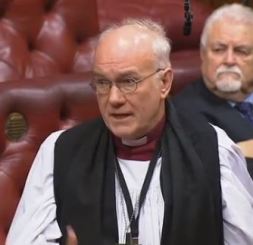
 On 24th January 2019 the Bishop of Worcester, Rt Revd John Inge, spoke in a debate tabled by Lord Scriven, “That this House takes note of the ability of local authorities across the United Kingdom to deliver essential services to their communities.”
The Lord Bishop of Worcester: My Lords, I rise with a heavy heart to raise questions concerning the ability of local councils to deliver essential services to their communities. I welcome the prospect of increased short-term government funding but, without that being increased and continued or there being rises in council tax, whatever the rights and wrongs of that, I question whether it will be sufficient to enable councils to meet rising demand, especially in social care. That issue is of immense concern, but others have spoken eloquently about it.
Continue reading “Bishop of Worcester highlights cultural and heritage losses of local council cuts”
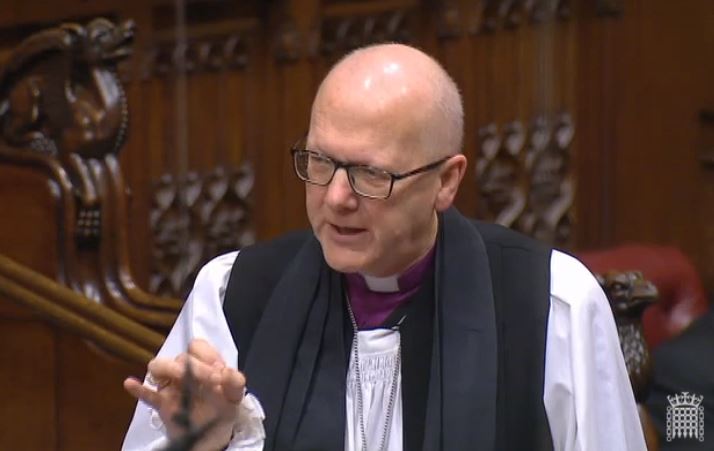
 On 23rd January 2019 the House of Lords considered the Government’s Trade Bill during its Committee stage. The Bishop of Chester, Rt Revd Peter Forster, spoke during debate on Amendment 24, moved by Lord Stevenson of Balmacara, which sought to keep the UK in a customs union with the European Union.
 The Lord Bishop of Newcastle: My Lords, the latest quarterly statistics released from the Office of Rail and Road show that the London North Eastern Railway has suffered its worst punctuality levels in over a decade and came second—not an honour—on the list of the 10 worst train services for punctuality. As my noble friend Lord Cormack said, we had hopes for the new Azuma trains, but there is a lack of investment in infrastructure in the north—the signalling systems north of York are over 30 years old. Will the Minister tell us when the necessary infrastructure works will take place in order for these trains to run as they should to serve the people of the north-east and Scotland?
 On 23rd January 2019 the Bishop of Coventry received written answers to two questions about the treatment of Nazanin Zaghari-Ratcliffe:
 On 22nd January 2019 the House of Lords considered a motion to approve the Floods and Water (Amendment etc.) (EU Exit) Regulations 2019. The Archbishop of York, Most Revd John Sentamu, asked a question of the Minister:
 On 21st January 2019 the House of Lords debated a motion from Baroness Stroud “To ask Her Majesty’s Government what assessment they have made of metrics to measure United Kingdom poverty, in the light of the report from the Social Metrics Commission.” The Bishop of Portsmouth, Rt Revd Christopher Foster, spoke in the debate:
 This week in the House of Lords bishops spoke and voted on the Government’s EU Withdrawal Agreement, the Counter-Terrorism and Border Security Bill, and the Civil Partnerships, Marriages and Deaths (Registration Etc.) Bill. They also spoke in debates on online gambling, and the effects of the Internet on children’s health. They asked questions on Brexit, gambling by children, Yemen, Islamophobia, pensions, school exclusions, and arts education.
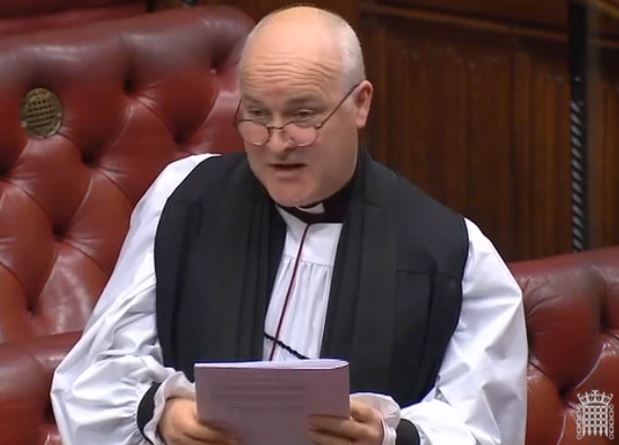 The Lord Bishop of Chelmsford: My Lords, an unregulated digital environment is causing moral decay. There is no time to reiterate the various harms that are being caused, but they are deep-seated, corrosive and pervasive. Just last week I was at a school in Essex talking to 7 to 11 year-olds about their use of a game called TikTok. All of them were using it. The lower age limit for using it is 13. As the noble Baroness, Lady Kidron, pointed out, the digital world assumes that all users are equal and all users are adults, whereas in fact one-third of users worldwide are children. Therefore, their health, well-being and development require us to ensure that the internet, and the many ways that children access it, are as safe as they can be. This has usually meant creating special safe places for children or safety options that can be activated.


You must be logged in to post a comment.