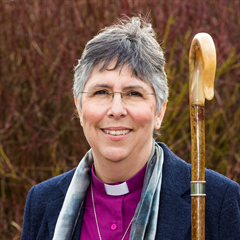
Bishop of Leeds takes part in debate on the current situation in Sudan, urging international action to address humanitarian concerns

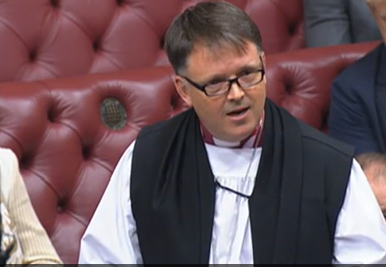
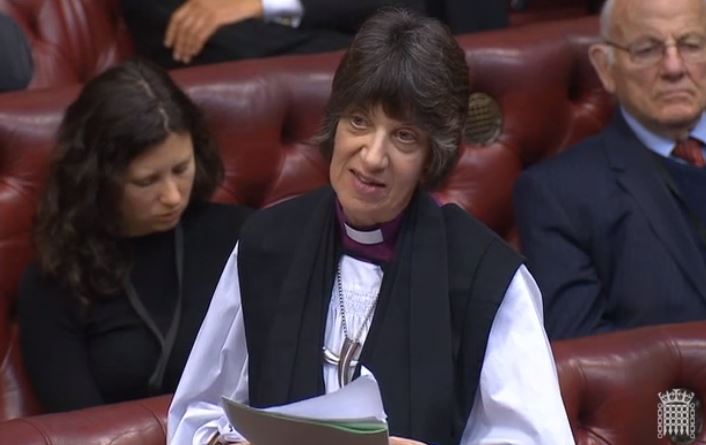
The Bishop of Leeds took part in a debate on the current conflict in Sudan on 13th September 2024, noting the escalating impact of the conflict and the need for the international community to act to save lives in the country:

The Lord Bishop of Leeds: My Lords, it is always a daunting honour to follow the noble Lord, Lord Alton, and the previous speakers. Like them, I have some considerable experience of Sudan, having been there a number of times and had dealings not just at the political level but on the ground, among very real and ordinary communities. I am grateful to the noble Lord, Lord Collins, for securing this debate.

Behind the statistics, there are human beings and stories; 25 million people going hungry could be just a number until you look individuals in the eye. Dig a little deeper and the whole situation in Sudan is much more complicated than simply two generals having a scrap. What we can say with confidence is this: military violence, including the bombing of children, women and ordinary civilians, is appalling. It is often indiscriminate, especially when unleashed by the RSF in what increasingly looks like deliberate and intentional genocide in parts of Sudan. A humanitarian catastrophe has exploded in plain sight of the world and its Governments, with food shortages; the closing down of access for humanitarian aid from neighbouring countries; famine; malnutrition; and a generation of children who are being starved, made homeless and given no medical care or education.

As the director of the World Food Programme told us at the APPG, as was referred to by the noble Lord, Lord Alton:

“Avoidable famine is no longer a threat—it is a reality now”.

Continue reading “Bishop of Leeds takes part in debate on the current situation in Sudan, urging international action to address humanitarian concerns”

Bishop of Sheffield takes part in debate on higher education in the UK

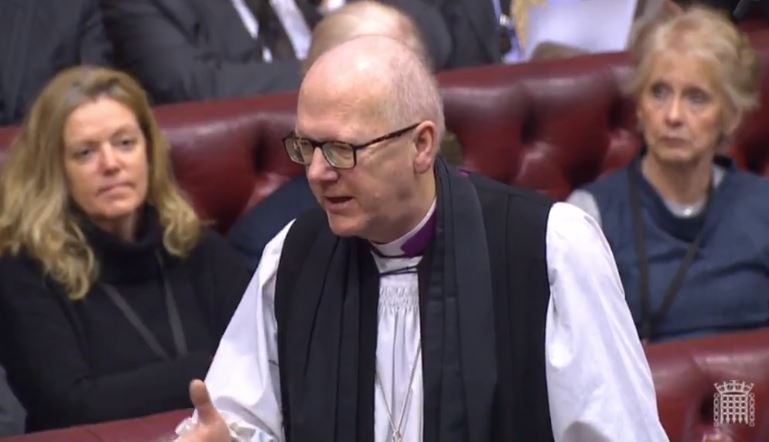
The Bishop of Sheffield spoke in a debate on the crisis in higher education on 12th September 2024, emphasising the role of universities as a public good for communities:

The Lord Bishop of Sheffield: My Lords, I am grateful to the noble Lord, Lord Krebs, for focusing the attention of the House on the HE crisis and for the opportunity to contribute to this debate. I look forward to the maiden speech of the noble Lord, Lord Tarassenko.

As the Bishop of Sheffield I have close ties with both universities in the city, the University of Sheffield and Sheffield Hallam University. I am told that those two institutions support more than 19,500 jobs and generate more than £1 billion annually for the local economy. I know at first hand that they bring a rich cultural diversity to our city. What is true in Sheffield is true across the country: universities are generally hugely beneficial to the communities within which they are situated.

Continue reading “Bishop of Sheffield takes part in debate on higher education in the UK”

Bishop of Sheffield highlights importance of prison staff and chaplains during debate on UK prison capacity

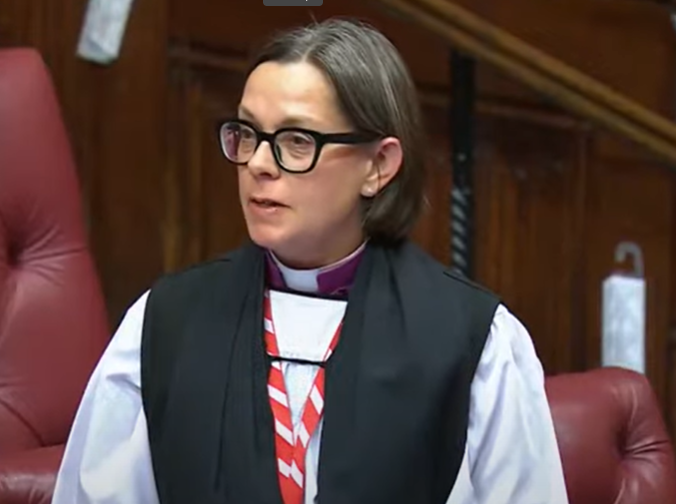
The Bishop of Sheffield spoke in a debate on prison capacity on 12th September 2024, highlighting the important role made by prison chaplains and the need for prison staff to be properly resourced and supported:

The Lord Bishop of Sheffield: My Lords, I am grateful to the noble Baroness, Lady Burt, for enabling this debate and for the opportunity to speak in it. My right reverend friend the Bishop of Gloucester, lead Bishop for prisons, is unable to be here today. I know she wishes that she had been able to contribute. I share her interest in the welfare of prisoners and of those called to work in prisons, not least in the four prisons in my diocese in and around Doncaster.

Ministers have made plain their deep concern at the capacity problem in our prisons and have set out their plans to address it in both the short and longer term. I urge the Government to think deeply about the factors that have led us to this crisis and to respond creatively and boldly when considering the purpose of prison and the alternatives to custody. At their best, prisons are places of transformation. Every person supported to turn away from offending makes our country safer for everyone. But truly effective rehabilitation almost always takes place in a context of care and trust. It surely goes without saying that overcrowding in prisons is not conducive to a transformative culture.

Continue reading “Bishop of Sheffield highlights importance of prison staff and chaplains during debate on UK prison capacity”

Bishop of Manchester asks about plans for bus franchising

The Bishop of Manchester asked a question on plans for franchising local bus and railway services on 12th September 2024, following a government statement on plans for bus franchising:

The Lord Bishop of Manchester: My Lords, I declare an interest: I got the bus on Monday, Tuesday, Wednesday and today, and shall be getting it tomorrow. As I live in Greater Manchester, I have been a real beneficiary of what the previous Government allowed for franchising in my city and its surrounds. The buses have become more reliable: I can now go to a bus stop and expect a bus to turn up within 10 minutes, not 40 minutes, which I sometimes had to wait for before.

Continue reading “Bishop of Manchester asks about plans for bus franchising”

Bishop of St Albans calls for integrated and sustainable approach to rural library services

On 12th September 2024, the Bishop of St Albans spoke in a debate on the government’s strategy for rural libraries, calling for an integrated rural strategy with a commitment to sustainability:

The Lord Bishop of St Albans: My Lords, if we are to stop the decline in the number of rural libraries, we urgently need something that many of us have been calling for for a long time, which is an integrated rural strategy with a commitment to rural sustainability. There is huge, mainly untapped potential in the countryside to use existing community buildings as hubs and provide many services such as access to computers and the internet—vitally important—banking services, basic dispensing, post offices and, of course, libraries. They could be sited in our rural schools or sometimes in underused village halls or even church buildings. We have managed to do that in some places; we can do it more. We need to find ways to make this vital service work economically. Will the Minister commit to supporting this radical rethink about rural services?

Continue reading “Bishop of St Albans calls for integrated and sustainable approach to rural library services”

Bishop of Leeds asks about UK military support for Ukraine

The Bishop of Leeds tabled a question on government plans to intensify military support for Ukraine on 12th September 2024:

The Lord Bishop of Leeds: To ask His Majesty’s Government what plans they have to accelerate and intensify military support for Ukraine.

Baroness Chapman of Darlington (Lab, FCDO): My Lords, UK support for Ukraine is ironclad, and that is why we are stepping up military aid to Ukraine. We are ramping up and speeding up delivery of military support for Ukraine. On Friday, the Defence Secretary announced that the UK would provide Ukraine with 650 lightweight multi-role missiles. Operation Interflex, which has trained 45,000 Ukrainian troops, will extend through 2025. Additionally, yesterday he confirmed that military support announced in April is on track for delivery.

Continue reading “Bishop of Leeds asks about UK military support for Ukraine”

Bishop of St Albans asks about rural crime

On 12th September 2024, the Bishop of St Albans tabled a question on the government’s assessment of the NFU Mutual’s recent rural crime report:

The Lord Bishop of St Albans: To ask His Majesty’s Government what assessment they have made of NFU Mutual’s Rural Crime Report 2024, published on 1 August.

Lord Hanson of Flint (Lab, Home Office): I begin by thanking the National Farmers’ Union Mutual for its report. Rural crime can have a devastating effect on, and consequences for, countryside communities and the agricultural sector. That is why the Government are committed to reducing crime in rural areas. Under our proposed reforms, rural communities will be safeguarded, with tougher measures to clamp down on anti-social behaviour and strengthen neighbourhood policing, as well as stronger measures to prevent farm theft and fly-tipping.

Continue reading “Bishop of St Albans asks about rural crime”

Votes: Social Fund Winter Fuel Payments Regulations

On 11th September 2024, the House of Lords debated changes to the Winter Fuel Payment Regulations which would change the payment from a universal to a means-tested benefit. Votes were held on three regret motions associated with the change, in which Bishops took part:

Continue reading “Votes: Social Fund Winter Fuel Payments Regulations”

Bishop of Sheffield supports motion to regret on changes to winter fuel payments

The Bishop of Sheffield spoke in a debate on changes to Winter Fuel Payments on 11th September 2024, supporting a regret motion and asking the government to reconsider the eligibility bar for payments:

The Lord Bishop of Sheffield: My Lords, I speak in broad support of the regret Motion in the name of the noble Lord, Lord Palmer. I appreciate the very tight fiscal constraints under which the Government are having to operate, and the need for tough choices to be made. I also accept the recent Statement by the Prime Minister that tough choices are almost by definition unpopular choices. Tough choices must also be wise choices, however, and I confess that I harbour misgivings about the wisdom of this proposal for two reasons.

Continue reading “Bishop of Sheffield supports motion to regret on changes to winter fuel payments”

Bishop of Southwark raises concerns over impact of changes to winter fuel payment regulations

The Bishop of Southwark spoke in a debate on changes to Winter Fuel Payments to pensioners on 11th September 2024, expressing concerns over the implications of moving to a means-tested threshold for the payments:

The Lord Bishop of Southwark: My Lords, I, too, congratulate the Minister on her appointment and I declare an interest as a beneficiary myself hitherto of the winter fuel payment—but only in very recent years. Indeed, I wonder whether your Lordships’ House should not pass a resolution declaring a corporate interest. Members of this House are unlikely to be seriously affected by the measure. That is not the point. For many pensioners in my diocese and for considerably larger numbers, possibly extending to millions, across the country, this will be a significant financial hit, with adverse repercussions this coming winter.

As has been alluded to, the origin of the Chancellor’s decision to cut winter fuel payments lies in her view of the state of public finances. It is not a manifesto commitment. The Minister, for whom I have enormous respect, has appealed to the House to neither annul the regulations nor express regret, but I suspect that there are those on the Government Benches who are internalising their regret at this very moment. I fear, and I think this feeling is shared across the House, that the Government’s decision on this matter will define them in the public mind for years to come. It is a signal gesture on their part and one that I believe should be resisted, notwithstanding the Minister’s careful appeal.

Continue reading “Bishop of Southwark raises concerns over impact of changes to winter fuel payment regulations”