On 19th January 2026, the Second Church Estates Commissioner, Marsha De Cordova MP, gave the following written answers to questions from MPs:
John Smyth
Adam Jogee MP (Lab, Newcastle-under-Lyme): To ask the hon. Member for Battersea, representing the Church Commissioners, what discussions the Church has had with the Government of Zimbabwe on John Smyth QC.
On 27th February 2025, Marsha De Cordova MP, representing the Church Commissioners, gave the following answers to MPs in the House of Commons:
Rural Parishes
Charlie Dewhirst MP (Bridlington and The Wolds) (Con) asked: What assessment the Church of England has made of the contribution of rural parishes. (902885)
Marsha De Cordova (Battersea) (Lab): The Church of England has more than 10,000 churches in our towns and villages in rural areas. In addition to their regular processes of prayer and worship, parish churches play an important role in the life of our rural communities.
The Bishop of Norwich received the following written answer on 12th February 2024:
The Lord Bishop of Norwich asked His Majesty’s Government what assessment they have made of the Communion Forest, an initiative comprising local activities of tree growing and ecosystem conservation, protection and restoration undertaken by parishes, dioceses and provinces across the Anglican Communion.
On 30th March 2023 the House of Lords held a short debate on a Motion from Lord Naseby: To ask His Majesty’s Government what plans they have to introduce new economic policies to address the challenges of climate change in developing countries, particularly those that are members of the Commonwealth.
The Archbishop of Canterbury: My Lords, I am grateful to the noble Lord, Lord Naseby, for tabling this Question. In his travelogue, he mentioned, to my alarm, the areas for which I am directly responsible—I suppose because they could not go anywhere else—notably, the Falkland Islands, Antarctica, Sri Lanka and Bermuda; I do not know what is going to happen to Kent.
The OECD’s most recent States of Fragility report found that, in 2022, 23% of the world’s population were living in fragile contexts, often linked to climate change, but 73% of the world’s extreme poor were. This figure is projected to rise to 86% of the world’s poor on the lowest incomes by 2030. For the Anglican Communion, within 165 countries over 150 of them are affected by such changes.
The Bishop of Chichester asked a question on the role of the Anglican Communion in supporting international development on 8th February 2022:
The Lord Bishop of Chichester: My Lords, parishes across England have links through the Anglican Communion with international communities where the issues of poverty, conflict and disease are most clearly felt. Those are shared by the people in our congregations in this land. As the bishops from the Anglican Communion gather for the Lambeth Conferencethis summer, I hope the Minister will enable us to present something about our nation’s international strategy for international development that will address some of the most crucial issues. First, there are the ways in which human rights are trampled on, particularly in the context of persecution of people for their faith—both Christian and other faiths. Secondly, there is the use of opportunities for partnership with the Anglian Communion in that strategy. Thirdly—
The Bishop of Southwark received the following written answers on 26th April 2021:
The Lord Bishop of Southwark asked Her Majesty’s Government what is their assessment of freedom of religion or belief in Egypt.
Lord Ahmad of Wimbledon (Con, FCDO): The UK welcomes the positive steps taken by the Government of Egypt in recent years, including President Sisi’s public commitment to upholding the rights of minorities and freedom of worship, as well as the protections for freedom of religion enshrined in the Egyptian constitution. We were also encouraged by the opening of the Middle East’s largest cathedral in Egypt in 2019.
On 13th February 2020 the Second Church Estates Commissioner, Andrew Selous MP, answered written questions from Jim Shannon MP, on carbon emissions, religious freedom, strategic development funding, church planting, green investments, the Democratic Republic of Congo and South Sudan, the Primates’ Meeting, new technologies, marriage and family life.
On 3rd September 2019 the Second Church Estates Commissioner, Rt Hon Dame Caroline Spelman MP, answered six written questions from Sir John Hayes MP, on the 2008 Jerusalem Statement, the Global Anglican Future Conference, the 39 Articles, the proportion of Church employees who are practising Christians, and biblical teaching on sex and gender in relation to transgender issues:
On 2nd April 2019 the House of Lords debated a motion from Lord McInnes of Kilwinning “To ask Her Majesty’s Government what steps they take to ensure that anti-corruption measures are supported as part of (1) aid to developing countries, and countries recovering from natural disasters, and (2) the reconstruction of former conflict areas.” The Bishop of Peterborough, Rt Revd Donald Allister, spoke in the debate:
The Lord Bishop of Peterborough: My Lords, I am most grateful to the noble Lord, Lord McInnes, for raising this important Question. I draw attention to my non-financial interest as a vice-president of the Leprosy Mission. I hasten to add that, to the best of my knowledge, that excellent organisation has not been infected by the scourge of corruption.
However, all of us involved in third sector aid must be vigilant and realistic about the temptations even for those whose careers and lives are essentially altruistic. The diocese I serve used to have what the Anglican Communion calls a companion link with a diocese in a very poor area of a very poor African country, where corruption is rife at all levels. We found it extremely difficult to support church work, rural clinics, schools and so on without significant amounts of money going astray—despite our best efforts as required by the Finance Act 2010 and by our own ethical standards.
On 22nd March 2018 the House of Lords debated a motion from the Foreign Office Minister Lord Ahmad of Wimbledon, “That this House takes note of the Commonwealth Heads of Government Meeting 2018.” The Bishop of Rochester, Rt Revd James Langstaff, spoke in the debate:
The Lord Bishop of Rochester: My Lords, the Anglican Communion extends significantly beyond the nations of the Commonwealth. Nevertheless, for obvious reasons of history, there is a very substantial Anglican presence in many Commonwealth countries. I am therefore pleased to speak from these Benches in this debate—and I, too, look forward to the maiden speech of the noble Lord, Lord Geidt.
Within the Anglican Communion we have a rich network of companion links between dioceses in different parts of the world, whereby most Lords spiritual will have an active engagement with the life of at least one Commonwealth country. The nature of the Commonwealth as a network of autonomous free nations also has some parallel with the life of the communion, wherein each province is autonomous yet links together through what one might call family likeness, and the position of honour granted to the most reverend Primate the Archbishop of Canterbury. Continue reading “Bishop of Rochester on importance of Commonwealth in building partnerships”



 On 13th February 2020 the Second Church Estates Commissioner, Andrew Selous MP, answered written questions from Jim Shannon MP, on carbon emissions, religious freedom, strategic development funding, church planting, green investments, the Democratic Republic of Congo and South Sudan, the Primates’ Meeting, new technologies, marriage and family life.
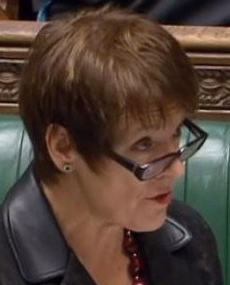 On 3rd September 2019 the Second Church Estates Commissioner, Rt Hon Dame Caroline Spelman MP, answered six written questions from Sir John Hayes MP, on the 2008 Jerusalem Statement, the
 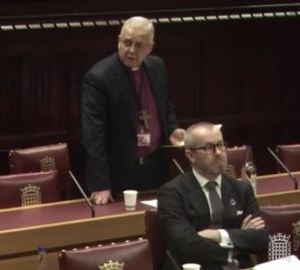 The Lord Bishop of Peterborough: My Lords, I am most grateful to the noble Lord, Lord McInnes, for raising this important Question. I draw attention to my non-financial interest as a vice-president of the Leprosy Mission. I hasten to add that, to the best of my knowledge, that excellent organisation has not been infected by the scourge of corruption.
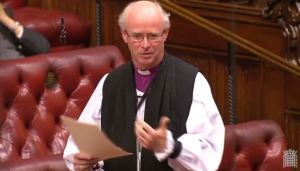 On 22nd March 2018 the House of Lords debated a motion from the Foreign Office Minister Lord Ahmad of Wimbledon, “That this House takes note of the Commonwealth Heads of Government Meeting 2018.” The Bishop of Rochester, Rt Revd James Langstaff, spoke in the debate:
 The Church of England in Parliament
You must be logged in to post a comment.