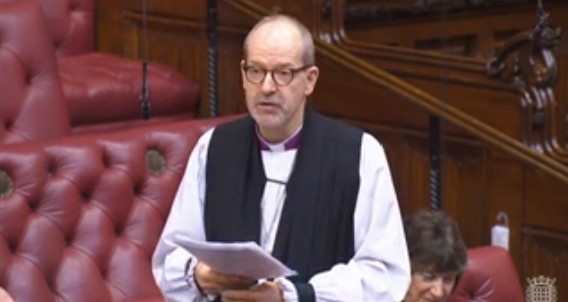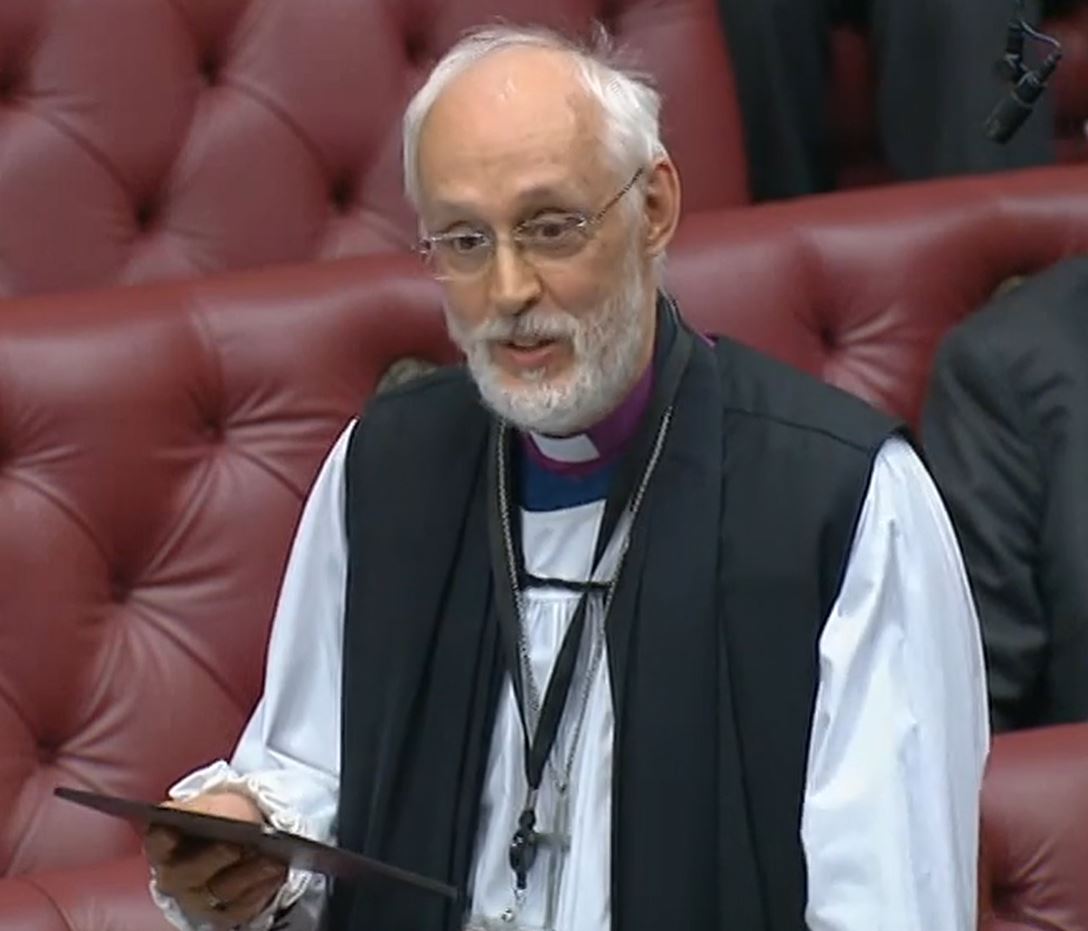
Bishop of Hereford asks about methods of engagement with the public on finance decisions

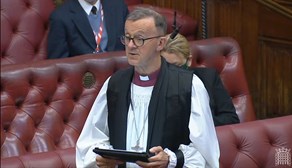
The Bishop of Hereford asked a question on methods for ascertaining public opinion on finance decisions during a discussion on press briefings regarding the budget:

The Lord Bishop of Hereford: My Lords, over the last few months not only have the bond markets been affected by this speculation, but people have made life-changing financial decisions, in part fuelled by speculation rooted in private government press briefings. These decisions may prove to be unwise when the Government’s actual decisions are revealed. Have the Government considered other, less damaging means of gauging public opinion than fishing through the media?

Continue reading “Bishop of Hereford asks about methods of engagement with the public on finance decisions”

Bishop of St Albans raises impact of budget on listed places of worship and cathedral choir schools

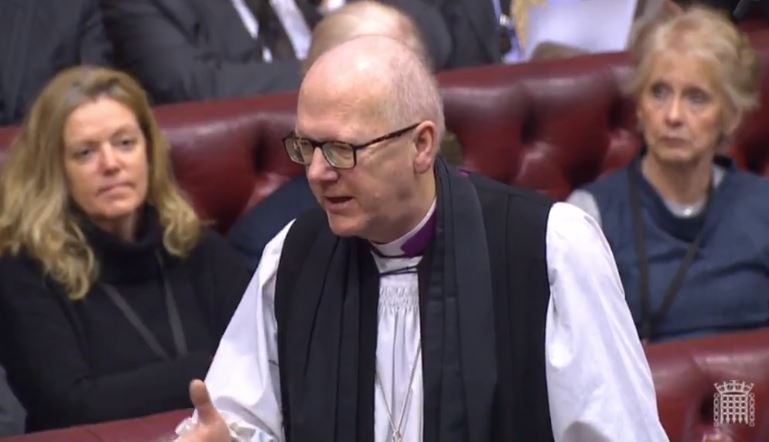
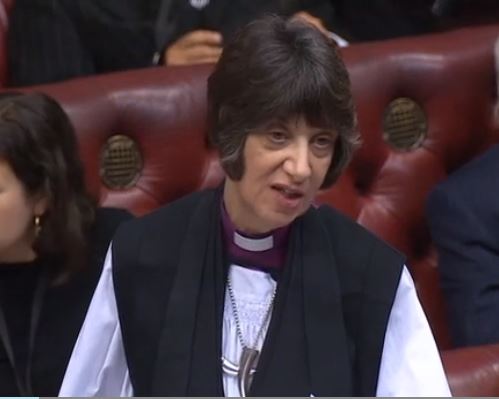
The Bishop of St Albans spoke in a debate on the impact of the recent Budget on arts, culture, and heritage on 14th November 2024, raising the issue of the Listed Places of Worship Grants scheme and the impact of increased VAT on choir schools:

The Lord Bishop of St Albans: My Lords, I too thank the noble Baroness, Lady Sater, for securing this debate.

A number of elements of the recent Budget are to be welcomed, such as the continuation of Museums and Galleries Exhibition Tax Relief and the cultural infrastructure funding. However, many of us were disappointed that there was no update on the Listed Places of Worship Grants Scheme, which is such a lifeline for so many of our historic buildings. The Church of England and other churches are trustees of some of the most important buildings in this country. We have to raise, voluntarily, tens of millions of pounds, and we really need to find ways to help very many pressurised local communities. These buildings are not used just for worship; many of them are the local concert venue. They have all sorts of music-making going on and they are places where music lessons are given. Many of our schools come into the churches, and they are used for all sorts of reasons beyond Sunday and midweek worship. I hope that DCMS will make a decision on this in the coming weeks, and I urge the Minister to ensure its future.

Continue reading “Bishop of St Albans raises impact of budget on listed places of worship and cathedral choir schools”

Autumn Budget: Bishop of Newcastle urges government to consider effects on vulnerable groups

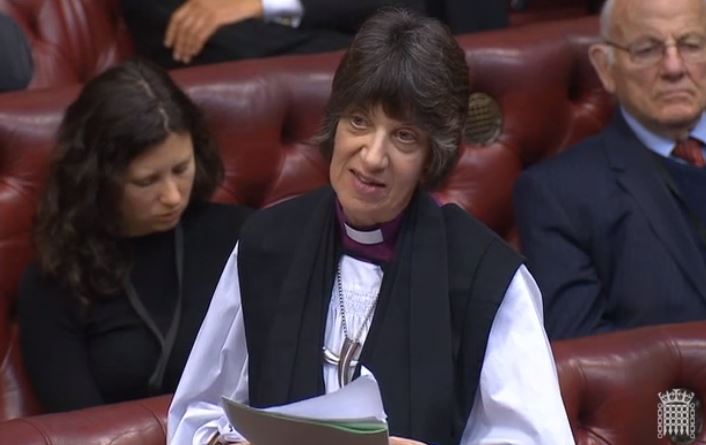
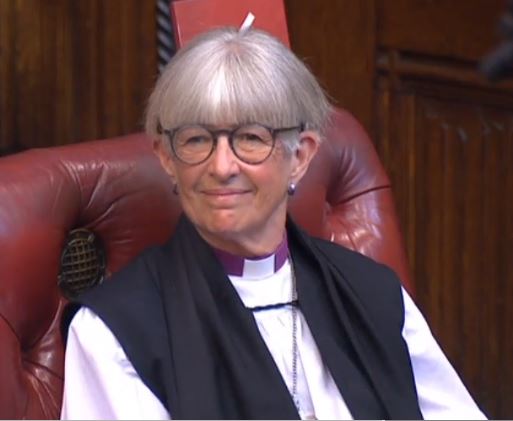
The Bishop of Newcastle spoke in a debate on the autumn budget on 11th November 2024, urging the government to carefully consider the impact of the budget on vulnerable groups:

The Lord Bishop of Newcastle: My Lords, I feel my B in GCSE maths is challenging my ability to speak with any fiscal authority in this debate, but I am glad of the opportunity to do so. I offer my congratulations to the noble Lord, Lord Booth-Smith, on his excellent maiden speech and I welcome him to your Lordships’ House.

I recognise that the decisions the Chancellor has made have not been easy, but balanced alongside the Government’s long-term priorities we must consider how this Budget will serve the needs of people who are struggling today, and affect what surely must be a significant long-term ambition—perhaps I can use the word “mission”—to improve social cohesion.

Continue reading “Autumn Budget: Bishop of Newcastle urges government to consider effects on vulnerable groups”

Autumn Budget: Bishop of Gloucester highlights need for reform in the criminal justice system

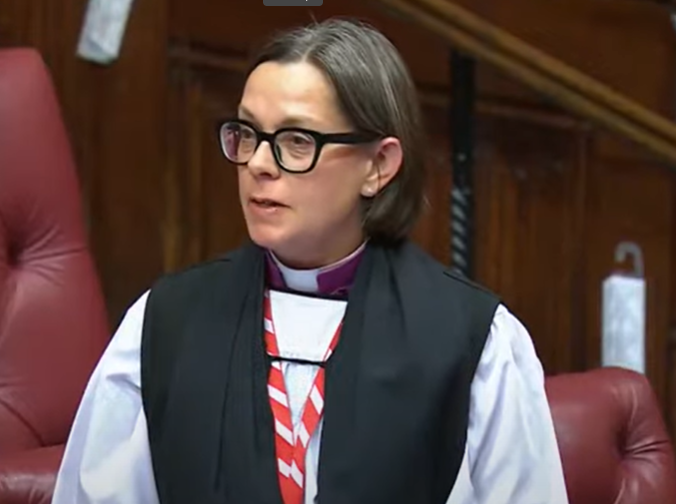
The Bishop of Gloucester spoke in a debate on the autumn budget on 11th November 2024, with a focus on reform of the criminal justice system:

The Lord Bishop of Gloucester: My Lords, I will focus on the Budget in the context of criminal justice, and declare my interest as the Anglican Bishop for HM Prisons in England and Wales.

I was encouraged to hear from the Chancellor that the Government intend to

“begin to repair the justice system”,

and I welcome the extra investment in the Ministry of Justice—although how that will be spent is vital. We need to ensure that the aim is not to finance our way out of a prison capacity crisis. Let us first address the purpose of prison and then put the resources in the right place, with a long-term vision of enabling strong and healthy families and communities. As a Christian, I hold fast to hope and transformation. Reoffending continues a pattern of broken relationships and is costly, not only to the fabric of society but in financial terms: it costs approximately £18 billion per year. Let us not increase funds simply to do more of the same, because all the evidence is that it is not working.

Continue reading “Autumn Budget: Bishop of Gloucester highlights need for reform in the criminal justice system”

Budget Debate: Bishop of Worcester highlights need for increased spending on overseas aid

On 18th March 2024, the Bishop of Worcester spoke in a debate on the spring budget, paying tribute to aspects of the budget such as the continuation of the household support fund and the reduction in National Insurance, and expressing regret that the international aid budget had not been increased:

The Lord Bishop of Worcester: My Lords, I congratulate the noble Lord, Lord Kempsell, on an excellent maiden speech, which was thoughtful and brief—and, as we all know, concision is next to godliness.

I have learned a lot in this debate, including the operation of the VAT regime on nuts—probably more than I would have wanted to have known. However, I will not concentrate my remarks on that.

It is clear that the Chancellor had a difficult task in producing the Budget, as has been observed by one of his predecessors, the noble Lord, Lord Lamont, who knows better than anyone. I want to pay tribute to the many good things in the Budget: the continuation of the household support fund, the reform of non-dom status, the increase in public services spending by 1% above inflation, and the welcome reduction in national insurance, to name but a few. However, I was very disappointed by one lacuna, to which I want to address my remarks now. That is, that the aid budget was not increased.

Continue reading “Budget Debate: Bishop of Worcester highlights need for increased spending on overseas aid”

Bishop of Gloucester responds to Chancellor’s Autumn Statement

The House of Lords debated the Chancellor’s Autumn Statement on 29th November 2022

The Lord Bishop of Gloucester: My Lords, growth is good and necessary, and it is clear that money does not grow on those proverbial trees. We find ourselves in extremely challenging times, and it seems to me that some of the measures that are set out in the Autumn Statement are prudent and necessary to rebalance the budget. I thank the Government for their desire to focus on supporting the poorest households, which is right and just, including their decision to increase benefits in line with inflation. Yet I have a number of concerns. I want to use my time to focus on just two key issues: first, food and feeding people, and, secondly, the criminal justice system. I declare an interest both as a trustee of Feeding Britain and as Anglican Bishop for prisons in England and Wales.

Continue reading “Bishop of Gloucester responds to Chancellor’s Autumn Statement”

Bishop of Newcastle makes valedictory speech on economic planning and issues arising from the government’s budget

On 3rd November 2021, the Bishop of Newcastle gave her valedictory speech in the House of Lords, raising issues of economic planning and the impact of the government’s budget on poorer communities, and paying tribute to the North-East of England:

The Lord Bishop of Newcastle: My Lords, these past six years during which I have served as Bishop of Newcastle and as a Member of your Lordships’ House have, in a good way, been the most extraordinary years of my life. After a lifetime of living in the south, these six years in the north-east have helped me to see things from a different and much richer perspective.

The usual way to assess a Budget, the one we see in the newspapers, is to identify the winners and losers. I want strongly to resist this approach. When, aeons ago, I studied for my degree in economics, I learned that the way we spend our money shows what we value, what really matters to us. The question that matters is not what will I or we get out of this, but what kind of values does this Budget embrace—what is the moral framework undergirding it?

Continue reading “Bishop of Newcastle makes valedictory speech on economic planning and issues arising from the government’s budget”

Bishop of Portsmouth responds to budget on issues of tax, benefits, and social care

On 12th March 2021, the Bishop of Portsmouth spoke in a debate on the state of the economy, following the delivery of the new Budget by the Chancellor:

The Lord Bishop of Portsmouth [V]: My Lords, I welcome from the Bishops’ Bench the noble Lords, Lord Beynon, Lord Cruddas and Lord Khan of Burnley, and congratulate them on their speeches. I am looking forward to hearing them. I also welcome the noble Lord, Lord Bellingham, and my namesake, the noble Baroness, Lady Foster of Oxton.

Every Budget has consequences in every community, including those I serve as Bishop of Portsmouth. In these last comments that I shall make on a Budget Statement, I have four points on how this Budget is likely to make the sharp end sharper still for many, with little slack, even in better times. A decade on from the Dilnot report, there is still no proposal to address the social care challenge, even though apparently the Government have a package ready. We should have bitten this bullet years ago. We must bite it now.

Continue reading “Bishop of Portsmouth responds to budget on issues of tax, benefits, and social care”

Response to the Budget from the Bishop of Birmingham


03/03/2021

Following the Budget speech, the Bishop of Birmingham, David Urquhart, Convenor of the Bishops in the House of Lords, said:

“This is a time of great uncertainty, and while the Chancellor has rightly focussed on steps to get the economy moving, I’m concerned he has missed the chance to give certainty to those people and families who rely on Universal Credit, by not making the £20 uplift permanent.

“I’ll look at the details of the Budget closely for measures that will help the poorest and most vulnerable, especially access to sustainable jobs. The £19m for Domestic Abuse programmes is welcome as is support for schools to help get children back on the road of educational discovery. The lack of detail on social care is, however, a worry.

“The £300m additional funding for the Culture Recovery Fund is very welcome and will support the many small businesses and independent contractors our churches employ and support. I also note that the Levelling Up Fund prospectus specifically mentions cultural and heritage assets, including churches, and we look forward to churches and cathedrals particularly in areas of high deprivation taking part in this programme.”

Source: CofE website

Bishop of Rochester responds to Chancellor’s Budget Statement

On 18th March 2020 the House of Lords debated the Budget Statement made the previous week by the Chancellor of the Exchequer. The Bishop of Rochester, Rt Revd James Langstaff, spoke in the debate:

The Lord Bishop of Rochester:  My Lords, as many have already observed, this Budget comes in extraordinarily unusual circumstances, and in relation to the issues around Covid-19, subsequent to the Budget announcement, the Chancellor has brought forward a number of measures which have been largely well received, and no doubt others will need to follow. While voluntary action in our communities will form much of the day-to-day response to those who are the most vulnerable and potentially isolated across our nation, the sustaining of public services and of businesses is vital for both our social and economic well-being; other speakers have already begun to address some of those issues.​

Following the most reverend Primate the Archbishop of Canterbury is always a risky business, and other noble Lords have already spoken with considerable knowledge of these matters, so I shall focus my remarks on one or two specific issues and areas which were already matters of concern, and where that concern is perhaps greater because of the circumstances in which we now find ourselves.

On children and young people, I hugely welcome the long-overdue extension of higher-rate housing benefit for care leavers until the age of 25, thus giving stability in their accommodation beyond their 22nd birthday. This is something that the Church of England organisation the Children’s Society and other charities have campaigned for over some time, and it is most welcome. Also welcome is the £2.5 million for research on family hubs. However, what is not in the provisions of the Budget or subsequent provisions is sufficient funding to address the urgent need for every child to achieve a good start in life, and that is becoming more urgent in the light of the current circumstances. Continue reading “Bishop of Rochester responds to Chancellor’s Budget Statement”