Bishop of Chelmsford asks Government why no UK representatives attended nuclear weapon ban UN Conference

Chelmsford 251115On 24th April 2017, the Bishop of Chelmsford, the Rt Revd Stephen Cottrell, received a written answer to a question on the UN Conference to Negotiate Ban on Nuclear Weapons.

The Lord Bishop of Chelmsford: To ask Her Majesty’s Government whether their officials attended the UN Conference to negotiate a ban on nuclear weapons held in New York on 27 March; and if not, why not. [HL6462] Continue reading “Bishop of Chelmsford asks Government why no UK representatives attended nuclear weapon ban UN Conference”

Bishop of Chelmsford: in a ‘post-truth’ era, proper regulation can offer newspapers salvation

On 20th December 2016, Lord Best moved that the House “take note of the Report from the Communications Committee Press Regulation: where are we now? (3rd Report, Session 2014–15, HL Paper 135)”. The Bishop of Chelmsford, the Rt Revd Stephen Cottrell, who is a member of the Communications Committee, spoke in the debate.

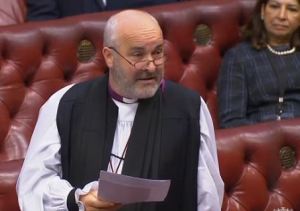
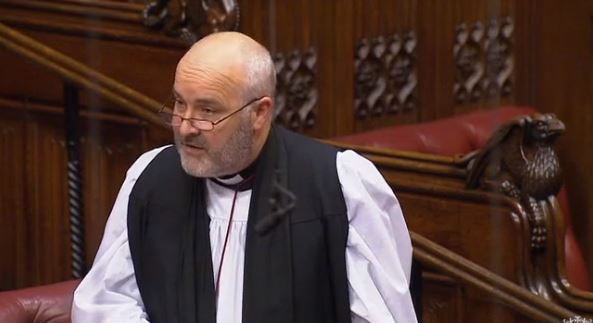
Chelmsford 251115The Lord Bishop of Chelmsford My Lords, I too thank the noble Lord, Lord Best, for bringing this debate to the House and for his wise and winsome chairing of the Select Committee on Communications. I speak as a member of that committee. I was not part of the committee that produced this report—that illustrates just how long it has taken for it get here—so I also thank my predecessors on the committee for all their work.

However, as the report makes clear and as has been well illustrated by the contributions so far, the situation is far from satisfactory and questions to government remain unanswered. As the noble Lord, Lord Best, has already explained, in the past few weeks the committee has again been burrowing into the detail of the issues and considering the present impasse. I shall not go over those details again; the noble Lord outlined them superbly, but I think that we could conclude that the carrot is not very tasty and the stick seems so severe that it is unlikely ever to be wielded. Continue reading “Bishop of Chelmsford: in a ‘post-truth’ era, proper regulation can offer newspapers salvation”

Bishop of Chelmsford on trust in public life and institutions

On 30th June 2016  Lord Fairfax of Cameron led a debate “That this House takes note of the role of openness and transparency in reinforcing confidence in public institutions.” The Bishop of Chelmsford, Rt Revd Stephen Cottrell, spoke in the debate:

Chelmsford 251115The Lord Bishop of Chelmsford: My Lords, I thank the noble Lord, Lord Fairfax of Cameron, for introducing this debate. I am still relatively new to this House, so you may not know that if there is a stick lying on the ground with a label on it saying, “wrong end”, I am prone to pick it up. I was drawn by the title of this debate and therefore went to the Library to read the briefing pack, which was fascinating. Its conclusion opens by saying that overall, the survey suggests that the public continue to have a very poor valuation of current standards in public life; respondents generally gave negative answers. That is something we should be concerned about.

My contribution will be over in 10 minutes and then you can get on with the debate that obviously some of you want to have, but I want to speak about what I see as the moral and spiritual dimensions to this issue. Continue reading “Bishop of Chelmsford on trust in public life and institutions”

Bishop of Chelmsford calls for statutory guidelines on historic abuse allegations, responds to concerns about George Bell case

On 30th June 2016 Lord Lexden led a debate in the House of Lords, “That this House takes note of the case for introducing statutory guidelines relating to the investigation of cases of historical child sex abuse.” During the debate Lord Lexden raised the case of Bishop George Bell, as did Lord Carey and a number of other Peers. The Bishop of Chelmsford, Rt Revd Stephen Cottrell, responded to the points made by those Peers about the Bell case and his speech is reproduced below, with extracts from the frontbench responses. All speeches made in the debate can be read here.

14.06.09 Chelmsford 3The Lord Bishop of Chelmsford: My Lords, I, too, thank the noble Lord, Lord Lexden, for bringing this debate before us and for the considered and careful way in which people have made their contributions. I agree with the noble Lord, Lord Cormack, that this House has an important part to play in setting our moral compass on the issues we are discussing.

I wish to make it clear that I and the Church of England welcome the introduction of some statutory guidelines for responding to historic allegations. As we in the Church are acutely aware, this is a difficult and sensitive area, so responding well to such allegations is extremely important. If there was statutory guidance on such cases, it would be easier to respond well and consistently. That said, we are all aware that the Independent Inquiry into Child Sexual Abuse may make relevant recommendations, and it might be that the Government wish to wait for them before issuing guidance in this area.

The noble Lords, Lord Lexden and Lord Dear, the noble and right reverend Lord, Lord Carey, and others have raised the specific case of Bishop George Bell, and I want to reflect briefly on it. Continue reading “Bishop of Chelmsford calls for statutory guidelines on historic abuse allegations, responds to concerns about George Bell case”

Bishop of Chelmsford calls for strengthening of religious education to combat hatred and xenophobia

Chelmsford 251115On 30th June 2016  Lord Taverne asked Her Majesty’s Government “in what way the guidance produced by Dr Satvinder Juss on the implications of the High Court’s ruling in R (Fox) v Secretary of State for Education is “inaccurate” as they have stated.” The Bishop of Chelmsford, Rt Revd Stephen Cottrell, asked a follow up question.

The Lord Bishop of Chelmsford: My Lords, I address the House at this point in my capacity as a lapsed atheist. I make it clear that I welcome the place of non-religious world views in religious education; they are very important. However, will the Minister further agree that one of the best ways in which people can counter the race hatred, xenophobia and misunderstandings that we see in our society at the moment is by strengthening religious education in schools? Continue reading “Bishop of Chelmsford calls for strengthening of religious education to combat hatred and xenophobia”

Bishop of Chelmsford condemns hate crime, calls for better religious literacy

On 29th June 2016 Lord Ahmed repeated to the House of Lords a Government statement made in the House of Commons about hate crime. The Bishop of Chelmsford, Rt Revd Stephen Cottrell, asked a follow up question about religious literacy and education.Chelmsford 251115

The Lord Bishop of Chelmsford: My Lords, perhaps I may ask the Minister two specific questions about religious literacy and religious education. First, I welcome the Statement and the responses from the other Front Benches, and of course to express my own great dismay at the incidents that we have experienced in recent days. As I said in the House on Monday, the diocese where I serve includes some of the most multicultural parts of this country. I have heard many disturbing stories, and even more of them here today.

My first question relates to religious education. We have discovered in recent days something that is already there within us and that has been stirred up and legitimised by some of the debate, yet religious education has less of a place in the national curriculum than it used to. I wonder whether this is another opportunity for the Government to look again at the place of religious education in schools.

My second question is about religious literacy. I serve on this House’s Select Committee on Communications. We have recently completed a report on the renewal of the BBC charter. Religious broadcasting has almost disappeared from public service broadcasting, and the BBC no longer has a commissioning editor for religious broadcasting. Surely this is a time when we need to do more about this. It is a very practical matter that the Government could address. Continue reading “Bishop of Chelmsford condemns hate crime, calls for better religious literacy”

Bishop of Chelmsford asks about Free Speech in Universities

Chelmsford 251115On the 27th June 2016, Lord Leigh of Hurley asked the Government “what steps they are taking to counter anti-Semitism on university campuses in the United Kingdom.” The Bishop of Chelmsford, the Rt Revd Stephen Cottrell, asked a supplementary question: Continue reading “Bishop of Chelmsford asks about Free Speech in Universities”

Bishop of Chelmsford calls for action to counter fear and race hatred after EU referendum

Chelmsford 251115On 27th June 2016, Baroness Stowell of Beeston repeated a statement on the result of the EU Referendum, made by the Prime Minister in the House of Commons. The Bishop of Chelmsford, Rt Revd Stephen Cottrell, asked a follow up question:


Lord Bishop of Chelmsford: My Lords, some commentators have said that the result of the referendum was a resounding victory for Brexit. I am not sure that I see it that way: 52 to 48 is, to my mind, a rather narrow victory. Where there is no overwhelming consensus, there is an overwhelming need to take account of the views of others. Nobody likes a bad winner. There has been too much hyperbole and spite in this debate. Yes, one side did win, the result is clear and we have to act on it. Those who advocated leave obviously need to take the lead in the negotiations that will take place. But we urgently need the sort of wise leadership that can build consensus. We need some sort of national Government—a coalition of good will where we can work together.

I serve the diocese of Chelmsford, which is, “east London in and Essex out”. Yesterday I spoke to a head teacher who said that the children were frightened when they went to school on Friday and that she had seen an increase in race hatred and intolerance. What plans are there to address the lack of unity in our nation and to counter the fear and race hatred that is on the rise? Can we ensure that those who lost this vote, as well as those who won, can be part of the planning going forward? Continue reading “Bishop of Chelmsford calls for action to counter fear and race hatred after EU referendum”

Bishop of Chelmsford says BBC services need to reflect religious and community life of the nation

On 21st April 2016 the House of Lords debated a motion from Lord Best, Chair of the Lords Communications Committee, “That this House takes note of the report from the Communications Committee BBC Charter Review: Reith not Revolution (1st Report, HL Paper 96).” The Bishop of Chelmsford, Rt Revd Stephen Cottrell, who is a member of the Committee spoke in the debate:

Chelmsford 251115The Lord Bishop of Chelmsford: My Lords, I too speak as a member of the Select Committee that produced this report. I must declare an interest as a co-chair of the multi-faith standing conference of the BBC on religion and ethics, and related to that work I want to talk about the place of faith in public service broadcasting, and indeed to speak for all the faith communities in these islands.

It has been said that if a mission statement is more than two or three words long, it either means that the organisation does not really know its purpose, or even if it does, no one else will. Let me give a few examples: glasnost, girl power, flower power, New Labour and the big society; I will not go on. Consequently, if a mission statement is going to work, it has to be pithy and memorable. Lord Reith’s “inform, educate and entertain” does the job, and has done it very effectively for a long time—everyone knows it.When the last charter renewal process landed the BBC with six rather wordy and worthy public purposes, it was not necessarily doing it a favour. Continue reading “Bishop of Chelmsford says BBC services need to reflect religious and community life of the nation”

Divisions: Immigration Bill

On 21st March the House of Lords considered the Government’s Immigration Bill at Report Stage. A number of votes were held on amendments, in which several bishops took part: Continue reading “Divisions: Immigration Bill”