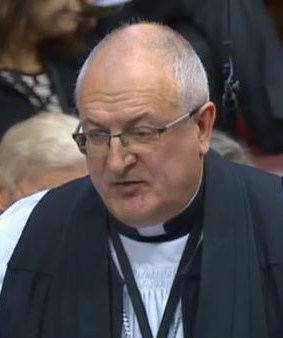
Autumn Budget: Bishop of Newcastle urges government to consider effects on vulnerable groups

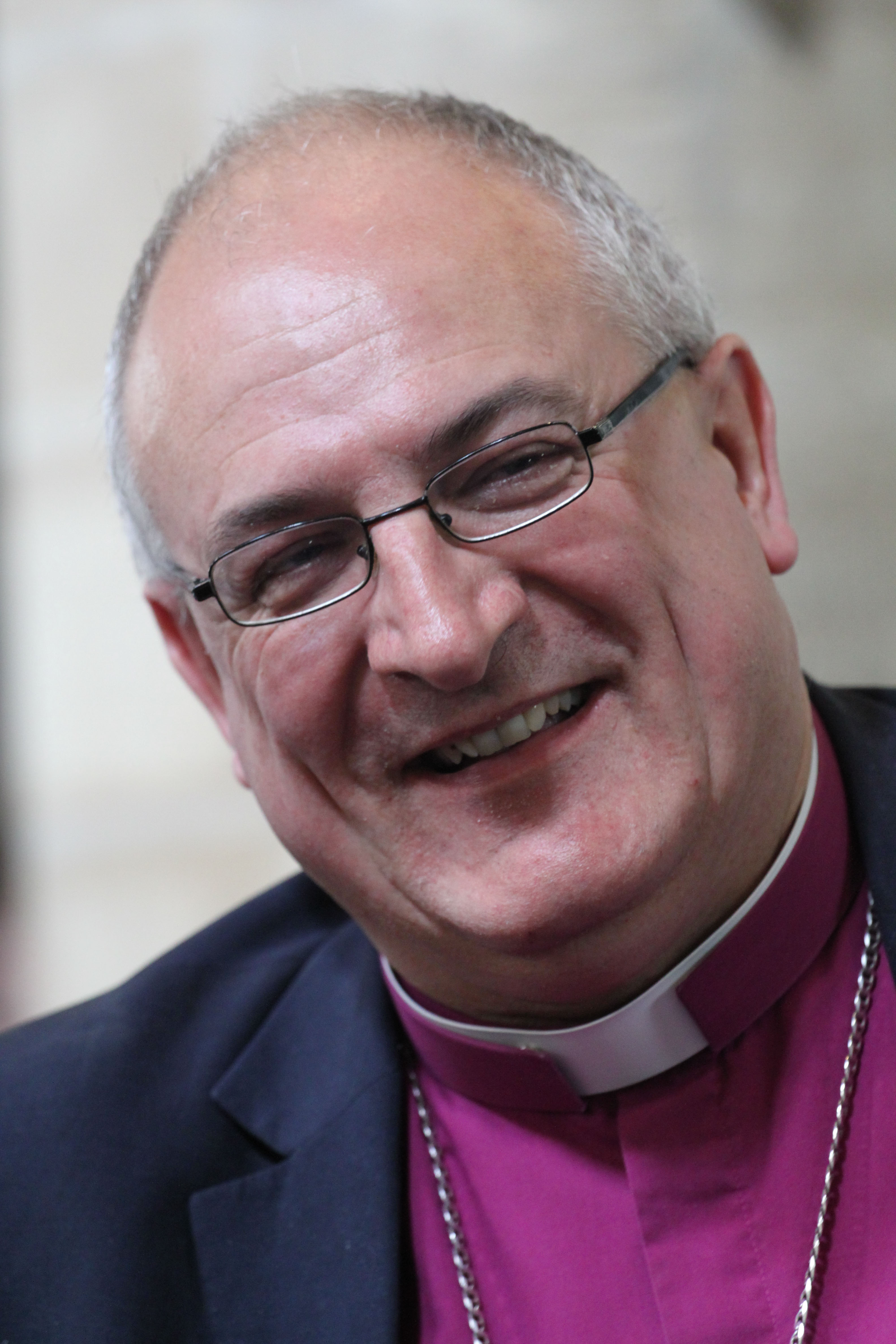
The Bishop of Newcastle spoke in a debate on the autumn budget on 11th November 2024, urging the government to carefully consider the impact of the budget on vulnerable groups:

The Lord Bishop of Newcastle: My Lords, I feel my B in GCSE maths is challenging my ability to speak with any fiscal authority in this debate, but I am glad of the opportunity to do so. I offer my congratulations to the noble Lord, Lord Booth-Smith, on his excellent maiden speech and I welcome him to your Lordships’ House.

I recognise that the decisions the Chancellor has made have not been easy, but balanced alongside the Government’s long-term priorities we must consider how this Budget will serve the needs of people who are struggling today, and affect what surely must be a significant long-term ambition—perhaps I can use the word “mission”—to improve social cohesion.

Continue reading “Autumn Budget: Bishop of Newcastle urges government to consider effects on vulnerable groups”

Bishop of Newcastle asks about child poverty and benefits system

The Bishop of Newcastle received the following written answers on 24th October 2024:

The Lord Bishop of Newcastle asked His Majesty’s Government what assessment they have made of the financial impact that the five-week wait has on those awaiting their first Universal Credit payment.

Baroness Sherlock (Lab, DWP): No assessment has been made of the financial impact of the 5-week-wait. The Government is committed to reviewing Universal Credit so that it makes work pay and tackles poverty.

Continue reading “Bishop of Newcastle asks about child poverty and benefits system”

Bishop of Leeds asks about link between poverty and absenteeism from school

On 22nd October 2024, the Bishop of Leeds asked a question on the causal correlation between poverty and absenteeism from school:

The Lord Bishop of Leeds: My Lords, is there any causal correlation between poverty, particularly in the wake of the cost of living crisis, and absenteeism from school?

Continue reading “Bishop of Leeds asks about link between poverty and absenteeism from school”

Bishop of Leicester asks about the impact of the current benefits system on children

On 21st October 2024, the Bishop of Leicester asked a question on the impact of the current benefits system on children from lower-income families:

The Lord Bishop of Leicester: My Lords, in his review, Sir David Bell looked at the attainment gap between children from less privileged and more privileged backgrounds. Can the Government commit to ensuring that the ministerial taskforce on child poverty will look at the impact of the current benefits system on children from lower-income families?

Continue reading “Bishop of Leicester asks about the impact of the current benefits system on children”

King’s Speech Debate: Bishop of Lincoln speaks on impact of poverty in rural and coastal communities

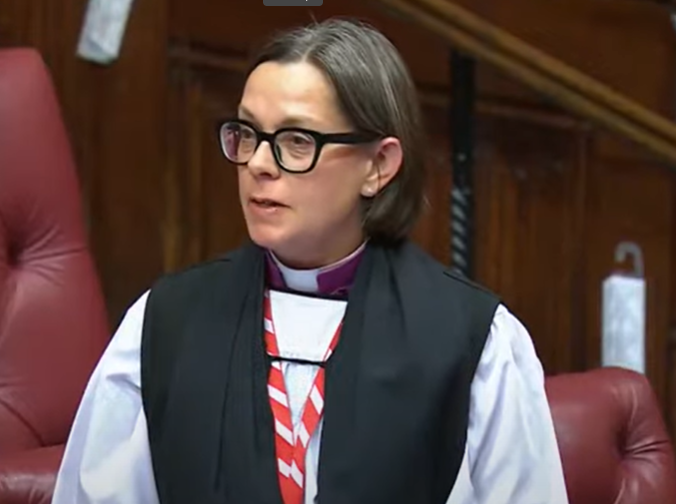
The Bishop of Lincoln spoke in the King’s Speech debate on 19th July 2024, raising the issue of poverty in coastal and rural areas and the subsequent effects on children’s mental health and wellbeing:

The Lord Bishop of Lincoln: My Lords, I share your Lordships’ appreciation of the noble Baronesses, Lady Barran and Lady Jolly, and I welcome the appointment of our new Ministers. The noble Baroness, Lady Merron, will know as much as I do about Lincolnshire and that, particularly in its coastal towns and rural areas, Lincolnshire suffers from intergenerational poverty, which has a very direct impact on children. I think your Lordships’ House has received two reports in the last 15 years about the poverty in our coastal towns, but nothing much has changed. If I have heard the Government correctly, I am glad to hear them express their intention to pay more attention to rural and coastal poverty, which is often hidden away when it is not in our big cities.

Therefore, I also particularly look forward to the progress of the children’s well-being Bill and the work of the newly announced child poverty unit. In moving forward in this area, how do His Majesty’s Government plan to involve faith communities in addressing these needs, particularly considering the concentration of faith communities in areas of poverty and deprivation, as my right reverend friend the Bishop of London referred to earlier?

Continue reading “King’s Speech Debate: Bishop of Lincoln speaks on impact of poverty in rural and coastal communities”

Bishop of Lincoln speaks in debate on combatting child poverty

The Bishop of Lincoln spoke in debate on child poverty on 29th April 2024, highlighting the importance of effective infrastructure for housing and employment, and the experiences of children and families in rural communities:

The Lord Bishop of Lincoln: My Lords, I too am grateful to the noble Lord, Lord Bird, for securing this debate and for his passion and his challenge. Like the noble Lord, I come from a poor London Irish family, but from south of the river, if that is allowed. We have heard from the noble Baroness, Lady Lister, about the causes of child poverty and that they are systemic, and about the potential for changing them—not by exceptionalism, as may have applied in our cases.

As the Bishop of Lincoln, I am very conscious that in greater Lincolnshire I see vibrant resilient communities but, in the midst of a commendable spirit, there are considerable challenges. The effects of deep poverty feel widespread and tangible in a way that I have not seen since I began as a priest in the mid-1980s. Damp, low-quality accommodation, particularly in the private rented sector, has an impact felt particularly by children at crucial stages of their development. In response to this, the Archbishops’ Commission on Housing, Church and Community set out five values for good housing: it should be safe, sociable, sustainable, satisfying and secure. Failure to deliver this only serves to entrench child poverty.

Continue reading “Bishop of Lincoln speaks in debate on combatting child poverty”

Bishop of Manchester tables question on child poverty and Household Support Fund

The Bishop of Manchester tabled a question on the impact of the Household Support Fund on children’s bed poverty on 21st March 2024, calling for the government to consider a long term strategy for alleviating household poverty as the scheme comes to a close:

The Lord Bishop of Manchester: To ask His Majesty’s Government what assessment they have made of the impact of the Household Support Fund on children’s bed poverty.

Viscount Younger of Leckie (Con, DWP): My Lords, an evaluation of the current household support fund scheme is under way to better understand the impact of the funding. In the Spring Budget, the Chancellor announced an extension to the household support fund in England for a further six months, meaning that the Government will ensure that targeted support is available for those facing the most challenging financial circumstances as inflation falls. Subject to local decisions, this funding may be used to purchase beds and other household essentials for those in need.

Continue reading “Bishop of Manchester tables question on child poverty and Household Support Fund”

Bishop of Durham gives valedictory speech in debate on poverty reduction, calling for greater efforts to combat child poverty in the UK

The Bishop of Durham gave his valedictory speech in the House of Lords on 22nd February 2024, during a debate on poverty reduction, focusing on continuing high levels of child poverty and calling for poverty in the UK to be confronted as a national emergency:

The Lord Bishop of Durham: I am very grateful to the noble Lord, Lord Bird, for securing this debate on an issue of such importance and for the way that he introduced it. Also, because I have spoken on this issue repeatedly throughout my past 10 years as a Member of this House, it thus seems a fitting debate for my valedictory speech. I am very grateful to the noble Baroness, Lady Armstrong, for speaking straight after me. We have worked together on poverty in the north-east. I also look forward to the right reverend Prelate the Bishop of Hereford’s maiden speech.

During my maiden speech, I spoke of the high levels of poverty in my region of the north-east. Sadly, poverty, particularly child poverty, remains as significant an issue today as it was 10 years ago. Only last week, the North East Child Poverty Commission released its blueprint for tackling child poverty, featuring the latest poverty stats from 2021 to 2022, along with those recorded in 2014-15—the very year I entered this House. They reveal that, in 2021-22, there were around 134,000 children living in poverty in the North East Mayoral Combined Authority—an increase of over 7% since 2014-15.

But poverty is not just about numbers. Behind each statistic are the lives of children and the impact on them is all-encompassing. Poverty means going without the basic essentials. It means not being able to concentrate in school due to an empty stomach and not getting adequate nutrition; a packet of apples costs five times the amount of a packet of biscuits. Poverty means missed opportunities. It denies the chance to develop new skills through extra-curricular activities. Poverty means growing up too soon. It means dealing with stresses and anxieties with which no child should ever be burdened. It impacts the present and its effects last a lifetime.

Continue reading “Bishop of Durham gives valedictory speech in debate on poverty reduction, calling for greater efforts to combat child poverty in the UK”

Bishop of Durham asks about UNICEF report on child poverty

The Bishop of Durham received the following written answer on 22nd January 2024:

The Lord Bishop of Durham asked His Majesty’s Government:

  • what steps are they taking to prevent children falling into poverty during future economic crises, in response to the conclusions of the UNICEF report Child Poverty in the Midst of Wealth, published on 6 December 2023.
  • what assessment they have made of the UNICEF report Child Poverty in the Midst of Wealth, published on 6 December 2023, and its finding that the UK has seen the greatest increase in child poverty out of the 40 countries featured in the report; and what steps they are taking to prevent a further increase.
Continue reading “Bishop of Durham asks about UNICEF report on child poverty”

Bishop of Durham asks about rates of child poverty in the UK

The Bishop of Durham received the following written answer on 10th January 2024:

The Lord Bishop of Durham asked His Majesty’s Government what assessment they have made of the UNICEF report Child Poverty in the Midst of Wealth, published on 6 December, and its conclusion that of the 39 OECD and EU countries featured in the report, the UK has seen the largest increase in child poverty since 2014.

Continue reading “Bishop of Durham asks about rates of child poverty in the UK”