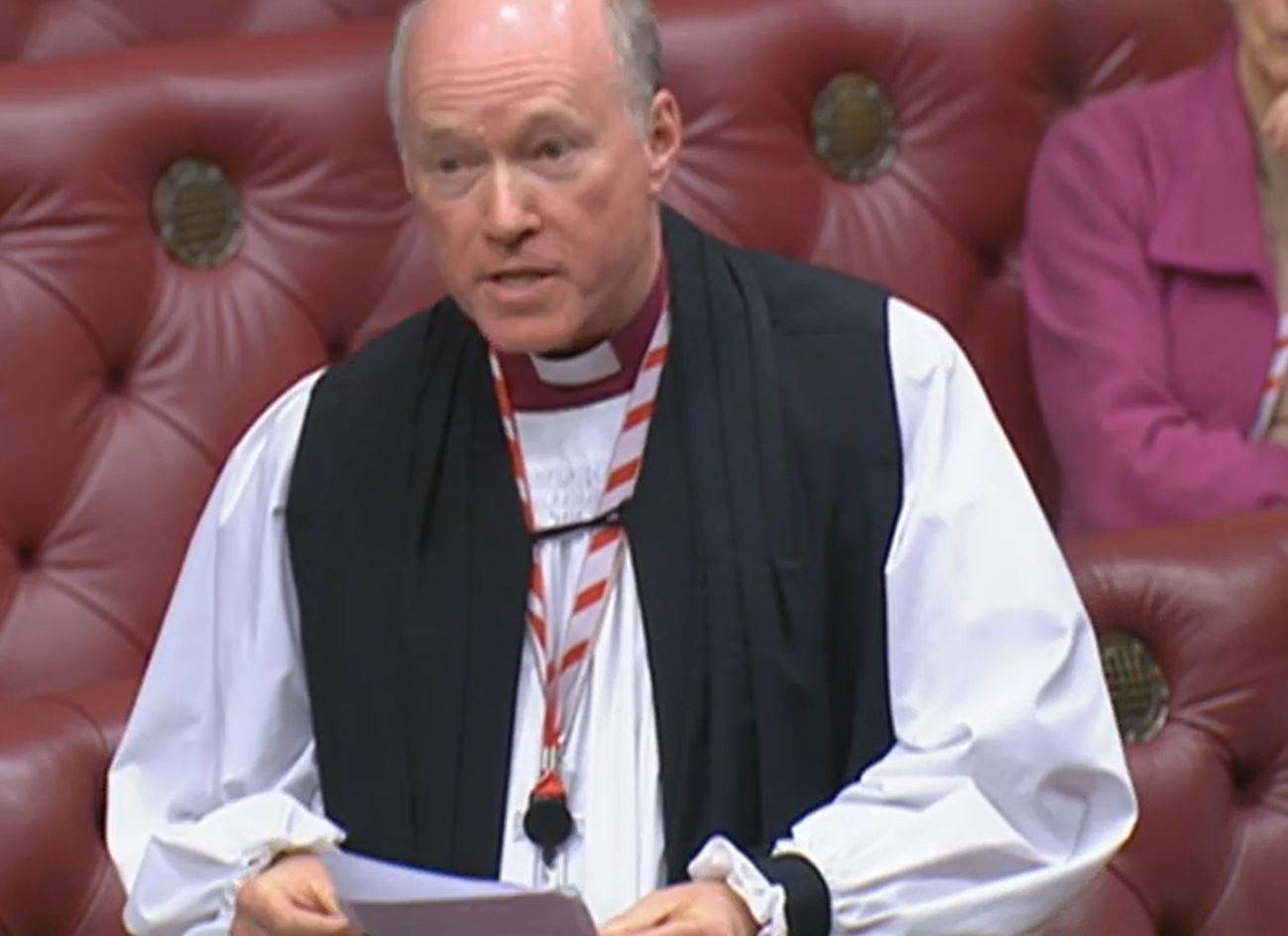
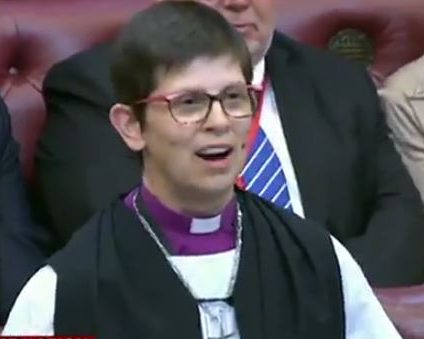
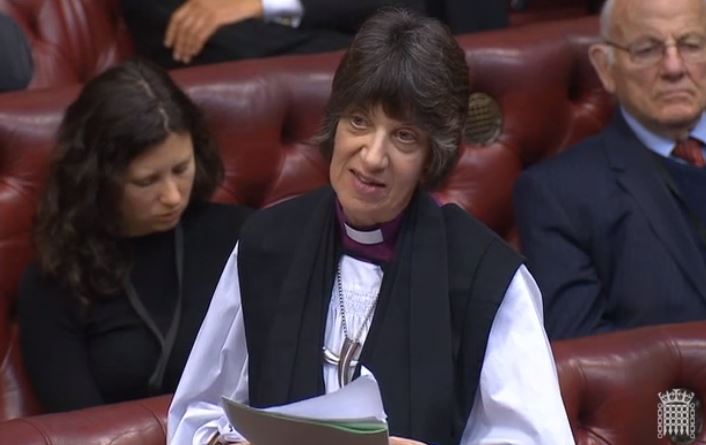
Bishop of Durham speaks on the effects of child poverty

The Bishop of Durham spoke in a debate on vulnerable teenagers on 26th January 2023, emphasising the negative effects of child poverty on later life:

The Lord Bishop of Durham: My Lords, it is a real pleasure to follow the noble Lord, Lord McConnell; I associate myself with everything he said, particularly about adopting the recommendations. He also reminded us that this is no new problem. He talked about his experience in the 1980s; I could do the same from when I was doing youth work. You can also quote Greek writers and philosophers about the problems of young people in the era of the Greeks, so this is something we have always lived with.

I also thank the noble Baroness, Lady Armstrong, for securing this debate. It is always lovely to share something with someone else from this part of the north-east of England. I congratulate Anne Longfield on the report, Hidden in Plain Sight. As the Commission on Young Lives’ report demonstrates, young people falling vulnerable to violence and exploitation and entering the criminal justice system is not an issue that is shrinking, nor one that could possibly be ignored. 

The effects of this problem are widespread, impacting not only the lives and futures of the young people themselves but the prosperity and security of our whole country. Such an issue cannot be resolved through sticking plasters or short-term solutions; it is instead vital that we examine and address the root causes and respond with long-term solutions.

As the report states,

“it is impossible to overestimate how important poverty is as a driver for so many of the social problems ruining and holding back lives.”

Continue reading “Bishop of Durham speaks on the effects of child poverty”

Archbishop of York asks about effects of benefit cap and two child limit

The Archbishop of York asked a question on the effects of the benefit cap and two child limit on vulnerable families on 24th January 2023:

The Lord Archbishop of York: My Lords, it is encouraging to see that the Government are keeping a check on the numbers of people being affected by these policies, but I was not quite sure whether I heard that work is being done to measure the impact of the policies on families. I can say, and it gives me no joy to say it, that from where I serve in the north of England—I am thinking particularly of Middlesbrough and Hull—I see the disturbing impact of an increase in poverty, child poverty and families in very difficult situations, not least with the cost of living crisis on top of all this. My simple, genuine and heartfelt question is: how would you explain this to a mum expecting her third child, or a family with three or four children who have been pushed into benefits over the past couple of years? They do not understand why this is happening but they are suffering as a consequence of it. How do we explain to them the rightness of this policy?

Continue reading “Archbishop of York asks about effects of benefit cap and two child limit”

Bishop of Carlisle asks about funded childcare schemes

The Bishop of Carlisle asked a question on the benefits of funded childcare schemes on 17th January 2023, during a debate on access to childcare for working families:

The Lord Bishop of Carlisle: My Lords, following the recommendation in a recent report published by the Work and Pensions Committee on universal credit and childcare costs, can the Minister tell us what assessment His Majesty’s Government have made of childcare funding schemes in Scotland and in some Scandinavian countries? Have they investigated whether their costs are offset by other benefits to society, such as increased economic activity, additional tax receipts and personal well-being?

Continue reading “Bishop of Carlisle asks about funded childcare schemes”

Bishop of Durham asks about asylum claims by children and families

The Bishop of Durham received the following written answers on 24th October 2022:

The Lord Bishop of Durham asked His Majesty’s Government when they will publish the next version of the Processing children’s asylum claims guidance.

Lord Sharpe of Epsom (Con): The Processing children’s asylum claims guidance is under review.

The current version of the guidance does not yet reflect changes under the Nationality and Borders Act 2022, where those came into force on 28 June 2022. Other guidance reflecting those changes made under the Nationality and Borders Act 2022, which are relevant to children’s asylum cases, are available on GOV.UK.

Continue reading “Bishop of Durham asks about asylum claims by children and families”

Bishop of Derby speaks in a debate on the economy

On 1oth October 2022, the House of Lords debated the government’s economic growth plan. The Bishop of Derby spoke in the debate:

The Lord Bishop of Derby: My Lords, it is a pleasure to join other noble Lords in congratulating the noble Baroness, Lady Gohir, on her maiden speech, which was delivered with such authority and clarity on matters that are close to my heart as well. I look forward to working with her in the years ahead. It is also a real privilege to pay tribute to my right reverend friend who gave his final reflection from these Benches. I am indebted to him as he has been not only an excellent Convenor of the Lords Spiritual but someone whose example has greatly influenced my ministry over many years.

I declare an interest as vice-chair of the Children’s Society. This afternoon, I want to give voice to the unheard voices that it works with and advocates for, as we take note of the economy and the Government’s growth plan. Last month, the Children’s Society published the 2022 Good Childhood Report, which records that 85% of parents and carers, despite welcome packages of support, are worried about the increase in the cost of living as it affects their ability to care for their children.

Continue reading “Bishop of Derby speaks in a debate on the economy”

Nationality and Borders Bill: Bishop of Durham speaks in favour of greater protection for children and vulnerable groups

On 2nd March 2022, the House of Lords debated the Nationality and Borders Bill in the second day of the report stage. The Bishop of Durham spoke on several amendments to the bill, including:

  • Amendment 35, which would prevent offshoring of asylum seekers
  • Amendments 40-45, moved by the Bishop of Durham on behalf of the Bishop of Gloucester, which relate to the standard of proof applied to vulnerable people seeking asylum
  • Amendments 48 & 49, which would promote more safe routes for asylum seekers and targets for resettlement

The Lord Bishop of Durham: My Lords, in rising to support Amendment 35 in the name of the noble Lord, Lord Kirkhope, to which I have added my name, I declare my interests in relation to both RAMP and Reset and set out in the register. I thank the noble Baroness, Lady Stroud, for the way she introduced this amendment, and I fully support all her points.

I set out my reasons for supporting this amendment in Committee. However, a significant concern for me now is that the Minister was not able to give assurance that children in families would be excluded from offshoring, nor that families would not be split up in the process. This is deeply concerning. I appreciate that the policy document of 25 February sets out that exemptions will depend on the country where people are being offshored and tat publicising exemptions will fuel the movement of the most vulnerable not subject to offshoring.

However, I would set out that, for children, onward movement to any country after an often traumatic journey to the UK, in addition to the trauma in their country of origin, is simply never in their best interests. All the concerns I set out in my Committee speech regarding the monitoring of the practice of offshoring processing centres are especially true for children.

Continue reading “Nationality and Borders Bill: Bishop of Durham speaks in favour of greater protection for children and vulnerable groups”

Nationality and Borders Bill: Bishop of Durham tables amendment to restrict use of accommodation centres for families and vulnerable groups of asylum seekers

The Bishop of Durham tabled an amendment to the Nationality and Borders Bill on 28th February 2022, seeking to restrict the use of accommodation centres for asylum seekers falling under certain categories, such as families and vulnerable adults. The amendment was not moved to a vote, following a response from the government with more information on proposed accommodation:

The Lord Bishop of Durham: My Lords, I have tabled Amendment 29, with the noble Baroness, Lady Lister. I declare my interests in relation to RAMP and Reset, as set out in the register.

I have tabled this amendment again because in Committee we did not have as satisfactory a response to our questions as we had hoped on the basic details of what these accommodation centres will look like. We do not know how many or where these will be. We do not know how many people will be accommodated in each one. I am not assured that the previously terrible, and now still wanting, conditions provided at Napier will not be repeated. We are being asked to agree to the use of accommodation centres without any information or reassurances of what they will look like, where they will be, and so on. We can only go on what we see as existing provision on MoD sites. That makes me very concerned—I remind the House that I had the privilege of visiting Napier barracks recently—and gives me strong reason to call for their use to be restricted, so that the vulnerable groups set out in this amendment cannot be accommodated in them. I continue to believe that placing people seeking asylum in housing in communities is much better for everyone.

Continue reading “Nationality and Borders Bill: Bishop of Durham tables amendment to restrict use of accommodation centres for families and vulnerable groups of asylum seekers”

Nationality and Borders Bill: Bishop of Durham supports amendments around family reunion

During a debate on amendments to the Nationality and Borders Bill in its fourth day of the Committee stage, on 8th February 2022, the Bishop of Durham spoke in support of amendments targeted towards ensuring family reunion for migrants, particularly refugees and unaccompanied minors:

The Lord Bishop of Durham: My Lords, I specifically support Amendment 117, to which I have added my name, but I support all these amendments around family reunion. I declare my interests in the register around RAMP and Reset as before.

Acknowledging that when people are forcibly displaced they end up in different places, often having lost family members, UNHCR research has shown that families often set out together but become separated along the way. Reconnecting those families, or, where some family members are lost, reconnecting people with other relatives, really matters. In seeking protection, those seeking asylum want to do so alongside the family that they have. This is better for individuals—their well-being and their future prospects—and for the community as a whole. It is therefore also better for social integration.

Continue reading “Nationality and Borders Bill: Bishop of Durham supports amendments around family reunion”

Police, Crime, Sentencing and Courts Bill: Bishop of Gloucester tables amendment on sentencing requirements for primary carers

The Bishop of Gloucester tabled an amendment to the Police, Crime, Sentencing and Courts Bill on 15th of December 2021, requiring courts to reference the impact of sentencing on primary carers of dependent children:

85: After Clause 132, insert the following new Clause—

“Pre-sentence report requirements

(1) Section 30 of the Sentencing Act 2020 is amended as follows.(2) After subsection (3) insert—“(3A) A court must make inquiries to establish whether the offender is a primary carer for a child.(3B) If the court establishes that the offender is a primary carer for a child, unless there are exceptional circumstances before sentencing the offender the court must obtain a pre-sentence report containing information to enable the court to make an assessment of the impact of a custodial sentence on the child.”(3) After subsection (4) insert—“(5) In this section—(a) “child” means a person under the age of 18; and(b) “primary carer” means a person who has primary or substantial care responsibilities for a child.””Member’s explanatory statement

This Clause amends section 30 of the Sentencing Act 2020 to make clear the requirement for a sentencing judge to have a copy of a pre-sentence report, considering the impact of a custodial sentence on the dependent child, when sentencing a primary carer of a child.

The Lord Bishop of Gloucester: My Lords, in moving Amendment 85 I will speak also to the other amendments in my name in the group. I am very grateful for the support of the noble Lords, Lord Ponsonby and Lord German. I am very grateful for the briefing and expertise provided to me by the organisation Women in Prison and I declare my interest as Anglican Bishop for Her Majesty’s Prisons.

In Committee I highlighted the injustice of punishing a child for their parent’s mistakes and I will not go over that ground again. But I want to frame this discussion by reminding us that when a parent goes to prison it can affect every area of a child’s life, from losing their familiar home and school through to reduced educational achievement and mental and physical well-being. The consequences can last a lifetime.

Continue reading “Police, Crime, Sentencing and Courts Bill: Bishop of Gloucester tables amendment on sentencing requirements for primary carers”

Bishop of Gloucester asks about conditions for prisoners, especially those with dependent children

The Bishop of Gloucester received the following written answer on 6th December 2021:

The Lord Bishop of Gloucester asked Her Majesty’s Government how many women in prison aged (1) 18 to 24, or (2) 25 years or older, have dependent children.

Lord Wolfson of Tredegar (Con): We do not hold current figures on how many women in prison aged (1) 18 to 24 or (2) 25 years or older have dependent children. Information on a prisoner’s caring responsibilities and their children living in the community is currently monitored locally by prison Governors/Directors to ensure appropriate support can be provided to offenders and their families. We are making changes to the questions within the Basic Custody Screening Tool (BCST) in the first quarter of 2022 and, once this has been done, we will be able to collect primary carer data via the BCST and access this information centrally. Consideration will then be given to how and what we can publish.

Continue reading “Bishop of Gloucester asks about conditions for prisoners, especially those with dependent children”