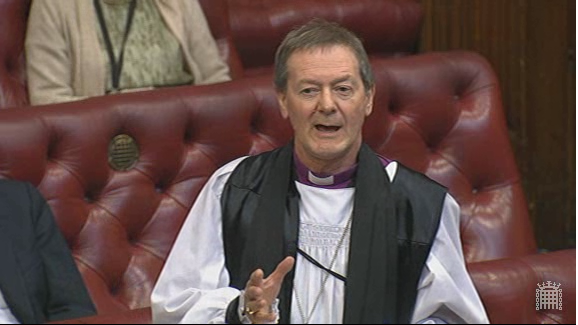
Bishop of St Albans Calls for Government Support for Voter Registration

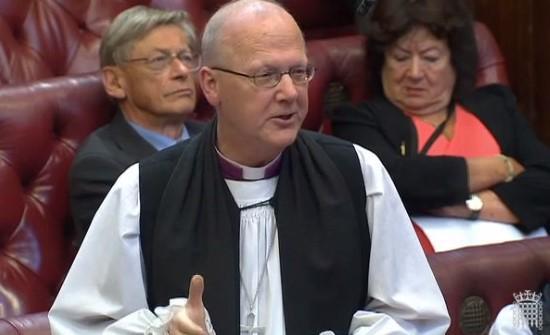
On 11th February 2015, Lord Storey asked Her Majesty’s Government what plans they have to allow pupils to register to vote in schools, sixth form and further education colleges. The Bishop of St Albans, the Rt Revd Alan Smith, asked a supplementary question:

Bishop of St AlbansThe Lord Bishop of St Albans: My Lords, I am grateful to the Minister for referring to last week’s National Voter Registration Day. As part of that, I went into Townsend School in St Albans with two dynamic members of Bite the Ballot, who were able to bring the whole thing alive in an interactive and very lively session. They handed out registration forms at the end and offered to take them back in—so they are already doing this sort of work. Have Her Majesty’s Government considered supporting that organisation and other similar ones that are already doing this work in a very creative way?

Lord Wallace of Saltaire (Cabinet Office): My Lords, I have played the game Rock Enrol!, and I hope that a lot of other noble Lords have done so, too. It demonstrates to young people how politics matters to them. I hope that that is going on all over the place. The Government have their own version of this, and Bite the Ballot has adapted another one. We are discussing with Bite the Ballot the question of support and we very much encourage what it and a number of other organisations are doing to bring young people back into being interested and involved in politics.

(Via Parliament.uk)

Bishop of Derby takes part in debate on the future of the House of Lords

“…we need a different kind of representation of the people besides that of MPs and those who vote for them. We need a supplementary system of representation that represents networks, groups, cultures and faiths—that whole complex ecology in which human beings live” – Bishop of Derby, 19/6/14

On 19th June 2014, the Bishop of Derby, the Rt Revd Alastair Redfern, took part in Baroness Taylor of Bolton’s take-note debate on the Labour Peers’ Working Group report on the future of the House of Lords and its place in a wider constitution. He spoke about the ability of the House of Lords to act as a advocate for a diverse number of voices from civil society and strengthen the democratic process.

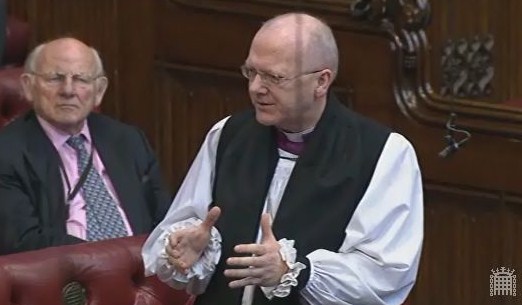
Bishop of DerbyThe Lord Bishop of Derby: My Lords, it a great honour and privilege to follow the noble and right reverend Lord, Lord Harries of Pentregarth. I have spent a lot of my ministry following his example and inspiration. I thank him for his contribution.

I am grateful for this report and for the clear presentation of the noble Baroness, Lady Taylor. I welcome the continuing debate and the whole style of incremental reform, which is the right approach. The report begins by recognising a significant feature of our times: widespread disengagement with our parliamentary system. We keep saying that and then just moving on. I want to ask us to stop and think about that phrase for a minute.

Continue reading “Bishop of Derby takes part in debate on the future of the House of Lords”

House of Lords debates ‘the importance of the English Parish Church’

“No other country in Europe has less financial support from the taxpayer for ecclesiastical heritage than England—which, ironically, has an established church” – Bishop of Norwich, 12/6/14

On 12th June Lord Cormack led a debate in the House of Lords on the subject ‘That this House takes note of the importance of the English parish church.’ The Bishop of Norwich spoke in the debate, about the community and financial value of parish churches, their heritage importance and current financial pressures. Lord Ahmad responded for the Government. Their speeches are reproduced in full below. The Bishop’s speech can also be viewed at ParliamentLive.TV and a useful summary of the debate can be found on the Law & Religion UK website, here.

14.06.12 Bishop of Norwich

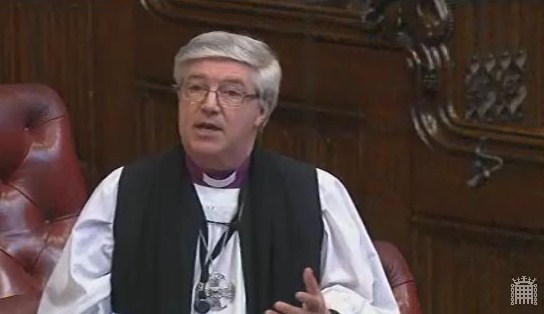
The Lord Bishop of Norwich: My Lords, we are meant to declare our interests in this House, but I think that standing here dressed like this is probably a visual declaration. Noble Lords will not be surprised to learn that I believe that the Motion tabled by the noble Lord, Lord Cormack, to take note of the importance of our parish churches, is one that I am happy to endorse. It applies in Wales and Scotland as well, of course, although I need to be a bit careful of the Presbyterian conscience and not presume any authority north of the border. Continue reading “House of Lords debates ‘the importance of the English Parish Church’”

Elder Abuse – Answers in Schools and Civil Society says Bishop of Oxford

“Western culture has developed—or, rather, deteriorated—into an atomised individualism… As we have scattered to our own personal enclaves, as it were, we have left the elderly behind as unproductive, unrewarding problems” – Bishop of Oxford, 14/5/14


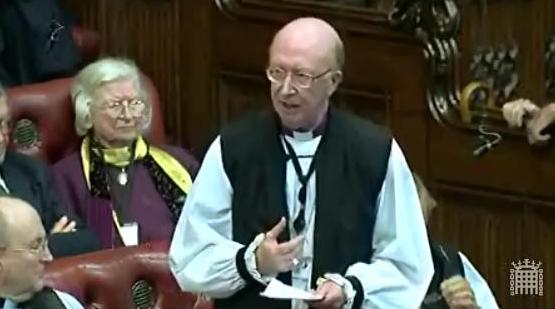
11.12.15 Bishop of OxfordOn 14th May 2014 the House of Lords debated a question for short debate from Baroness Cumberlege, “To ask Her Majesty’s Government what assessment they have made of the incidence of elder abuse across the nation.” The Bishop of Oxford, Rt Rev John Pritchard spoke about the need to focus on schools and civil society to counter recent worrying trends.

Continue reading “Elder Abuse – Answers in Schools and Civil Society says Bishop of Oxford”

Bishop of Wakefield calls for close links with civil society to end violence against women

The Lord Bishop of Wakefield: My Lords, I, too, congratulate the noble Baroness, Lady Prosser, on securing this debate. I reassure noble Lords that I am not speaking simply to bring a modicum of gender balance to the Chamber.

Many years ago now, when we were living in the East Midlands, my wife was a volunteer at a women’s refuge. She was scrupulous in maintaining confidentiality about those who used the refuge. None the less, on occasion, she would return home shocked and distressed at the violence that women had experienced, even here in our own country. It was a phenomenon that did not relate to just one stratum of society. Continue reading “Bishop of Wakefield calls for close links with civil society to end violence against women”

Votes – Transparency of Lobbying, Non-Party Campaigning and Trade Union Administration Bill

House of Lords Division Lobby

On 28th January 2014, a number of bishops took part in two divisions on the Government’s Transparency of Lobbying, Non-Party Campaigning and Trade Union Administration Bill, during ‘ping pong’.

Continue reading “Votes – Transparency of Lobbying, Non-Party Campaigning and Trade Union Administration Bill”

Bishop of Derby urges caution over ‘sapping of political energy’ in civil society

“We need transparency for professional lobbying and for political parties but we need transparency, and that is openness, in political debate. We should rejoice that so many charities, faith groups and voluntary groups want to be involved. They are subject to regulation in the political sphere through our tradition of charity Acts. Politics needs this political energy for the common good and all the signals—as we can tell from our e-mail inboxes—are that this source of political energy is being closed down and discouraged at the very time we are wringing our hands because the great public are not interested in political parties, elections or the democratic process.”

On 22nd October 2013, the Bishop of Derby, the Rt Revd Alastair Redfern, took part in the Second Reading debate of the Government’s Transparency of Lobbying, Non-Party Campaigning and Trade Union Administration Bill. In his speech, he asked the Minister to comment on three of the major tests for regulating transparency: the test of influencing electoral outcomes; the test of levels of financial expenditure and the test regarding the constituency as a measure. He expressed concern that as a result of politics becoming professionalised and pragmatic, ordinary people with political instincts were being excluded and the Bill as it stood would further sap political energy. The bishop hoped that there would be a pause and that the Minister would be willing to meet representatives of charities, faith and voluntary groups to look at proper controls and accountability.

Bishop of DerbyThe Lord Bishop of Derby: My Lords, I, too, want to comment on Part 2 from the perspective of charities and faith groups and the scoping out of a framework in this debate for further work. I declare an interest as a trustee of Christian Aid and as chair of the governors of the Churches’ Legislation Advisory Service, the secretariat service of which comprises Central Lobby consultants who will have to register under Part 1 of the Bill.

I recognise that the Government are trying hard to listen to concerns about Part 2. Like others, I have been in correspondence with the Leader of the Commons and his team. However, as the noble Baroness, Lady Hayter, and others have said, the Constitution Committee noted:

“The provisions of Part 2 directly affect the fundamental common law right to freedom of political expression”. Continue reading “Bishop of Derby urges caution over ‘sapping of political energy’ in civil society”

Bishop of Derby takes part in debate on demographic change in the UK

On 17th October 2013, Independent Peer Lord Filkin led a take-note debate in the House of Lord on the Report of the Public Service and Demographic Change Committee ‘Ready for Ageing?’ The Bishop of Derby, the Rt Revd Alastair Redfern, took part in the debate, focusing his remarks on the important role civil society play in supporting the elderly. He also raised concerns about the language used to talk about the elderly and highlighted the very significant contribution played by older people in society.

Bishop of DerbyThe Lord Bishop of Derby: My Lords, I, too, thank the noble Lord, Lord Filkin, and his colleagues on the Select Committee for introducing such a comprehensive and expert report. I shall pursue the theme mentioned of the contribution of civil society.

My first point is about the language that we use and the signals that we give out. The noble Baroness, Lady Tyler, talked about the importance of a public debate. It is easy to use language such as “retirement”, which indicates something negative, about stopping and ceasing to contribute. In the diocese where I work, we have 200 clergy who are retired; 80% of them make an enormous contribution, not just filling in but front-line, active contribution to the life of the church. Some cultures use the word senior rather than the word ageing. We must be very careful how we frame the debate. I invite the Minister to comment on the language that we use and the signals that we give out, so that it is not about a problem of decline and desperation but celebrating life at different stages and in different ways. Continue reading “Bishop of Derby takes part in debate on demographic change in the UK”

Bishop of Derby asks Government about success of national civil service volunteering scheme

On 9th October 2013, the Bishop of Derby, the Rt Revd Alastair Redfern, received an answer to six written questions on the subject of the national civil service volunteering scheme.

DerbyThe Lord Bishop of Derby: To ask Her Majesty’s Government how many civil servants are participating in the national civil service volunteering scheme, broken down by region.

To ask Her Majesty’s Government which government ministries and departments are participating in the national civil service volunteering scheme.

To ask Her Majesty’s Government how they intend to measure the success or otherwise of the civil service volunteering scheme.

To ask Her Majesty’s Government what, if any, criteria they apply to placements offered as part of the civil service volunteering scheme.

To ask Her Majesty’s Government what proportion of the organisations participating in the civil service volunteering scheme are (1) voluntary groups, (2) community groups, and (3) social enterprise organisations.

To ask Her Majesty’s Government how many of the voluntary groups, community groups and social enterprise organisations participating in the civil service volunteering scheme have received government funding.

**

Lord Wallace of Saltaire: The Government encourages all staff to undertake volunteering which can be of benefit to the local community but also allows civil servants to gain valuable insight and career skills. However, there is no formal national civil service volunteering scheme.

Due to the number of civil servants, and the amount who volunteer in their own time, it is not possible to know how many organisations which have worked with civil servants are voluntary groups, community groups or social enterprise organisations which have received government funding.

(via Parliament.uk)

Bishop of Birmingham speaks of shared values of religious and non-religious

“I celebrate today the contribution of humanists and atheists to the common good. I revel in our common humanity, our shared commitment to society and the gift of friendship.”

On 25th July 2013,  Lord Harrison led a debate in the House of Lords to take note of the contribution of atheists and humanists to United Kingdom society. The Bishop of Birmingham, the Rt Revd David Urquhart, welcomed the debate and the contribution of humanists and aetheists to the common good. He hoped that the debate would challenge intolerant tribalism and noted that people of faith, atheists and humanists had in common a desire to explore profound questions about life.

01.04.14 Bishop of BirminghamThe Lord Bishop of Birmingham: My Lords, while I am still privileged to occupy the Bench of the Lords spiritual on behalf of the nation, I am delighted to say that the debate today is most welcome and I am honoured to follow the previous three speakers. They have given us the opportunity to hear the great deal of good that can and should be recognised, wherever we find it, whether in philosophy—the noble Baroness, Lady Whitaker, reminded us of the great traditions of humanist philosophy—or in science. I note the point of the noble Baroness, Lady Meacher, about the very serious business of assisted dying; I am sure that we will work hard on that together to get it right.

There is also the wonderful good that comes from humanists or atheists ringing bells. So often in society we appear to be motivated simply by our own interests, with the consequence that acknowledging good in others is interpreted simply as disloyalty to one’s tribe. Within the church, we are not immune to this problem. None the less, the Christian tradition points to the wider generosity; when Jesus was asked for an example of neighbourliness, he told a story about the Samaritan and not a good religious Jew, such as himself. I hope that, among many other themes, this debate will challenge intolerant tribalism in all walks of life wherever we find it. Continue reading “Bishop of Birmingham speaks of shared values of religious and non-religious”