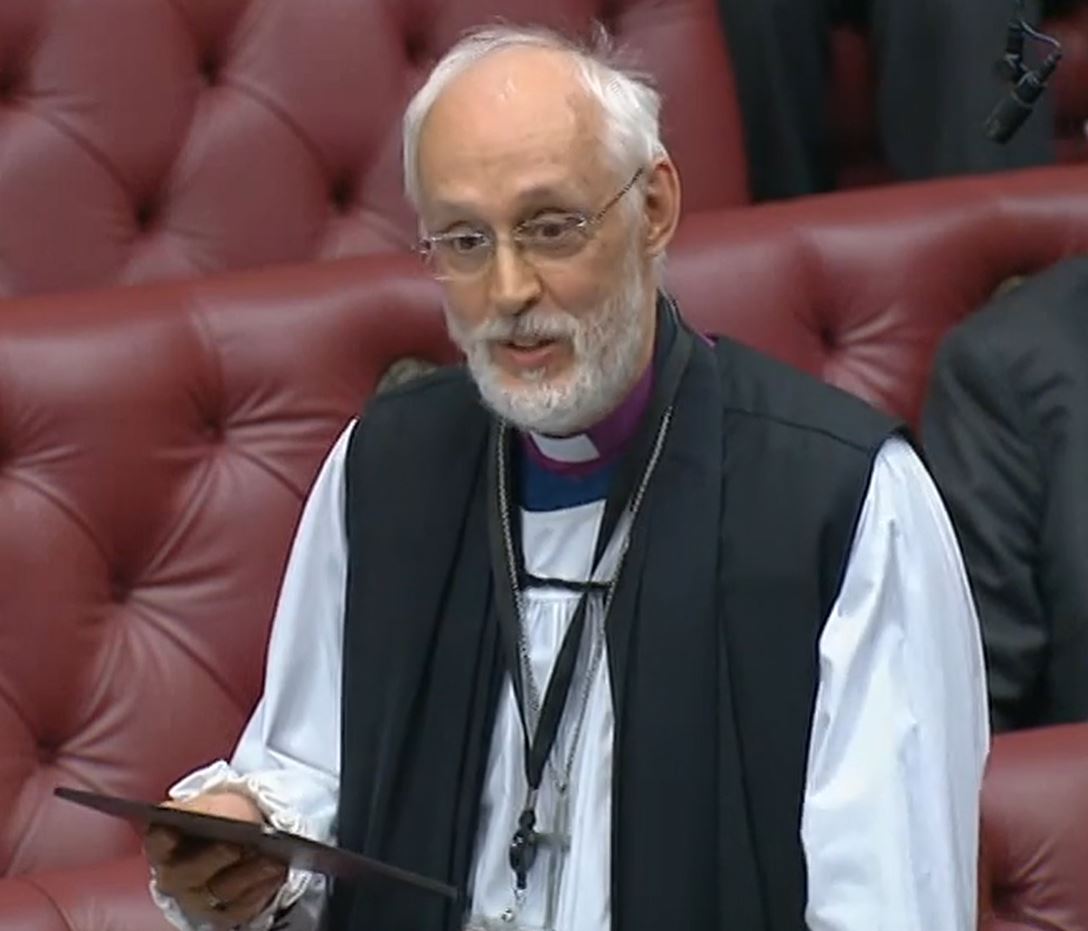
Bishop of Norwich asks about upcoming convention on biological diversity, international cooperation on conservation, and outdoor education

The Bishop of Norwich received the following written answers on 7th October 2024:

The Lord Bishop of Norwich asked His Majesty’s Government:

  • what their priorities are for the Conference of the Parties to the UN Convention on Biological Diversity to be held in Colombia in October.
  • what assessment they have made of the theme of the forthcoming Conference of the Parties to the UN Convention on Biological Diversity (COP16) being designated “Peace with Nature” by the government of Colombia, and in particular of the link between environmental breakdown and conflict internationally; and what are their objectives for COP16 regarding the relationship between humanity and nature to ensure greater global peace.
Continue reading “Bishop of Norwich asks about upcoming convention on biological diversity, international cooperation on conservation, and outdoor education”

Bishop of Norwich takes part in debate on report from Environment and Climate Change Committee

The Bishop of Norwich spoke in a debate on a report from the environment and climate change committee on 11th September 2024, emphasising the need to protect and safeguard the natural environment:

The Lord Bishop of Norwich: My Lords, I believe that restoring land and sea for nature is a crucial part of our response to the twin crises of climate change and biodiversity loss. It is a great privilege to follow four outstanding speakers, real heroes of the environment, particularly for the environment in this nation. It is indeed an extraordinary challenge that we face, but one that I hope we can rise to.

The report contains many excellent recommendations. I commend the noble Lords on the Select Committee who have taken evidence, distilled it and brought us a report containing so much clarity and wisdom. It is imperative that the regulation of habitat protection is retained and strengthened to make sure that protected land is truly being managed for nature. Alongside that, and ultimately far more effective, is for those who own and manage land or use the sea to have a great pride for the natural world in their stewardship and for society at large to value nature. I see the beginnings of a positive change in that regard, as more and more landowners, tenants and people who work the land and the sea recognise our negative impact on the environment and notice the silenced song of creation in so many places.

Continue reading “Bishop of Norwich takes part in debate on report from Environment and Climate Change Committee”

Bishop of St Albans asks about health effects of climate change in Latin America

The Bishop of St Albans received the following written answer on 23rd May 2024:

The Lord Bishop of St Albans asked His Majesty’s Government what assessment they have made of the increasing level of hunger and disease in Latin America due to extreme climate conditions.

Continue reading “Bishop of St Albans asks about health effects of climate change in Latin America”

Bishop of Manchester supports motion to regret on National Networks Policy statement

On 8th May 2024, Bishop of Manchester spoke in support of a Motion to Regret tabled by Lord Berkeley: “That this House regrets the Government’s decision to lay the National Networks National Policy Statement, laid before the House on 6 March, without carrying out the systematic review of road projects recommended by the Climate Change Committee; addressing the risk of insufficient environmental action by the Department for Transport highlighted by the National Audit Office; or joining up their policies with the missions presented to Parliament under the Levelling-up and Regeneration Act 2023.

The Lord Bishop of Manchester: My Lords, as it seems compulsory in this short debate to quote Voltaire, perhaps I might take us to his wonderful creation, Dr Pangloss, who continues to assert:

“All is for the best in this best of all possible worlds”

even while the horrors are descending around him. I feel there is something of that in the statement; it is a bit Panglossian. As noble Lords have already said, we face a climate emergency and crisis, and this statement is not adequate to the seriousness of the situation that we are in.

Continue reading “Bishop of Manchester supports motion to regret on National Networks Policy statement”

Bishop of Newcastle asks about food security in the event of flooding or extreme weather

The Bishop of Newcastle asked a question on government plans to ensure food security in the event of extreme weather events and flooding affecting supply lines on 16th April 2024, during a discussion on compensation for farmers affected by flooding:

The Lord Bishop of Newcastle: Climate change and global events have exposed the vulnerability of relying on imported foods. Given the extreme weather events and flooding, the likelihood that this will continue and the impact on farming, what plans do the Government have in place to ensure food security?

Continue reading “Bishop of Newcastle asks about food security in the event of flooding or extreme weather”

Bishop of St Albans asks about effects of climate change in the Horn of Africa

The Bishop of St Albans received the following written answer on 20th March 2024:

The Lord Bishop of St Albans asked  His Majesty’s Government whether they have any plans to increase climate funding available to drought-affected and flood-prone communities in the Horn of Africa.

Lord Benyon (Con, FCDO): Building climate resilience is central to the UK’s work in the Horn of Africa where flooding and drought have impacted tens of millions of people.

Continue reading “Bishop of St Albans asks about effects of climate change in the Horn of Africa”

Bishop of Norwich asks about government plans to withdraw from the Energy Charter Treaty

The Bishop of Norwich received the following written answer on 26th February 2024:

The Lord Bishop of Norwich asked His Majesty’s Government what plans they have to withdraw from the Energy Charter Treaty.

Continue reading “Bishop of Norwich asks about government plans to withdraw from the Energy Charter Treaty”

Bishop of Norwich calls for greater global investment and cooperation to tackle climate change

The Bishop of Norwich spoke in a debate on the impact of climate change on developing nations on 11th January 2024, focusing on the need for global investment and cooperation to support projects tackling climate change:

The Lord Bishop of Norwich: My Lords, I too express my appreciation to the noble Baroness, Lady Northover, for securing this debate and congratulate my right reverend friend the Bishop of Winchester on his informative and passionate maiden speech.

The UK rightly has a distinguished record in overseas development aid and I look forward to the urgent return to the Government’s manifesto commitment of 0.7% of GDP being spent on it. There also needs to be transparency in new funding announcements about whether the funding is new money or comes from salami-slicing existing programmes. The priorities for climate change aid must be focused on three areas: mitigation, resilience and emergency response. I will look briefly at each in turn.

Continue reading “Bishop of Norwich calls for greater global investment and cooperation to tackle climate change”

Bishop of Winchester makes maiden speech on the topic of climate change and its effects on developing nations

On 11th January 2024, The Bishop of Winchester made his maiden speech during a debate on the impact of climate change on developing nations, referencing the importance of both local and international approaches in tackling these issues, and linking to his previous work on freedom of religion and belief:

The Lord Bishop of Winchester: My Lords, I am conscious of the immense privilege that is mine to have a seat as of right in your Lordships’ House. I am very grateful for the welcome and help I have received from noble Lords and staff, both today and as I have been inducted into its ways.

The See of Winchester, which I serve, was founded in 660. In 838, at the Great Council of Kingston, King Ecgberht of Wessex entered into a compact with the Sees of Winchester and Canterbury, in return for their promise of support for his son Aethelwulf’s claim to the Throne. Aethelwulf was the father of Alfred the Great. That ancient compact was a key moment in the developing relationship between Church and state that has done so much to shape to the life of this country, as together we have sought the common good—and it is to that theme of the common good that I will return later.

I turn specifically to the matter of this debate. In looking at this issue of international development, I believe we must pay proper attention to two cardinal principles: internationalism and localism. It is vital that, as a country, we take an internationalist approach to international development. Global problems, including climate change, require global solutions, and nothing less will do. But, in all that, the local must not be lost. Effective development must always have purchase at the grass roots in specific contexts and communities, or it will be simply unsustainable.

Continue reading “Bishop of Winchester makes maiden speech on the topic of climate change and its effects on developing nations”

Bishop of Leicester calls for reconsideration of debt to help developing nations combat climate change

The Bishop of Leicester spoke in a debate on the impact of climate change on developing nations on 11th January 2024, highlighting the relationship between debt and dealing with climate change:

The Lord Bishop of Leicester: My Lords, I too am grateful to the noble Baroness, Lady Northover, for the opportunity to debate this hugely significant subject. I too am looking forward to the maiden speech by my right reverend friend the Bishop of Winchester, who has real expertise in this area.

When it comes to thinking about the impact of climate change on developing nations, the injustices at play are twofold. First is the fact that those nations that are being and will yet be most affected by climate change are those that have contributed least to the crisis. Secondly, much of the funds that fuelled our Industrial Revolution, wherein were sown the seeds of climate change, were generated by extracting and exploiting the resources of many of those regions, most devastatingly, of course, through the transatlantic chattel slave trade.

Our moral debt is as great as the climate emergency we face, so I was pleased to see that the Government’s international development White Paper, published in November, included “tackling climate change” in its title. I was also most encouraged to read the Government advocating for a move away from donor-recipient models of aid towards partnerships built on mutual respect, putting greater value on the voice, perspectives and needs of developing nations, as well as supporting local leadership. The paper hearteningly states:

“We will engage with humility and acknowledge our past”.

Continue reading “Bishop of Leicester calls for reconsideration of debt to help developing nations combat climate change”