
On 26th November MPs put questions to the Second Church Estates Commissioner, Andrew Selous MP, on public worship, tree planting, Christmas services, gender-based violence, Living in Love and Faith, cathedral services, Christian persecution, community support and consistory court appeals. A transcript is below:
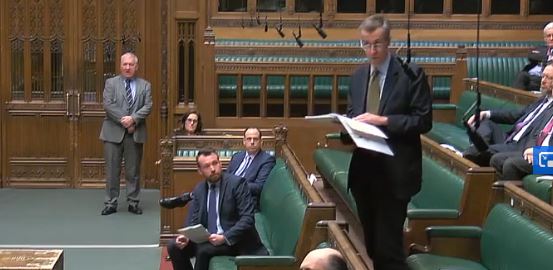
Church Commissioners
The hon. Member for South West Bedfordshire, representing the Church Commissioners was asked—
Covid-19 Lockdown: Public Worship
Sir Edward Leigh (Gainsborough) (Con): What representations the Church of England has made to the Government on the importance of public worship during periods of covid-19 lockdown. [909344] Continue reading “Church Commissioner Questions: public worship, tree planting, Christmas services, gender-based violence, Living in Love and Faith, cathedral services, Christian persecution, community support, consistory court appeals”
 Andrew Selous: Following the Government announcement of a second lockdown, churches have been required to close again for public worship, between 5th November and 2nd December. The Archbishops of Canterbury and York, the Bishop of London and senior Christian and other faith leaders wrote to the Prime Minister about this and their letter can be read here:
  Andrew Selous: The Church of England’s seasonal campaign ‘Comfort and Joy’ will provide online, booklet and social media resources for all parishes and worshippers to use and enjoy this Advent and Christmas. More information is available here:
  The Lord Bishop of Durham [V]: Regarding the voice of children and young people, if Article 12 had been in law, what might their input have been on their own situation in schools, universities and the like through the pandemic?
  The Lord Bishop of Durham [V]: The Salvation Army has an innovative project for short-term housing solutions by using “meanwhile use” land to provide high-quality modular homes rooted in church communities and supported by wider community groups. This gives the residents the provision of a flat and the relational support of the community. What consideration have Her Majesty’s Government given to the Salvation Army’s innovative approach to homelessness and similar projects?
  The Lord Bishop of Durham [V]: Families in receipt of legacy benefits, such as employment and support allowance, did not benefit from the very welcome £20 a week uplift in benefits. These people are just as likely to be affected by the financial impact of the Covid-19 pandemic and include many disabled people. Will the Government extend the increase in benefits to include those in receipt of legacy benefits, as recommended by the Joseph Rowntree Foundation’s Keep the Lifeline campaign?
 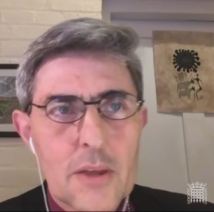 The Lord Bishop of Winchester [V]: My Lords, protecting freedom of religion or belief remains a pertinent issue in the developing world when more than 80% of the world’s population identify with a religion or belief system. My diocese has historic links with the Church of the Province of Myanmar, and during the pandemic many of its clergy have been providing volunteer support in understaffed hospitals. Can the Minister assure the House that, despite the almost £3 billion cut in the UK’s foreign aid budget, Her Majesty’s Government will continue to prioritise international freedom of religion and belief and recognise the contribution of religious groups in the development and support of their communities, particularly in times of crisis?
 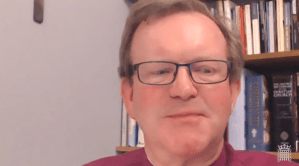 The Lord Bishop of Portsmouth [V]: My Lords, I welcome the Government’s desire to protect jobs and livelihoods, but can the Minister confirm that the extension of the furlough scheme until March—a full five months—is based on the assumption and expectation that those jobs, or at least the vast majority of them, will be ready to return to unchanged? That is a bold assumption. If it is not the case, what strategy do the Government have now for addressing the transitional challenges for those whose jobs will disappear? This Statement was made late, in haste. Tackling the jobs issue in March is tackling it too late.
  The Church of England in Parliament
You must be logged in to post a comment.