Sentencing Bill: Bishop of Gloucester questions lack of long-term planning in bill

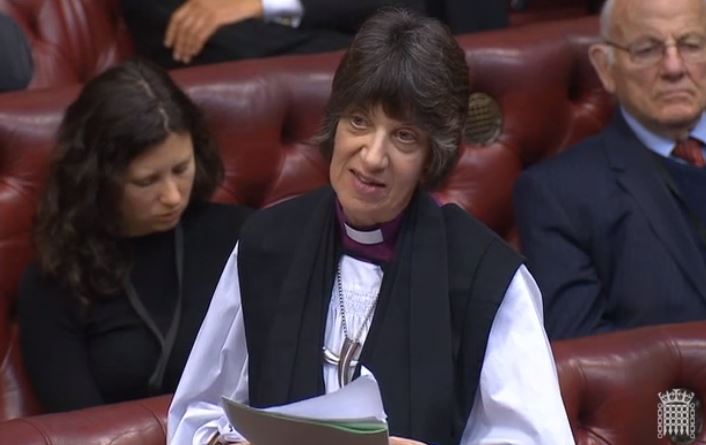
On 12th November 2025, the Bishop of Gloucester spoke at the second reading of the Sentencing Bill, expressing concern at the lack of comprehensive long term planning in the legislation:

The Lord Bishop of Gloucester: My Lords, I declare an interest as Anglican bishop to His Majesty’s prisons in England and Wales. I, too, pay tribute to the late Baroness Newlove, not least in her role as Victims’ Commissioner. I want to echo so much of what the noble Lord, Lord Beith, and the noble and learned Lord, Lord Burnett, have just said, which has lifted my spirits.

There is much to welcome in this Bill. For example, as has been said, we know in general that short custodial sentences do more harm than good, so I am delighted that we are now seeing some evidence-based policy-making rather than policy shaped by media headlines. We also need to clarify our long-term vision and aims. As a Christian, I believe that every human being is made in the image of God and is created to live in interdependent relationship, and broken relationship sits at the heart of all brokenness. Strong relationship sits at the heart of all that is good and transformative. I thank the Minister for his introduction, but I am dismayed that we are setting the context of this Bill as overcrowded prisons and a current crisis. Surely our long-term vision and big picture is not simply about more prisons or even decent prisons, but ultimately about strengthening communities so that people flourish in a network of healthy and safe relationships.

Continue reading “Sentencing Bill: Bishop of Gloucester questions lack of long-term planning in bill”

Bishop of Leeds asks about government response to Leveson recommendations

The Bishop of Leeds asked a question on the government response to the Leveson recommendations on delays between charges and trials in the courts on 10th November 2025:

The Lord Bishop of Leeds: My Lords, the Minister has said a couple of times that the response to the Leveson recommendations will be delivered in due course. Can she possibly tell us what “in due course” looks like, because it has been quite a long time already?

Continue reading “Bishop of Leeds asks about government response to Leveson recommendations”

Bishop of Manchester asks about equity in the courts

The Bishop of Manchester asked a question on equitable treatment of those from minority-ethnic backgrounds in the courts on14th July 2025, during a discussion on proposed restrictions on trial by jury:

The Lord Bishop of Manchester: My Lords, it was my privilege this lunchtime to be with a group of young legal students with very diverse backgrounds except that they had all been through the care system—a group of people who are more likely than anybody else to be charged and prosecuted for behaviours that others might be treated more favourably over. The same often applies to people from minority-ethnic backgrounds. Does the Minister agree that dealing with that disproportionality in how people are treated for the same behaviour by the legal system will be a good way to reduce some of the waiting lists of courts?

Continue reading “Bishop of Manchester asks about equity in the courts”

Votes: Sentencing Guidelines (Pre-sentence Reports) Bill

On 4th June 2025, the House of Lords debated the Sentencing Guidelines (Pre-sentence Reports) Bill. Votes were held on amendments to the bill, in which a bishop took part:

Continue reading “Votes: Sentencing Guidelines (Pre-sentence Reports) Bill”

Bishop of London emphasises need for support for victims of crime in debate on Crown Court backlog

The Bishop of London spoke in a debate on Crown Court Criminal Case Backlog on 20th March 2025, raising the need to support victims of crime:

The Lord Bishop of London: My Lords, it is humbling to speak in this debate in the company of those better qualified than me to make comment, but I rise to speak particularly about the impact on victims. From London, I also welcome the noble Baroness, Lady Longfield, to her place.

It continues to be a great shame that criminal justice is one of those Cinderella public services. We often talk or feel that spending money on things such as schools and healthcare is good, and of course it is. However, talking about spending money on prisons, probation and the courts is much less frequently affirmed, despite the fact that not spending in the courts has a terrible implication for victims. I wonder whether improving public understanding of the importance of a well-functioning court system for victims and defendants may be key to winning wider support and gaining resources that are so desperately needed. What consideration have the Government given to improving public understanding in this way?

Continue reading “Bishop of London emphasises need for support for victims of crime in debate on Crown Court backlog”

Bishop of Bristol asks about legal aid review

The Bishop of Bristol received the following written answer on7th October 2024:

The Lord Bishop of Bristol asked his Majesty’s Government whether they intend to continue the Review of Civil Legal Aid; and if so, when they intend to publish a final report.

Continue reading “Bishop of Bristol asks about legal aid review”

Bishop of Gloucester asks about measures to deliver a more diverse judiciary

The Bishop of Gloucester received the following written answer on 30th April 2024:

The Lord Bishop of Gloucester asked His Majesty’s Government, further to the report by the University of Manchester Racial Bias and the Bench: A response to the Judicial Diversity and Inclusion Strategy (2020-2025), published in November 2022, what support they will give to recommendations to overhaul judicial appointment processes to deliver a more diverse judiciary and embed equalities within the judiciary.

Continue reading “Bishop of Gloucester asks about measures to deliver a more diverse judiciary”

Votes: Safety of Rwanda (Asylum and Immigration) Bill

On 4th March 2024, the House of Lords debated the Safety of Rwanda (Asylum and Immigration Bill) in the first day of the report stage. Votes were held on amendments to the bill, in which Bishops took part:

Continue reading “Votes: Safety of Rwanda (Asylum and Immigration) Bill”

Safety of Rwanda (Immigration and Asylum) Bill: Bishop of Chichester supports amendments on role of the courts in asylum system

On 19th February 2024, the House of Lords debated the Safety of Rwanda (Immigration and Asylum) Bill in committee. The Bishop of Chichester spoke in the debate, in support of two sets of amendments on the jurisdiction of the courts, pointing out the practical issues associated with offshoring of asylum seekers:

  • amendments tabled by Baroness Chakrabarti restoring the jurisdiction of domestic courts “by rendering the future safety of Rwanda (evidenced by UNHCR advice) a rebuttable presumption and restoring the ability for UK courts and tribunals to grant interim relief…”
  • amendments in the name of the Archbishop of Canterbury and Baroness Chakrabarti which would seek to ensure that that proper regard is given to interim measures of the European Court of Human Rights in accordance with international law

The Lord Bishop of Chichester: My Lords, my noble friend the most reverend Primate the Archbishop of Canterbury regrets that he cannot be in his place today to speak to the amendments in this group tabled in the name of the noble Baroness, Lady Chakrabarti, and the noble and learned Baroness, Lady Hale. I wish to associate my remarks with theirs and to emphasise how important the restoration of the jurisdiction of the domestic courts is in considering also UNHRC evidence and the ability to grant interim relief. This is no mere technicality. This jurisdiction might make the difference between sending an asylum seeker to Rwanda while their claim, or an aspect of their claim, is pending or not doing so.

Continue reading “Safety of Rwanda (Immigration and Asylum) Bill: Bishop of Chichester supports amendments on role of the courts in asylum system”

Safety of Rwanda (Asylum and Immigration) Bill: Bishop of Leeds raises concerns over indefinite declaration of Rwanda’s safety

The Bishop of Leeds spoke in a debate on the Safety of Rwanda (Asylum and Immigration) Bill on 14th February 2024, pointing out the need for demonstration of Rwanda’s safety, and the risks associated with the country’s safety being declared indefinitely:

The Lord Bishop of Leeds: My Lords, I will be very brief. I endorse the speech by the noble Lord, Lord Deben. I want to question slightly the use of truth because there is a difference between truth and factuality. Something can be not factual, but it can be true. Let us look at a parable, for example. We have not even got as far as factuality when we are talking about truth. To put it very simply—I am in terrible danger of evoking Immanuel Kant here, but I will try to avoid that—if I say I am a banana, it does not make me a banana. There has to be some credible questioning of that. I am not a banana. A country does not become safe because someone says it is, even if a Government say that. That has to be demonstrated, and it has to be open to question, particularly, as has been said many times, because the word “is”—we are getting very Clintonesque in his impeachment hearings when we get into the meaning of “is”—has a permanence about it that does not allow for the possibility of change. I fail to see rationally how this is such a problem for the Government, other than that there is an ideological drive in this which is not open to argument.

Hansard