Restorative Justice: Bishop of Peterborough Calls For Greater Use

Baroness Gardner of Parkes asked Her Majesty’s Government how many offenders received multiple cautions in the past year; and what plans they have to review the guidance to the police on the use of cautions for serious crimes.

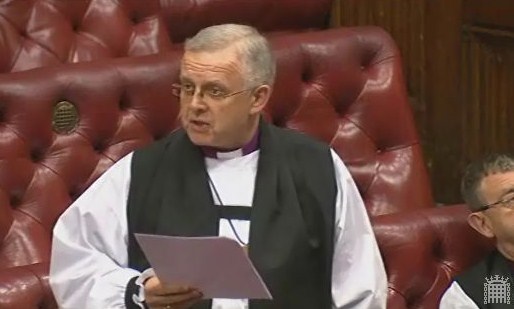
The Bishop of Peterborough asked a supplementary question:14.02 Peterborough

The Lord Bishop of Peterborough: My Lords, the Minister mentioned restorative justice. Does he agree that, alongside limited use of cautions, a greater use of restorative justice interventions could be of great help, both in reducing reoffending and in supporting victims?

Lord Faulks: My Lords, I agree with the right reverent Prelate. There is a great case for restorative justice in appropriate cases, and it is indeed an option for it to be part of the conditional caution. There is increasing approval in this House and outside of its use.

(via Parliament.uk)

Bishop of Ripon & Leeds welcomes work of metal theft task force

On 23rd January, 2014, Lord Faulkner of Worcester asked Her Majesty’s Government whether they will continue to support the metal theft task force.

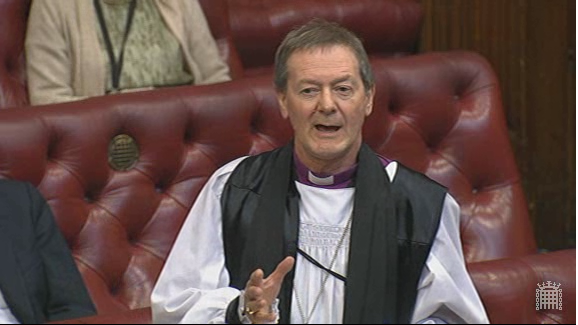
R_LThe Bishop of Ripon and Leeds asked a supplementary question:

The Lord Bishop of Ripon and Leeds: My Lords, the metal theft task force has been of inestimable value in checking the epidemic of lead theft from churches. Stripping of lead from church roofs has caused extensive rain damage to historic interiors. Will the Minister consult English Heritage, the Churches Conservation Trust and the cathedrals and church buildings division of the Archbishops’ Council as to how the destruction of our heritage can be combated and the work of the task force maintained? Continue reading “Bishop of Ripon & Leeds welcomes work of metal theft task force”

Bishop of Derby: housing people leaving prison in the interests of all

“It seems to me that the connection between housing and a lower reoffending rate is clear and it would be in the interests of government, society and prisoners if we could maximise the enabling of people leaving prison to be housed, giving stability of place and of relationship” – The Bishop of Derby

Bishop of DerbyOn 5th December 2013, the Bishop of Derby took part in a debate on the what assessment the Government have made of the impact on reoffending rates of providing stable accommodation for those leaving prison. Continue reading “Bishop of Derby: housing people leaving prison in the interests of all”

Bishop of Derby supports raising age of criminal responsibility

“No one is an individual—that is a modern myth. Each human being is a person who is who they are because of their relationships with others. Crime is when relationships go wrong or are handled destructively. Human beings are formed through relationships” – Bishop of Derby, 8.11.13

On 8th November 2013, the Bishop of Derby, the Rt Revd Alastair Redfern, took part in the debate on the Second Reading of Lord Dholakia’s Age of Criminal Responsibility Bill, which sought to raise the age of criminal responsibility from 10 to 12. The Bishop focused his remarks on the challenges associated with treating children as entirely individual and independent units, and the associated need of providing safe and positive spaces in which children can develop socially – particularly focusing on the need for strong family units. The Bill did not progress any further than its Second Reading. 

DerbyThe Lord Bishop of Derby: My Lords, I, too, thank the noble Lord, Lord Dholakia, for introducing this topic and I heartily endorse all that the noble Earl has said. This is a very complex issue, and we are having this debate in a national context in which public opinion wants justice to be seen to be done. A strong scapegoating mentality exists which indicates that there is also a high level of anxiety in society. The key people to be scapegoated tend to be criminals and immigrants. We have to take that part of the context seriously in having this debate. A second context, as we have heard, is the UN recommendation on the rights of the child, that the age of criminal responsibility should be at least 12. Many countries, as we have heard, go even higher than that. A third context is that there are suggestions, as there is in Ireland, of raising the age to 12, but of allowing some flexibility in dealing with serious crimes. So this is a very complex issue in an anxious society which is nervous about seeming to give positive signals to bad behaviour and social deviancy. Continue reading “Bishop of Derby supports raising age of criminal responsibility”