
Bishop of St Albans asks Government about working with local faith communities to help Ebola victims

St Albans 2On 25th July 2019 the Bishop of St Albans asked the Government “what steps they are taking to help those areas affected by the latest outbreak of Ebola which has been declared a Public Health Emergency of International Concern by the World Health Organization”. He then asked a follow-up question:

The Lord Bishop of St Albans: My Lords, I thank the noble Baroness for her Answer and, indeed, for the money that has been made available. One of the most effective ways of rolling out preventative health education is to use local indigenous leadership. In 2015, Christian Aid and other charities recommended that NGOs should engage with local faith leaders for this purpose. Are Her Majesty’s Government following this advice? Secondly, with daily flights between DRC and Europe, given the highly infectious nature of this disease, will she explain to the House the steps that are being taken for our own domestic preparedness?

Continue reading “Bishop of St Albans asks Government about working with local faith communities to help Ebola victims”

Bishop of St Albans asks Government about assistance with Ebola epidemic in Democratic Republic of Congo

St Albans 2On 16th July 2019 the Bishop of St Albans asked the Government “what action they are taking to assist local communities in the Democratic Republic of Congo to deliver health advice on the Ebola epidemic, which has now spread to the city of Goma”. The Bishop then asked a follow-up question:

The Lord Bishop of St Albans: I thank the Minister for her response and for all that DfID and others are doing. If we are to prevent further spread of the disease, we need more grass-roots health education and disease prevention. My colleague, the Bishop of Hertford, is currently using his sabbatical to do just that, working through churches, local community leaders and faith groups, and his health educational material, translated into Swahili, is being delivered through the Anglican dioceses and by 800 Baptist pastors in every part of the DRC. Will the Minister explore how we can support this grass-roots work with indigenous leaders and communities, including the churches, and will she meet me to see how we can build on this initiative?

Continue reading “Bishop of St Albans asks Government about assistance with Ebola epidemic in Democratic Republic of Congo”

Bishop of Winchester asks Government about security for health and aid workers responding to Ebola outbreak in DRC

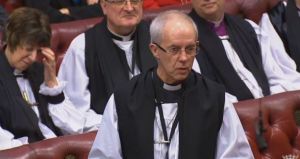
On 20th May 2019 a Government statement on the Ebola outbreak in the Democratic Republic of the Congo,  was repeated in the House of Lords. The Bishop of Winchester, Rt Revd Tim Dakin, asked a follow-up question:

The Lord Bishop of Winchester: My Lords, I thank the noble Baroness for repeating the Statement from the other place. My diocese is linked directly with the Congo and I have had a relationship with the current Bishop of North Kivu, Bishop Isesomo, for nearly 20 years.
I see the outbreak of Ebola as the presenting issue for what is a community breakdown. Over the past 25 years, particularly since the 1990s, we have seen a form of alternative governance which makes it very hard for any kind of intervention to work that does not tackle the question of security. Continue reading “Bishop of Winchester asks Government about security for health and aid workers responding to Ebola outbreak in DRC”

Archbishop of Canterbury asks for Government’s response to events in the Democratic Republic of the Congo

In the House of Lords on the 6th March 2018 the Archbishop of Canterbury, the Rt Revd Justin Welby, asked a question he had tabled to Government about escalating violence and suppression of peaceful protests across the Democratic Republic of the Congo.

Continue reading “Archbishop of Canterbury asks for Government’s response to events in the Democratic Republic of the Congo”

Archbishop of Canterbury receives answer to written question on Democratic Republic of Congo

Archbishop of CanterburyOn 19th February 2018 the Archbishop of Canterbury, the Most Revd and Rt Hon Justin Welby, received an answer to a written question on the Democratic Republic of Congo. The question was originally tabled on 5th February 2018.
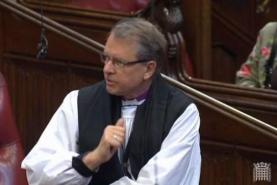
The Archbishop of Canterbury: To ask Her Majesty’s Government what is their response to recent reports of civilian deaths and arrests following the crackdown on peaceful Church protests by the government of the Democratic Republic of the Congo. Continue reading “Archbishop of Canterbury receives answer to written question on Democratic Republic of Congo”

Bishop of Durham asks Government how they assess safety of those deported to Democratic Republic of Congo

Bp Durham June 2015 bOn 9th January 2017, the Bishop of Durham, Rt Revd Paul Butler, received an answer to a written question about the safety of those deported to the Democratic Republic of Congo.


Bishop of Durham: To ask Her Majesty’s Government, further to the Written Answer by Baroness Williams of Trafford on 15 December (HL3748), what steps they are taking to assess the safety of those removed from the UK to the Democratic Republic of Congo, once they are in the Democratic Republic of Congo. Continue reading “Bishop of Durham asks Government how they assess safety of those deported to Democratic Republic of Congo”

Bishop of Wakefield highlights Church’s role in preventing sexual violence in the DRC

Lord McConnell of Glenscorrodale asked Her Majesty’s Government what is their assessment of recent developments in the Democratic Republic of the Congo.

The Bishop of Wakefield asked a supplementary question:

The Lord Bishop of Wakefield: My Lords, I am sure that the Minister will be aware that my colleague and friend the most reverend Primate the Archbishop of Canterbury is visiting the DRC today with the Minister for Africa. Could she inform the House of the work of Her Majesty’s Government, currently being promoted by them, in the protection of women in the DRC, particularly from gender-based violence?

Baroness Warsi: The Minister for Africa will have meetings with the most reverend Primate the Archbishop of Canterbury and the Archbishop of the DRC, particularly to support HEAL Africa, a project which aims to support women who have been subjected to sexual violence.

(via parliament.uk)

Bishop of Wakefield seeks government response to DRC peace initiative (Written Question)

On 27th November 2013, the Bishop of Wakefield, the Rt Revd Stephen Platten, received an answer to a written question on the Democratic Republic of Congo.

Bishop Stephen Platten

The Lord Bishop of Wakefield: To ask Her Majesty’s Government whether they intend to allocate additional resources to support the implementation of commitments outlined in the Peace, Security and Cooperation Framework for the Democratic Republic of the Congo; and, if so, what will be the main focus of those resources.

Baroness Northover: The UK is currently considering how best to support the Peace Security and Cooperation Framework (PSCF). DFID is engaging with the Democratic Republic of Congo’s National Oversight Mechanism for the PSCF to ensure those that represent local populations, such as civil society organisations, are consulted during implementation. This will include ensuring that there are on-going opportunities for these organisations to provide feedback from the Congolese people affected.

(via Parliament.uk)

Bishop of Wakefield urges proactive response to crisis in Central African Republic

“It is not surprising that the violence and insecurity that now plagues this country has hampered the delivery of humanitarian aid. As a result, local faith groups and a few national and international NGOs are the primary responders” – Bishop of Wakefield, 18.11.13

On 18th November 2013, Conservative Peer Baroness Berridge led a short debate to ask Her Majesty’s Government what assessment they have made of the security and humanitarian situation in the Central African Republic and the Great Lakes region of Africa. The Bishop of Wakefield, the Rt Revd Stephen Platten, took part in the debate, focusing his remarks on the need to sanction the perpetrators of violence in the Central African Republic and the urgent need to tackle sexual violence in conflict.

Bishop of Wakefield PlattenThe Lord Bishop of Wakefield: My Lords, I warmly congratulate the noble Baroness, Lady Berridge, for securing this debate and for introducing it with such clarity of purpose. Those of us of a certain age will remember graphically the tragedy of the Congo, going all the way back to independence itself. This was followed by the Katanga breakaway movement and the instability there, and the subsequent tragedies made the entire Great Lakes region a terrible, open wound on our common humanity. As we know, that conflict, which began all those years ago, continues in a number of countries. Continue reading “Bishop of Wakefield urges proactive response to crisis in Central African Republic”

Bishop of Ripon and Leeds calls for stronger monitoring of welfare of asylum seekers returned to DRC

On 24th October 2013, the Bishop of Ripon and Leeds, the Rt Revd John Packer asked Her Majesty’s Government on what evidence they consider the Democratic Republic of the Congo to be a safe country to which to return asylum seekers.

R_LThe Lord Bishop of Ripon and Leeds: Despite my unelected nature, I beg leave to ask the Question standing in my name on the Order Paper.

The Parliamentary Under-Secretary of State, Home Office (Lord Taylor of Holbeach) (Con): My Lords, we observe our obligations under the refugee convention and the European Convention on Human Rights. Every asylum application is considered on its individual merits in the light of country information from a range of sources, including fellow European and asylum-intake countries. Returns are made only if it is safe to do so, and the courts have supported our position.

The Lord Bishop of Ripon and Leeds: I am very grateful to the Minister for that response. Following the Unsafe Return report of November 2011 and continued documented reports of ill treatment of those who return to the Democratic Republic of the Congo in the Unsafe Return 2 report of this month, will the Government use the evidence provided to challenge the DRC authorities and to set up a monitoring mechanism for those returned so that there is a minimal safety measure for them in this very dangerous country?

Lord Taylor of Holbeach: My Lords, the Home Office works very closely with FCO staff here in London and with embassy officials in Kinshasa. The embassy staff participated in the DRC fact-finding mission and stated that they were not aware of substantial evidence of any returnee being ill treated. However, I assure the right reverend Prelate that the Home Offices investigates specific allegations of mistreatment on return.

(via Parliament.uk)