On 13th February 2020 the Second Church Estates Commissioner, Andrew Selous MP, answered written questions from Jim Shannon MP, on carbon emissions, religious freedom, strategic development funding, church planting, green investments, the Democratic Republic of Congo and South Sudan, the Primates’ Meeting, new technologies, marriage and family life.
On 5th August 2019 the Bishop of Durham, Rt Revd Paul Butler, received a written answer from Government regarding support for Burundi’s government in hosting DRC refugees:
The Lord Bishop of Durham: HL17454 To ask Her Majesty’s Government what support they are offering the government of Burundi in hosting Congolese refugees being displaced through the ongoing conflict in the Democratic Republic of the Congo.
On 25th July 2019 the Bishop of St Albans asked the Government “what steps they are taking to help those areas affected by the latest outbreak of Ebola which has been declared a Public Health Emergency of International Concern by the World Health Organization”. He then asked a follow-up question:
The Lord Bishop of St Albans: My Lords, I thank the noble Baroness for her Answer and, indeed, for the money that has been made available. One of the most effective ways of rolling out preventative health education is to use local indigenous leadership. In 2015, Christian Aid and other charities recommended that NGOs should engage with local faith leaders for this purpose. Are Her Majesty’s Government following this advice? Secondly, with daily flights between DRC and Europe, given the highly infectious nature of this disease, will she explain to the House the steps that are being taken for our own domestic preparedness?
On 16th July 2019 the Bishop of St Albans asked the Government “what action they are taking to assist local communities in the Democratic Republic of Congo to deliver health advice on the Ebola epidemic, which has now spread to the city of Goma”. The Bishop then asked a follow-up question:
The Lord Bishop of St Albans: I thank the Minister for her response and for all that DfID and others are doing. If we are to prevent further spread of the disease, we need more grass-roots health education and disease prevention. My colleague, the Bishop of Hertford, is currently using his sabbatical to do just that, working through churches, local community leaders and faith groups, and his health educational material, translated into Swahili, is being delivered through the Anglican dioceses and by 800 Baptist pastors in every part of the DRC. Will the Minister explore how we can support this grass-roots work with indigenous leaders and communities, including the churches, and will she meet me to see how we can build on this initiative?
On 20th May 2019 a Government statement on the Ebola outbreak in the Democratic Republic of the Congo, was repeated in the House of Lords. The Bishop of Winchester, Rt Revd Tim Dakin, asked a follow-up question:
The Lord Bishop of Winchester: My Lords, I thank the noble Baroness for repeating the Statement from the other place. My diocese is linked directly with the Congo and I have had a relationship with the current Bishop of North Kivu, Bishop Isesomo, for nearly 20 years.
In the House of Lords on the 6th March 2018 the Archbishop of Canterbury, the Rt Revd Justin Welby, asked a question he had tabled to Government about escalating violence and suppression of peaceful protests across the Democratic Republic of the Congo.
On 19th February 2018 the Archbishop of Canterbury, the Most Revd and Rt Hon Justin Welby, received an answer to a written question on the Democratic Republic of Congo. The question was originally tabled on 5th February 2018.
On 9th January 2017, the Bishop of Durham, Rt Revd Paul Butler, received an answer to a written question about the safety of those deported to the Democratic Republic of Congo.
Lord McConnell of Glenscorrodale asked Her Majesty’s Government what is their assessment of recent developments in the Democratic Republic of the Congo.
The Bishop of Wakefield asked a supplementary question:
The Lord Bishop of Wakefield: My Lords, I am sure that the Minister will be aware that my colleague and friend the most reverend Primate the Archbishop of Canterbury is visiting the DRC today with the Minister for Africa. Could she inform the House of the work of Her Majesty’s Government, currently being promoted by them, in the protection of women in the DRC, particularly from gender-based violence?
Baroness Warsi: The Minister for Africa will have meetings with the most reverend Primate the Archbishop of Canterbury and the Archbishop of the DRC, particularly to support HEAL Africa, a project which aims to support women who have been subjected to sexual violence.
On 27th November 2013, the Bishop of Wakefield, the Rt Revd Stephen Platten, received an answer to a written question on the Democratic Republic of Congo.
Bishop Stephen Platten
The Lord Bishop of Wakefield: To ask Her Majesty’s Government whether they intend to allocate additional resources to support the implementation of commitments outlined in the Peace, Security and Cooperation Framework for the Democratic Republic of the Congo; and, if so, what will be the main focus of those resources.
Baroness Northover: The UK is currently considering how best to support the Peace Security and Cooperation Framework (PSCF). DFID is engaging with the Democratic Republic of Congo’s National Oversight Mechanism for the PSCF to ensure those that represent local populations, such as civil society organisations, are consulted during implementation. This will include ensuring that there are on-going opportunities for these organisations to provide feedback from the Congolese people affected.

 On 13th February 2020 the Second Church Estates Commissioner, Andrew Selous MP, answered written questions from Jim Shannon MP, on carbon emissions, religious freedom, strategic development funding, church planting, green investments, the Democratic Republic of Congo and South Sudan, the Primates’ Meeting, new technologies, marriage and family life.
 On 5th August 2019 the Bishop of Durham, Rt Revd Paul Butler, received a written answer from Government regarding support for Burundi’s government in hosting DRC refugees:
 On 25th July 2019 the Bishop of St Albans asked the Government “what steps they are taking to help those areas affected by the latest outbreak of Ebola which has been declared a Public Health Emergency of International Concern by the World Health Organization”. He then asked a follow-up question:
 On 16th July 2019 the Bishop of St Albans asked the Government “what action they are taking to assist local communities in the Democratic Republic of Congo to deliver health advice on the Ebola epidemic, which has now spread to the city of Goma”. The Bishop then asked a follow-up question:
 The Lord Bishop of Winchester: My Lords, I thank the noble Baroness for repeating the Statement from the other place. My diocese is linked directly with the Congo and I have had a relationship with the current Bishop of North Kivu, Bishop Isesomo, for nearly 20 years.
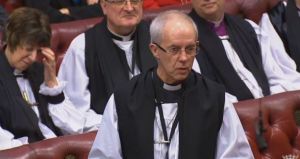 In the House of Lords on the 6th March 2018 the Archbishop of Canterbury, the Rt Revd Justin Welby, asked a question he had tabled to Government about escalating violence and suppression of peaceful protests across the Democratic Republic of the Congo.
 On 19th February 2018 the Archbishop of Canterbury, the Most Revd and Rt Hon Justin Welby, received an answer to a written question on the Democratic Republic of Congo. The question was originally tabled on 5th February 2018.
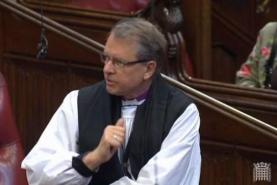 On 9th January 2017, the Bishop of Durham, Rt Revd Paul Butler, received an answer to a written question about the safety of those deported to the Democratic Republic of Congo.


You must be logged in to post a comment.