Bishop of Portsmouth welcomes Bill on making sports grounds more accessible

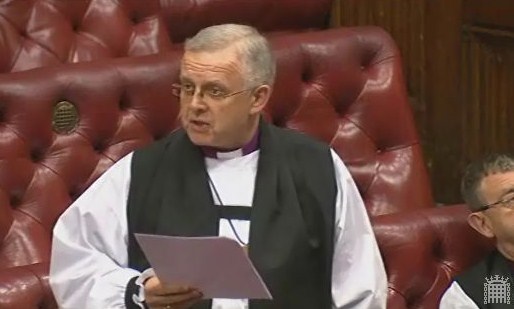
On 17th July 2015 the Bishop of Portsmouth, Rt Revd Christopher Foster, spoke during the Second Reading debate of Lord Faulkner of Worcester’s Accessible Sports Grounds Bill. The Bishop welcomed the Bill.

14.04.09 Portsmouth maiden speech 1The Lord Bishop of Portsmouth: My Lords, I am pleased to welcome the Bill of the noble Lord, Lord Faulkner, and to support it this morning. I am grateful for his and others’ determination to make good provision for disabled people at sports grounds a requirement and not just a vague aspiration. Were this not a sitting Friday and it my responsibility to lead the Prayers of this House, I would instead this morning be at Lord’s for the second day of the Ashes Test. My ticket—obtained long before today was fixed as a sitting Friday—is being put, I trust, to good use. Continue reading “Bishop of Portsmouth welcomes Bill on making sports grounds more accessible”

Bishop of St Albans raises concerns of deaf people about cap on Access to Work fund

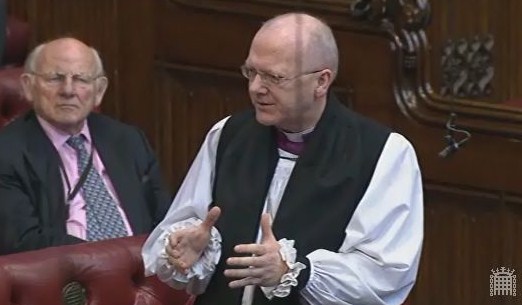
On 29th June 2015 Lord Touhig asked Her Majesty’s Government “what assessment they have made of the effectiveness of the Access to Work fund and what plans they have to help people with disabilities into work.” The Bishop of St Albans, Rt Revd Alan Smith, asked a supplementary question about the impact on deaf people of the cap on Access to Work grants.

Bishop of St AlbansThe Lord Bishop of St Albans: My Lords, perhaps I may press the Minister a little about the very real concerns of many people in the deaf community about the use of British Sign Language, not least because currently four-fifths of the highest-value awards are paying for BSL services. Indeed, the DWP’s own figures show that almost 90% of the users who will be affected by the cap that is to be brought in are deaf. How do the Government plan to continue to support and encourage deaf professionals on a par with the hearing community in the light of this cap? Continue reading “Bishop of St Albans raises concerns of deaf people about cap on Access to Work fund”

Bishop of Leicester speaks about challenges facing young people leaving foster care

“We know that transitioning to adulthood is challenging and demanding for all young people today, but how much more so for care leavers” – Bishop of Leicester, 12/3/15.

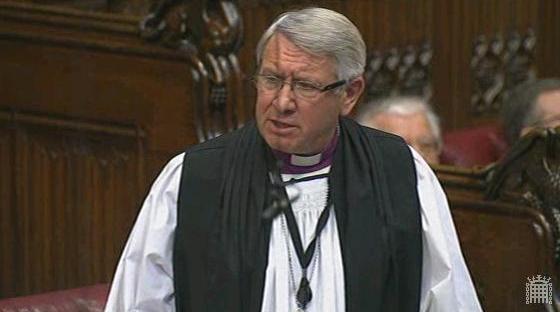
On 12th March 2015 the Bishop of Leicester, Rt Rev Tim Stevens, spoke in a debate tabled by Baroness Eaton, “to ask Her Majesty’s Government what plans they have to help young care leavers not able to “stay put” in foster care to make a successful transition to independence.”

Leicester Continue reading “Bishop of Leicester speaks about challenges facing young people leaving foster care”

Bishop of Leicester asks about personal independence payments for 16 and 17 year olds

On 10th March 2015 Lord Touhig asked Her Majesty’s Government “how many people are awaiting assessment for personal independence payments?” The Bishop of Leicester, Rt Rev Tim Stevens, asked a supplementary question.Leicester

The Lord Bishop of Leicester: My Lords, can the Minister tell us how many 16 and 17 year-olds are awaiting reassessment? What action do the Government propose to take to meet the additional needs of that group, including providing support for them through the reassessment process?

Lord Freud: I will have to write to the right reverend Prelate on that matter. I do not have the data on 16 and 17 year-olds so I shall write to him.

(via Parliament.uk)

Bishop of Worcester Supports Ban on Pavement Parking

On 11th February 2015, the Bishop of Worcester, the Rt Revd John Inge, spoke during the Report Stage of the Deregulation Bill. He spoke in favour of an amendment prohibiting parking on pavements and verges. Following assurances from the Minister, the amendment was withdrawn.

WorcesterThe Lord Bishop of Worcester: My Lords, I support the amendment, whose importance has been ably and eloquently demonstrated by the noble Lords, Lord Low and Lord Tope. It is quite clear that the present situation is costly and complex, as has been said. I should like very briefly, given the hour, to demonstrate how in Worcester—one of the few cities in the UK that has tried to tackle the problem of pavement parking —there have been difficulties because of the current situation.

Continue reading “Bishop of Worcester Supports Ban on Pavement Parking”

Bishop of St Albans calls for improved access to the criminal justice system and victim support for vulnerable people

On January 22nd 2015, the Bishop of St Albans, the Rt Revd Dr Alan Smith, took part in a debate on improving access to the criminal justice system and victim support for people with autism spectrum disorders. The debate was precipitated by the case of Faruk Ali, a young autistic man who was attacked in Luton.

Bishop of St Albans The Lord Bishop of St Albans: My Lords, I, too, thank the noble Baroness for this debate. As has already been said, Faruk Ali comes from Luton, a town in my own diocese. Quite a number of people have raised that case with me and have been concerned about what happened, so I am glad to be able to involve myself in this debate. However, I will leave it to other noble Lords to comment on the specifics of the debate—I, too, have read the media on this—as clearly it raises a number of wider problems. At an early stage I pay tribute to all those people, both professional and volunteers, who work in the statutory services and in the charitable sector, who are doing a very good job at huge personal cost and with great expertise. We need to acknowledge what they are doing and affirm it before looking at some of the problems. Continue reading “Bishop of St Albans calls for improved access to the criminal justice system and victim support for vulnerable people”

Bishop of St Albans – Work Capability Assessment (Written Answer)

On 25th November 2014, the Bishop fo St Albans, the Rt Revd Alan Smith, received a written answer from the Depatment of Work and Pensions on the Work Capability Assessment.

Bishop of St AlbansThe Lord Bishop of St Albans: To ask Her Majesty’s Government whether people who are undergoing a work capability assessment because of mental health problems are guaranteed assessment by health professionals who have psychiatric expertise.[HL2851]

The Parliamentary Under-Secretary of State, Department for Work and Pensions (Lord Freud): All healthcare professionals who carry out work capability assessments on behalf of the DWP are fully trained in disability assessment and are registered with their respective Regulatory Body. Healthcare professionals receive comprehensive training in the functional effects of mental health conditions. In addition all health professionals are supported by mental function champions who have specialist knowledge of mental health conditions and provide support and best practice advice.

(via Parliament.uk)

Bishop of St Albans raises concerns about Work Capability Assessment

On 5th November 2014, Lord McAvoy asked Her Majesty’s Government how many people were awaiting a Work Capability Assessment on the latest date for which figures are available. The Bishop of St Albans, the Rt Revd Alan Smith, asked a supplementary question:

Bishop of St AlbansThe Lord Bishop of St Albans: My Lords, great concern has been expressed by some people about how work capability assessments are being carried out and whether those undertaking them have the right skills and expertise. Indeed, in one anecdotal case, the health professional who undertook a complex mental health assessment was a physiotherapist. If that is the case, surely it cannot be right. What are Her Majesty’s Government doing to ensure that those undertaking the assessments have the right skills and experience to be able to do them properly?

Lord Freud: The important thing about doing these assessments is that someone assesses correctly in terms of capability of performing functions and capability of working; that is, what people are able to do. As I said earlier, we have more specialist professional support going into the system to make sure that those assessments are done accurately.

(via Parliament.uk)

Written Questions – Disabled Students’ Allowances

On 14th July 2014, the Bishop of St Albans, the Rt Revd Alan Smith, received answers to two written questions, on the subject of Disabled Students’ Allowances.

Bishop of St AlbansThe Lord Bishop of St Albans: To ask Her Majesty’s Government which criteria they will use, under the proposed changes to the Disabled Students’ Allowance, to distinguish between the need for higher specification or higher cost computers where a student needs one by virtue of their disability, as opposed to a need because of the way in which a course is delivered.

Lord Ahmad of Wimbledon: The criteria for determining when Disabled Student Allowances (DSAs) will contribute to the cost of higher specification or higher cost computers will be set out in guidance that will be published alongside the appropriate regulations in the autumn. Support under DSAs will continue to be available if the need for a higher specification or higher cost computer is by virtue of the student’s disability, rather than how the course is being delivered by the Higher Education Institution (HEI). If access to a higher specification or higher cost computer is essential to all students on that course, regardless of whether they are disabled or not, then provision of such computers would be a matter for the HEI.

Continue reading “Written Questions – Disabled Students’ Allowances”

Bishop of Carlisle raises concerns about health inequalities for people with learning disabilities

“Even when all the other factors have been taken into account, the disparity in mortality between people with and without learning difficulties is alarming” – Bishop of Carlisle, 12/6/14

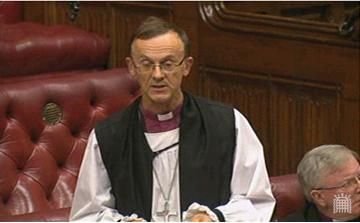
On 12th June, the House of Lords debated a motion from Baroness Hollins: ‘To ask Her Majesty’s Government what action they are taking to address the health inequalities found by the Confidential Inquiry into Premature Deaths of People with Learning Disabilities’. The Bishop of Carlisle, Rt Rev James Newcome, who is the lead CofE bishop for healthcare issues, spoke in the debate. He highlighted the need for greater monitoring of the causes of health inequalities for those with learning disabilities, better training for health professionals and improved advocacy and service design, especially to involve patients.

14.06.09 Bishop of Carlisle

The Lord Bishop of Carlisle: My Lords, in this debate we are asking Her Majesty’s Government to do three things. The first is to recognise the situation that currently exists, as we have heard, with regard to people with learning disabilities. It has been pointed out that the situation is one of considerable inequality. Continue reading “Bishop of Carlisle raises concerns about health inequalities for people with learning disabilities”