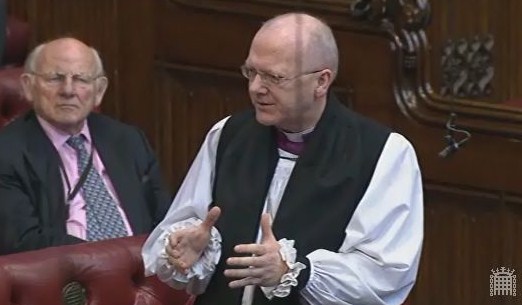
Bishop of Carlisle raises concerns about health inequalities for people with learning disabilities

“Even when all the other factors have been taken into account, the disparity in mortality between people with and without learning difficulties is alarming” – Bishop of Carlisle, 12/6/14

On 12th June, the House of Lords debated a motion from Baroness Hollins: ‘To ask Her Majesty’s Government what action they are taking to address the health inequalities found by the Confidential Inquiry into Premature Deaths of People with Learning Disabilities’. The Bishop of Carlisle, Rt Rev James Newcome, who is the lead CofE bishop for healthcare issues, spoke in the debate. He highlighted the need for greater monitoring of the causes of health inequalities for those with learning disabilities, better training for health professionals and improved advocacy and service design, especially to involve patients.

14.06.09 Bishop of Carlisle

The Lord Bishop of Carlisle: My Lords, in this debate we are asking Her Majesty’s Government to do three things. The first is to recognise the situation that currently exists, as we have heard, with regard to people with learning disabilities. It has been pointed out that the situation is one of considerable inequality. Continue reading “Bishop of Carlisle raises concerns about health inequalities for people with learning disabilities”

Bishop of Lichfield calls for greater support of vulnerable young people in preventing suicide

The Bishop of Lichfield spoke during Lord Eames’ debate on reducing the levels of suicide among young people in the United Kingdom. He focused his remarks on the relationship between low levels of self-worth amongst young people as a factor that contributes to suicidal thoughts. He also raised particular concerns about the risks of bullying or coercion that young people with disabilities face, specifically as debates about assisted suicide become more widespread, and the need to support children who are refugees or asylum seekers and particularly vulnerable due to a lack of adequate mental health care.

The Lord Bishop of Lichfield: My Lords, I, too, thank the noble and right reverend Lord, Lord Eames, for initiating this debate.

The Association for Young People’s Health recently published its key data on adolescence. At present, the statistics show that the levels of self-harm are relatively stable, although for such a sensitive topic there is likely to be low reporting. It is clear that girls are at least three times more likely to self-harm than boys; on the other hand, suicide is much more prevalent among young males, particularly those aged between 20 and 24. This coincides with the evidence from ChildLine. Numbers have fallen fractionally in more recent years but the report questions whether this will continue.

How this correlates with child well-being needs careful consideration. We all remember the United Nations report about the unhappiness of children in this country. ChildLine reports that the number of children contacting it about suicidal feelings has risen for the third year running, including a rise of 33% in the last year. Overall, child well-being in the UK, according to the United Nations, has improved from 21st out of 21 to 16th out of 29 countries. Economic reasons have been stated and there is much correlation with the commentary from the Association for Young People’s Health. Continue reading “Bishop of Lichfield calls for greater support of vulnerable young people in preventing suicide”

Votes – Children and Families Bill

On 9th and 17th December 2013, a number of bishops took part in votes to amend the Government’s Children and Families Bill, during the bill’s Report Stage. 

House of Lords Division Lobby

Continue reading “Votes – Children and Families Bill”