
On 9th December 2015 the House of Lords considered the Government’s Welfare Reform and Work Bill in its second day of Committee.
The Bishop of Durham, Rt Revd Paul Butler, spoke in support of a group of amendments to clause 4 of the Bill, concerned with Government reporting on the life chances of children. The amendments sought to require the Government to report on the situation of children in low-income households, not only workless households and educational attainment. The amendments were withdrawn after the debate.
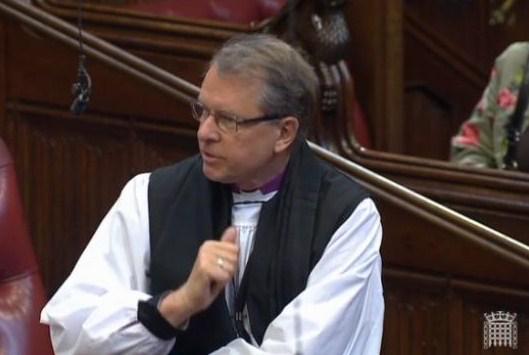 The Lord Bishop of Durham: My Lords, I will speak in support of Amendments 24, 25 and 26. I know that everyone in this House, and indeed in the other place, is committed to protecting those children in our society who are vulnerable to suffering the worst effects of poverty. Indeed, I know that there is a broad recognition across the House that some form of statutory reporting on the issues of child poverty and children’s life chances is an important tool in driving initiatives that will combat that poverty. The questions about what should be included in Clause 4 are questions of best practice, rather than questions of best intention. Continue reading “Welfare Reform Bill – Bishop of Durham supports amendments on child poverty”
 The Lord Bishop of Durham: My Lords, I support many of the principles underlying this Bill: the importance of personal, as well as collective, responsibility; the value of decent work, not just financially, but for human dignity; the role of the welfare system in encouraging positive behaviours; the recognition that poverty is not simply about lack of income; and the desire for fairness for those who receive from and contribute to the system, including the vast majority of us who do both at different points in our lives. None of these is completely new, but the Government’s approach to welfare reform has certainly reinvigorated the debate about poverty, helping to challenge implicit assumptions and some very tired thinking. Governments naturally want to distinguish themselves, but in seeking to introduce a fresh perspective on old problems, there is always a danger of going too far or of throwing out the good with the bad. That is my concern about some of the measures being discussed today.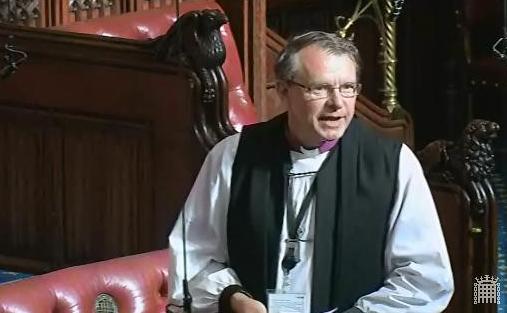
 The Church of England in Parliament
You must be logged in to post a comment.