Bishop of Peterborough calls on Government to support adoption of Living Wage

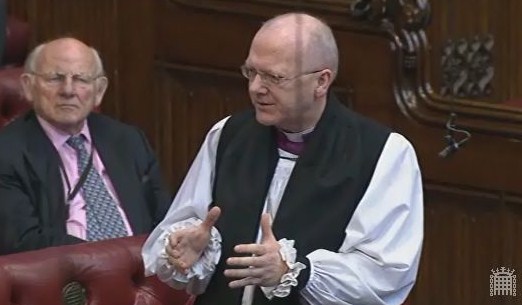
On 11th November 2014, Lord Haske asked Her Majesty’s Government what is their assessment of the report by the Resolution Foundation Low Pay Britain 2014.The Bishop of Peterborough, the Rt Revd Donald Allister, asked a supplementary question:
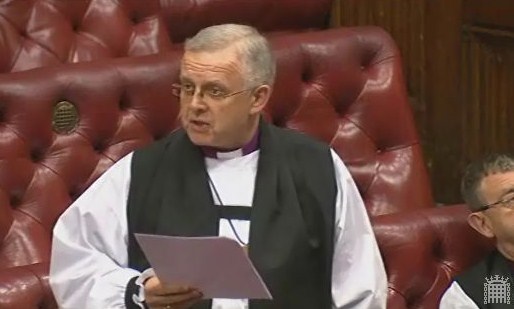
14.02 PeterboroughThe Lord Bishop of Peterborough: My Lords, now that the economy is picking up, will the Minister comment on the living wage and on whether the Government believe that the minimum wage really is enough?

Lord Ashton of Hyde: The right reverend Prelate is right to bring this subject up. The minimum wage is a minimum as a catch-all; the Government support people and businesses paying above that, if they can pay the living wage, but only when it is affordable and not at the expense of jobs. In BIS, the department I represent, we have recently increased the pay of the lowest-paid workers in the department so that everyone receives the living wage. We support that as long as it is not at the expense of jobs.

(via Parliament.uk)
Bishop of Norwich calls for stronger response to tackle growth of food bank use

“When we stigmatise the poor, the unemployed and the vulnerable, we have succumbed to blaming them for their position. However, although some people stigmatise welfare claimants, many others show enormous human and social solidarity by volunteering to help them.”

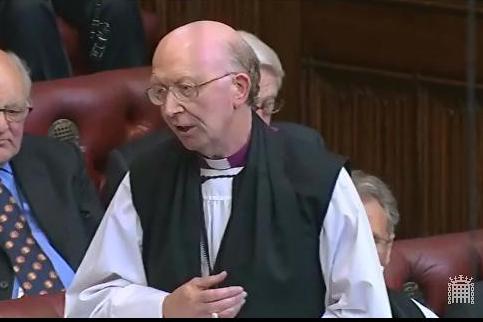
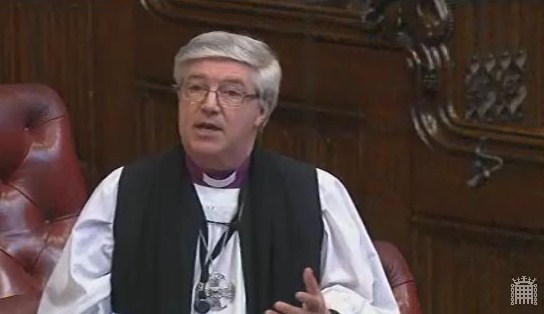
On 6th November 2014, Labour Peer the Rt Hon. the Lord Whitty led a take-note debate in the House of Lords on the cumulative effects of Government economic, public spending and regulatory policies on low income and vulnerable consumers. The Bishop of Norwich, the Rt Revd Graham James, spoke in the debate. He focused his remarks on the rise in the use of food banks across his diocese, and the need for a sustained response to help reduce the use of food banks, including investment in nutrition programmes and reducing the number of delays to welfare payments. He praised those who volunteer and support food banks and other charitable responses, and cautioned some of the language used to describe those who use food banks and other forms of support.

14.06.12 Bishop of NorwichThe Lord Bishop of Norwich: My Lords, I am grateful to the noble Lord, Lord Whitty, for securing this debate, which I enter in no partisan spirit but hope to contribute some reflections from local experience in Norwich of those on low incomes in our city.

It was more than five years ago that I was first approached to become patron of the Norwich food bank, a relatively early one to be established. Its work informs a good deal of what I want to say. The necessity for it was identified before the previous general election as a result of the recession. Suddenly, people who thought themselves reasonably secure were worried. Those who were already insecure became highly vulnerable. That was all very noticeable within our church communities on the housing estates in Norwich, especially in the areas of greatest social deprivation. Continue reading “Bishop of Norwich calls for stronger response to tackle growth of food bank use”

Bishop of Derby takes part in debate on slavery and its use in supply chains

“We live in a culture that is rightly concerned about safeguarding. We are concerned rightly about the safeguarding of children at the moment. We have to get up to speed with the safeguarding of vulnerable adults, many of whom are in exploited forced labour.”

On 30th October 2014, Baroness Kennedy of Cradley led a short debate in the House of Lords to ask Her Majesty’s Government what steps they are taking to combat slavery in supply chains nationally and internationally. The Bishop of Derby, the Rt Revd Alastair Redfern, a former member of the Joint Select Committee on the Draft Modern Slavery Bill, spoke in the debate. He argued that there is a deep underlying tension between economic activity and treatment of the individual, which the modern slave trade has exploited. He also asked the Minister a number of questions regarding the strengthing of reporting and best practice in supply chains.

Bishop of DerbyThe Lord Bishop of Derby: My Lords, I, too, thank the noble Baroness, Lady Kennedy, for securing this debate and for her excellent introduction that laid out the ground clearly. I want to make some remarks from my experience of working with victims, the police and other agencies within our national context. We have just heard from the noble Baroness, Lady Cox, about the sheer horror of the way in which human beings are being treated in our own country.

I begin by welcoming Karen Bradley’s recent announcement that there will be amendments to secure proper reporting and disclosure. The key will be the level of reporting and the size of the company. I also welcome the strong support from many leaders in our industries. On the Select Committee, the people who represented Primark and Tesco, for instance, were supportive of a framework to require proper reporting and accountability, which would help their business case and standing in the community. Continue reading “Bishop of Derby takes part in debate on slavery and its use in supply chains”

Bishop of St Albans calls for Living Wage to help improve youth employment

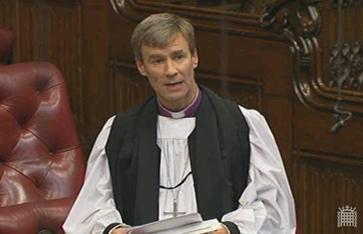
On 30th July 2014 Baroness Sherlock asks Her Majesty’s Government what action they are taking to reduce levels of youth unemployment following the recent closure of the youth employment contract incentive scheme. The Bishop of St Albans, the Rt Revd Alan Smith, asked a supplementary question:

Bishop of St AlbansThe Lord Bishop of St Albans: My Lords, a significant part of the problem is that there are some posts suitable for young people, but they are often in parts of the country where accommodation is prohibitively expensive or the cost of commuting simply precludes them from taking those jobs. In the light of that, have Her Majesty’s Government considered embracing the concept of the living wage for all people of working age?

Lord Freud: Obviously we have looked at the living wage. If the figure suggested for the living wage were to be adopted, we would have to consider the impact on unemployment and the particular impact on youngsters, who would be hit worst. The NIESR estimated that adopting the living wage as opposed to the minimum wage would knock 300,000 youngsters out of work.

(via Parliament.uk)

Bishop of Sheffield calls for development of Armed Forces credit union

On 29th July 2014, the Bishop of Sheffield, the Rt Revd Steven Croft, co-sponsored and spoke in support of an amendment to the Armed Forces (Service Complaints and Financial Assistance) Bill. The amendment, tabled by Lord Kennedy of Southwark, sought to establish a credit union specifically for members of the armed forces and their families. He noted the Church’s own work in setting up the Churches’ Mutual Credit Union, and highlighted the well-developed system of credit unions for service personnel in the United States. He called on the Minister to give an update on the progress made towards the creation of such an institution. Following the debate, Lord Kennedy withdrew his amendment, but indicated that he may bring it back at the Third Reading of the Bill.

14.03.27 Bishop of SheffieldThe Lord Bishop of Sheffield: My Lords, from these Benches I welcome the amendment in the name of the noble Lord, Lord Kennedy, and give it our full support. The amendment gives strong support to the setting up of a credit union for the Armed Forces and their families in a similar way in which the church is setting up its own credit union—the Churches’ Mutual Credit Union. The Armed Forces, like the clergy and other groups, need a source of affordable credit for short and long-term needs. As a society we have duty of support and care to our Armed Forces. Recent research in a number of strands shows clearly that the ability to obtain credit at reasonable rates of interest is a vital element in building resilience to poverty and debt across our whole society. The inability to obtain such credit in times of need raises the possibility of falling further into debt, of food and fuel poverty and of a downward spiral. Continue reading “Bishop of Sheffield calls for development of Armed Forces credit union”

Bishop of Truro takes part in debate on Deregulation Bill

“In general, the question of whether or to what extent a particular type of economic activity is a legitimate driver of economic growth is a moral one that should not just be subsumed under a catch-all principle that regulators should promote economic growth. The prevention of damaging or unjust economic activity, surely, is equally germane to their mission.” – The Bishop of Truro, 07/07/14

On 7th July 2014, the Bishop of Truro, the Rt Revd Tim Thornton, took part in the Second Reading debate on the Government’s Deregulation Bill, led by Lord Wallace of Saltaire. In his speech he welcomed many of the measures, but raised concerns about two areas covered by the Bill – the work of employment tribunals and provisions that would require regulators to have regard for promoting economic growth.

Bishop of Truro 20.6.13The Lord Bishop of Truro: My Lords, I think that I need to begin with an apology. I am grateful to the noble Lord, Lord Stevenson, for drawing our attention to matters relating to dog collars. I was not going to refer to them but I will make sure that one of my colleagues does when we get to Committee.

I have no more interest than any other Member of this House in regulation for its own sake. In fact the New Testament, on the principle that,

“where the Spirit of the Lord is, there is freedom”,

specifically warns people against submitting to unnecessary regulations in matters of religion. This is something on which I will comment when we get to York later this week for the meeting of the General Synod. Continue reading “Bishop of Truro takes part in debate on Deregulation Bill”

Bishop of Oxford calls for more intentional support for the rural economy and rural schools

“I very much hope that the Department for Education will not resort to a philosophy of “the weakest to the wall” with these small schools because small rural schools are so often worth their weight in gold, as the heart and hub of our rural communities. The Church of England will publish a report very soon on how to support our rural schools effectively” – Bishop of Oxford, 3/7/14.

On 3rd July, the Bishop of Oxford, the Rt Revd John Pritchard, took part in a debate on the rural economy, lead by the Earl of Shrewsbury. The Bishop spoke about the need for intentional support for the many micro-businesses that make up the rural economy, and also for greater personal investment in rural schools, particularly through an increase in the number of foundation govenors supporting rural schools.

Bishop of OxfordThe Lord Bishop of Oxford: My Lords, I, too, am grateful to the noble Earl, Lord Shrewsbury, for giving us this opportunity to debate this matter. We all approach this important subject from different angles. I want to emphasise one that is economic and the other that is personal in the sense of our own personal investment and commitment. I serve a diocese which is largely rural although it has large centres of population such as Oxford, Reading, Milton Keynes and Slough. However, the rural expanses of Oxfordshire, Buckinghamshire and Berkshire are considerable, with 815 churches and 650 clergy, all of whom are strongly connected to the all-round flourishing of our diverse communities. Continue reading “Bishop of Oxford calls for more intentional support for the rural economy and rural schools”

Archbishop of York: ‘working poor’ “a stain on the conscience of this country”

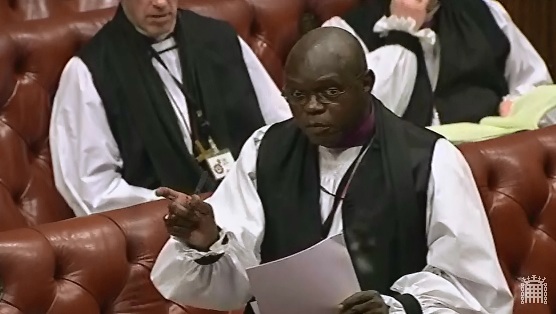
On 25th June 2014, Labour Peer Baroness Thornton asked Her Majesty’s Government what measures they are taking to address any fall in wages of women in the United Kingdom. The Archbishop of York, the Most Revd and Rt Hon John Sentamu,asked a supplementary question:

Archbishop of YorkThe Archbishop of York: My Lords, the Living Wage Commission published its final report yesterday. It makes it clear that people in the care industry are paid very poorly—and the majority happen to be women. Will the Government take a reality check and recognise that people in the care professions are paid poorly? Will they make sure that, in terms of procurement, local authorities encourage those in the care profession to pay at least the living wage, which we wanted to be voluntary and not compulsory? If that does not happen, concern about women being paid poorly will continue. It is a stain on the conscience of this country that people work hard and are still in poverty.

Baroness Northover: I read the report of the most reverend Primate’s commission with enormous interest. I note that he has just said that he is looking for a voluntary approach rather than regulation, but he challenges responsible employers to pay a fair wage. He is right to identify the difference in pay between men and women.

(via Parliament.uk)

Bishop of St Albans asks Government to consider link between under-occupancy charge and rent arrears in housing associations

On 24th June 2014, Baroness Quin asked Her Majesty’s Government when they expect to publish their interim review on the under-occupancy charge.The Bishop of St Albans, the Rt Revd Alan Smith, asked a supplementary question:

Bishop of St AlbansThe Lord Bishop of St Albans: My Lords, the Ipsos MORI report, undertaken by the National Housing Federation in February this year looked at 183 housing associations. It found that two-thirds of tenants affected by the underoccupancy charge were in rent arrears and 38% indicated that they were in debt. That is the equivalent of 72,000 tenants in housing associations in debt in England alone, which seems to be allied in some way to the underoccupancy charge. What assessment have Her Majesty’s Government made of the impact on housing associations of rent arrears because of the underoccupancy charge?

Lord Freud: We have a general look at the level of arrears through the Homes and Communities Agency, whose statistics show that arrears have fallen—not risen—for the past two quarters in a row. The average rent collection rate for associations remains at 99%, a very high figure, which is very much at variance with some of the stories that we hear and the data that the right reverend Prelate referred to.

(via Parliament.uk)

Second Church Estates Commissioner urges Government to resist liberalisation of Sunday trading rules

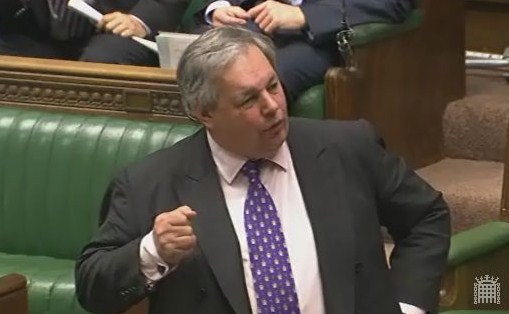
On 19th June 2014, the Second Church Estates Commissioners, the Rt Hon Sir Tony Baldry MP, spoke during the weekly debate on the Business of the House. In his brief remarks, he called on the Government to resist amendments to the Deregulation Bill (debated 23rd June) that would deregulate Sunday trading. The Leader of the House of Commons gave assurances that the Government does not support a change in the Sunday trading rules.

14.01 CCQ BaldrySir Tony Baldry (Banbury): Next Monday, the House will debate the Report stage and Third Reading of the Deregulation Bill. My right hon. Friend will have noted that our hon. Friends the Members for Shipley (Philip Davies) and for Bury North (Mr Nuttall) have tabled a number of new clauses which, if passed, would completely deregulate Sunday trading. I must tell my right hon. Friend that any such move by the House would be seen by the Church of England—and, I am sure, by many other faith groups—as an act of bad faith on the part of Parliament. The present Sunday trading arrangements arose from a series of compromises that were agreed in the mid-1990s to strike a balance between keeping Sunday special and enabling more stores and shops to open on Sundays. I should welcome my right hon. Friend’s reassurance that if you, Mr Speaker, select any of the new clauses for debate, they will be resisted by the Government.

Continue reading “Second Church Estates Commissioner urges Government to resist liberalisation of Sunday trading rules”