Bishop of Oxford calls for more intentional support for the rural economy and rural schools

“I very much hope that the Department for Education will not resort to a philosophy of “the weakest to the wall” with these small schools because small rural schools are so often worth their weight in gold, as the heart and hub of our rural communities. The Church of England will publish a report very soon on how to support our rural schools effectively” – Bishop of Oxford, 3/7/14.

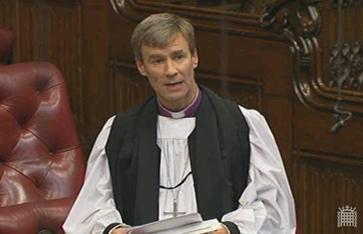
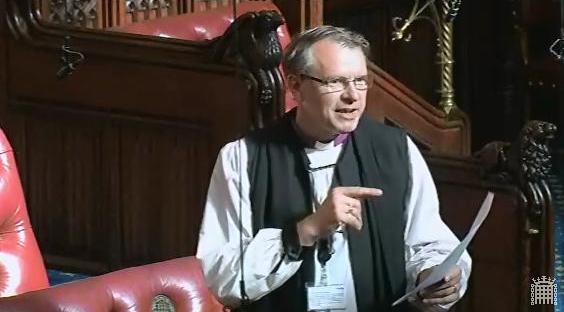
On 3rd July, the Bishop of Oxford, the Rt Revd John Pritchard, took part in a debate on the rural economy, lead by the Earl of Shrewsbury. The Bishop spoke about the need for intentional support for the many micro-businesses that make up the rural economy, and also for greater personal investment in rural schools, particularly through an increase in the number of foundation govenors supporting rural schools.

Bishop of OxfordThe Lord Bishop of Oxford: My Lords, I, too, am grateful to the noble Earl, Lord Shrewsbury, for giving us this opportunity to debate this matter. We all approach this important subject from different angles. I want to emphasise one that is economic and the other that is personal in the sense of our own personal investment and commitment. I serve a diocese which is largely rural although it has large centres of population such as Oxford, Reading, Milton Keynes and Slough. However, the rural expanses of Oxfordshire, Buckinghamshire and Berkshire are considerable, with 815 churches and 650 clergy, all of whom are strongly connected to the all-round flourishing of our diverse communities. Continue reading “Bishop of Oxford calls for more intentional support for the rural economy and rural schools”

Archbishop of York: ‘working poor’ “a stain on the conscience of this country”

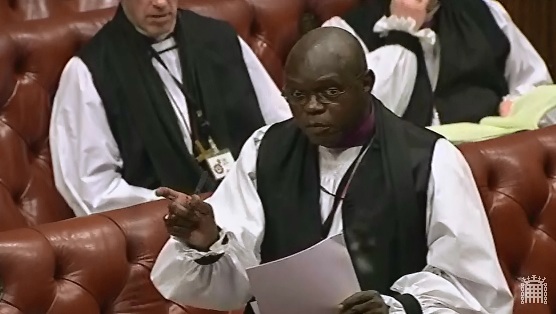
On 25th June 2014, Labour Peer Baroness Thornton asked Her Majesty’s Government what measures they are taking to address any fall in wages of women in the United Kingdom. The Archbishop of York, the Most Revd and Rt Hon John Sentamu,asked a supplementary question:

Archbishop of YorkThe Archbishop of York: My Lords, the Living Wage Commission published its final report yesterday. It makes it clear that people in the care industry are paid very poorly—and the majority happen to be women. Will the Government take a reality check and recognise that people in the care professions are paid poorly? Will they make sure that, in terms of procurement, local authorities encourage those in the care profession to pay at least the living wage, which we wanted to be voluntary and not compulsory? If that does not happen, concern about women being paid poorly will continue. It is a stain on the conscience of this country that people work hard and are still in poverty.

Baroness Northover: I read the report of the most reverend Primate’s commission with enormous interest. I note that he has just said that he is looking for a voluntary approach rather than regulation, but he challenges responsible employers to pay a fair wage. He is right to identify the difference in pay between men and women.

(via Parliament.uk)

Bishop of St Albans asks Government to consider link between under-occupancy charge and rent arrears in housing associations

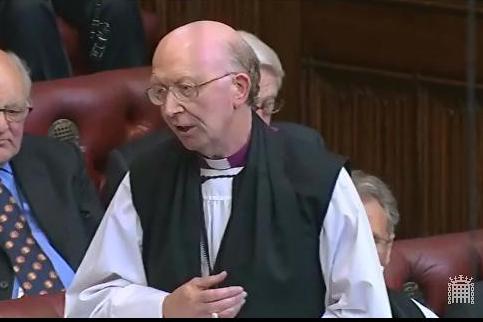
On 24th June 2014, Baroness Quin asked Her Majesty’s Government when they expect to publish their interim review on the under-occupancy charge.The Bishop of St Albans, the Rt Revd Alan Smith, asked a supplementary question:

Bishop of St AlbansThe Lord Bishop of St Albans: My Lords, the Ipsos MORI report, undertaken by the National Housing Federation in February this year looked at 183 housing associations. It found that two-thirds of tenants affected by the underoccupancy charge were in rent arrears and 38% indicated that they were in debt. That is the equivalent of 72,000 tenants in housing associations in debt in England alone, which seems to be allied in some way to the underoccupancy charge. What assessment have Her Majesty’s Government made of the impact on housing associations of rent arrears because of the underoccupancy charge?

Lord Freud: We have a general look at the level of arrears through the Homes and Communities Agency, whose statistics show that arrears have fallen—not risen—for the past two quarters in a row. The average rent collection rate for associations remains at 99%, a very high figure, which is very much at variance with some of the stories that we hear and the data that the right reverend Prelate referred to.

(via Parliament.uk)

Second Church Estates Commissioner urges Government to resist liberalisation of Sunday trading rules

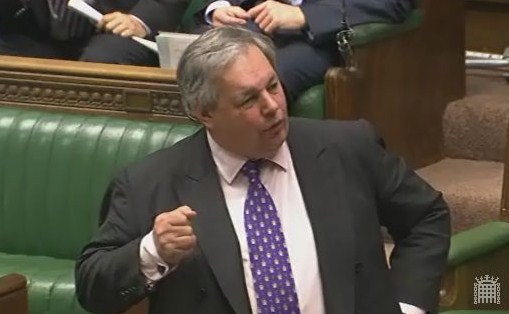
On 19th June 2014, the Second Church Estates Commissioners, the Rt Hon Sir Tony Baldry MP, spoke during the weekly debate on the Business of the House. In his brief remarks, he called on the Government to resist amendments to the Deregulation Bill (debated 23rd June) that would deregulate Sunday trading. The Leader of the House of Commons gave assurances that the Government does not support a change in the Sunday trading rules.

14.01 CCQ BaldrySir Tony Baldry (Banbury): Next Monday, the House will debate the Report stage and Third Reading of the Deregulation Bill. My right hon. Friend will have noted that our hon. Friends the Members for Shipley (Philip Davies) and for Bury North (Mr Nuttall) have tabled a number of new clauses which, if passed, would completely deregulate Sunday trading. I must tell my right hon. Friend that any such move by the House would be seen by the Church of England—and, I am sure, by many other faith groups—as an act of bad faith on the part of Parliament. The present Sunday trading arrangements arose from a series of compromises that were agreed in the mid-1990s to strike a balance between keeping Sunday special and enabling more stores and shops to open on Sundays. I should welcome my right hon. Friend’s reassurance that if you, Mr Speaker, select any of the new clauses for debate, they will be resisted by the Government.

Continue reading “Second Church Estates Commissioner urges Government to resist liberalisation of Sunday trading rules”

Bishop of Durham gives maiden speech in House of Lords

“Young people…have been told that their value and contribution to the world is in work and their economic contribution. They have been told a lie…We have to help our young people to understand their true value as human beings first and foremost—but yes, we have to help them to find good, meaningful work” – Bishop of Durham, 10/6/14

14.06.10 Bishop of Durham 4

On 10th June 2014 the Bishop of Durham, Rt Rev Paul Butler, gave his maiden speech to the House of Lords, during the debate on the Queen’s Speech. The Bishop spoke about the attributes and needs of the Durham diocese, his experience of the global church, and his concern for young people’s social and economic welfare. He voiced his support for the Living Wage and plans within the Queen’s Speech for laws to tackle the emotional abuse of children.

This was the seventh contribution to the debate on the Queen’s Speech from the Bishops’ Benches. You can also watch a video of the Bishop delivering the speech on parliamentlive.tv


The Lord Bishop of Durham (Maiden Speech): My Lords, I begin by thanking your Lordships for the way in which I have been welcomed and supported as I have entered this noble House. That support has been full of wisdom, including guiding this Bishop as to how to kneel correctly during Prayers, for which I was extremely grateful. Continue reading “Bishop of Durham gives maiden speech in House of Lords”

Bishop of St Albans receives answers to written questions on benefits, electricity and housing

On 12th May 2014, the Rt Revd Alan Smith, Bishop of St Albans, received answers to three written questions on benefits, electricity and housing.

Benefits

14.03 Bishop of St AlbansThe Lord Bishop of St Albans: To ask Her Majesty’s Government what assessment they have made of the financial impact on people on low incomes of uprating most cash benefits and tax credits by one per cent from April 2013 rather than in line with inflation.

The Parliamentary Under-Secretary of State, Department for Work and Pensions (Lord Freud): For 2013/14, the main rates of working-age benefits, statutory payments and tax credits were up-rated by one per cent in the Social Security Benefits Up-rating Order 2013. The Welfare Benefits Up-rating Act 2013 provided for the one per cent increase to apply for 2014/15 and 2015/16. Both of these were accompanied by Impact Assessments.

As part of his ongoing public sector equality duty under the Equality Act 2010 to monitor impacts on “protected groups”, the Secretary of State continues to monitor the impacts of the Welfare Benefits Up-rating Act 2013 in light of any changes to the underlying rate of inflation. The underlying rate of inflation for increases in 2014/15 is similar to that forecast by the Office for Budget Responsibility and used in the Impact Assessment. It is therefore likely that the impacts on affected households will be broadly similar to those detailed in the Impact Assessment.

(via Parliament.uk)

Continue reading “Bishop of St Albans receives answers to written questions on benefits, electricity and housing”

Apprenticeships – Written Questions

On 6th May 2014, the Rt Revd Alan Smith, Bishop of St Albans, recieved answers to two written questions on the subject of apprenticeships.

14.03 Bishop of St AlbansThe Lord Bishop of St Albans: To ask Her Majesty’s Government what percentage of apprentices enter into employment with the company to which they were apprenticed after their apprenticeship scheme has finished.

Lord Ahmad of Wimbledon (Con): We publish information on learning outcomes on the Further Education Choices website to help better inform learner choices. This website presents information on learner outcomes with any employer as well as other destinations:

http://fechoices.skillsfundingagency.bis.gov.uk

Continue reading “Apprenticeships – Written Questions”

Living Wage Call by the Bishop of Leicester

In the House of Lords on 1st April 2014 Lord Young of Norwood Green asked Her Majesty’s Government ‘what plans they have to mark the 15-year anniversary of the minimum wage, which took effect on 1 April 1999.’ The Bishop of Leicester asked a supplementary question: 

14.04.01 Bishop of Leicester

The Lord Bishop of Leicester: My Lords, in view of what the Minister has said about there being much work to do on the living wage, does he agree that a good way to mark this anniversary would be to commission an independent inquiry into the actual effects of raising the minimum wage to the living wage for everyone? Continue reading “Living Wage Call by the Bishop of Leicester”

Shrinking the economic gap between London and the regions: Budget speech by Bishop of Sheffield

“If we do nothing, we will see the gap between London and the regions continue to widen to the detriment of the whole country. I urge the Government and this House to address this problem with imagination, courage and vigour” – Bishop of Sheffield

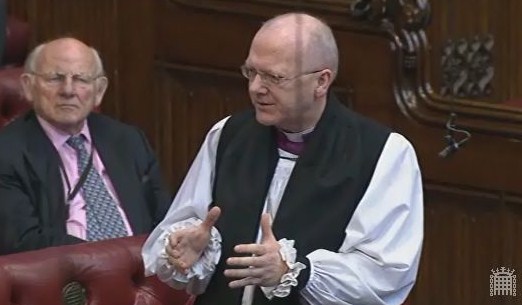
On 27th March Peers debated the Chancellor’s 2014 Budget statement. The Bishop of Sheffield spoke of the need to rebalance the economy so that the proceeds of renewed economic growth could be shared across the regions. He suggested this could be the task of a cross-party parliamentary commission.

14.03.27 Bishop of SheffieldThe Lord Bishop of Sheffield: My Lords, the prophet Jeremiah wrote a short but remarkable letter to his contemporaries long ago who had been sent into exile in Babylon. The letter has shaped Jewish and Christian thought on how communities of faith should engage with the wider society down all the generations since. The prophet’s advice is to,

“seek the welfare of the city where I have sent you … for in its welfare you will find your welfare”.

Continue reading “Shrinking the economic gap between London and the regions: Budget speech by Bishop of Sheffield”

Freedom and Responsibility: Budget speech by the Bishop of Chester

On 27th March Peers debated the Chancellor’s 2014 Budget statement. The Bishop of Chester, Rt Rev Peter Forster, cautioned that if society were to experience renewed growth and prosperity, it should guard against recreating the problems of the past 30 years. He argued for an emphasis on strengthened social institutions, including families, continued commitment to overseas aid, and improved financial education.

14.03 Bishop of ChesterThe Lord Bishop of Chester:  My Lords, the reason that the Bishops sit on the government side of the Chamber, I am told, is the recognition that the task of government is so difficult that the Government need all the help available to them. Managing the economy in recent years has been an enormously difficult task and we can only express relief and, indeed, gratitude that things seem to be moving on to a more normal plane despite all the challenges ahead, about which the Chancellor himself is fairly candid. Continue reading “Freedom and Responsibility: Budget speech by the Bishop of Chester”