Budget Debate: Bishop of Worcester highlights need for increased spending on overseas aid

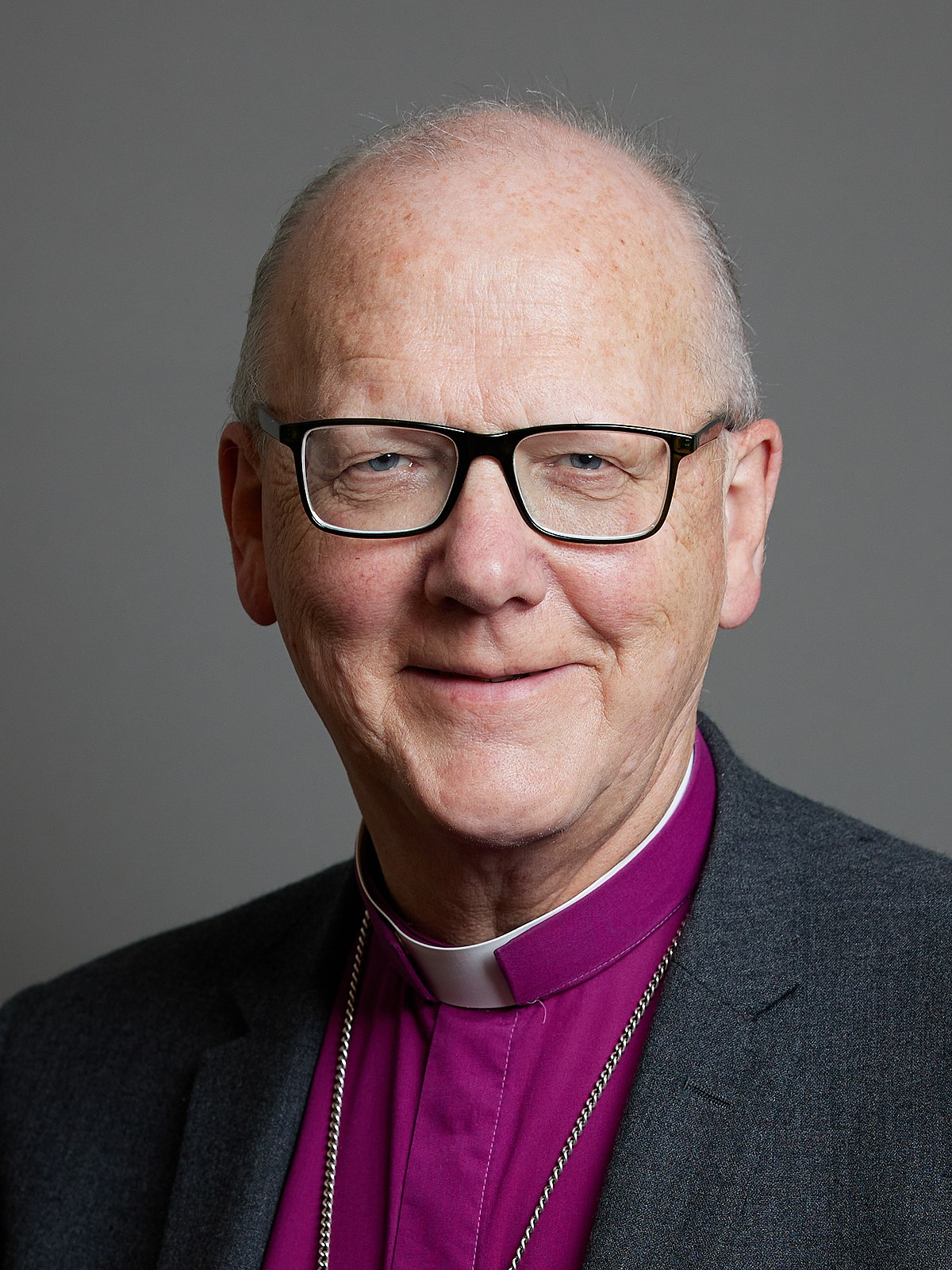
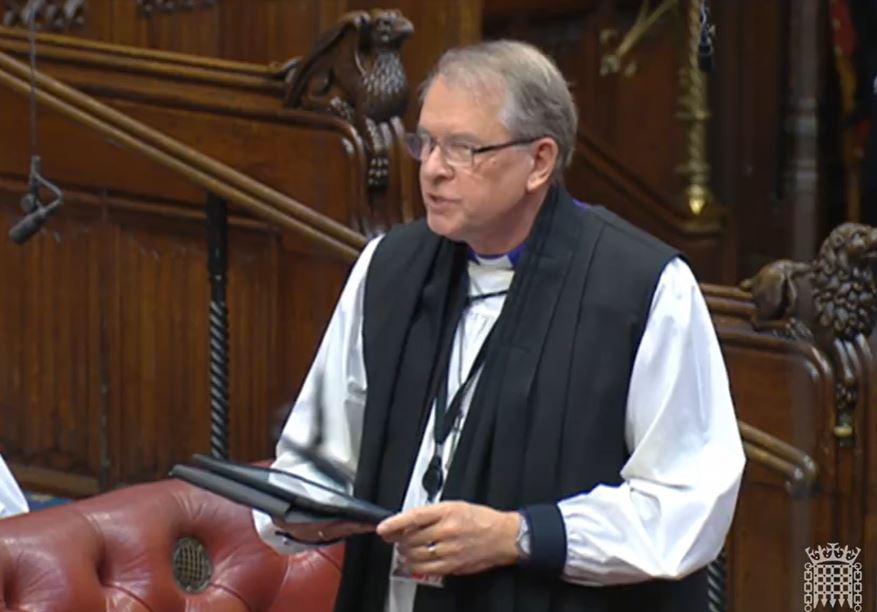
On 18th March 2024, the Bishop of Worcester spoke in a debate on the spring budget, paying tribute to aspects of the budget such as the continuation of the household support fund and the reduction in National Insurance, and expressing regret that the international aid budget had not been increased:

The Lord Bishop of Worcester: My Lords, I congratulate the noble Lord, Lord Kempsell, on an excellent maiden speech, which was thoughtful and brief—and, as we all know, concision is next to godliness.

I have learned a lot in this debate, including the operation of the VAT regime on nuts—probably more than I would have wanted to have known. However, I will not concentrate my remarks on that.

It is clear that the Chancellor had a difficult task in producing the Budget, as has been observed by one of his predecessors, the noble Lord, Lord Lamont, who knows better than anyone. I want to pay tribute to the many good things in the Budget: the continuation of the household support fund, the reform of non-dom status, the increase in public services spending by 1% above inflation, and the welcome reduction in national insurance, to name but a few. However, I was very disappointed by one lacuna, to which I want to address my remarks now. That is, that the aid budget was not increased.

Continue reading “Budget Debate: Bishop of Worcester highlights need for increased spending on overseas aid”

Bishop of Norwich asks about development assistance rates

The Bishop of Norwich received the following written answer on 19th February 2024:

The Lord Bishop of Norwich asked His Majesty’s Government, following the Autumn Statement 2023, what assessment they have made of the suitability of the economic climate to enable them to return Official Development Assistance to 0.7 per cent of gross national income.

Baroness Vere of Norbiton (Con, Treasury): The government remains committed to returning to a target of spending 0.7% of GNI on ODA when, on a sustainable basis, the government is not borrowing for day-to-day spending and underlying debt is falling.

Hansard

Bishop of Bristol speaks in debate on workers and employment

The Bishop of Bristol spoke in a debate on a report from the Economic Affairs Committee on workers on 8th February 2024, emphasising the value of meaningful work and drawing attention to the findings of the Archbishops Commission on Families & Households:

The Lord Bishop of Bristol: My Lords, it is a pleasure to speak in this important debate about the nature of the UK workforce in a challenging economic climate. I pay tribute to the noble Lord, Lord Bridges, as have others, and all the members of the Economic Affairs Committee who worked to produce this report and have stimulated our thinking today.

On a personal note, having recently found it hard to recruit lay staff to my office in Bristol, I am very grateful for being informed by the report we are debating today. At the heart of my diocese, you can find the New Room, the chapel where John Wesley led the first Methodist congregation from 1739. As part of his pioneering ministry, he offered “Rules of a Helper” to ordained Ministers, the first of which is:

“Never be unemployed a moment, never be triflingly employed, never while away time”.

While the word “unemployed” might have pricked the ears of your Lordships in the context of this debate, the final clause may be the significant one here. In effect, we are reminded about the importance of using our time on earth well. There is work to be done, good news to share and disciples to be made. Wesley was on to something. There is great purpose and fulfilment to be found in using our time well, maximising our skills and ensuring we fulfil our potential. It enriches our lives and the lives of our community, and that is central to my remarks today.

Continue reading “Bishop of Bristol speaks in debate on workers and employment”

Bishop of St Albans asks about plans to manage grocery inflation levels

The Bishop of St Albans received the following written answer on 23rd January 2024:

The Lord Bishop of St Albans asked His Majesty’s Government what plans they have to manage grocery inflation in light of disruption to the Red Sea and the potential delay in shipping times.

Lord Douglas-Miller (Con): The UK has a highly resilient food supply chain, which is well equipped to deal with situations with the potential to cause disruption.

Continue reading “Bishop of St Albans asks about plans to manage grocery inflation levels”

Bishop of Manchester responds to Chancellor’s Autumn Statement, raising issues in mental healthcare funding and the ongoing cost of living crisis

The Bishop of Manchester spoke in a debate on the Chancellor’s Autumn Statement on 29th November 2023, welcoming the uprating of benefits and rise in the national living wage and calling for further commitment to funding for mental healthcare, and for an independent body to set the rate of benefits to ensure the cost of living are met:

The Lord Bishop of Manchester: My Lords, that felt more like a speech about a future Autumn Statement from a Labour Government than about the current one before us.

I too welcome the Minister to her new role and look forward to hearing from her often in this House. However, I suspect that, even if you are a Treasury Minister, every Autumn Statement feels like a missed opportunity. There are always things that each one of us would have liked to have seen given a higher priority and areas of spend to which we would have wanted greater resources allocated. There may also be things on which we think too much money is being spent, although they may be a little less common.

I begin by being grateful for a number of items announced this time. I am not sure that I can sustain that congratulatory perspective all the way through my remarks—your Lordships know me too well to expect that—but I will at least start in a positive direction. The uprating of working-age benefits by 6.7% and the 9.8% increase in the national living wage will go some way to stemming or slowing the growth and deepening of poverty among households who are striving and struggling with low-paid and insecure employment. My belief is that the money made available to our lowest-income households should not, however, be subject to annual political whim. More than a triple lock for pensions, we need an independent mechanism to ensure that benefits always cover the basic essentials of living.

Continue reading “Bishop of Manchester responds to Chancellor’s Autumn Statement, raising issues in mental healthcare funding and the ongoing cost of living crisis”

King’s Speech Debate: Bishop of Durham speaks on poverty and the economy

On 13th November 2023, the Bishop of Durham spoke in the King’s Speech debate on the issue of poverty and the UK economy:

The Lord Bishop of Durham: I look forward to the maiden speeches of the noble Lord, Lord Gascoigne, and my right reverend friend the Bishop of Norwich. The gracious Speech expressed the Government’s intention to make difficult long-term decisions to build a better future for the country. I confess that I am struggling to see much evidence of that plan. To think truly long-term about our country’s future, it is vital that children and families and the environment are at the heart of every policy, particularly from the Treasury. Without prioritising investing in children, what hope is there of moulding citizens who contribute positively to society and the economic growth that this Government desire? So I welcome the Government’s plan to increase the number of those taking high-quality apprenticeships, allowing young people to pursue their varied skills, but to ensure the educational success of all children we need to prioritise their well-being inside and outside the school gates. Without this support, how can we expect them to thrive?

The Joseph Rowntree Foundation’s recent report Destitution in the UK 2023 revealed that around 1 million children have experienced destitution in the past year—I repeat: 1 million children have experienced not simply poverty, but destitution. This number is not inevitable. It is preventable.

Continue reading “King’s Speech Debate: Bishop of Durham speaks on poverty and the economy”

Bishop of Sheffield asks about national income rates

The Bishop of Sheffield received the following written answer on 18th September 2023:

The Lord Bishop of Sheffield asked His Majesty’s Government, further to the answer by Baroness Penn on 6 July (HL Deb col 1304) giving the relative gross domestic product (GDP) per head for Wales and the UK, what is the relative GDP per head for each region of England.

Continue reading “Bishop of Sheffield asks about national income rates”

Financial Services and Markets Bill: Bishop of St Albans speaks on cryptocurrency, access to cash, credit unions, and net zero

The House of Lords debated the Financial Services and Markets Bill in its second reading on 10th January 2022. The Bishop of St Albans spoke in the debate concerning issues of access and regulation:

The Lord Bishop of St Albans: My Lords, theologians sometimes discuss the personal and social ethics in the teaching of Christ under the three headings of money, sex and power, those three areas which can be the most extraordinary gift and blessing when used rightly and for the common good but which, when they are an end in themselves, can become extraordinarily disruptive. Of these three areas, Christ had most to say about money, as its use reveals our values as individuals and as a society, often in a very stark way. A close reading of this Bill reveals a set of cultural assumptions and values about what is considered important and valuable. There are four areas that I want to highlight and which we need to consider if a growing and vibrant financial sector will work for the common good.

First, on crypto asset regulation, as others have said, we need to act fast both to protect our citizens and so that we do not fall behind the rest of the world. The problem at the moment is that the almost complete lack of regulation means that, for many people, crypto- currencies are just another form of gambling. The recent collapse of FTX has demonstrated the volatility of this market and its vulnerability to fraud. Some have made a fortune, while others have lost their life savings and will now be looking to the state to provide for them. Just as we need a sensible and balanced approach to the regulation of online gambling, so we need sensible, balanced regulation of crypto- currencies. The provision in this Bill to ensure that crypto is treated as a regulated activity and giving the FCA and the PSR the power and, as others have noted, the resources to do their work and to protect customers, is welcome.

Continue reading “Financial Services and Markets Bill: Bishop of St Albans speaks on cryptocurrency, access to cash, credit unions, and net zero”

Bishop of Gloucester responds to Chancellor’s Autumn Statement

The House of Lords debated the Chancellor’s Autumn Statement on 29th November 2022

The Lord Bishop of Gloucester: My Lords, growth is good and necessary, and it is clear that money does not grow on those proverbial trees. We find ourselves in extremely challenging times, and it seems to me that some of the measures that are set out in the Autumn Statement are prudent and necessary to rebalance the budget. I thank the Government for their desire to focus on supporting the poorest households, which is right and just, including their decision to increase benefits in line with inflation. Yet I have a number of concerns. I want to use my time to focus on just two key issues: first, food and feeding people, and, secondly, the criminal justice system. I declare an interest both as a trustee of Feeding Britain and as Anglican Bishop for prisons in England and Wales.

Continue reading “Bishop of Gloucester responds to Chancellor’s Autumn Statement”

Bishop of Southwark asks about reductions in manufacturing output in the UK

The Bishop of Southwark received the following written answer on 29th November 2022:

The Lord Bishop of Southwark asked His Majesty’s Government what assessment they have made of the reduction of 2.3 per cent in manufacturing output for the three months to September 2022 compared to the previous three months; and the impact of this reduction on economic activity.

Lord Callanan (Con): Russia’s invasion of Ukraine, the rise in global energy prices and supply chain issues have strained all corners of the UK economy including manufacturing.

Continue reading “Bishop of Southwark asks about reductions in manufacturing output in the UK”