Press release from the Church of England website:
Responding today (22nd November 2017) to the Chancellor’s Autumn Budget Statement, the Bishop of Birmingham, Rt. Revd David Urquhart, Convenor of the Lords Spiritual, said:
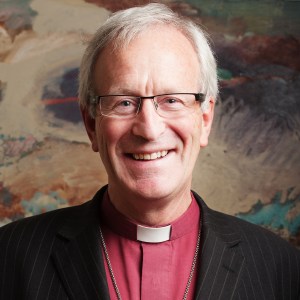 “The Chancellor’s Budget has gone some way to deal with the immediate problems facing our economy, housing and NHS, but it could have gone much further to help the many at the sharp end struggling to get by.
“Across the country churches support and are in touch with those who experience poverty or financial difficulty as a result of low pay, illness, or debt. The Budget statement provided an opportunity to make a difference to the lives of the most disadvantaged at a time when the cost of living is rising. The country faces substantial financial challenges and the growth forecast downgrades are worrying. But whilst the Chancellor has limited room for manoeuvre, there is more that could have been done to alleviate the situation of those who are struggling to manage. Deficit reduction is important, but should be achieved in ways that promote fairness, generosity, and sustainability. Bishops frequently raise these issues in the House of Lords and in meetings with ministers, and will continue to do so. Continue reading “Autumn Budget 2017 – response from Bishop of Birmingham”

 The Lord Bishop of Portsmouth: My Lords, my first duty today is one of great joy: to welcome on behalf of this Bench, and I am sure the whole House, the right reverend Prelate the Bishop of Lincoln, and to congratulate him on a fine maiden contribution. Its quality was no surprise to me. He is remembered with great respect in the Diocese of Portsmouth, which I now serve and where my colleague and friend was parish priest and archdeacon. I know that his erstwhile congregation in Petersfield was delighted that he was able to visit them last year.
  Lord Bishop of Lincoln (Maiden Speech): My Lords, I thank those who have made me so welcome to your Lordships’ House, not least those who hail from Lincolnshire, including several proud doorkeepers who either live in the county or have served there in the armed services. We share a love for our historic county, the beauty of landscape and building, not least Lincoln Cathedral, about which noble Lords may have heard from the noble lord, Lord Cormack; the pleasure of its food—I am a bigger man now than I was when I went there—and, most importantly, the rugged, independent-mindedness of its people. I also thank those who have said warm words of encouragement in this debate.
  On 5th March the Lord Privy Seal, Baroness Evans of Bowes Park, made a statement on the UK’s future economic partnership with the European Union. The Bishop of Leeds, the Rt Revd Nick Baines, responded with a concern about the language used:
 h February 2018, the Minister for Business, Energy and Industrial Strategy, Lord Henley
  On the 18 December 2017 Baroness Tyler of Enfield led a debate on the report of the Select Committee on Financial Exclusion – Tackling Financial Exclusion: A country that works for everyone? (
 On 14th December 2017 the Bishop of St Albans, Rt Revd Alan Smith, received a written answer to a question on credit:
 The Lord Bishop of Portsmouth: My Lords, one of the duties in which I take particular pleasure is chairing the governors at Ripon College, Cuddesdon, just outside Oxford, a theological college at which men and women are prepared for ministry. It is known by those associated with it more colloquially as a vicar factory. Notices around the college remind the residents that, after night prayer or Compline, they are expected to abide by what is known as the great silence. It is not, I suspect, adhered to with the same severity as in years past. Indeed, one has a sense that the silence masks all kinds of feverish activity, all of it associated with theology, of course.
 The Lord Bishop of St Albans: My Lords, I am deeply concerned—as I know are many other Members of this Chamber—about rising levels of household debt in this country. Households in the UK are taking on far more debt than they used to and overall are taking on more debt than they bring home in income. While the ratio of household debt to income has not yet eclipsed the 160% peak hit in early 2008, it currently hovers around 140%, a dramatic shift from the ratio of 95% in 1997.

You must be logged in to post a comment.