On 8th December 2017 the Archbishop of Canterbury, Most Revd and Rt Hon Justin Welby, led a debate in the House of Lords, ‘That the House takes note of the role of education in building a flourishing and skilled society.’ The Archbishops’ opening and closing speeches are below in full:
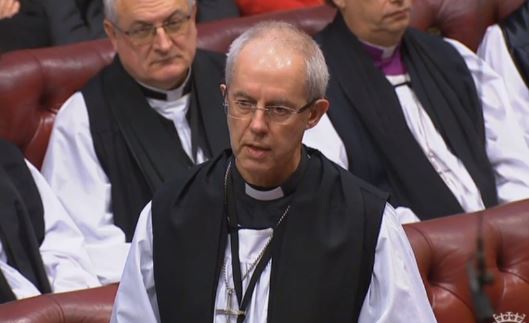 The Archbishop of Canterbury: My Lords, I am grateful to the usual channels for making time once again for me to lead a debate in your Lordships’ House. It is now something of a tradition for an Archbishop’s debate to be held in early December. Though a little later and less well established than the John Lewis advert, the appearance of an Archbishop on the order paper is a sure sign that Christmas is just around the comer.
Last year, I led a debate on shared national values, which featured some extremely impressive and thoughtful speeches. I am sure that today’s debate will be equally impressive, and I am grateful to so many of your Lordships for making time to attend. I look forward to your contributions, and it will be an especial pleasure to hear the first speech from the noble, reincarnated and right reverend Lord, Lord Chartres. I am also delighted that the noble Lord, Lord Sacks, will be speaking today. He has told me—and obviously we all understand—that he will have to leave before the wind-up to get home in time for the Sabbath. But it is very good that he has come here at all.
There is a link between today’s debate on education and the previous one on shared values. What I hope to give today is an outline of the sort of values that we suggest, from these Benches especially, should underpin our education system, and the structures that might support them, so that we might create a society where individual and mutual flourishing become the norm.
Continue reading “Archbishop leads Lords debate on the role of education in building a flourishing and skilled society.”

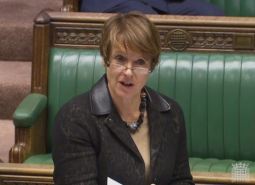 On 30th May 2018, Dame Caroline Spelman, the Second Church Estates Commissioner, answered a written question from Bob Blackman, the Conservative Member for Harrow East, about the Church’s view of the Government’s consultation on out-of-school education settings:
 The right hon Member for Meriden, representing the Church Commissioners, was asked—
  On 16th April Baroness Garden of Frognal held a debate ‘To ask Her Majesty’s Government what progress is being made in developing a sustainable lifelong learning culture in England’. The Bishop of Coventry, the Rt Revd Christopher Cocksworth, spoke in the debate:
 The Lord Bishop of Derby: My Lords, I, too, thank the noble Baroness, Lady Coussins. I want to say something about the general importance of the subject, and then some specific things about business and primary. The noble Baroness has set out a lot of the data, which is the foundation.
 On 4th January 2018 the Bishop of Durham, Rt Revd Paul Butler, received a written answer to a question on school holiday schemes to combat food poverty:
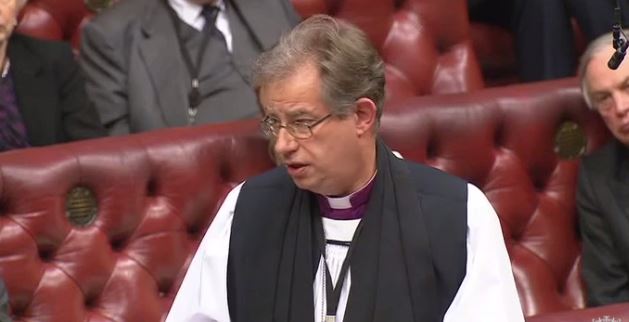 The Lord Bishop of Oxford: My Lords, like other speakers, I am grateful to the most reverend Primate the Archbishop of Canterbury for his leadership in this debate and in much else.
 The Lord Bishop of Gloucester: I too thank the most reverend Primate for bringing forward today’s debate, and indeed for naming the recently established Church of England Foundation for Educational Leadership, of which I am privileged to be a trustee.
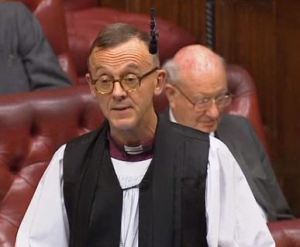 The Lord Bishop of Worcester: My Lords, I echo the thanks expressed to the noble Lord, Lord Watson, for securing this debate. It is clearly essential for the prosperity of our nation that lifelong learning is made a priority. Following cuts in the recent past, the Budget offered some welcome additional funding, including new funding for training in digital skills and construction, and the announcement of a retraining scheme for adults. The industrial strategy published today is a welcome step forward.
  On 22nd November 2017 Lord Lennie asked Her Majesty’s Government “what action they have taken to address the concerns raised in the Social Mobility Commission’s State of the Nation report published in November 2016.” The Bishop of Coventry, Rt Revd Christopher Cocksworth, asked a follow up question:

You must be logged in to post a comment.