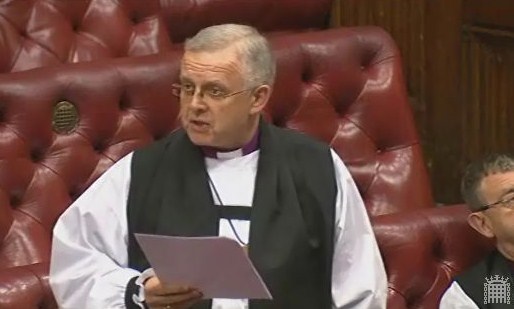
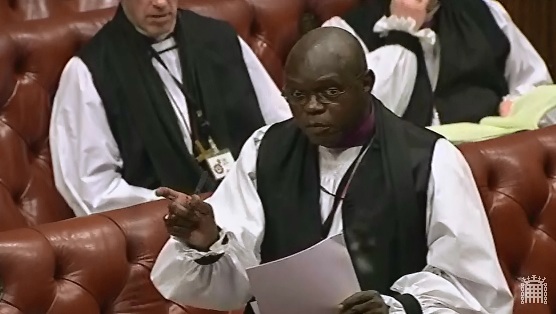
Archbishop of York highlights risks to financial stability of higher education system

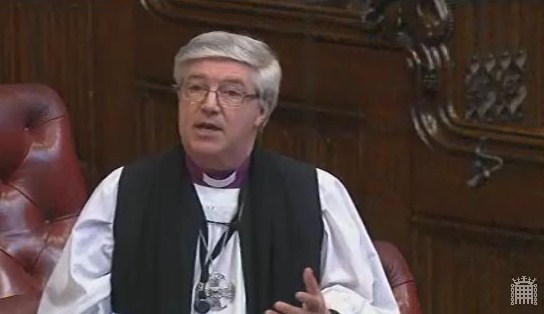
On 15th December 2014, Lord Sharkey asked Her Majesty’s Government what is their assessment of the Higher Education Commission’s report Too Good to Fail: The Financial Sustainability of Higher Education in England. The Archbishop of York, the Most Rev. and the Rt Hon. John Sentamu, asked a supplementary question:

Archbishop of YorkThe Archbishop of York: My Lords, will the noble Baroness tell us how, in the light of this report, she hopes to mitigate the risks to financial sustainability? Those are very big risks. Can she tell us how she will mitigate them? Forget the canoes.

Baroness Williams of Trafford: My Lords, the Government have asked HEFCE to monitor this situation, particularly in the light of the cap being lifted in 2016. That is a very important point.

(via Parliament.uk)

Bishop of St Albans – Forced Marriage (Written Answer)

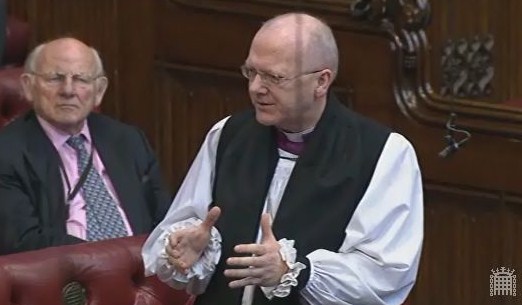
On 10th December 2014, the Bishop of St Albans, the Rt Revd Alan Smith, received an answer to a written question on the subject of forced marriage.

Bishop of St AlbansThe Lord Bishop of St Albans: To ask Her Majesty’s Government whether they will clarify the role of teachers in monitoring girls at risk of being forced into under-age marriage. [HL3494]

The Parliamentary Under-Secretary of State for Schools (Lord Nash): All school staff have a responsibility to identify children who may be in need of extra help or who are suffering, or are likely to suffer, significant harm. All staff then have a responsibility to take appropriate action, working with other services as required. Those responsibilities, which apply to the risk of forced marriage as to any other form of abuse, are set out in ‘Keeping Children Safe in Education’ statutory guidance for schools and their staff which the Government published in April 2014. [1] Continue reading “Bishop of St Albans – Forced Marriage (Written Answer)”

Bishop of Derby commends recommendations of Children’s Commission on Poverty

On 8th December 2014, Baroness Jones of Whitchurch asked Her Majesty’s Government what assessment they have made of the impact of child poverty on children’s early years educational development. The Bishop of Derby, the Rt Revd Alastair Redfern, asked a supplementary question:

Bishop of DerbyThe Lord Bishop of Derby: My Lords, has the Minister heard of the report At What Cost? produced by the Children’s Commission on Poverty, which is a group of young people supported by the Children’s Society? If the Minister has come across the report, what will the Government do about the recommendations in it?
Lord Nash: Again, I am afraid that I will have to write to the right reverend Prelate on that matter.


Bishop of Worcester takes part in debate on relationship between children’s rights and internet use

“The Church of England schools’ commitment to this aim is seen in the breadth of our holistic educational vision. We seek to conceive of education as developing children’s creativity and awareness of the world around them—of course, we are not alone in that. To fit students for a life of active civic engagement, and not just to learn facts, is what education should be about.”

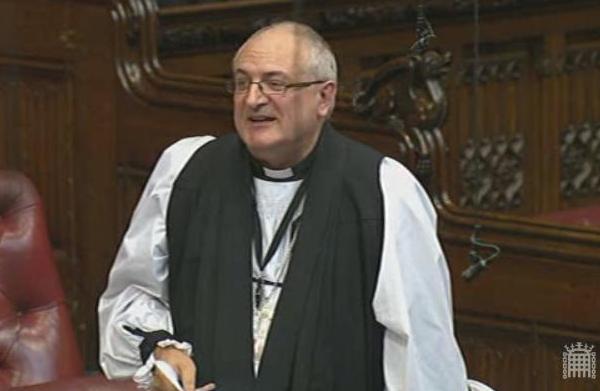
On 20th November 2014, Baroness Kidron led a debate in the House of Lords to take note of the impact of the United Nations Convention on the Rights of the Child on children’s and young people’s online and digital interactions. The Bishop of Worcester, the Rt Revd John Inge, took part in the debate, which was timed to mark the 25th anniversary of the Convention. The Bishop spoke about the ability of online education resources to release the talents of all children, noting the Church of England’s commitment to a holistic educational vision in its schools. He also highlighted some of the risks associtated with young people using the internet and supported calls for the government to review how the UNCRC can be applied to the context of these online and digital interactions.

WorcesterThe Lord Bishop of Worcester: My Lords, I begin by echoing the congratulations offered to the noble Baroness, Lady Shields, on an excellent maiden speech. I join her in applauding the wonderful work in this area of the noble Baroness, Lady Kidron, to whom I am also grateful for providing the House with an opportunity to take stock of the changes wrought over the past couple of decades by the growth of the internet and evolution of digital technologies—on this auspicious day, 25 years since the establishment of the UN Convention on the Rights of the Child, which coincides, as she pointed out, with the beginning of the development of the internet. What a different world we live in now that the convention has come of age. It behoves us to consider the new cultural landscape in which we find ourselves, in which 81% of 12 to 15 year-olds use the internet every day. Continue reading “Bishop of Worcester takes part in debate on relationship between children’s rights and internet use”

BISHOP OF LICHFIELD SPEAKS IN SHORT DEBATE ON THE SUSTAINABILITY OF MUSIC EDUCATION

14.03.27 Bishop of LichfieldThe Bishop of Lichfield, the Rt. Revd. Jonothan Gledhill, made a speech during the short evening debate on the long term financial sustainability of the National Music Plan in England. In it, he called for an increase in the number of music hubs, as well as greater financial support for them; highlighting the tremendous benefits a high-quality music education can have for children in all aspects of their lives.

Read the full transcript of his speech here:

The Lord Bishop of Lichfield: My Lords, I congratulate the noble Lord, Lord Aberdare, on introducing this important and timely short debate. I welcome the national plan for music education, which emphasises the importance of music and the creation of music education hubs in this country, I also welcome the fact that the report has taken note of the recommendations made in the Henley review, perhaps the most comprehensive and thorough review of the state of music education in England for many years. I thank the noble Lord, Lord Berkeley of Knighton, for his support of church music as well. Continue reading “BISHOP OF LICHFIELD SPEAKS IN SHORT DEBATE ON THE SUSTAINABILITY OF MUSIC EDUCATION”

Minister congratulates CofE on new free schools in response to question from Bishop of Peterborough

On 21st October 2014, Baroness Massey of Darwen asked Her Majesty’s Government “what steps they are taking to ensure a fair admissions policy in schools.” The Bishop of Peterborough, Rt Rev Donald Allister, asked a supplementary question:

14.02 PeterboroughThe Lord Bishop of Peterborough: Will the Minister join me in congratulating the four latest Church of England free schools to be announced, which between them offer nearly 2,500 places to young people of all faiths and none, especially in areas of severe shortage? Continue reading “Minister congratulates CofE on new free schools in response to question from Bishop of Peterborough”

Maiden speech by the Bishop of Ely – Government strategy on social justice

The legitimacy of any legislature is judged by the sure access to justice for all citizens, regardless of age or estate. For that justice to be social it requires the active participation of all communities. I believe that this justice is rooted in the invitation of God to be generous and visible with and for others” – Bishop of Ely, 16/10/14

14.10.16 Bishop of Ely 1On 16th October 2014, the House of Lords debated a motion in the name of Baroness Tyler of Enfield, “that this House takes note of Her Majesty’s Government’s Social Justice strategy.” The Bishop of Ely, Rt Rev Stephen Conway, gave his maiden speech in the debate:

The Lord Bishop of Ely (Maiden Speech):My Lords, I begin by expressing my gratitude for the welcome I have received since I was introduced into your Lordships’ House. My theological sense of direction is rather more developed than my physical sense, and I have been touched by the noble Lords who have accompanied me around bewildering corridors. Your Lordships may yet see me, like Theseus, unwinding a ball of twine to get me back to the Bishops’ Robing Room. Continue reading “Maiden speech by the Bishop of Ely – Government strategy on social justice”

Bishop of Birmingham responds to Government statement on ‘Trojan Horse’

On 22nd July 2014, a Government statement on Birmingham Schools was repeated in the House of Lords by the Parliamentary Under-Secretary of State for Schools, Lord Nash. The Bishop of Birmingham, the Rt Revd David Urquhart, responded to the statement. He called for Government support of the Kershaw Report, asked for clarity on responsibility and accountability in the education system, and argued that the incident highlighted the need for greater understanding of faith and religion throughout civil society.

T01.04.14 Bishop of Birminghamhe Lord Bishop of Birmingham: My Lords, I am grateful to the Minister for bringing the Secretary of State’s Statement to the House and for the publication of Peter Clarke’s report. As he mentioned, this goes alongside Ian Kershaw’s report, which was published on Friday, about Birmingham City Council and it has the support of the Birmingham Trojan horse review group, of which I am a member. That group has published its own, wider recommendations in this complex and troubling period. Does the Minister agree that both reports are thorough and hard-hitting, and that there is much in common in their findings? Continue reading “Bishop of Birmingham responds to Government statement on ‘Trojan Horse’”

Bishop of St Albans supports efforts to encourage young people to vote

On 1st July 2014, Liberal Democrat peer Lord Storey asked Her Majesty’s Government what plans they have to encourage educational establishments to take part in National Voter Registration Day 2015. The Bishop of St Albans, the Rt Revd Alan Smith, asked a supplementary question.

Bishop of St AlbansThe Lord Bishop of St Albans: My Lords, the Question is about encouraging educational establishments to encourage a whole new generation of people to engage in the electoral process. Of course, next year is a hugely significant year, with the 800th anniversary of Magna Carta. Can we not only encourage our schools to use this as an opportunity to really inspire people to think about civil participation, citizenship and so on but find some imaginative ways to give people the information in the educational packs that will be used next year?

Lord Wallace of Saltaire: My Lords, certainly. We trust that the churches will play their own role, and perhaps we will have mentions in sermons of civic duty and what one should render unto Caesar as well as unto God.

(via Parliament.uk)

Bishop of Chester asks question on assessment of needs of dyslexics in higher education

On 30th June 2014, Liberal Democrat peer Lord Addington asked Her Majesty’s Government how the assessment of complex needs for dyslexics will be achieved under the new Disabled Students’ Allowance arrangements. The Bishop of Chester, the Rt Revd Peter Forster, asked a supplementary question.
14.03 Bishop of ChesterThe Lord Bishop of Chester: My Lords, I declare an interest in that my younger son has just graduated successfully and has benefited from the computer and software for someone with dyslexia. People with dyslexia often flourish later in the educational process as they gain their coping mechanisms. Does this not mean that it is even more important to make sure that this support is fully in place, not least at university?
Lord Ahmad of Wimbledon: The right reverend Prelate makes an important point, and I congratulate him on his son’s successful graduation. The point he makes is perfectly valid. I have already mentioned that we will be looking at a full equality impact assessment before laying the regulations. I am sure that part and parcel of that process, and the discussion around those regulations, will be to cover the points that the right reverend Prelate has made.